
Faith
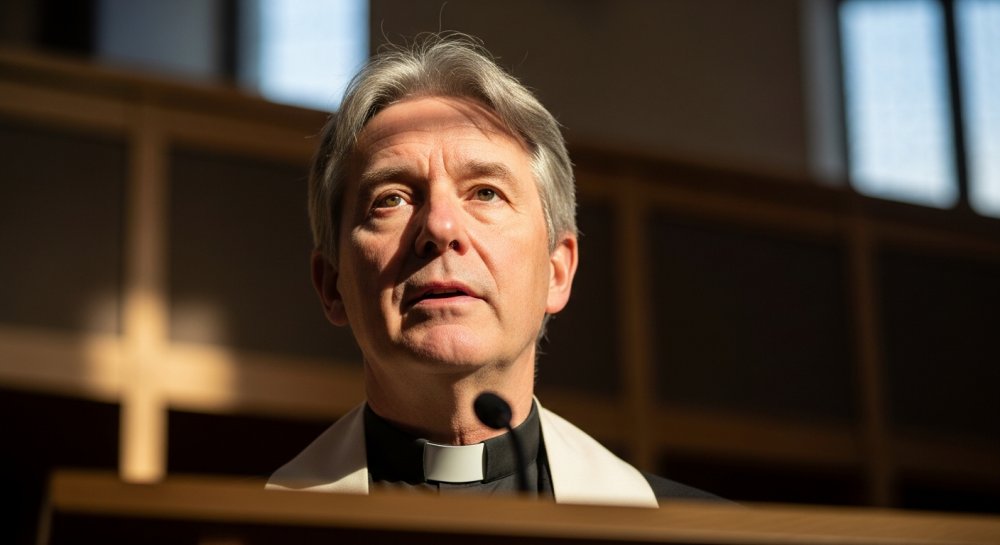
Alpha Course Leader Faces Backlash for Biblical Call to Combat Inequality

Faith Facts
- Nicky Gumbel, Alpha course pioneer and former Holy Trinity Brompton leader, faces criticism after urging Spirit-filled Christians to address inequality
- Critics have accused Gumbel of promoting communist ideals and unbiblical teachings for his stance on social justice
- Defenders argue that confronting injustice and fighting inequality are core biblical mandates rooted in Scripture
The founder of the internationally recognized Alpha course is at the center of a controversy that highlights deep divisions within the Christian community over how believers should engage with issues of social justice and inequality. Nicky Gumbel, who pioneered the Alpha evangelism program and formerly led Holy Trinity Brompton (HTB), has drawn sharp criticism from some quarters after calling on Spirit-filled Christians to actively fight against inequality.
The backlash against Gumbel has included accusations that he is promoting communist ideologies and straying from biblical teaching. These charges have sparked a heated debate about the proper role of Christians in addressing systemic injustice and whether such activism aligns with scriptural principles.
Tommy Sharpe, writing in defense of Gumbel’s position, expressed shock at the nature of the criticism. He argues that far from being unbiblical or politically motivated, the call to confront inequality is deeply rooted in the teachings of Scripture and the example of Christ.
The controversy touches on a fundamental question facing American Christians today: What does faithful Christian witness look like in a society marked by disparities and injustice? While some believers view social justice language as importing secular ideologies into the church, others contend that pursuing justice for the poor and oppressed is a non-negotiable aspect of biblical faith.
Throughout Scripture, God’s concern for the vulnerable and marginalized is abundantly clear. From the Law of Moses, which included specific provisions to protect widows, orphans, and foreigners, to the prophets who thundered against exploitation and oppression, the biblical witness consistently calls God’s people to pursue justice.
The prophet Micah famously summarized what the Lord requires: “To act justly and to love mercy and to walk humbly with your God.” Isaiah condemned those who “deprive the poor of their rights” and declared that true worship involves loosening “the chains of injustice” and setting “the oppressed free.”
Jesus Himself launched His public ministry by reading from Isaiah 61, declaring that He had come “to proclaim good news to the poor” and “to set the oppressed free.” Throughout His earthly ministry, Christ demonstrated particular concern for those on society’s margins—the sick, the poor, the ritually unclean, and the socially ostracized.
The early church continued this pattern, with the apostles teaching that “pure and faultless” religion includes caring for “orphans and widows in their distress.” The epistles repeatedly call believers to show practical love to those in need and to avoid favoritism toward the wealthy.
However, defenders of biblical justice are careful to distinguish their position from secular ideologies or political movements that may use similar language. The Christian pursuit of justice is rooted in the character of God Himself, who is described in Scripture as loving justice and hating oppression. This divine mandate differs fundamentally from materialist philosophies that deny God’s existence or elevate the state above all other authorities.
Biblical justice recognizes the inherent dignity of every person as made in God’s image. It calls for personal transformation through the gospel while also working to address systemic barriers that prevent human flourishing. It emphasizes personal responsibility alongside corporate accountability, and it seeks lasting change through changed hearts rather than through coercion alone.
For Christian conservatives, the challenge is to faithfully apply biblical principles in contemporary contexts without compromising core doctrinal convictions or adopting worldly ideologies wholesale. This requires discernment to distinguish between timeless scriptural commands and temporary political programs.
The Alpha course, which Gumbel developed, has introduced millions worldwide to the Christian faith through its accessible presentation of the gospel. The program’s emphasis on the Holy Spirit’s power and the need for personal conversion has made it particularly popular among evangelical and charismatic Christians. Gumbel’s credentials as a Bible-believing, Spirit-filled leader make the accusations against him all the more surprising to many observers.
Supporters of Gumbel’s position note that conservative Christians have historically been at the forefront of many social reform movements, from the abolition of slavery to the civil rights movement. They argue that retreating from questions of justice and equality cedes important ground to secular voices and fails to represent the full counsel of Scripture.
At the same time, concerns about the infiltration of Marxist or progressive ideologies into the church are not without foundation. Church leaders must exercise wisdom in addressing social issues without importing unbiblical frameworks that contradict Christian anthropology or soteriology.
The path forward requires Christians to anchor their social engagement firmly in Scripture, approaching issues of justice with both prophetic boldness and theological precision. Believers must demonstrate through both word and deed that the gospel has implications for all of life, including how we treat our neighbors and structure our communities.
As this controversy continues, it serves as a reminder that faithful Christians can disagree about application while affirming shared biblical principles. The unity of the body of Christ must be preserved even amid robust debate about how best to live out our calling in a broken world.
Let us know what you think, please share your thoughts in the comments below.


Faith Facts
- Christians are called to redeem every tool for God’s glory and the spread of the Gospel.
- Artificial intelligence is a human creation and remains under God’s sovereign authority.
- Believers must approach emerging technologies with wisdom rooted in Scripture.
Christians around the world are asking an important question as artificial intelligence grows more powerful. How can this technology be captured for the glory of God and the advancement of the Gospel?
Scripture teaches that every good gift comes from above. Technology itself is not evil, but its use must be directed by truth and righteousness.
AI systems are built by people and trained on data created by people. They reflect human choices and remain limited by the boundaries God has established.
Believers have a responsibility to guide these tools toward purposes that honor Christ and serve others. That includes sharing the Gospel, protecting life, and strengthening families.
“Whether therefore ye eat, or drink, or whatsoever ye do, do all to the glory of God,” 1 Corinthians 10:31 reminds us.
Churches and ministries are already exploring ways to use AI for translation, accessibility, and discipleship resources. These efforts must stay anchored in sound doctrine and prayerful discernment.
At the same time, Christians are right to raise concerns about privacy, truth, and the temptation to place ultimate trust in machines rather than in the Lord.
“Trust in the Lord with all thine heart; and lean not unto thine own understanding,” Proverbs 3:5 declares.
Ultimately, the future belongs to the One who created all things, not to any algorithm or invention of man. AI will never have the final word over humanity.
Let us know what you think, please share your thoughts in the comments below.

Faith Facts
- The little log church has stood along the historic Oregon Trail route, serving as a steadfast reminder of Christian faith amid the rugged American frontier.
- U.S. Highway 191 passes near this enduring structure, connecting modern travelers to the spiritual legacy of pioneer families who settled the West.
- The church continues to bear witness to the traditional values of faith, family, and freedom that shaped our nation’s westward expansion.
Along U.S. Highway 191 stands a little log church that looks as though it has occupied this windswept landscape since the days of wagon trains.
The humble structure serves as a tangible link to the pioneer families who carried their Bibles and their faith across the plains in search of new beginnings.
Its weathered logs and simple steeple rise against the vast Western sky, a quiet testament to the enduring strength of Christian witness in America.
Travelers passing by are reminded that the values of hard work, self-reliance, and devotion to God helped build this nation from the ground up.
Let us know what you think, please share your thoughts in the comments below.

Faith Facts
- Scripture teaches that creation groans under the weight of sin and awaits redemption
- Christian teaching holds that believers are called to reflect God’s compassion through practical help
- History shows the church has long been first on the scene after floods, fires, and storms
Every natural disaster reminds us that we live in a fallen world — that mankind’s sin irreparably marred the world’s original perfection.
We call these events “natural disasters,” but the reality is that these tragedies are anything but “natural.”
Let us know what you think, please share your thoughts in the comments below.


-

 Self-Reliance1 year ago
Trump’s Bold Move Uncovers Massive Social Security Fraud
-

 Faith1 year ago
New Clues Emerge in Noah’s Ark Mystery
-

 News2 years ago
Governor Walz’s Rhetoric Sparks National Controversy
-

 News1 year ago
Mel Gibson’s ‘The Passion of the Christ’ Sequel Title Announced
-

 Family1 year ago
Texas Lawmaker Targets Furries in Schools
-

 Freedom2 years ago
Maine Lawmaker Challenges Sports Fairness Controversy
-

 Family1 year ago
Canada’s Controversial Policy Sparks Ethical Debate
-
Faith10 months ago
Congress Hears Pleas for Nigerian Christians