
Faith
Algerian Believers Forced Into Hiding After Government Shutters Churches

Faith Facts
- Algeria has systematically sealed nearly all Evangelical churches since launching a crackdown in 2017
- Christian communities have been driven underground, practicing their faith in secret amid government persecution
- Believers describe their situation as an “internal exile” as they continue worshiping despite state opposition
Christian communities in Algeria face severe religious persecution as government authorities continue enforcing a years-long campaign that has shuttered Protestant churches across the North African nation. What began as targeted closures in 2017 has escalated into a full-scale assault on Christian worship, forcing believers to practice their faith in secret.
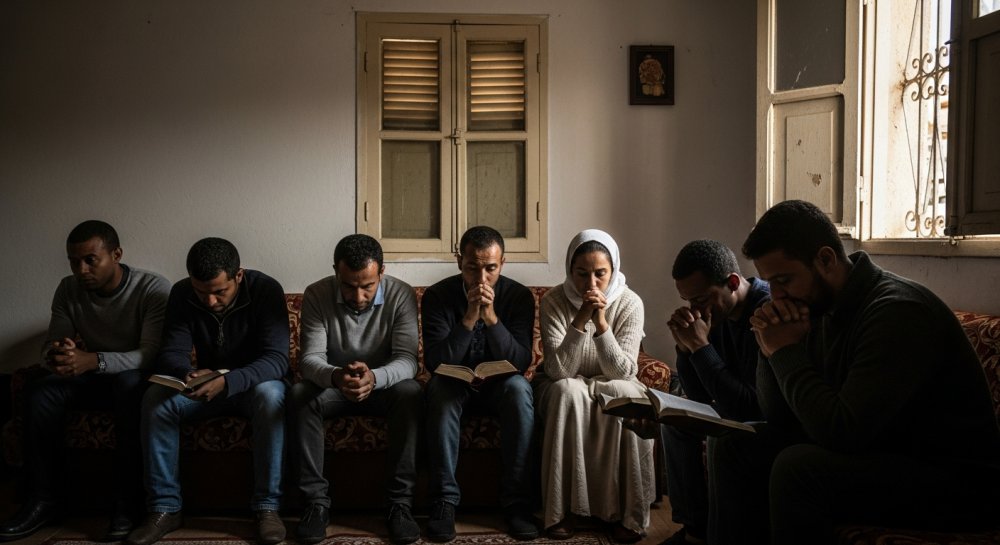
The systematic closure of Evangelical churches represents one of the most aggressive anti-Christian campaigns in the region. Believers who once gathered openly to worship now meet in homes and hidden locations, reminiscent of the early church under Roman persecution.
Algerian Christians describe their current reality as an “internal exile,” stripped of their fundamental right to worship freely in their own country. Despite the threat of government retaliation, these faithful believers continue to gather, demonstrating the enduring power of Christian faith under persecution.
The crackdown reflects a broader pattern of religious intolerance targeting Christian minorities in predominantly Muslim nations. While Western nations champion religious freedom as a foundational human right, Christians in Algeria and throughout the Middle East and North Africa face systematic discrimination, harassment, and violence for their beliefs.
This persecution should serve as a wake-up call to Christians in America and throughout the free world. The religious liberty we often take for granted remains under assault in many parts of the globe, where believers risk everything simply to follow Jesus Christ.
The courage of Algeria’s underground church stands as a testament to the strength of Christian conviction. When governments attempt to silence the Gospel through intimidation and force, faithful believers respond not with violence but with steadfast devotion to Christ, meeting in secret to worship the God who cannot be contained by earthly powers.
American Christians must stand in solidarity with our persecuted brothers and sisters, lifting them up in prayer and advocating for their religious freedom. The same faith that sustains Algerian believers in their darkest hour calls us to action on their behalf.
Let us know what you think, please share your thoughts in the comments below.

Faith Facts
- The Southern Baptist Convention and its Executive Committee have been named as defendants in a class-action lawsuit involving a South Carolina church that allegedly allowed a convicted sex offender to volunteer near children.
- Church leaders at the South Carolina congregation face criminal charges related to the case, raising questions about institutional oversight and child protection policies.
- The lawsuit represents growing legal pressure on denominational bodies to ensure member churches maintain proper safeguards for the most vulnerable members of their congregations.
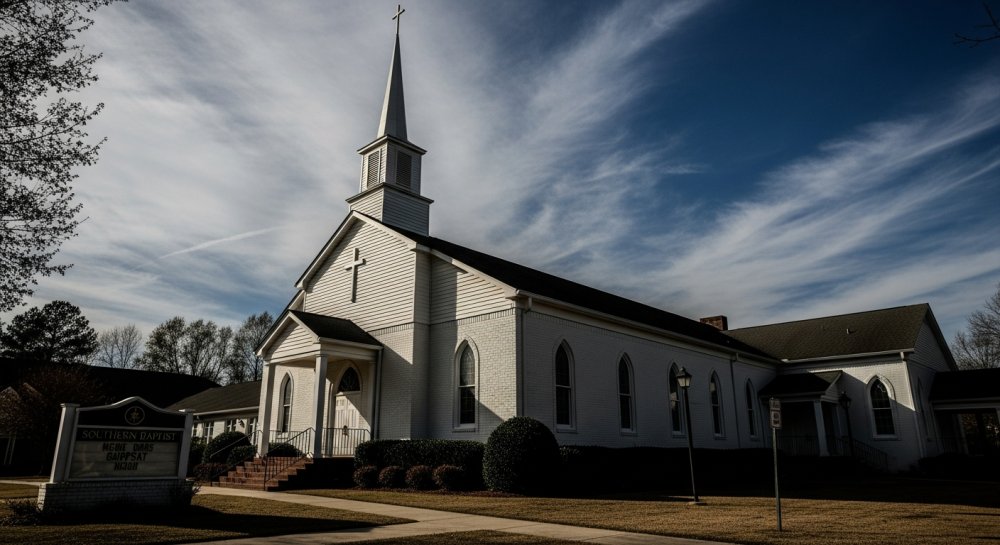
A troubling case out of South Carolina has placed the Southern Baptist Convention at the center of serious legal action. The denomination and its Executive Committee now stand as defendants in a class-action lawsuit connected to failures at a member church.
The case involves a South Carolina congregation whose leadership allegedly permitted a convicted sex offender to volunteer in proximity to children for an extended period. This stunning breach of basic child safety protocols has resulted in criminal charges against church leaders.
The inclusion of the SBC and its Executive Committee in the lawsuit raises significant questions about denominational accountability. While Southern Baptist churches maintain local autonomy, plaintiffs apparently believe the broader organization bears some responsibility for ensuring member congregations maintain appropriate safeguards.
Child protection in churches has become an urgent priority for congregations across America. Christian communities have a sacred duty to protect the innocent and vulnerable, making failures in this area particularly grievous.
The case highlights the tension between congregational independence—a hallmark of Baptist polity—and the need for denominational oversight on critical matters of safety and integrity. Churches must balance their autonomy with accountability to broader standards that protect children.
For families who trust their churches with their children’s spiritual formation and physical safety, such allegations represent a devastating breach of faith. The church is called to be the safest place for children, not a venue where known dangers are permitted access.
The criminal charges against the South Carolina church’s leadership indicate prosecutors believe laws were violated. When church leaders fail to protect children from known threats, they not only betray their spiritual calling but may face serious legal consequences.
This lawsuit adds to mounting pressure on the Southern Baptist Convention regarding child safety issues within its network of churches. The denomination has faced increasing scrutiny in recent years over how sexual abuse allegations have been handled across its member congregations.
Christian conservatives have long emphasized the importance of protecting children and maintaining high moral standards in religious institutions. When churches fail in this fundamental responsibility, it damages the witness of the Gospel and erodes public trust in Christian ministry.
The outcome of this case may have implications for how denominational bodies approach oversight and accountability with member churches. While respecting congregational autonomy remains important, ensuring child safety must be non-negotiable.
Churches across America should view this case as a reminder to review their own child protection policies. Background checks, proper training, clear procedures, and vigilant oversight are essential elements of faithful stewardship of the children entrusted to church care.
The biblical mandate to protect the vulnerable could not be clearer. Jesus himself warned that anyone who causes harm to children would face severe judgment, saying it would be better for them to have a millstone hung around their neck and be drowned in the sea.
Let us know what you think, please share your thoughts in the comments below.

Faith Facts
- Canadian evangelicals are mobilizing to oppose government plans to extend assisted suicide to individuals suffering from mental illness
- Faith leaders are urging believers to contact their Members of Parliament to voice concerns over the proposed expansion of euthanasia eligibility
- The push reflects growing alarm among Christians over the sanctity of life and the dangerous precedent of allowing mental health conditions to qualify for state-assisted death
Faith communities across Canada are raising their voices in defense of the vulnerable as the nation moves closer to allowing people with mental illness to access physician-assisted suicide. Evangelical leaders are calling on believers to take immediate action by contacting their local representatives in Parliament.
The proposed expansion of Canada’s Medical Assistance in Dying (MAiD) program has sparked deep concern among Christians who view it as a dangerous erosion of the value of human life. What began as a provision for those with terminal physical illnesses now threatens to include Canadians whose suffering is psychological rather than physiological.
For Christians, the issue strikes at the heart of biblical teaching on the sanctity of life and the responsibility to protect the most vulnerable members of society. Mental illness, by its very nature, can impair judgment and distort one’s view of hope and future possibilities. Allowing such individuals access to state-sanctioned death raises profound moral and ethical questions that cannot be ignored.
Church leaders are emphasizing that this is not merely a political issue but a spiritual one that demands the engagement of every believer. The call to action is clear: Christians must make their voices heard in the halls of government before this policy becomes entrenched in Canadian law.
The expansion of assisted suicide eligibility represents a troubling shift in how society values human life, particularly those experiencing mental health challenges. Rather than investing in comprehensive mental health care, suicide prevention, and community support, the government appears poised to offer death as a solution to suffering.
This development in Canada serves as a warning to believers across North America about the slippery slope of euthanasia laws. What begins with supposedly narrow criteria inevitably expands to encompass broader categories of people, ultimately devaluing life itself.
The mobilization of evangelical Christians on this issue demonstrates the vital role faith communities play in defending life and upholding traditional values in an increasingly secular society. Their voices represent not only religious conviction but also a profound concern for the common good and the protection of society’s most vulnerable members.
As the debate continues, Christians are reminded that their engagement in the public square is both a civic duty and a faithful witness to the value God places on every human life, regardless of circumstance or condition.
Let us know what you think, please share your thoughts in the comments below.
Faith Facts
- Cameron Arnett stars in “Soul Snatchers,” a supernatural thriller designed to awaken Christians to spiritual warfare realities
- The actor urges churches to stop avoiding discussions about spiritual warfare and demonic forces
- Arnett emphasizes that Christians must reject fear and reclaim God’s supernatural power over evil
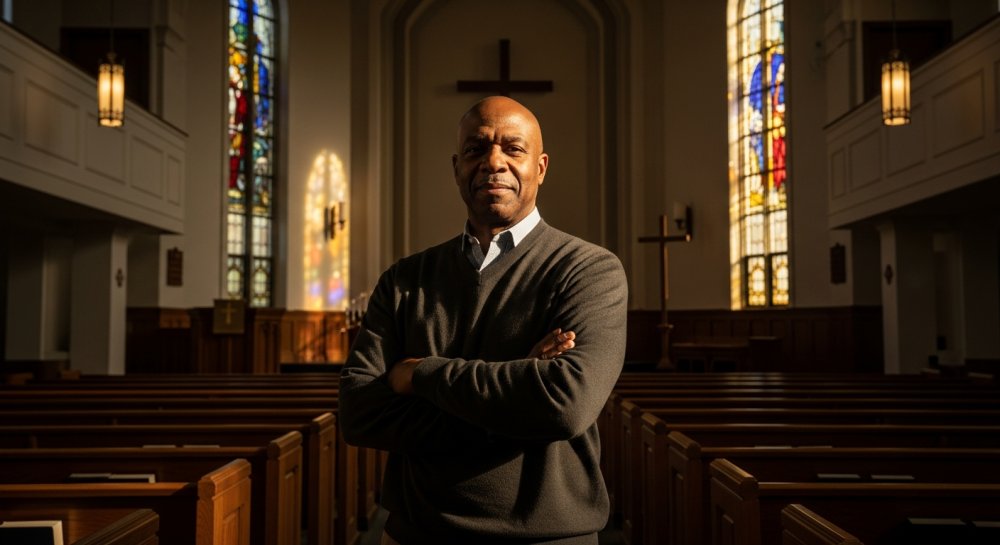
A prominent Christian actor is sounding the alarm about a critical gap in modern church teaching, calling on congregations across America to confront the reality of spiritual warfare head-on. Cameron Arnett, star of the new faith-based supernatural thriller “Soul Snatchers,” believes the Church has largely abandoned one of its most essential missions: equipping believers to recognize and combat demonic forces.
In an era when many pulpits shy away from discussing the supernatural realm, Arnett sees his latest film as a wake-up call. The movie deliberately employs the thriller genre not for entertainment’s sake alone, but as a vehicle to challenge Christians who have grown comfortable ignoring the spiritual battle raging around them.
“Soul Snatchers uses the supernatural thriller genre to challenge Christians to reject fear, embrace the reality of spiritual warfare and rediscover God’s supernatural power over evil,” Arnett explained.
The veteran actor’s message comes at a time when traditional Christian teaching on spiritual warfare has diminished in many congregations. Where previous generations of believers were taught to recognize demonic influence and stand against it through prayer and Scripture, today’s church-goers often receive little instruction on the subject.
Arnett’s emphasis on rejecting fear resonates with biblical teaching that repeatedly commands believers not to be afraid. From Joshua’s call to be strong and courageous to Paul’s reminder that God has not given us a spirit of fear, Scripture consistently affirms that Christians possess authority over evil through Christ.
The actor’s call for churches to reclaim supernatural power isn’t about sensationalism or charismatic excess. Rather, it reflects a return to New Testament Christianity, where believers routinely engaged spiritual forces and witnessed God’s power breaking demonic strongholds. The Book of Ephesians explicitly states that “we do not wrestle against flesh and blood, but against principalities, against powers, against the rulers of the darkness of this age.”
“Soul Snatchers” represents a growing trend in faith-based entertainment that refuses to sanitize Christianity’s supernatural elements. While some Christian films focus exclusively on feel-good messages or romance, this project tackles darker spiritual realities that many believers face but few discuss openly in church.
Arnett’s background in Hollywood gives him unique insight into how entertainment can shape worldview and spiritual awareness. By choosing to work in faith-based projects that address spiritual warfare, he’s using his platform to fill a void left by churches that have become overly focused on self-help messages and cultural relevance.
The timing of this message proves particularly significant as American culture becomes increasingly hostile to Christian values. Many believers report feeling spiritually attacked yet lack the theological framework or practical teaching to respond effectively. Arnett’s call challenges churches to recover biblical truth about the spiritual realm and equip their congregations accordingly.
His emphasis on God’s supernatural power serves as a reminder that Christianity is not merely a moral philosophy or self-improvement program. At its core, the faith involves a real spiritual kingdom engaged in ongoing conflict with forces of darkness—a reality that demands more than positive thinking or good intentions.
For Christians willing to engage this teaching, the implications are profound. Recognizing spiritual warfare transforms how believers pray, understand trials, and approach evangelism. It restores a sense of divine authority and power that secular culture desperately tries to suppress.
Let us know what you think, please share your thoughts in the comments below.


-

 Self-Reliance1 year ago
Trump’s Bold Move Uncovers Massive Social Security Fraud
-

 Faith1 year ago
New Clues Emerge in Noah’s Ark Mystery
-

 News1 year ago
Governor Walz’s Rhetoric Sparks National Controversy
-

 News1 year ago
Mel Gibson’s ‘The Passion of the Christ’ Sequel Title Announced
-

 Family1 year ago
Texas Lawmaker Targets Furries in Schools
-

 Freedom1 year ago
Maine Lawmaker Challenges Sports Fairness Controversy
-

 Family1 year ago
Canada’s Controversial Policy Sparks Ethical Debate
-
Faith9 months ago
Congress Hears Pleas for Nigerian Christians