
News
African Evangelical Leaders Make Bold Move to Expand Biblical Training

Faith Facts
- The Association for Christian Theological Education in Africa (ACTEA) has restructured into three distinct language-based councils to better serve theological institutions across the continent.
- The reorganization addresses a historical gap in accreditation services for French- and Portuguese-speaking evangelical schools, which have been underserved compared to English-speaking institutions.
- This strategic change aims to strengthen biblical education and pastoral training throughout Africa by ensuring quality theological standards across all major language groups.
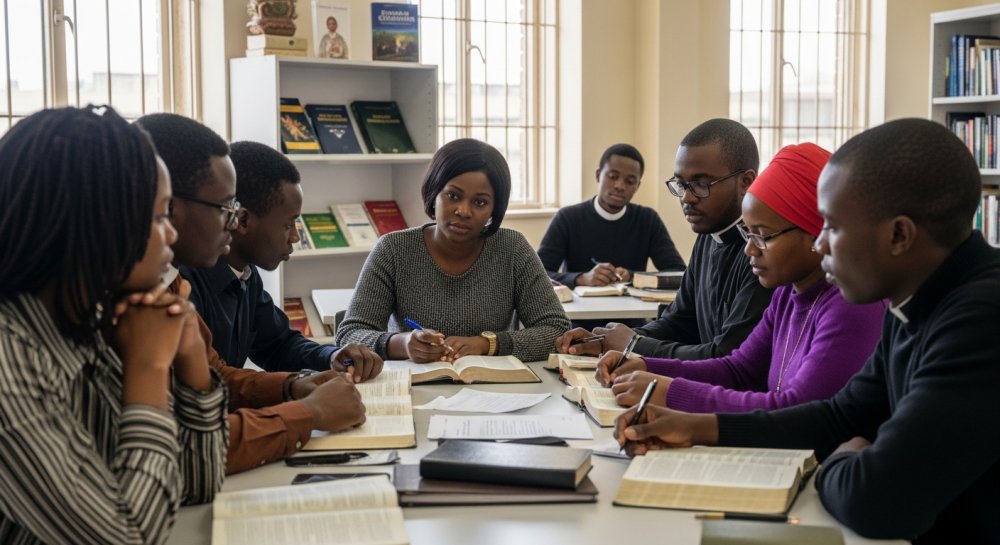
In a significant development for Christian education across Africa, the Association for Christian Theological Education in Africa (ACTEA) has undertaken a comprehensive restructuring to better serve theological institutions in multiple languages. The organization’s leadership has voted to divide its operations into three language-based councils, marking a new chapter in evangelical theological training on the continent.
This reorganization represents a strategic response to a long-standing challenge facing theological education in Africa. For years, French- and Portuguese-speaking evangelical institutions have faced barriers to quality accreditation and support services that their English-speaking counterparts have more readily accessed.
The new structure will establish dedicated councils for English, French, and Portuguese-speaking theological schools and seminaries. Each council will operate with cultural and linguistic sensitivity while maintaining consistent standards of biblical excellence and theological integrity.
ACTEA’s decision reflects a commitment to equipping pastors, missionaries, and Christian leaders across Africa’s diverse linguistic landscape. The continent’s rich tapestry of languages and cultures requires educational approaches that honor local contexts while upholding sound doctrine and biblical truth.
This restructuring comes at a crucial time for African Christianity, which continues to experience significant growth. Ensuring that theological training keeps pace with the expansion of the church has become increasingly important for maintaining doctrinal soundness and effective ministry leadership.
The move also demonstrates the maturation of African evangelical leadership, which is taking proactive steps to address institutional gaps and strengthen the foundation of Christian education. By creating language-specific councils, ACTEA can provide more targeted resources, culturally relevant assessments, and appropriate guidance to schools that previously struggled with language barriers in the accreditation process.
French-speaking regions of Africa, particularly in West and Central Africa, have historically faced challenges in accessing quality theological resources and accreditation support. Portuguese-speaking nations, including Mozambique and Angola, have encountered similar obstacles. The new council structure aims to remedy these disparities.
For Christian families and churches across Africa, this development means better-trained pastors and ministry leaders who can effectively teach Scripture and shepherd congregations. Quality theological education serves as a bulwark against false teaching and ensures that the next generation of African church leaders is grounded in biblical truth.
The restructuring also positions ACTEA to better serve the growing number of theological institutions being established across the continent. As African churches increasingly take ownership of their own theological training, the need for robust, linguistically appropriate accreditation becomes more pressing.
This organizational change underscores a broader principle: effective Christian ministry requires attention to both universal truth and local context. The gospel message remains unchanging, but its communication and the training of those who proclaim it must be adapted to serve diverse communities effectively.
Let us know what you think, please share your thoughts in the comments below.

Faith Facts
- Flash floods struck Kurung Kumey district in Arunachal Pradesh, India, washing away a Catholic church and devastating multiple Christian congregations.
- The remote border town lost all road connectivity to district headquarters, leaving believers and residents stranded.
- The flooding highlights ongoing challenges Christians face in India’s remote regions where infrastructure remains vulnerable and support limited.
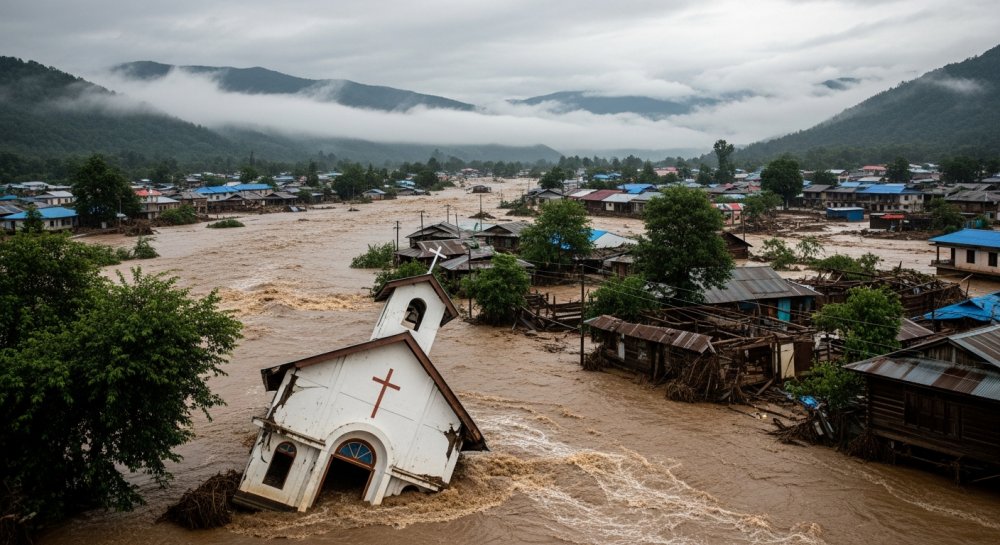
A devastating flood struck the Kurung Kumey district of Arunachal Pradesh, India, on Monday, leaving a trail of destruction in its wake. The flash floods proved particularly catastrophic for the Christian community in this remote border region.
Among the structures lost to the raging waters was an entire Catholic church, swept away by the torrential force of the flood. Multiple other churches throughout the district sustained significant damage, representing a severe blow to the faithful in an area where Christian congregations often serve as vital centers of community life.
The flooding didn’t just claim houses of worship—it severed the lifeline connecting this remote town to the outside world. Road connectivity to the district headquarters was completely cut off, isolating residents and making rescue and relief efforts extraordinarily difficult.
Arunachal Pradesh sits in India’s far northeastern corner, bordering China, Bhutan, and Myanmar. The region’s mountainous terrain and heavy monsoon patterns make it particularly vulnerable to flash flooding, but Monday’s deluge proved exceptionally destructive.
For Christians in this border district, the loss extends beyond physical structures. Churches in remote Indian regions often function as more than places of worship—they serve as educational centers, community gathering points, and anchors of social support in areas where government services remain limited.
The Christian community in India faces growing challenges, from increasing religious persecution in some areas to the practical difficulties of maintaining congregations in geographically isolated regions. Natural disasters like this flood compound those existing struggles, destroying years of ministry investment in moments.
As floodwaters recede, the work of assessment and rebuilding will begin. For believers in Kurung Kumey, that process will require not just reconstruction of physical buildings, but restoration of community infrastructure that serves the spiritual and practical needs of the faithful in one of India’s most remote corners.
The situation calls attention to the vulnerability of Christian communities in India’s border regions, where geographic isolation, limited infrastructure, and environmental hazards create ongoing challenges for those seeking to maintain their faith and way of life.
Let us know what you think, please share your thoughts in the comments below.
News
Senator Lindsey Graham Passes Away as Trump Addresses Election Integrity and American Freed from Iran
Faith Facts
- Senator Lindsey Graham, a prominent Republican voice in the Senate, has passed away this week
- President Trump delivered a major address on election infrastructure and integrity reforms
- An American citizen detained in Iran has been successfully released and returned home
This past week brought significant developments across the political landscape, marked by profound loss and notable achievements in national security and election reform.
The nation mourns the passing of Senator Lindsey Graham, who served as a stalwart defender of conservative values in the United States Senate. His dedication to national security and constitutional principles made him a respected voice among Republicans and across the aisle.
In a major policy address, President Trump focused on strengthening America’s election infrastructure, emphasizing the critical importance of election integrity to preserve our republic. The speech outlined measures designed to restore confidence in our electoral system and protect the sacred right to vote that generations of Americans have fought to defend.
The administration also celebrated the successful release of an American citizen who had been detained in Iran. This achievement demonstrates the power of principled diplomatic engagement and the unwavering commitment to bringing Americans home safely.
These events underscore the ongoing challenges and responsibilities facing our nation’s leaders as they work to uphold traditional American values and protect our citizens at home and abroad.
Let us know what you think, please share your thoughts in the comments below.

Faith Facts
- Police reports show record numbers of children being arrested for sexual offenses, with social media platforms identified as a primary contributing factor
- The surge in juvenile arrests for sexual crimes correlates directly with increased unsupervised access to digital platforms and explicit content
- Child safety advocates warn that the absence of parental oversight and tech company accountability is creating an environment where children both victimize and are victimized online
New law enforcement data has exposed a disturbing trend that should alarm every parent in America: children are being arrested for sexual offenses at unprecedented rates, and investigators are pointing directly to social media as a major driver of this crisis.
The police figures paint a sobering picture of how digital platforms designed to connect people are instead exposing our youngest generation to harmful content and dangerous behaviors. These aren’t isolated incidents—they represent a systematic failure to protect children in the digital age.
For families who believe in biblical values of purity, protection, and proper child development, these statistics represent more than just numbers. They reveal how far our culture has drifted from God-given standards for raising children in righteousness and wisdom.
The link between social media use and criminal behavior among minors raises fundamental questions about corporate responsibility and parental authority. Tech companies have created addictive platforms that expose children to explicit material, predatory adults, and peer pressure to engage in inappropriate sexual behavior—often without meaningful age verification or content moderation.
Child development experts have long warned that early exposure to sexual content damages healthy psychological development. When combined with the anonymity and accessibility of social media, children find themselves in situations their minds and souls are not equipped to handle.
This crisis demands action on multiple fronts. Parents must reclaim their God-given authority over what influences enter their homes and shape their children’s minds. Churches need to equip families with biblical wisdom about technology use and sexual purity. And lawmakers must hold social media companies accountable for the damage their platforms inflict on the most vulnerable among us.
The protection of childhood innocence is not a partisan issue—it’s a moral imperative rooted in our duty before God to guard the next generation. Every child arrested represents a failure of adults to create proper boundaries and a culture that honors what Scripture teaches about human sexuality and the precious nature of childhood.
As people of faith, we cannot stand by while an entire generation is corrupted by technology that profits from destroying innocence. The time for action is now, before more children become both perpetrators and victims of crimes that will mark them for life.
Let us know what you think, please share your thoughts in the comments below.


-

 Self-Reliance1 year ago
Trump’s Bold Move Uncovers Massive Social Security Fraud
-

 Faith1 year ago
New Clues Emerge in Noah’s Ark Mystery
-

 News1 year ago
Governor Walz’s Rhetoric Sparks National Controversy
-

 News1 year ago
Mel Gibson’s ‘The Passion of the Christ’ Sequel Title Announced
-

 Family1 year ago
Texas Lawmaker Targets Furries in Schools
-

 Freedom1 year ago
Maine Lawmaker Challenges Sports Fairness Controversy
-

 Family1 year ago
Canada’s Controversial Policy Sparks Ethical Debate
-
Faith8 months ago
Congress Hears Pleas for Nigerian Christians