
News
9/11 Widow Calls on Trump to Hold Saudi Arabia Accountable

Faith Facts
- Terry Strada, whose husband died in the 9/11 attacks, urged President Trump to bring Saudi Arabia to justice at the 25th memorial ceremony
- Strada criticized previous administrations for failing to hold the Saudi kingdom accountable for its alleged role in the attacks
- The call for accountability comes as families of 9/11 victims continue seeking transparency about foreign involvement in the terrorist attacks
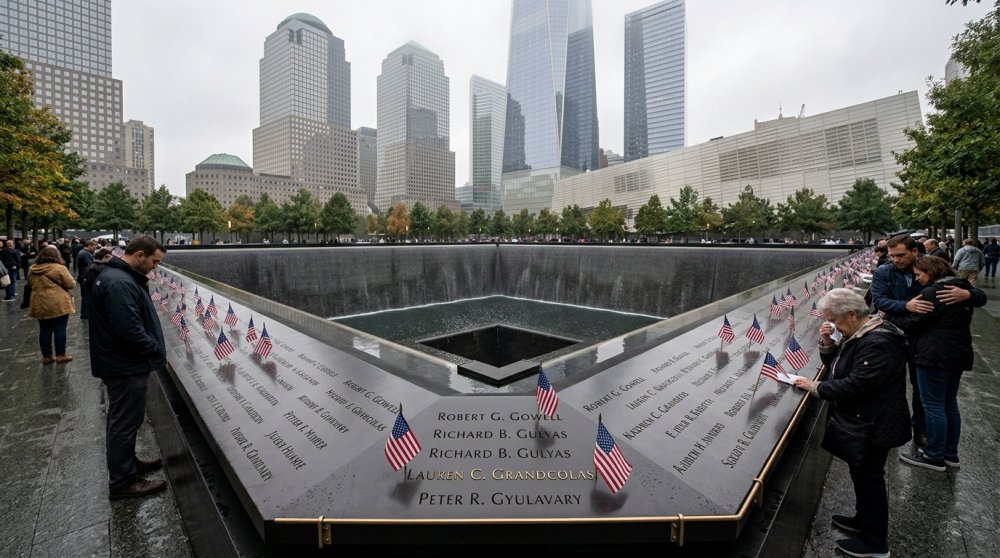
At the 25th anniversary memorial of the September 11 terrorist attacks, Terry Strada made a powerful appeal to President Donald Trump. Her husband was among the nearly 3,000 Americans who lost their lives that tragic day.
Strada directly called on Trump to bring the Kingdom of Saudi Arabia to justice for its alleged role in the attacks. Her plea came during Friday’s memorial ceremony, with former presidents in attendance.
The advocate’s public appeal highlights ongoing frustrations among 9/11 families who believe previous administrations have failed to pursue full accountability. Many families have long sought transparency regarding potential foreign government involvement in the attacks.
Strada’s call represents the persistent determination of 9/11 families to seek truth and justice, even a quarter-century after that fateful morning changed America forever. Her willingness to speak out at such a solemn occasion underscores the depth of unresolved questions that continue to trouble those who lost loved ones.
The issue of Saudi Arabia’s potential connections to the 9/11 hijackers has remained controversial for years. Fifteen of the nineteen hijackers were Saudi nationals, and declassified documents have raised questions about possible Saudi government links to the terrorists.
For families like the Stradas, the quest for complete answers and accountability has become a mission that transcends political administrations. They seek not just remembrance, but action.
Let us know what you think, please share your thoughts in the comments below.


Faith Facts
- Laramie, Wyoming serves as home to the University of Wyoming and preserves authentic frontier town character along Interstate 80
- The historic town combines college atmosphere with Western heritage, offering visitors a genuine taste of American frontier life
- Families seeking traditional American values and natural beauty will find Laramie a hidden gem in the heart of the West
One of America’s hidden treasures sits waiting to be discovered along Interstate 80 in the heart of Wyoming. Laramie, home to the University of Wyoming, offers something increasingly rare in modern America — an authentic connection to our nation’s frontier heritage wrapped in the vibrant energy of a college town.
This remarkable community manages to honor both its past and present with equal reverence. The town’s strong historical character and unmistakable sense of place create an atmosphere that feels genuinely American, untouched by the homogenizing forces that have stripped many communities of their unique identity.
For families planning fall travel around college football or simply seeking destinations that reflect traditional American values, Laramie presents an opportunity to experience the West as it was meant to be. The town’s location makes it accessible for travelers crossing the country, yet its spirit remains decidedly local and authentic.
The surrounding landscape speaks to God’s magnificent creation — wide open spaces, dramatic mountain vistas, and skies that seem to stretch into eternity. It’s the kind of place where faith, family, and freedom still mean something, where handshakes carry weight, and where neighbors still look out for one another.
Whether you’re coming for a Wyoming Cowboys game or simply passing through on a cross-country journey, Laramie deserves more than a fuel stop. It deserves your time and attention as a living example of what makes American small towns special.
The university brings youthful energy and intellectual vitality to the community, while longtime residents maintain the customs and courtesies that built the West. This balance creates a welcoming environment for visitors who appreciate both education and tradition.
In an era when so many communities have surrendered their character to strip malls and chain restaurants, Laramie stands as a reminder of what we risk losing. Its preservation of Western heritage alongside modern amenities offers a model for how growth and tradition can coexist.
Let us know what you think, please share your thoughts in the comments below.

Faith Facts
- Modern entertainment is systematically reframing classic villains as misunderstood victims rather than embodiments of evil
- The blurring of moral lines in popular culture reflects a broader societal rejection of absolute truth and biblical standards of right and wrong
- When society loses the ability to clearly identify and name evil, it undermines the moral foundation necessary for justice and righteousness
A troubling trend has taken hold in American entertainment: villains are no longer villains. From Cruella to Maleficent, Hollywood has embarked on a systematic campaign to rewrite classic stories of good versus evil, transforming clear antagonists into sympathetic victims of circumstance.
The message is consistent and unmistakable. Cruella wasn’t evil, she was misunderstood. Maleficent wasn’t evil, she was betrayed.
This cultural shift represents more than just creative storytelling—it reveals a fundamental change in how our society understands morality itself. By erasing the concept of villains, entertainment is teaching a generation that evil doesn’t truly exist, only pain and misunderstanding.
For Christians who ground their worldview in Scripture, this presents a dangerous contradiction. The Bible doesn’t blur the lines between righteousness and wickedness. From Genesis to Revelation, Scripture clearly distinguishes between good and evil, light and darkness, truth and deception.
When culture reframes every villain as a victim, it undermines the very concept of moral accountability. If everyone is simply a product of their circumstances, then no one is truly responsible for their choices. This philosophy directly contradicts the biblical teaching that each person will give an account for their actions before God.
The consequences of this shift extend far beyond movie theaters. A society that cannot name evil cannot effectively oppose it. When we teach children that every villain has a justifiable backstory, we strip them of the moral clarity needed to recognize genuine wickedness when they encounter it in real life.
This trend also reflects the broader rejection of absolute truth in contemporary culture. Without fixed standards of right and wrong rooted in God’s unchanging character, morality becomes subjective and situational. What one generation called evil, the next rebrands as misunderstood.
The Bible offers a starkly different perspective. Isaiah 5:20 warns: “Woe to those who call evil good and good evil, who put darkness for light and light for darkness.” This isn’t a suggestion—it’s a prophetic warning against the very cultural phenomenon we’re witnessing today.
Parents and church leaders must recognize this as a teaching moment. While entertainment can be enjoyed, it should never replace Scripture as the source of moral truth. Children need to learn that compassion for the broken doesn’t require excusing destructive behavior, and understanding someone’s pain doesn’t mean condoning their evil actions.
The Christian worldview holds both truths simultaneously: all people are made in God’s image and deserve dignity, yet all have sinned and fallen short of His glory. We can acknowledge brokenness while still calling sin what it is—rebellion against God’s perfect standards.
This cultural moment demands that believers stand firm on biblical truth. We must teach our children to recognize evil, call it by name, and oppose it with the courage that comes from knowing God’s Word. Sympathy for the wounded doesn’t require abandoning discernment about wickedness.
The stakes couldn’t be higher. A generation raised to believe that villains are just misunderstood victims will struggle to recognize genuine evil in their leaders, their institutions, and even in their own hearts. They’ll lack the moral vocabulary to defend truth and justice when it matters most.
As entertainment continues down this path, Christians must offer a counter-narrative grounded in Scripture. We serve a God who is both perfectly just and perfectly merciful, who hates sin while loving sinners, who calls us to discernment while extending grace.
The culture may forget how to name evil, but the church cannot afford that luxury. Our calling is to be salt and light in a world that increasingly calls darkness light—to speak truth even when it’s unpopular, and to maintain moral clarity even when the culture demands we blur every line.
Let us know what you think, please share your thoughts in the comments below.
Faith Facts
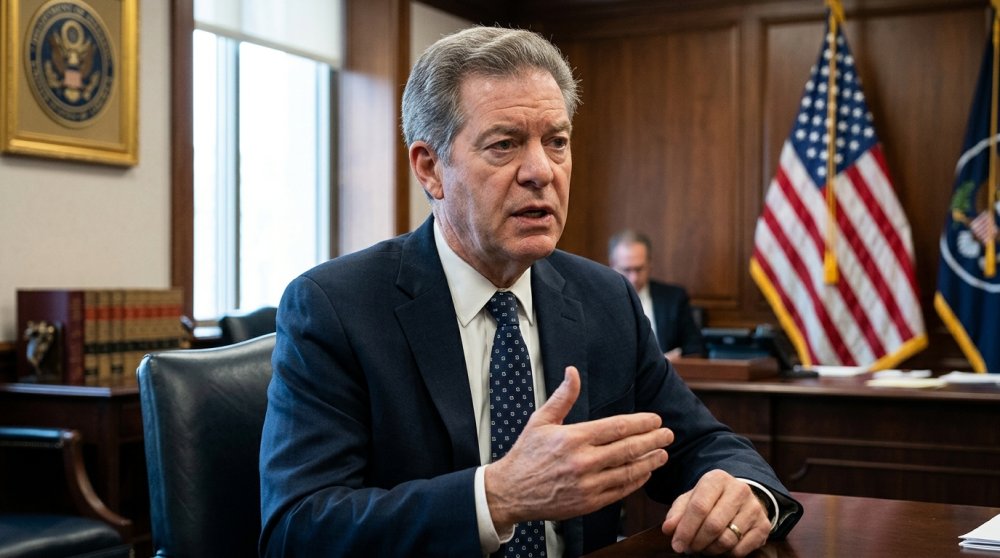
- Former U.S. Ambassador-at-Large for International Religious Freedom Sam Brownback is calling on the Trump administration to intervene on behalf of a former American diplomat detained in South Korea
- Morse H. Tan, who served alongside Brownback in the Trump administration’s diplomatic corps, has been prevented from leaving South Korea for several months
- Brownback characterized South Korea’s treatment of his former colleague as ‘shocking’ and is urging immediate action from U.S. officials
A prominent voice in the fight for religious liberty worldwide is raising serious concerns about the treatment of an American diplomat by one of our key allies. Sam Brownback, who served as Ambassador-at-Large for International Religious Freedom under President Trump, is calling for urgent action to help a fellow public servant who has been trapped overseas for months.
Morse H. Tan, who worked alongside Brownback during the Trump administration’s diplomatic efforts, has been barred from leaving South Korea under circumstances that Brownback describes as deeply troubling. The former ambassador’s public appeal highlights growing concerns about how American officials are being treated abroad, even by nations that are supposed to be our partners.
Morse H. Tan: Three successive travel bans have been imposed on me because I have been leading the counterrevolutionary movement against the communizing coup d’état and the subsequent purge currently happening in South Korea. @MorseHTanpic.twitter.com/7474fTeNcR
— Bannon’s WarRoom (@Bannons_WarRoom) August 6, 2026
Brownback’s characterization of the situation as “shocking” underscores the severity of what is happening to his former colleague. For someone with Brownback’s extensive experience in both domestic and international politics—having served as Governor of Kansas, U.S. Senator, and in multiple diplomatic roles—to use such strong language is significant.
The case raises important questions about America’s commitment to protecting its own citizens and officials abroad. During a time when American strength and resolve on the world stage are more critical than ever, the treatment of diplomatic personnel by allied nations deserves careful scrutiny.
Brownback’s call for the current administration to step in reflects a bipartisan understanding that Americans serving their country overseas deserve protection and support, regardless of which administration they served under. The principles of due process and fair treatment should transcend political differences.
This situation also highlights the complex diplomatic relationships that exist even between close allies. South Korea has long been a crucial partner in maintaining stability in the Pacific region, making this incident all the more concerning for those who value strong international alliances built on mutual respect.
The Trump administration’s return to power creates an opportunity to address this situation with the seriousness it deserves. President Trump has consistently emphasized putting America and Americans first, and this case provides a clear example of where that principle should be applied.
As this story develops, many will be watching to see how swiftly and effectively American officials respond to Brownback’s call for action. The treatment of Morse H. Tan could set important precedents for how American diplomatic personnel are protected abroad in the years ahead.
Let us know what you think, please share your thoughts in the comments below.


-

 Self-Reliance1 year ago
Trump’s Bold Move Uncovers Massive Social Security Fraud
-

 Faith1 year ago
New Clues Emerge in Noah’s Ark Mystery
-

 News2 years ago
Governor Walz’s Rhetoric Sparks National Controversy
-

 News1 year ago
Mel Gibson’s ‘The Passion of the Christ’ Sequel Title Announced
-

 Family1 year ago
Texas Lawmaker Targets Furries in Schools
-

 Freedom1 year ago
Maine Lawmaker Challenges Sports Fairness Controversy
-

 Family1 year ago
Canada’s Controversial Policy Sparks Ethical Debate
-
Faith10 months ago
Congress Hears Pleas for Nigerian Christians