
Faith
Israeli Officials Block Entry to Dozens of Christian Educators in Jerusalem

Faith Facts
- More than 70 Christian teachers and school staff members have been denied entry permits by Israeli authorities, forcing multiple Christian schools in Jerusalem to delay their start date.
- The schools, operated by the Latin Patriarchate, serve approximately 2.6 million students who would otherwise begin classes today across Israel.
- Church leaders and Christian educators are calling for immediate intervention to restore religious educational access in the Holy City.
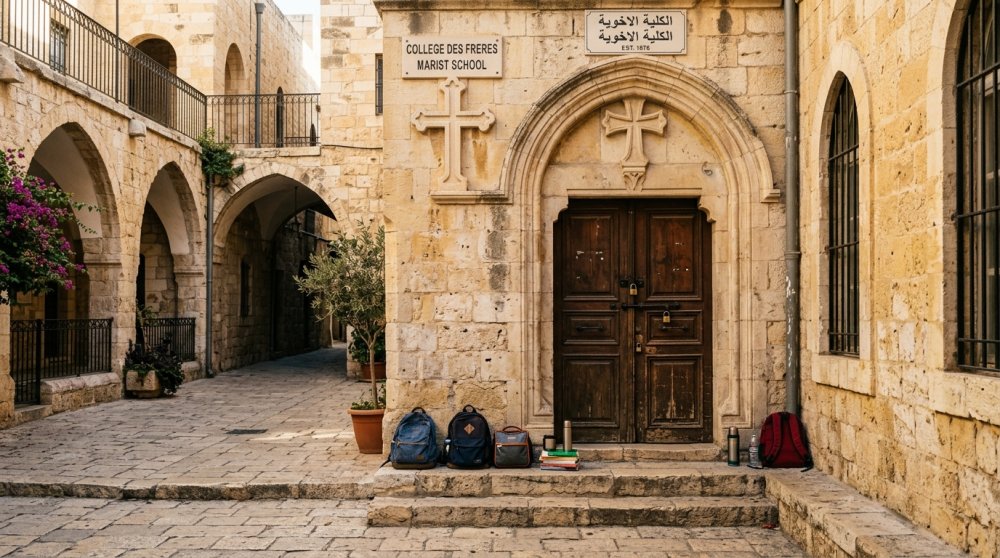
As millions of Israeli students returned to classrooms across the nation today, Christian families in Jerusalem faced closed school doors. Multiple Christian schools operating under the Latin Patriarchate have been forced to cancel classes indefinitely after Israeli government officials refused to renew entry permits for more than 70 teachers and staff members.
The permit denials have effectively shut down schools that serve thousands of Christian students in Jerusalem, leaving families scrambling for educational alternatives. While 2.6 million students nationwide began their academic year as scheduled, Christian children in the Holy City remain without access to their faith-based education.
The Latin Patriarchate schools have long served as pillars of Christian education in Jerusalem, providing instruction rooted in traditional values and biblical principles. These institutions represent centuries of Christian presence and educational ministry in the region, dating back generations.
Church authorities have expressed deep concern over the timing and scope of the permit denials. Without access to their teaching staff, school administrators have been left with no choice but to delay the start of the academic year, creating hardship for Christian families who depend on these institutions.
The situation highlights broader challenges facing Christian communities in the Middle East, where religious minorities often navigate complex bureaucratic systems. For these Jerusalem families, education grounded in Christian faith and values is not merely a preference but a fundamental expression of their religious freedom.
Parents and educators are now calling on government officials to reconsider the permit decisions and allow qualified Christian teachers to return to their classrooms. The extended closure threatens not only this academic year but the long-term viability of Christian education in one of Christianity’s most historic cities.
As this situation develops, it serves as a reminder of the ongoing need to protect religious liberty and educational access for Christian communities worldwide. The ability of parents to choose faith-based education for their children remains a cornerstone of religious freedom.
Let us know what you think, please share your thoughts in the comments below.

Faith Facts
- British authorities are distributing rape awareness leaflets to asylum seekers in an attempt to address cultural differences regarding women’s rights
- Former UK Member of Parliament Miriam Cates argues that Britain’s historic respect for women stems directly from Judeo-Christian values that shaped Western civilization
- The leaflet approach fails to address the deeper spiritual and cultural transformation needed to instill reverence for human dignity and women’s safety
Britain’s response to a troubling pattern of violence against women reveals a nation attempting to solve a spiritual crisis with a pamphlet. The approach exposes how far the West has drifted from the foundational truths that once protected the vulnerable and elevated the dignity of every person.
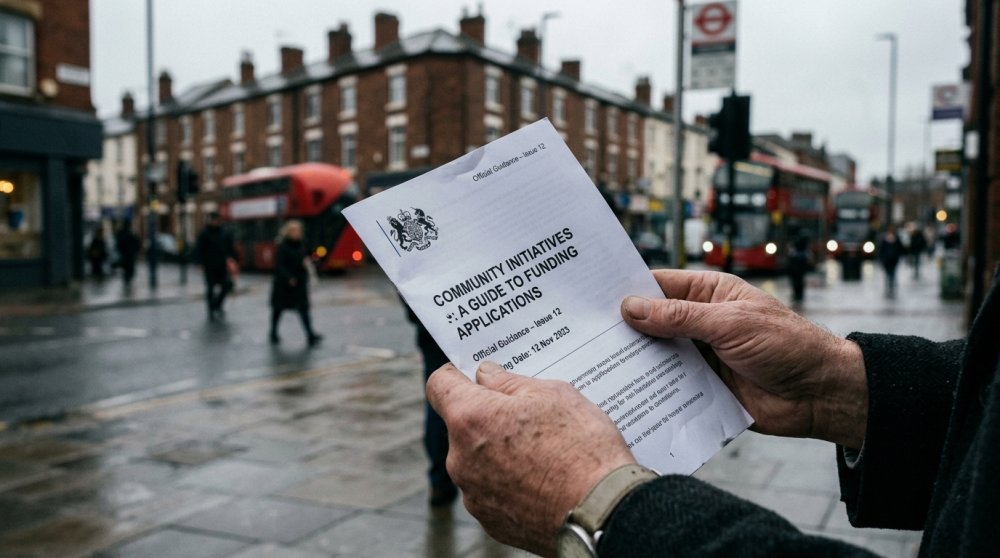
Former Conservative Member of Parliament Miriam Cates has drawn attention to the government’s distribution of rape awareness materials to asylum seekers. The booklets attempt to communicate basic principles about consent and women’s rights — concepts that Western nations long took for granted as self-evident.
“British ideas about the rights of women point to the historic Judeo-Christian values our country is founded on,” Cates explains. “Seeking to change the deep-seated cultural beliefs of some asylum seekers by issuing a booklet just won’t work.”
Her observation strikes at the heart of a contradiction plaguing modern Britain and much of Europe. Nations built on centuries of Christian moral teaching are now discovering that once you abandon the foundation, the structure begins to crumble. The rights and protections women enjoy in Western societies didn’t emerge from secular humanism or government decree — they developed organically from a biblical worldview that recognized every human being as created in the image of God.
For generations, the Christian understanding of human dignity, complemented by the virtue of chastity and the sanctity of marriage, created cultures where women could walk streets safely and expect respect as a matter of course. That safety wasn’t maintained by informational pamphlets but by shared moral conviction rooted in faith.
The leaflet strategy represents the bankruptcy of secular solutions to spiritual problems. Government officials apparently believe that individuals raised in cultures with fundamentally different views of women, sexuality, and human dignity can be reformed through a brief reading assignment. This ignores the reality that worldviews are shaped by religious and cultural formation that runs soul-deep — not by bureaucratic literature.
What made Western civilization safe for women wasn’t merely laws on paper, but the internalized moral framework Christianity provided. Men were taught from childhood that women deserved honor, protection, and respect — not because the government said so, but because Scripture commanded it and the culture reinforced it.
The current crisis illustrates what happens when a nation welcomes people from non-Christian cultures without any expectation or mechanism for genuine cultural and spiritual integration. A leaflet about consent assumes a shared moral foundation that simply does not exist across all cultures. Some worldviews do not recognize the equal dignity of women, and no government handout will change hearts shaped by entirely different religious systems.
Cates’ point is both obvious and controversial in today’s Britain: real change requires transformation at the level of belief, not just behavior modification through information. The Christian faith offers such transformation through the renewing of minds and hearts by the Gospel.
Britain once knew this. Its laws protecting women, its cultural expectations of male honor, and its relatively safe society were all fruits of Christian civilization. As that civilization has been systematically dismantled in favor of secular multiculturalism, the safety women once enjoyed has diminished accordingly.
The solution is not more leaflets but a return to the moral and spiritual framework that made Western nations beacons of human dignity in the first place. That framework is inseparable from the Christian faith that built it. You cannot maintain Christian fruits while cutting down the Christian roots.
For America, the lesson is clear. As our own nation faces similar challenges with immigration and cultural integration, we must recognize that assimilation requires more than paperwork and pamphlets. It requires a commitment to the Judeo-Christian values that made our nation a place where liberty and safety could flourish together.
The West is learning a hard lesson: once you tell people that objective moral truth doesn’t exist, that all cultures are equal, and that traditional Christian sexual ethics are outdated, you lose the ability to insist on standards of behavior. A secular society has no transcendent ground on which to stand when declaring that certain actions are absolutely wrong.
Christianity provides that ground. It declares that every person — male and female — bears the image of God and therefore possesses inherent dignity and worth. It teaches that sexual intimacy is reserved for the covenant of marriage between one man and one woman. It calls men to sacrificial love and protection, not exploitation.
These aren’t just nice ideas; they are the pillars that upheld safe, flourishing societies for centuries. Remove the pillars, and the structure collapses — no matter how many informational pamphlets you distribute in the rubble.
Let us know what you think, please share your thoughts in the comments below.

Faith Facts
- A recent discussion has emerged calling on Christian communities to examine internal issues of abuse and violence rather than focusing solely on external cultural concerns
- The conversation emphasizes the biblical call for self-examination and accountability within the Body of Christ before judging those outside the faith
- Christian leaders are being urged to ensure churches remain safe havens where biblical principles of respect, dignity, and protection for women and children are upheld
The Christian community is facing renewed calls to address serious concerns about abuse and violence within its own congregations. This conversation, while difficult, represents an important opportunity for the Church to demonstrate its commitment to biblical standards of justice, protection, and righteousness.
Scripture is clear about the Church’s responsibility to maintain holiness and protect the vulnerable within its walls. In 1 Corinthians 5:12, the Apostle Paul writes, “What business is it of mine to judge those outside the church? Are you not to judge those inside?”
The discussion centers on ensuring that Christian communities hold themselves to the highest biblical standards when it comes to protecting women, children, and all vulnerable members. Churches have a sacred duty to be places of genuine safety, where predatory behavior is not tolerated and where victims are believed, supported, and given pathways to justice and healing.
Christian conservatives have long championed the importance of strong families, biblical masculinity, and the protection of women and children. These values must begin at home and in our houses of worship. When abuse occurs within Christian settings—whether in homes, churches, or Christian institutions—it represents a profound betrayal of biblical teaching and must be confronted with the full force of church discipline and, when appropriate, legal accountability.
The Bible presents a clear model of godly manhood that stands in stark contrast to any form of abuse or violence. Christian men are called to love their wives as Christ loved the church, giving Himself up for her (Ephesians 5:25). They are instructed to treat women with honor and respect (1 Peter 3:7) and to be protectors, not predators.
Many Christian leaders and ministries have been working diligently to address these concerns. Churches across America are implementing stronger safeguarding policies, providing training for leadership, and creating cultures where abuse is not hidden or minimized. This work must continue and expand.
The challenge before the Church is to demonstrate that Christian values, when truly lived out, create the safest possible environment for women and children. This means zero tolerance for abuse, swift action when allegations arise, full cooperation with legal authorities, and genuine repentance and restoration processes that prioritize victim safety and healing.
At the same time, Christians must recognize that sin is a universal human problem that transcends culture, nationality, or religious background. The doctrine of total depravity teaches that all people, apart from God’s grace, are capable of great evil. This understanding should lead to humility, vigilance, and a commitment to biblical accountability structures.
The Church’s credibility in speaking to cultural issues depends significantly on its willingness to address sin within its own ranks. When Christians call for righteousness in society while tolerating wickedness in their congregations, they undermine their witness and bring reproach upon the name of Christ.
Moving forward, churches must balance grace with truth, mercy with justice. This means supporting victims, holding perpetrators accountable, and creating systems that prevent abuse before it happens. It also means teaching a robust biblical theology of sexuality, marriage, and human dignity that equips young people to recognize and reject abusive patterns.
Christian families and churches should be leading the way in demonstrating what healthy, God-honoring relationships look like. This includes teaching young men about biblical masculinity, sacrificial love, and self-control, while empowering young women to recognize their inherent worth as image-bearers of God.
The Gospel offers hope and transformation even in the darkest circumstances. Churches that take these issues seriously, implement biblical discipline, and create cultures of genuine safety and accountability can become beacons of hope in a broken world.
Let us know what you think, please share your thoughts in the comments below.
Faith Facts
- Christian leaders are debating whether the rise of artificial intelligence presents a new mission field for evangelism
- Millions of workers face potential displacement as AI technology advances, creating a spiritual crisis about human worth and purpose
- Biblical teaching affirms that human value comes from being made in God’s image, not from productivity or economic output
As artificial intelligence rapidly transforms the workplace and society, a crucial debate is emerging among Christian thought leaders about where the Church’s focus should be. While some advocate for engaging with AI systems themselves, others argue the real mission field is the human beings whose livelihoods and sense of purpose hang in the balance.
Michael Guillén has sparked conversation by suggesting Christians should embrace AI technology and even attempt to evangelize chatbots and artificial intelligence systems. Jay Atkins acknowledges merit in understanding and engaging with these new technologies but contends the Church is missing a far more urgent calling.
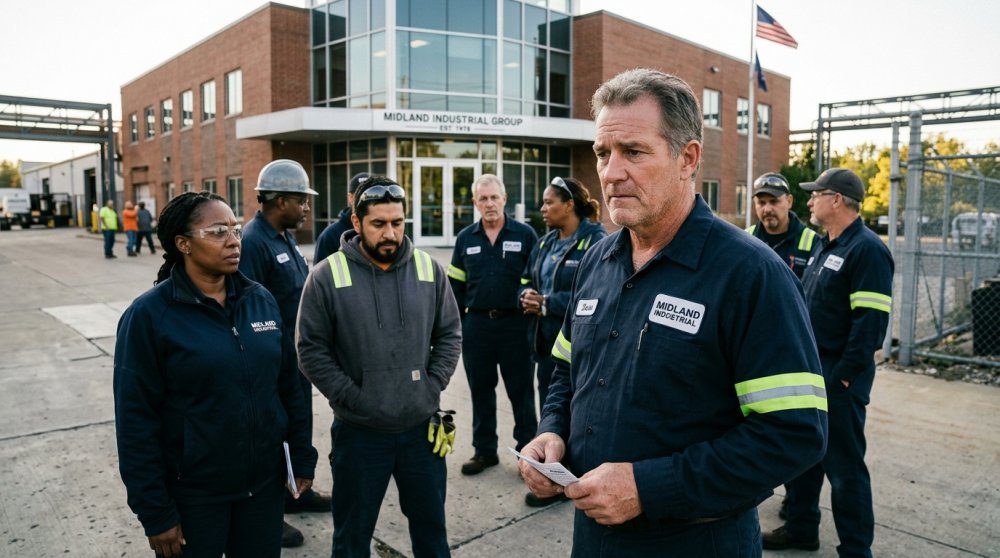
The real mission field, Atkins argues, consists of the millions of Americans who are about to face an identity crisis as automation replaces their jobs. For decades, secular culture has taught people that their value derives from their productivity, their career achievements, and their economic contributions. That foundation is about to crumble for countless workers.
“The bigger mission field may be the millions of people about to discover their worth was never about what they produce,” Atkins observes.
This presents the Church with an unprecedented evangelistic opportunity. As people lose the false foundations they’ve built their identities upon, they become more open to the eternal truth that human worth comes from being created in the image of God—not from any human accomplishment or economic utility.
The biblical worldview has always stood in stark contrast to materialistic philosophies that reduce people to their productivity. Scripture teaches that every person has inherent dignity and value because they bear the image of their Creator. This truth becomes especially relevant as technological advancement threatens to render many traditional jobs obsolete.
Rather than fearing AI or trying to convert computer programs, Christians should prepare to minister to those experiencing displacement and purposelessness. The gospel message—that God loves each person unconditionally and has a unique purpose for every life—directly addresses the crisis of meaning that many will face.
This moment calls for the Church to clearly articulate why human beings matter beyond their economic function. It’s an opportunity to demonstrate that Christianity offers answers to the deepest questions of identity and purpose that secular humanism simply cannot provide.
The debate between Guillén and Atkins reflects a broader question facing American Christians: How should people of faith respond to rapid technological change? The answer may not be choosing between engaging technology or ministering to people, but recognizing that the human need remains primary.
As AI continues to develop, churches should equip believers to offer hope and biblical truth to neighbors, coworkers, and family members who are questioning their worth. Small groups, counseling ministries, and biblical teaching on human dignity will become increasingly vital.
The coming disruption may prove to be one of the most significant ministry opportunities in generations—a chance to share the timeless truth that every person’s value rests not in what they do, but in whose image they bear.
Let us know what you think, please share your thoughts in the comments below.


-

 Self-Reliance1 year ago
Trump’s Bold Move Uncovers Massive Social Security Fraud
-

 Faith1 year ago
New Clues Emerge in Noah’s Ark Mystery
-

 News1 year ago
Governor Walz’s Rhetoric Sparks National Controversy
-

 News1 year ago
Mel Gibson’s ‘The Passion of the Christ’ Sequel Title Announced
-

 Family1 year ago
Texas Lawmaker Targets Furries in Schools
-

 Freedom1 year ago
Maine Lawmaker Challenges Sports Fairness Controversy
-

 Family1 year ago
Canada’s Controversial Policy Sparks Ethical Debate
-
Faith9 months ago
Congress Hears Pleas for Nigerian Christians