
Faith
Faith Leader Joins Forces With Hollywood Director for Biblical Epic

Faith Facts
- Pastor Samuel Rodriguez has been appointed as an ambassador for Mel Gibson’s upcoming film ‘The Resurrection of the Christ: Part One’
- Gibson’s Icon Productions made the official announcement through El Mensaje Comunicaciones
- This partnership brings together influential evangelical leadership and proven biblical filmmaking experience
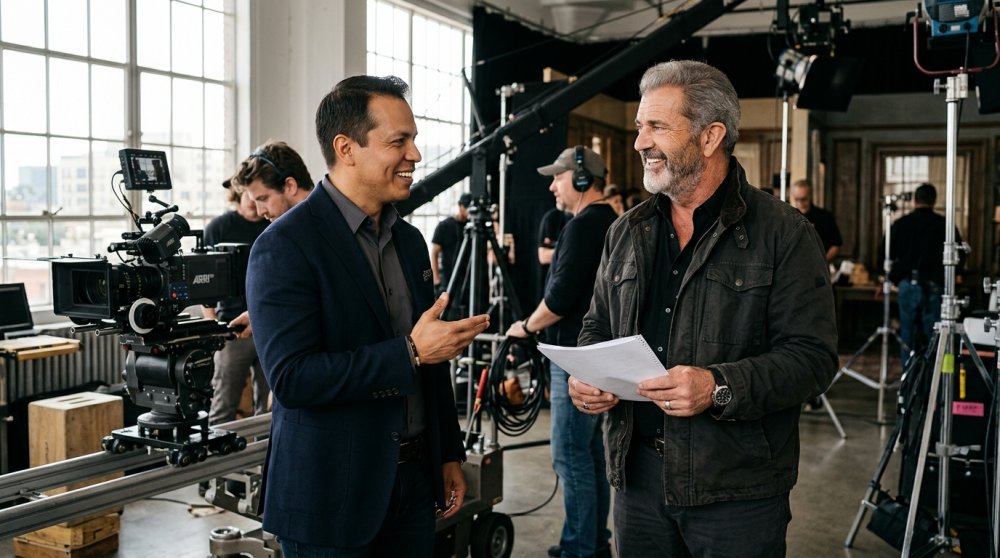
A powerful new collaboration is taking shape in Hollywood as one of America’s most prominent evangelical leaders joins forces with acclaimed director Mel Gibson for a highly anticipated biblical film project. Pastor Samuel Rodriguez has officially been named an ambassador for “The Resurrection of the Christ: Part One,” marking a significant partnership between faith leadership and the entertainment industry.
Icon Productions, Gibson’s production company, made the announcement through El Mensaje Comunicaciones. The appointment signals a strategic effort to bridge the gap between Hollywood and the Christian community for this major biblical production.
Rodriguez, who serves as president of the National Hispanic Christian Leadership Conference, brings substantial influence within evangelical circles. His involvement as an ambassador suggests the film will have strong support among faith-based audiences when it releases.
Gibson previously demonstrated his ability to create compelling biblical cinema with “The Passion of the Christ,” which became a cultural phenomenon and one of the highest-grossing religious films in history. That 2004 film resonated deeply with Christian audiences and sparked nationwide conversations about faith.
The collaboration between Rodriguez and Gibson represents more than just promotional strategy. It reflects a growing recognition in Hollywood that authentic faith stories require genuine input from faith leaders who understand the spiritual significance of biblical narratives.
By appointing Rodriguez as an ambassador, Icon Productions is ensuring that evangelical perspectives are represented throughout the film’s journey to audiences. This approach stands in contrast to Hollywood’s frequent mishandling of religious themes and demonstrates respect for the Christian community.
“The Resurrection of the Christ: Part One” will focus on the most pivotal event in Christian history—the resurrection of Jesus Christ. This subject matter holds eternal significance for believers and represents the cornerstone of Christian faith.
Details about the film’s production timeline and release date have not been fully disclosed. However, the involvement of both Gibson and Rodriguez has already generated considerable interest among Christian communities nationwide.
The partnership also highlights the importance of faith leaders engaging with culture and media. Rodriguez’s ambassadorship provides an opportunity to ensure biblical accuracy and theological integrity in how this sacred story is presented to millions of viewers.
Gibson’s return to biblical filmmaking has been long anticipated by Christian audiences who appreciated his previous work. His commitment to producing “The Resurrection of the Christ” demonstrates that Hollywood can still produce content that honors Scripture and respects Christian beliefs.
Let us know what you think, please share your thoughts in the comments below.

Faith Facts
- Muslim residents in East Java Province pressured local officials to shut down a Christian church building
- Officials cited potential “social tension” as justification for halting worship services
- The incident highlights ongoing religious freedom challenges faced by Christians in Indonesia
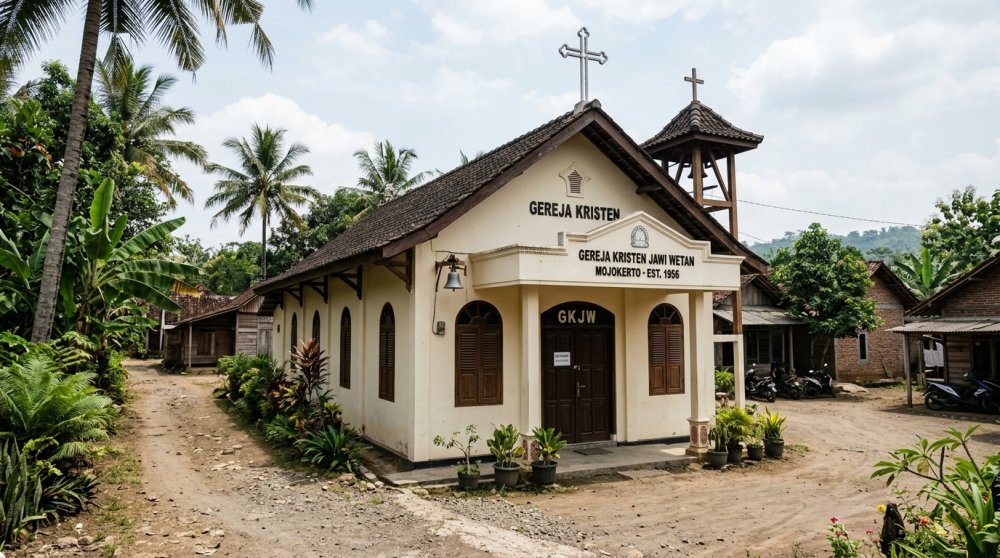
Christians in a village in East Java Province, Indonesia have been forced to stop using their own church building after Muslim residents pressured local officials to shut it down. The disturbing incident underscores the mounting challenges believers face in the world’s largest Muslim-majority nation.
According to sources familiar with the situation, Muslim villagers claimed that Christian worship services in the building could cause “social tension” in the community. Rather than protecting the religious freedom of the Christian minority, local officials capitulated to the pressure and ordered the church to cease operations.
The closure represents yet another example of how Christian communities in Indonesia face systematic barriers to practicing their faith freely. Despite constitutional protections for religious liberty, local authorities frequently side with majority Muslim populations when tensions arise over church buildings and worship activities.
Indonesia’s Christians, who make up roughly 10 percent of the nation’s population, have long struggled to obtain permits for church buildings and maintain existing places of worship. Many congregations are forced to meet in homes or rented spaces due to bureaucratic obstacles and community opposition orchestrated by Islamic groups.
Religious freedom advocates have repeatedly called attention to Indonesia’s troubling pattern of church closures and restrictions on Christian worship. The situation in East Java Province serves as a reminder of the persecution believers endure in regions where they are religious minorities.
This latest incident should concern all Americans who value religious liberty as a fundamental human right. When governments bow to pressure from religious majorities and silence minority voices, tyranny prevails over freedom.
Let us know what you think, please share your thoughts in the comments below.
Faith Facts
- U.S. Congress members have called on the Pakistani government to protect an 18-year-old Christian woman allegedly abducted and forcibly converted to Islam
- The case highlights ongoing persecution of religious minorities in Pakistan, where forced conversions and abductions of Christian women remain a serious concern
- American lawmakers are using diplomatic pressure to defend religious freedom abroad and protect vulnerable believers
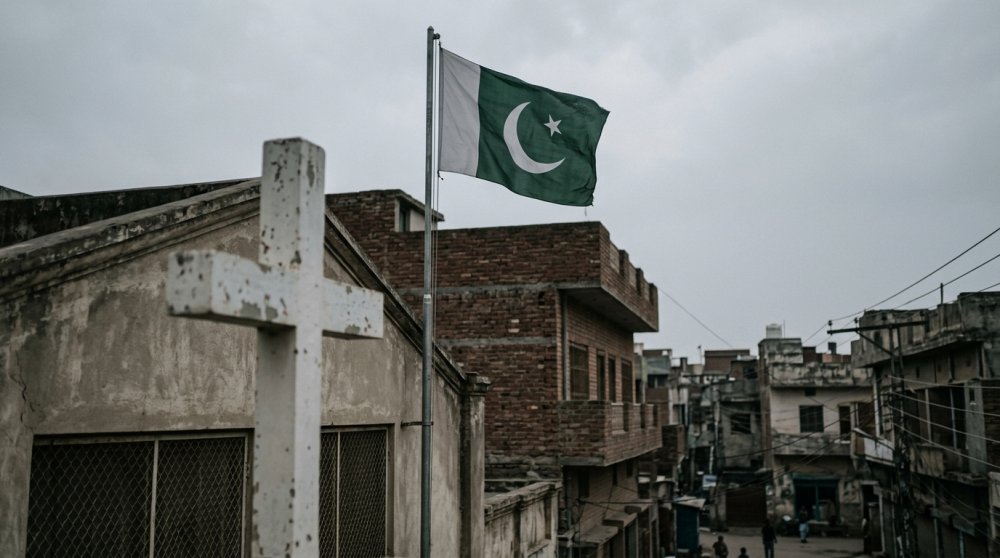
Members of the United States Congress are taking a stand for religious liberty overseas, pressing Pakistan’s government to safeguard a young Christian woman whose family reports she was kidnapped and coerced into converting to Islam. The intervention underscores America’s commitment to defending persecuted Christians worldwide.
The 18-year-old woman’s case has drawn international attention as her family maintains she was forcibly taken and pressured to abandon her Christian faith. Such incidents reveal the dangerous reality faced by religious minorities in Pakistan, where Christians comprise less than two percent of the population.
Congressional action demonstrates that American leaders recognize the duty to speak for those who cannot speak for themselves. The pressure from U.S. lawmakers sends a clear message that the persecution of Christians will not be ignored by the international community.
Pakistan has long struggled with protecting religious minorities, particularly Christian and Hindu women who face kidnapping, forced marriage, and coerced conversions. These crimes frequently go unpunished, leaving families devastated and communities living in fear.
The congressional appeal for protection reflects traditional American values of religious freedom and human dignity. When government officials use their platform to defend the vulnerable and oppressed, they honor both biblical principles and the founding ideals of our nation.
This case serves as a reminder that persecution of Christians remains a global crisis demanding attention and action. Believers in America have a responsibility to pray for and advocate on behalf of brothers and sisters in Christ facing persecution around the world.
Let us know what you think, please share your thoughts in the comments below.
Faith Facts
- The Holy Land is a living homeland shared by peoples with distinct histories, identities, and hopes—not just a collection of ancient sacred sites
- Christians worldwide can learn directly from believers whose families have lived in the Holy Land for millennia
- Understanding the modern reality of the Holy Land requires listening to indigenous Christian voices who continue living out their faith there today
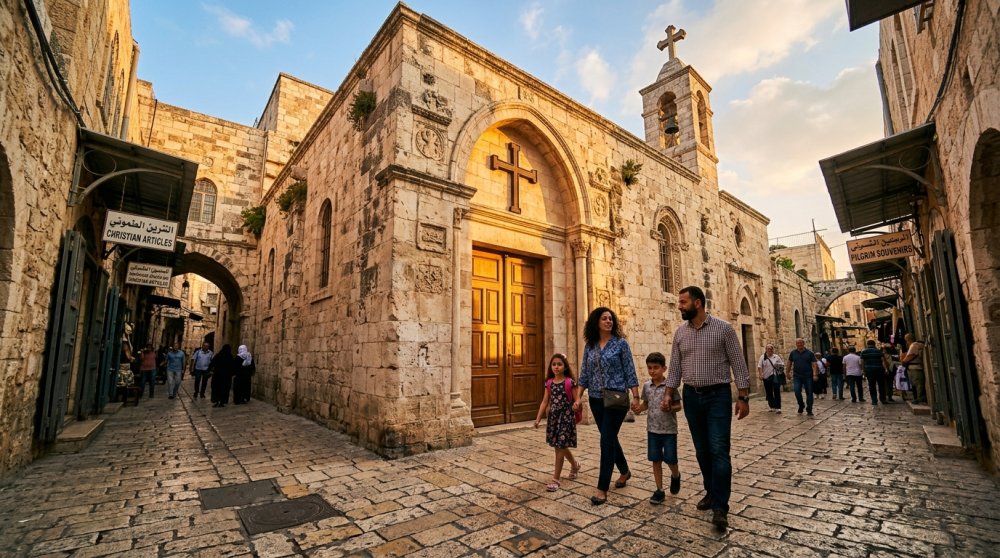
The Holy Land is not merely a collection of sacred sites or ancient stories. It is not an abstract concept but a living homeland shared by peoples carrying different histories, identities, wounds, and hopes.
Christians around the world don’t need to imagine what the Holy Land is like—we can learn from those who live there today. For believers who grow up reading Scripture and studying the history of our faith, it’s easy to think of the Holy Land as something frozen in time, a place preserved in the pages of the Bible.
But the truth is far richer and more complex. The Holy Land continues to be home to vibrant Christian communities whose families have maintained their witness for generations, even through tremendous hardship.
These indigenous Christians carry forward a living testimony that bridges the ancient world of Scripture and the modern challenges of faith in a contested region. Their perspective offers Western Christians a corrective lens—one that sees beyond tourism and prophecy charts to the flesh-and-blood reality of discipleship in the land where Jesus walked.
Understanding the Holy Land today means recognizing it as more than a backdrop for biblical events. It means honoring the Christians who have never left, who pray in the same languages spoken in the early church, and who navigate daily the tensions between preserving heritage and surviving in a rapidly changing Middle East.
For American Christians especially, many of whom support policies affecting the region, this understanding carries real-world implications. The decisions made in Washington and Jerusalem directly impact our brothers and sisters in Christ who call the Holy Land home.
These believers don’t have the luxury of viewing the Holy Land through a purely theological or prophetic framework. For them, it’s where they raise their children, run businesses, worship in centuries-old churches, and try to be faithful witnesses in a land sacred to multiple faiths.
Their stories challenge us to expand our understanding beyond pilgrimage sites and eschatological timelines. They invite us into a deeper solidarity—one that listens before it speaks, learns before it teaches, and recognizes that God’s work in the Holy Land didn’t end with the book of Acts.
The ancient stones still stand, but living stones—believers filled with the Holy Spirit—continue to build the Church in the very place where it was born. Their perseverance, their witness, and their wisdom offer Western Christians an invaluable gift: the chance to see the Holy Land not just as it was, but as it is.
For those seeking to truly understand this sacred region, the starting point is clear: listen to the voices of those whose families have lived there for millennia, whose faith has endured empires and upheavals, and whose testimony connects us directly to the unbroken chain of Christian witness in the land of our Savior.
Let us know what you think, please share your thoughts in the comments below.


-

 Self-Reliance1 year ago
Trump’s Bold Move Uncovers Massive Social Security Fraud
-

 Faith1 year ago
New Clues Emerge in Noah’s Ark Mystery
-

 News1 year ago
Governor Walz’s Rhetoric Sparks National Controversy
-

 News1 year ago
Mel Gibson’s ‘The Passion of the Christ’ Sequel Title Announced
-

 Family1 year ago
Texas Lawmaker Targets Furries in Schools
-

 Freedom1 year ago
Maine Lawmaker Challenges Sports Fairness Controversy
-

 Family1 year ago
Canada’s Controversial Policy Sparks Ethical Debate
-
Faith9 months ago
Congress Hears Pleas for Nigerian Christians