
Faith
Massive Christian Revival Sweeps Argentina’s Capital After Nearly a Decade


Faith Facts
- Tens of thousands gathered in Buenos Aires for the March for Jesus after a nine-year absence from the city
- The event united Christian families, leaders, and delegations from multiple provinces and nations in prayer and worship
- The return of this historic Christian gathering signals a renewed hunger for faith and public witness in Argentina
A powerful display of Christian unity filled the streets of Buenos Aires on Sunday as tens of thousands of believers returned for the March for Jesus, an event absent from Argentina’s capital for nearly a decade. The massive gathering demonstrated the enduring strength of Christian faith in South America and the growing desire among believers to publicly proclaim their devotion to Jesus Christ.
Organizers reported that the event drew families, Christian leaders, and delegations from various provinces across Argentina as well as international participants. The atmosphere was marked by fervent prayer, worship, and a spirit of revival that transcended denominational boundaries.
The nine-year gap since the last March for Jesus in Buenos Aires makes this year’s return particularly significant for Argentina’s Christian community. The event represents not only a celebration of faith but also a statement of resilience and commitment to Christian values in an increasingly secular world.
Christian gatherings of this magnitude serve as powerful reminders that faith remains a cornerstone of society, bringing together diverse communities under the banner of shared belief. The March for Jesus has historically provided believers an opportunity to publicly witness their faith, encourage one another, and demonstrate the transformative power of the Gospel in their lives and communities.
The success of this year’s event in Buenos Aires may signal a broader spiritual awakening taking place across Latin America, where Christian churches have experienced significant growth despite cultural and political challenges. Such public expressions of faith offer hope and inspiration to believers worldwide who seek to maintain their Christian witness in the public square.
As Argentina faces economic and social challenges, the massive turnout for the March for Jesus demonstrates that many citizens are looking to faith as a source of hope, guidance, and community strength. The event’s return after such a long absence underscores the enduring importance of religious freedom and the vital role Christianity plays in shaping the moral and spiritual foundation of nations.
Let us know what you think, please share your thoughts in the comments below.


Faith Facts
- AI-powered beauty filters are being used by hundreds of millions worldwide, reshaping perceptions of human appearance
- These algorithmic tools raise critical questions about who defines beauty standards and what it means to be made in God’s image
- The gospel calls believers to recognize the inherent dignity and worth of every person as God created them
When Americans open a retouching app on their phones, they should pause and ask a fundamental question: who decides what my face should look like? For millions, the answer is increasingly an algorithm — and the spiritual and cultural implications reach far deeper than simple vanity.
Artificial Intelligence-powered beauty filter applications have attracted hundreds of millions of users worldwide. This technological trend represents a troubling development for a society already struggling with issues of identity, self-worth, and the understanding of human dignity.
These apps don’t just smooth skin or adjust lighting. They fundamentally alter facial features based on programmed standards of beauty — standards created by programmers and shaped by cultural forces that often stand in direct opposition to biblical truth.
The issue strikes at the heart of what Christians understand about humanity. Scripture teaches that every person is crafted in the image of God, with inherent worth and dignity that comes not from symmetry or smoothness, but from divine design.
When we allow algorithms to redefine our appearance, we’re tacitly accepting that God’s original design needs correction. We’re submitting our understanding of beauty and worth to the judgment of code written by fallible humans with their own biases and commercial interests.
The gospel presents a radically different image — one where value comes from being known and loved by the Creator, not from conforming to digitally-generated ideals. Christ came to redeem real people with real faces, not airbrushed avatars.
For young people especially, these filters create unrealistic standards and fuel comparison, anxiety, and dissatisfaction with their God-given appearance. The constant exposure to algorithmically “perfected” faces distorts their understanding of normal, healthy human features.
This technology also raises troubling questions about authenticity and truth in an age already marked by deception and image manipulation. When digital alterations become the norm, we lose our connection to reality and to one another as we truly are.
Christian families should approach this technology with wisdom and discernment. While technology itself is neutral, the values embedded in these applications often conflict with biblical teaching about identity, contentment, and the goodness of God’s creation.
The answer isn’t necessarily to reject all photo editing, but to recognize the spiritual danger in allowing artificial intelligence to reshape our understanding of human beauty and worth. We must teach the next generation that their value is secured in Christ, not in filters.
Let us know what you think, please share your thoughts in the comments below.
Faith Facts
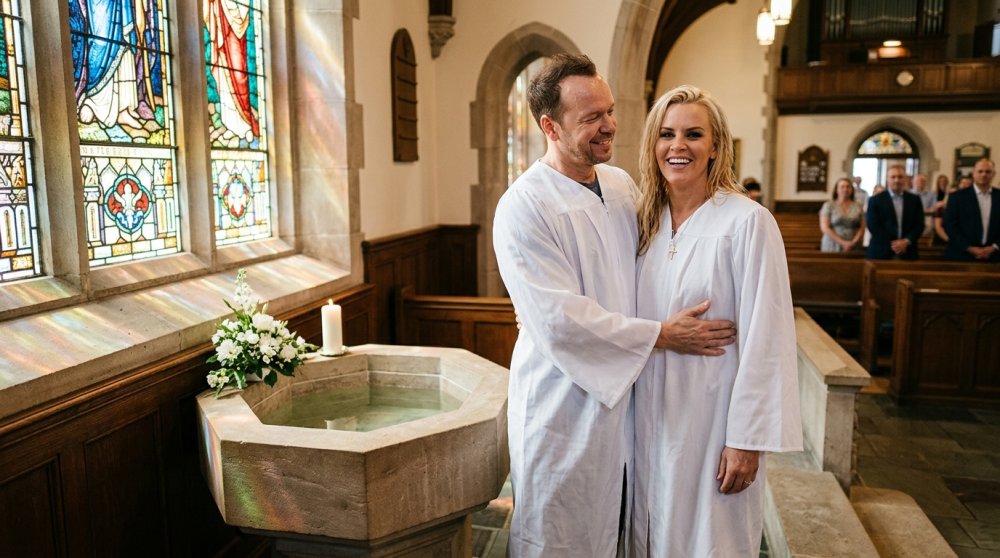
- Donnie Wahlberg and Jenny McCarthy were baptized following their public decision to surrender their lives to Jesus Christ
- The celebrity couple has been openly sharing how their faith transformation has changed their priorities and perspectives
- Their baptism represents a public declaration of their commitment to following Christ
In a powerful testimony to the transformative power of faith, Donnie Wahlberg and his wife, Jenny McCarthy, have taken a significant step in their spiritual journey by being baptized. This decision comes after the couple has spent recent months openly discussing how surrendering their lives to Jesus Christ has fundamentally changed their faith and priorities.
The baptism marks a public declaration of their commitment to Christ and serves as an inspiring example to their fans and followers. For believers, baptism represents an outward sign of an inward transformation — a symbolic death to the old self and resurrection to new life in Christ.
Wahlberg and McCarthy’s willingness to share their faith journey publicly demonstrates the courage it takes to stand for Christian values in Hollywood. In an industry often hostile to traditional faith, their openness about surrendering to Jesus sends a powerful message about the reality of God’s work in people’s lives.
The couple’s testimony reflects the biblical truth that no one is beyond the reach of God’s grace. Their transformation reminds us that authentic faith isn’t about perfection, but about surrendering control and allowing Christ to work in our hearts and lives.
As more public figures speak openly about their faith in Christ, it creates opportunities for meaningful conversations about the Gospel. The decision to be baptized is deeply personal, yet when shared publicly, it can inspire others to examine their own relationship with God.
This public profession of faith comes at a time when America desperately needs strong Christian witnesses in every sphere of influence, including entertainment. Believers should celebrate when anyone — celebrity or not — makes the decision to follow Christ and be baptized in obedience to Scripture.
Let us know what you think, please share your thoughts in the comments below.
Faith Facts
- An Anglican Church in North America (ACNA) court unanimously found Bishop Derek Jones guilty of misconduct charges related to his leadership of a breakaway chaplain organization.
- Jones oversees Redeeming Grace Anglican Church International and formed a separate chaplain group after disputes with ACNA leadership over theological direction and oversight.
- The ruling marks a significant development in ongoing tensions within the Anglican communion over church governance and accountability structures.
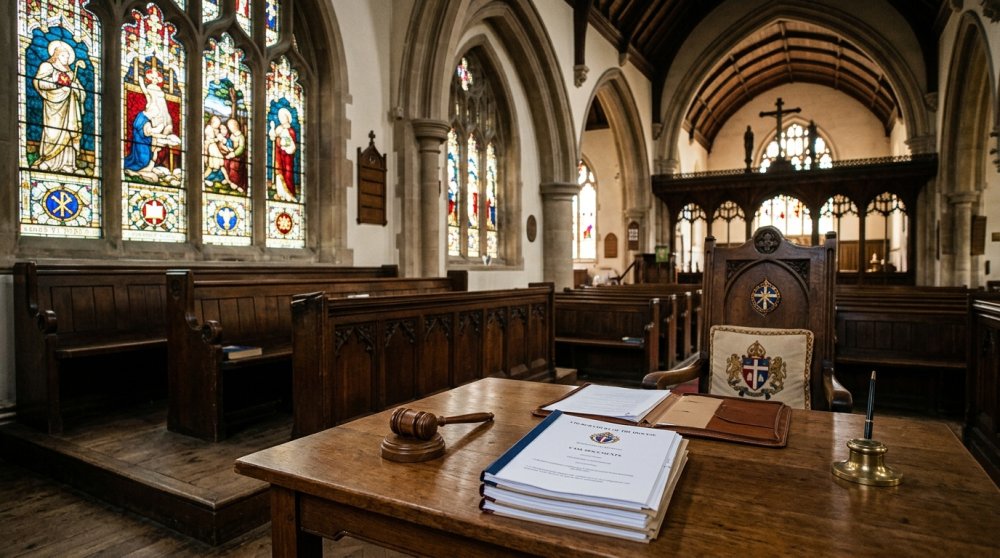
An Anglican Church in North America court has issued a unanimous guilty verdict against a bishop leading a breakaway chaplain organization, finding him guilty of misconduct in a case that highlights deepening divisions within the denomination.
Bishop Derek Jones, who oversees the breakaway chaplain group, was convicted following proceedings that examined his conduct and leadership decisions. The court’s decision came after careful review of evidence presented regarding his actions and their alignment with ACNA’s standards and expectations for clergy leadership.
The case centers on Jones’s formation and oversight of a separate chaplain organization that operates outside the formal structures of ACNA. According to church officials, the breakaway group was established following disagreements over theological direction and the proper channels of ecclesiastical authority.
ACNA, formed in 2009 as a theologically conservative alternative to the Episcopal Church, has maintained strict standards for clergy conduct and church governance. The denomination has emphasized biblical orthodoxy and traditional Christian teaching, particularly on issues of marriage, sexuality, and scriptural authority.
The misconduct charges reflect concerns within ACNA leadership about maintaining proper accountability and unity within the denomination’s structures. Church courts play an essential role in upholding standards and ensuring that those in positions of spiritual authority operate within established guidelines.
Jones’s leadership of Redeeming Grace Anglican Church International has been characterized by its independent approach to ministry and chaplaincy work. The separate chaplain group he formed has operated with its own governance structure, raising questions about proper oversight and alignment with broader ACNA polity.
The unanimous nature of the guilty verdict underscores the seriousness with which the court viewed the charges. In ecclesiastical court proceedings, unanimity often reflects clear evidence and strong consensus regarding violations of church standards.
This case arrives at a time when many traditional Christian denominations are grappling with questions of authority, accountability, and proper church governance. The tension between local church autonomy and denominational oversight remains a ongoing challenge for many faith communities seeking to maintain both unity and doctrinal integrity.
ACNA’s response to this situation demonstrates the denomination’s commitment to maintaining standards for clergy conduct and proper ecclesiastical procedure. The court’s decision will likely have implications for how similar cases are handled in the future and may influence discussions about the boundaries of acceptable ministerial independence.
For supporters of traditional church governance, the ruling represents an important affirmation of accountability structures within Christian institutions. It reinforces the principle that spiritual leadership carries with it responsibilities to operate within established frameworks of authority and oversight.
The verdict also raises questions about the future of the breakaway chaplain organization and Jones’s continued role within ACNA structures. Disciplinary measures following misconduct convictions can vary widely depending on the specific nature of the violations and the recommendations of the ecclesiastical court.
As American Christianity continues to navigate questions of denominational authority and local church autonomy, cases like this one highlight the ongoing importance of clear standards and accountability mechanisms. For many believers, proper church governance is essential to maintaining both theological fidelity and organizational integrity.
Let us know what you think, please share your thoughts in the comments below.


-

 Self-Reliance1 year ago
Trump’s Bold Move Uncovers Massive Social Security Fraud
-

 Faith1 year ago
New Clues Emerge in Noah’s Ark Mystery
-

 News1 year ago
Governor Walz’s Rhetoric Sparks National Controversy
-

 News1 year ago
Mel Gibson’s ‘The Passion of the Christ’ Sequel Title Announced
-

 Family1 year ago
Texas Lawmaker Targets Furries in Schools
-

 Freedom1 year ago
Maine Lawmaker Challenges Sports Fairness Controversy
-

 Family1 year ago
Canada’s Controversial Policy Sparks Ethical Debate
-
Faith9 months ago
Congress Hears Pleas for Nigerian Christians