
Faith
Congo Churches Step Up As Ebola Battle Intensifies

Faith Facts
- Churches in eastern Congo are equipping pastors and community leaders with critical Ebola prevention training as the deadly outbreak continues
- Christian health partners are expanding outreach efforts across the region to combat one of the deadliest Ebola crises in recent history
- Faith communities are serving as trusted frontline responders, bringing lifesaving health information directly to vulnerable populations
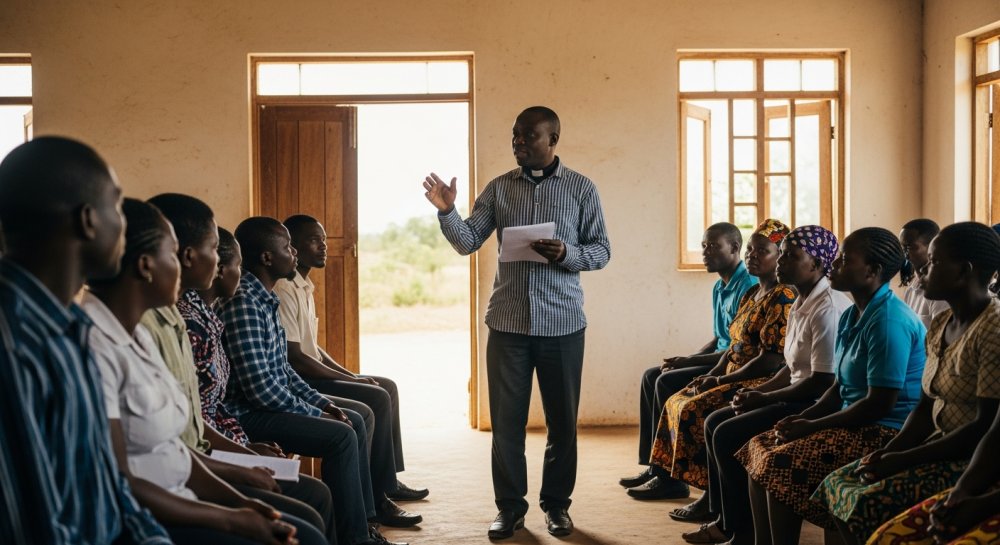
In the face of one of the most devastating disease outbreaks in recent memory, churches across eastern Democratic Republic of the Congo are answering the call to serve their communities. Pastors and local Christian leaders are being trained and equipped with vital health information that could save countless lives as the Ebola crisis continues to claim victims across the region.
The response demonstrates the essential role that faith-based organizations play in times of crisis, particularly in areas where trust in governmental institutions may be limited. Churches have historically served as beacons of hope and healing in their communities, and this outbreak is proving no exception.
Christian health partners are significantly expanding their outreach efforts throughout eastern Congo, recognizing that the battle against Ebola requires not just medical intervention but also community education and trust-building. These faith-based initiatives are reaching into villages and neighborhoods where traditional healthcare messaging may face resistance or simply fail to penetrate.
The deadly Ebola outbreak has tested the resilience and faith of communities across the region. By mobilizing pastors and church leaders as health educators and advocates, Christian organizations are leveraging existing relationships and trust networks to spread critical prevention information rapidly and effectively.
Local congregations are becoming centers for health education, where accurate information about transmission, symptoms, and prevention measures can be shared in culturally appropriate and spiritually grounded ways. This approach recognizes that sustainable public health victories require partnerships with those who already hold the trust and respect of the people they serve.
The church’s response to this crisis reflects the biblical mandate to care for the sick and vulnerable. As the Ebola outbreak continues to threaten lives and destabilize communities, these faith-driven initiatives represent both practical compassion and spiritual obedience in action.
The effectiveness of church-based health outreach in previous epidemics has been well-documented, making this expansion of faith-community partnerships a strategic and potentially lifesaving approach. By combining medical knowledge with pastoral care and spiritual support, these programs address both the physical and emotional toll that epidemic disease takes on affected populations.
Let us know what you think, please share your thoughts in the comments below.

Faith Facts
- American missionary pilot has been released after being held captive since October in Niger
- The unnamed pilot served a faith-based aviation mission before his abduction
- Prayer networks mobilized for months seeking his safe return through divine intervention
An American missionary pilot who was abducted last October while serving in Niger has been released from captivity, according to reports. The faithful servant of Christ had been held for several months before his release, bringing relief to family, friends, and prayer warriors who have been interceding on his behalf.
The pilot’s identity has not been publicly disclosed at this time. He was taken captive while performing missionary aviation work, a vital service that supports Christian missions in remote and challenging regions of the African nation.
Niger, a predominantly Muslim country in West Africa, has faced increasing security challenges in recent years from Islamic terrorist groups operating in the region. Christian missionaries serving there demonstrate remarkable courage and commitment to sharing the Gospel despite significant personal risk.
The circumstances surrounding the pilot’s release remain unclear, though prayers from believers around the world have been constant since news of his abduction first emerged. Christian aviation ministries provide essential support for humanitarian and evangelistic work in areas with limited infrastructure, often putting pilots in harm’s way for the sake of the Gospel.
This case highlights the ongoing persecution and danger faced by Christian missionaries worldwide who answer God’s call to serve in difficult fields. American believers continue to support missions work while praying for the safety and success of those on the front lines of spreading Christ’s message.
The pilot’s safe return serves as a testimony to the power of faithful prayer and God’s protection over His servants. Details about his condition and future plans have not been released as he reunites with loved ones.
Let us know what you think, please share your thoughts in the comments below.
Faith Facts
- Nearly 9 million people downloaded the Gospel of John digitally in just nine months
- Over 750 million internet searches led seekers to digital Bible resources
- The Pocket Testament League reports unprecedented global reach through online ministry
In a remarkable demonstration of how technology can advance the Great Commission, millions of people around the world have turned to digital platforms in search of God’s Word. New data reveals that the hunger for Scripture remains strong in our modern age, with countless souls seeking truth online.
The Pocket Testament League announced Tuesday that their digital outreach efforts have connected with seekers on an unprecedented scale. In a span of just nine months, nearly 9 million individuals downloaded a digital copy of the Gospel of John after conducting online searches for spiritual truth.
The organization reported that more than 750 million internet searches directed people to their digital Bible resources during this period. This staggering number reflects the deep spiritual yearning present in our world today, as individuals from diverse backgrounds seek answers to life’s most important questions.
This digital harvest field demonstrates that while the methods of sharing the Gospel may evolve with technology, the message itself remains as powerful and relevant as ever. The accessibility of Scripture through online platforms has removed barriers that once prevented many from encountering God’s Word.
The success of this digital ministry initiative underscores the importance of meeting people where they are in today’s connected world. As believers, we are called to use every tool at our disposal to share the good news of Jesus Christ, and the internet has proven to be fertile ground for evangelism.
The Gospel of John, often recommended as an entry point for new believers, presents the life and teachings of Jesus Christ in a way that speaks directly to seekers. Its availability in digital format ensures that anyone with an internet connection can access this life-changing message at any time.
This outreach success reminds us that God’s Word does not return void. Whether delivered through traditional printed copies or modern digital downloads, Scripture continues to transform lives and draw people into relationship with their Creator.
Let us know what you think, please share your thoughts in the comments below.
Faith Facts
- Biblical idolatry rarely involves abandoning God — it typically means adding something alongside Him that gradually takes His place in our hearts and priorities.
- Many Christians unknowingly worship their businesses, careers, or ambitions while maintaining outward religious observance, following the same pattern seen throughout Scripture.
- True worship is revealed not by what we profess with our lips, but by where we invest our time, energy, and deepest affections.
For twenty years, I believed I was walking faithfully with the Lord. I attended church, prayed before meals, and considered myself a committed Christian. Yet all the while, an idol sat enthroned in the center of my life — and I never saw it for what it was.
The idol was my business. Not in the sense that I consciously chose it over God, but in the far more subtle and dangerous way that idolatry actually works.
I had convinced myself I was safe from such spiritual compromise. After all, I hadn’t turned my back on God or embraced some false religion. But that’s precisely the deception. Idolatry in Scripture is almost never a man who abandons God completely. It’s a man who adds — who places something alongside the Lord and gradually allows it to consume what rightfully belongs to Him alone.
The children of Israel didn’t typically renounce Yahweh outright. They built altars to Baal while still claiming allegiance to the God of Abraham. They hedged their bets, divided their devotion, and called it wisdom. And God called it adultery.
My business became that competing altar. The hours I poured into it, the mental energy it demanded, the identity I derived from it — these weren’t merely the fruits of diligent stewardship. They were symptoms of misplaced worship.
I told myself I was providing for my family, building something of value, exercising the talents God had given me. And on the surface, those justifications held weight. But underneath, the truth was more uncomfortable: my business had become the organizing principle of my life. It determined my schedule, shaped my decisions, and occupied the throne room of my heart.
When business was thriving, I felt secure and significant. When challenges arose, anxiety followed. My emotional and spiritual state rose and fell with profit margins and client feedback. These weren’t the responses of a man whose security rested in Christ. They were the responses of a worshiper bowing before an idol.
The danger of this kind of idolatry is its respectability. No one questions the Christian businessman who works hard and builds something successful. The church celebrates it. Society rewards it. But God sees the heart, and He recognizes when our good gifts become our functional gods.
What finally exposed my idolatry wasn’t a dramatic crisis or a prophetic rebuke. It was the quiet, persistent voice of the Holy Spirit asking uncomfortable questions: Why do you think about your business more than you think about Me? Why does your security depend on quarterly results rather than My promises? Why are you more passionate about your company’s mission than about My kingdom?
These questions didn’t come with condemnation, but with invitation — an invitation to return to first things, to dethrone the idol, and to restore God to His rightful place as the supreme love and ultimate priority of my life.
Repentance meant more than feeling sorry or making small adjustments. It required a fundamental reordering of my loves. It meant learning to hold my business with an open hand, to view it as a stewardship rather than a source of identity, and to find my satisfaction in Christ rather than in earthly success.
The process hasn’t been easy or quick. Old habits of heart die hard, and the temptation to return to familiar idols remains strong. But the freedom that comes from proper worship — from loving God above all else and keeping everything else in its proper place — is worth every uncomfortable moment of surrender.
If you’re reading this and recognizing similar patterns in your own life, know that you’re not alone. The idol might not be a business. It might be a career, a relationship, a hobby, or a dream. But whatever form it takes, the solution is the same: honest examination, genuine repentance, and deliberate reordering of your affections toward the only One worthy of your ultimate devotion.
Jesus didn’t call us to balance our worship between Him and our ambitions. He called us to seek first the kingdom of God, trusting that everything else would find its proper place in the light of that supreme priority.
Twenty years is a long time to worship the wrong thing. But God’s grace is sufficient, His mercies are new every morning, and it’s never too late to return to your first love.
Let us know what you think, please share your thoughts in the comments below.
-

 Self-Reliance1 year ago
Trump’s Bold Move Uncovers Massive Social Security Fraud
-

 Faith1 year ago
New Clues Emerge in Noah’s Ark Mystery
-

 News1 year ago
Governor Walz’s Rhetoric Sparks National Controversy
-

 News1 year ago
Mel Gibson’s ‘The Passion of the Christ’ Sequel Title Announced
-

 Family1 year ago
Texas Lawmaker Targets Furries in Schools
-

 Freedom1 year ago
Maine Lawmaker Challenges Sports Fairness Controversy
-

 Family1 year ago
Canada’s Controversial Policy Sparks Ethical Debate
-
Faith9 months ago
Congress Hears Pleas for Nigerian Christians