
Faith
The Hidden Idol That Consumed Two Decades of My Life

Faith Facts
- Biblical idolatry rarely involves abandoning God — it typically means adding something alongside Him that gradually takes His place in our hearts and priorities.
- Many Christians unknowingly worship their businesses, careers, or ambitions while maintaining outward religious observance, following the same pattern seen throughout Scripture.
- True worship is revealed not by what we profess with our lips, but by where we invest our time, energy, and deepest affections.
For twenty years, I believed I was walking faithfully with the Lord. I attended church, prayed before meals, and considered myself a committed Christian. Yet all the while, an idol sat enthroned in the center of my life — and I never saw it for what it was.
The idol was my business. Not in the sense that I consciously chose it over God, but in the far more subtle and dangerous way that idolatry actually works.
I had convinced myself I was safe from such spiritual compromise. After all, I hadn’t turned my back on God or embraced some false religion. But that’s precisely the deception. Idolatry in Scripture is almost never a man who abandons God completely. It’s a man who adds — who places something alongside the Lord and gradually allows it to consume what rightfully belongs to Him alone.
The children of Israel didn’t typically renounce Yahweh outright. They built altars to Baal while still claiming allegiance to the God of Abraham. They hedged their bets, divided their devotion, and called it wisdom. And God called it adultery.
My business became that competing altar. The hours I poured into it, the mental energy it demanded, the identity I derived from it — these weren’t merely the fruits of diligent stewardship. They were symptoms of misplaced worship.
I told myself I was providing for my family, building something of value, exercising the talents God had given me. And on the surface, those justifications held weight. But underneath, the truth was more uncomfortable: my business had become the organizing principle of my life. It determined my schedule, shaped my decisions, and occupied the throne room of my heart.
When business was thriving, I felt secure and significant. When challenges arose, anxiety followed. My emotional and spiritual state rose and fell with profit margins and client feedback. These weren’t the responses of a man whose security rested in Christ. They were the responses of a worshiper bowing before an idol.
The danger of this kind of idolatry is its respectability. No one questions the Christian businessman who works hard and builds something successful. The church celebrates it. Society rewards it. But God sees the heart, and He recognizes when our good gifts become our functional gods.
What finally exposed my idolatry wasn’t a dramatic crisis or a prophetic rebuke. It was the quiet, persistent voice of the Holy Spirit asking uncomfortable questions: Why do you think about your business more than you think about Me? Why does your security depend on quarterly results rather than My promises? Why are you more passionate about your company’s mission than about My kingdom?
These questions didn’t come with condemnation, but with invitation — an invitation to return to first things, to dethrone the idol, and to restore God to His rightful place as the supreme love and ultimate priority of my life.
Repentance meant more than feeling sorry or making small adjustments. It required a fundamental reordering of my loves. It meant learning to hold my business with an open hand, to view it as a stewardship rather than a source of identity, and to find my satisfaction in Christ rather than in earthly success.
The process hasn’t been easy or quick. Old habits of heart die hard, and the temptation to return to familiar idols remains strong. But the freedom that comes from proper worship — from loving God above all else and keeping everything else in its proper place — is worth every uncomfortable moment of surrender.
If you’re reading this and recognizing similar patterns in your own life, know that you’re not alone. The idol might not be a business. It might be a career, a relationship, a hobby, or a dream. But whatever form it takes, the solution is the same: honest examination, genuine repentance, and deliberate reordering of your affections toward the only One worthy of your ultimate devotion.
Jesus didn’t call us to balance our worship between Him and our ambitions. He called us to seek first the kingdom of God, trusting that everything else would find its proper place in the light of that supreme priority.
Twenty years is a long time to worship the wrong thing. But God’s grace is sufficient, His mercies are new every morning, and it’s never too late to return to your first love.
Let us know what you think, please share your thoughts in the comments below.


Faith Facts
- Danica McKellar credits Candace Cameron Bure with leading her to Christ four years ago.
- McKellar now views her acting career through a faith-centered lens.
- She seeks roles that reflect her Christian values and convictions.
Actress Danica McKellar has opened up about the moment she found faith in Christ. She credits longtime friend and fellow former child star Candace Cameron Bure for guiding her on that journey four years ago.
McKellar shared that her new relationship with Jesus has transformed the way she sees her career and the projects she now chooses to pursue. Instead of simply chasing roles for fame or success, she is now more intentional about the stories she tells on screen.
“It’s been Jesus this whole time”
McKellar’s transformation reflects a deeper commitment to living out her faith both on and off the screen. She has expressed gratitude for the spiritual mentorship she received from Bure, whose own public witness as a believer has long been a steady presence in Hollywood.
The actress says her faith has redefined her purpose, helping her to focus on projects that align with her Christian convictions rather than simply accepting work based on popularity or financial gain.
Let us know what you think, please share your thoughts in the comments below.
Faith Facts
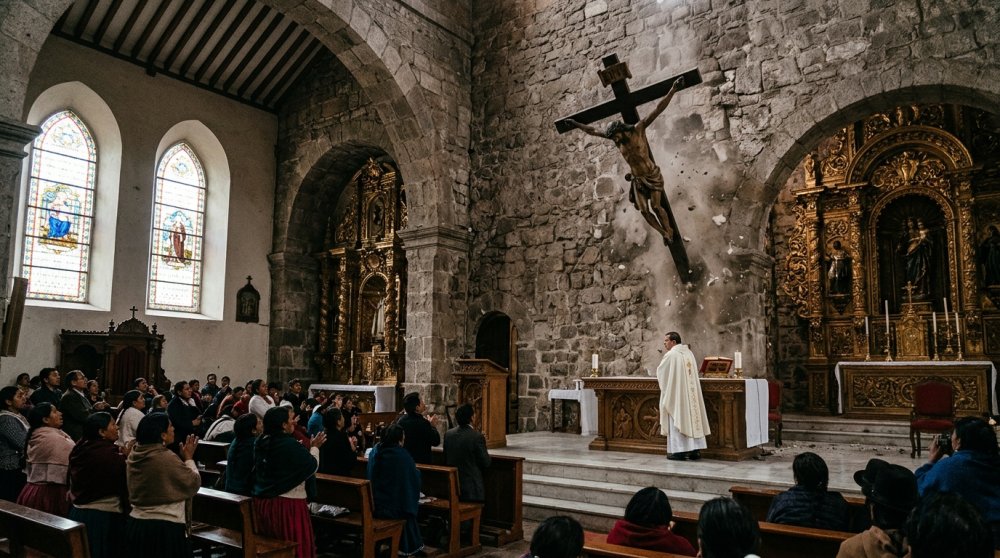
- A priest in Ecuador died during a church service when a large crucifix fell from the wall.
- Kenny Kinglesmith addresses unbelieving friends in an open letter about hope in Jesus amid suffering.
- Christian believers continue to place their trust in Christ even when tragedy strikes inside the sanctuary.
The sudden death of a priest while leading worship has shaken believers across Ecuador. Questions about suffering and divine purpose are rising again.
Kenny Kinglesmith has written an open letter to friends who do not believe. He explains why his hope in Jesus remains firm despite the pain.
“In the face of inexplicable suffering, I still choose to place my hope in Jesus.”
Many Christians are wrestling with how a loving God could allow such a loss inside His house. The event has prompted renewed reflection on the mystery of suffering.
Kinglesmith does not offer easy answers. Instead he points to the cross itself, where Christ endured the ultimate injustice yet brought redemption.
“I still choose to place my hope in Jesus.”
The tragedy has become a moment for believers to examine their own trust in God. It is also an opportunity to demonstrate compassion to those who question.
Kinglesmith urges Christians to live out their faith openly. He believes the witness of steadfast hope can speak louder than arguments.
“In the face of inexplicable suffering, I still choose to place my hope in Jesus.”
Let us know what you think, please share your thoughts in the comments below.
Faith Facts
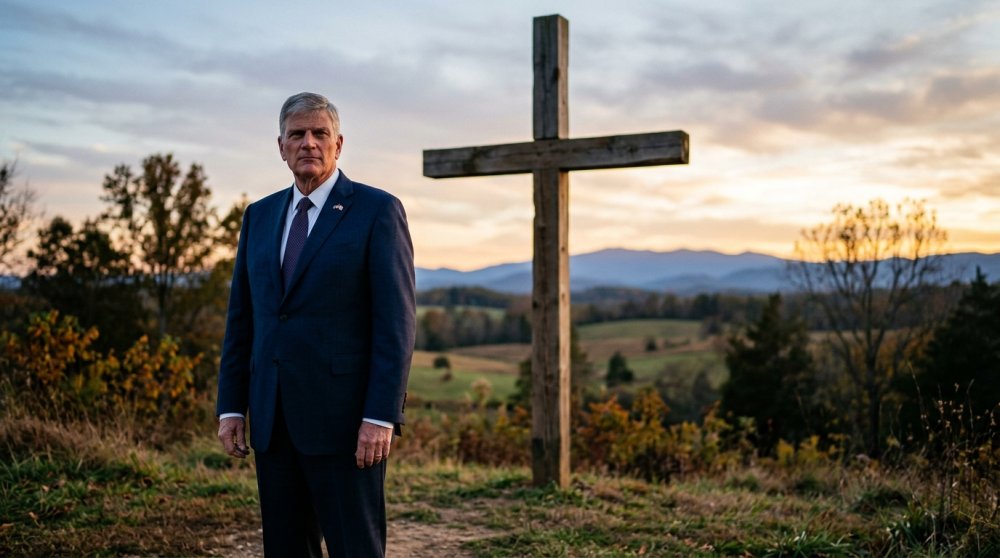
- Franklin Graham was raised in the shadow of his father Billy Graham, one of the most influential Christian leaders of the twentieth century.
- He has publicly stated that he never tried to become Billy Graham and instead sought to follow the distinct path God set before him.
- The younger Graham has carried the Gospel message across the globe through Samaritan’s Purse and the Billy Graham Evangelistic Association while maintaining a clear Christian conservative witness.
Franklin Graham recently opened up about the challenges of growing up in the household of the twentieth century’s most renowned evangelist. He explained that being the son of Billy Graham carried both a tremendous blessing and a heavy weight of expectations.
Despite the public scrutiny and inevitable comparisons, Graham made a deliberate choice early in life. He decided he would not attempt to replicate his father’s ministry or persona in any way.
“I never try to be Billy Graham,”
he said. This statement reflects the conviction that God equips each believer for a unique assignment rather than a copy of someone else’s.
Graham’s own ministry has grown into a powerful force for the Gospel through both the Billy Graham Evangelistic Association and the international relief work of Samaritan’s Purse. His approach has been marked by direct, unapologetic proclamation of biblical truth on issues ranging from religious liberty to the sanctity of life and traditional marriage.
“I never try to be Billy Graham,”
he reiterated, underscoring that his calling has always been to serve the Lord faithfully in the time and culture where God has placed him.
Today Franklin Graham continues to lead large-scale evangelistic events across the United States and around the world. He remains a steady voice for Christian values at a time when many pulpits have grown silent on cultural matters.
Let us know what you think, please share your thoughts in the comments below.


-

 Self-Reliance2 years ago
Trump’s Bold Move Uncovers Massive Social Security Fraud
-

 Faith2 years ago
New Clues Emerge in Noah’s Ark Mystery
-

 News2 years ago
Governor Walz’s Rhetoric Sparks National Controversy
-

 News2 years ago
Mel Gibson’s ‘The Passion of the Christ’ Sequel Title Announced
-

 Family2 years ago
Texas Lawmaker Targets Furries in Schools
-

 Freedom2 years ago
Maine Lawmaker Challenges Sports Fairness Controversy
-

 Family1 year ago
Canada’s Controversial Policy Sparks Ethical Debate
-
Faith11 months ago
Congress Hears Pleas for Nigerian Christians