
Faith
Four Nations Form Unholy Alliance Against Believers Worldwide

Faith Facts
- China, Russia, Iran, and North Korea are coordinating efforts to persecute Christians through shared surveillance technology and legal frameworks
- These authoritarian regimes exchange tactics including fake church operations designed for propaganda purposes
- A new investigative book exposes the systematic collaboration between these nations to suppress religious freedom
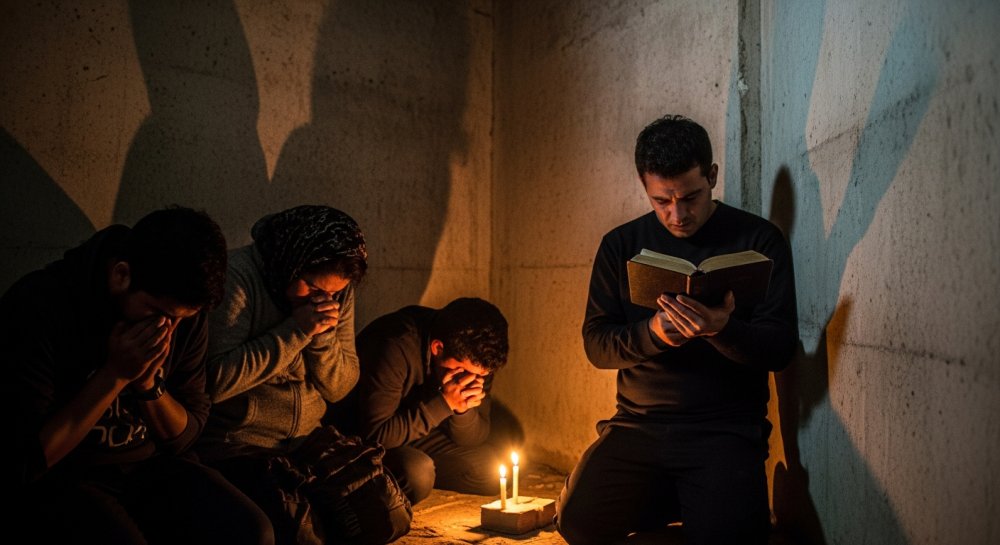
While American foreign policy experts have long focused on the military and cyber threats posed by China, Russia, Iran, and North Korea, a groundbreaking new investigation reveals these nations are working together in a far more insidious campaign: the systematic persecution of Christians across the globe.
The coordination goes beyond mere ideology. These authoritarian regimes actively share surveillance technology, legal strategies, and even construct counterfeit churches designed to deceive the international community while crushing genuine faith communities.
The revelation comes at a critical time when religious freedom advocates have been sounding the alarm about increasing threats to Christian believers worldwide. This unholy alliance represents a sophisticated, multinational effort to suppress the Gospel and silence followers of Christ.
The collaborative persecution tactics include the exchange of digital surveillance systems specifically designed to track and identify Christian believers. These technologies allow authorities to monitor church gatherings, intercept communications between believers, and build detailed databases of Christian communities.
Legal frameworks for religious suppression are also being shared between these nations. Laws that criminalize evangelism, restrict religious gatherings, and punish conversions are being adapted and implemented across borders, creating a unified front against religious liberty.
Perhaps most disturbing is the construction of propaganda churches — state-controlled religious facades designed to present an image of religious tolerance to the outside world while actual believers face imprisonment, torture, and death. These fake institutions allow authoritarian governments to claim they protect religious freedom while simultaneously crushing it.
The collaboration between these four nations represents a strategic alliance that extends far beyond geopolitical maneuvering. It is a coordinated assault on the fundamental human right to worship freely and practice one’s faith without fear of government reprisal.
For American Christians, this revelation underscores the importance of supporting persecuted believers abroad and advocating for policies that prioritize religious freedom in international relations. The alliance of China, Russia, Iran, and North Korea against Christianity demands a unified response from the free world.
As these authoritarian regimes continue to refine their methods of persecution and share their tactics, the global Christian community must remain vigilant. Prayer, advocacy, and support for underground churches become increasingly critical as persecution intensifies.
The book’s findings serve as a wake-up call to policymakers and faith leaders alike. Religious persecution is not merely a series of isolated incidents but a coordinated international campaign requiring serious attention and action from those who value freedom of conscience and worship.
Let us know what you think, please share your thoughts in the comments below.


Faith Facts
- Canadian military chaplains are now prohibited from praying or mentioning God or the divine during public ceremonies and spiritual reflections
- Government officials claim the policy ensures religious neutrality, though critics argue true neutrality is impossible when faith is systematically silenced
- The directive treats chaplains as government representatives who must embrace secular messaging rather than fulfill their spiritual calling
A stunning new policy in Canada has effectively silenced the voice of faith within the nation’s armed forces. Military chaplains are no longer permitted to pray publicly or even reference God or the divine during spiritual reflections at official events. The directive marks an alarming shift toward state-enforced secularism that undermines the very purpose of the chaplaincy.
Under the new rules, chaplains serving in Canada’s military are being told they must function as government representatives first and spiritual leaders second—if at all. The policy demands public secularism in the name of religious neutrality, a concept that sounds fair on the surface but crumbles under scrutiny. When faith is banned from the public square, the default position is not neutrality—it is secularism itself, which is simply another worldview competing for dominance.
For centuries, military chaplains have provided spiritual care and comfort to service members, many of whom face life-and-death situations. Prayer and acknowledgment of the divine are central to that mission. Stripping chaplains of their ability to speak freely about God does not create a neutral environment; it creates a hostile one for people of faith.
The policy reflects a broader cultural trend in Western nations where religious expression is increasingly viewed as something to be managed, regulated, or removed from public life altogether. What is presented as inclusivity often becomes exclusivity—excluding the very beliefs that have shaped the moral foundations of free societies.
Canada’s move raises serious questions about freedom of conscience and religious liberty. If chaplains cannot perform their core spiritual duties, what purpose do they serve? The answer appears to be that they are being repurposed as secular counselors who happen to wear religious titles—a hollow representation of faith that serves the state’s agenda rather than the souls of those who serve.
True religious freedom respects the right of individuals and institutions to live out their beliefs openly, including in public settings. A government that demands silence about God in the name of neutrality is not being neutral—it is taking sides against faith. This is not progress; it is regression into a form of state control over conscience that should alarm all who value liberty.
Let us know what you think, please share your thoughts in the comments below.
Faith Facts
- A Kansas United Methodist Church pastor and Democratic Senate nominee declared in a 2022 sermon that atheists and non-Christians will inherit Heaven
- The teaching contradicts biblical Christianity, which affirms salvation comes exclusively through faith in Jesus Christ
- The resurfaced sermon raises questions about theological orthodoxy among clergy seeking political office
A United Methodist Church pastor running as the Democratic nominee for U.S. Senate in Kansas told his congregation in a newly resurfaced 2022 sermon that he believes people of all religions—and even atheists—will be in Heaven, regardless of their faith in Jesus Christ.
The statement directly contradicts the core Christian doctrine of salvation, which teaches that eternal life comes only through repentance and faith in Jesus Christ as Lord and Savior. Scripture is clear on this matter, with Jesus Himself declaring in John 14:6, “I am the way, the truth, and the life. No one comes to the Father except through me.”
The pastor’s comments reflect a growing trend of theological liberalism within mainline Protestant denominations, where foundational Christian beliefs are increasingly being reinterpreted or discarded in favor of more culturally acceptable positions. This shift away from biblical authority has contributed to declining membership and influence in these denominations.
Traditional Christian teaching affirms that while God desires all people to be saved, salvation requires a personal relationship with Jesus Christ. The Apostle Peter proclaimed in Acts 4:12, “Salvation is found in no one else, for there is no other name under heaven given to mankind by which we must be saved.”
The resurfaced sermon raises important questions about the intersection of faith and politics. When clergy members seek political office while preaching doctrines that contradict biblical Christianity, voters of faith must carefully consider whether such candidates truly represent their values and beliefs.
This controversy also highlights the broader challenge facing American Christianity: the need to distinguish between genuine biblical faith and a watered-down spirituality that prioritizes inclusivity over truth. While Christians are called to love all people, that love does not require abandoning the exclusive claims of Christ.
Conservative Christians have long warned about the dangers of theological liberalism, which often begins with small compromises on Scripture but eventually leads to the complete abandonment of historic Christian orthodoxy. This case serves as a reminder of why doctrinal fidelity matters, especially among those who claim to speak for the faith.
As the election approaches, Kansas voters will need to weigh whether a candidate who rejects fundamental Christian teachings can effectively represent their interests and values in the U.S. Senate. The issue transcends party politics and goes to the heart of what it means to be a faithful witness to biblical truth.
Let us know what you think, please share your thoughts in the comments below.

Faith Facts
- Mel Gibson’s long-awaited sequel to ‘The Passion of the Christ’ will be filmed in English, a departure from the original’s Aramaic and Latin dialogue
- The follow-up will be structured as two parts with a non-linear storytelling approach, diverging from the 2004 film’s chronological narrative
- The original ‘Passion of the Christ’ became one of the highest-grossing faith-based films in history, profoundly impacting Christian audiences worldwide
After nearly two decades of anticipation, filmmaker Mel Gibson has revealed key details about his planned sequel to the groundbreaking biblical epic that moved millions of believers in 2004. The new project represents a significant creative evolution while maintaining the spiritual foundation that made the original so powerful.
According to Gibson, the upcoming continuation of Christianity’s central story will depart from the original film’s format in several meaningful ways. Most notably, the dialogue will be presented in English rather than the ancient Aramaic and Latin that gave the first film its authentic historical atmosphere.
The filmmaker has also confirmed that the sequel will span two parts and utilize a non-linear narrative structure. This approach marks a stark contrast to the 2004 release, which followed a straightforward chronological path through Christ’s final hours.
Gibson’s original “The Passion of the Christ” sparked a cultural phenomenon upon its release, becoming a touchstone for Christian communities across America and around the globe. The film’s unflinching portrayal of Christ’s sacrifice resonated deeply with audiences seeking authentic biblical storytelling in an increasingly secular entertainment landscape.
The decision to film the sequel in English suggests Gibson aims to reach an even broader audience while maintaining the spiritual integrity that defined his first effort. Many faith-based filmmakers have struggled to balance accessibility with authenticity, but Gibson’s proven track record gives believers reason for optimism.
While specific plot details remain under wraps, the two-part structure indicates an ambitious scope for the project. The non-linear approach could allow for creative exploration of the Resurrection and its aftermath, potentially weaving together multiple timelines and perspectives from Scripture.
The original film faced significant opposition from secular critics but found overwhelming support among Christian audiences who had long waited for Hollywood to treat their faith with seriousness and respect. Its commercial success demonstrated the enormous appetite for quality faith-based content in American culture.
As production details continue to emerge, Christian moviegoers across the nation are watching with great interest. The sequel represents an opportunity to once again bring the greatest story ever told to the big screen with the reverence and artistic excellence it deserves.
Let us know what you think, please share your thoughts in the comments below.


-

 Self-Reliance1 year ago
Trump’s Bold Move Uncovers Massive Social Security Fraud
-

 Faith1 year ago
New Clues Emerge in Noah’s Ark Mystery
-

 News1 year ago
Governor Walz’s Rhetoric Sparks National Controversy
-

 News1 year ago
Mel Gibson’s ‘The Passion of the Christ’ Sequel Title Announced
-

 Family1 year ago
Texas Lawmaker Targets Furries in Schools
-

 Freedom1 year ago
Maine Lawmaker Challenges Sports Fairness Controversy
-

 Family1 year ago
Canada’s Controversial Policy Sparks Ethical Debate
-
Faith9 months ago
Congress Hears Pleas for Nigerian Christians