
Faith
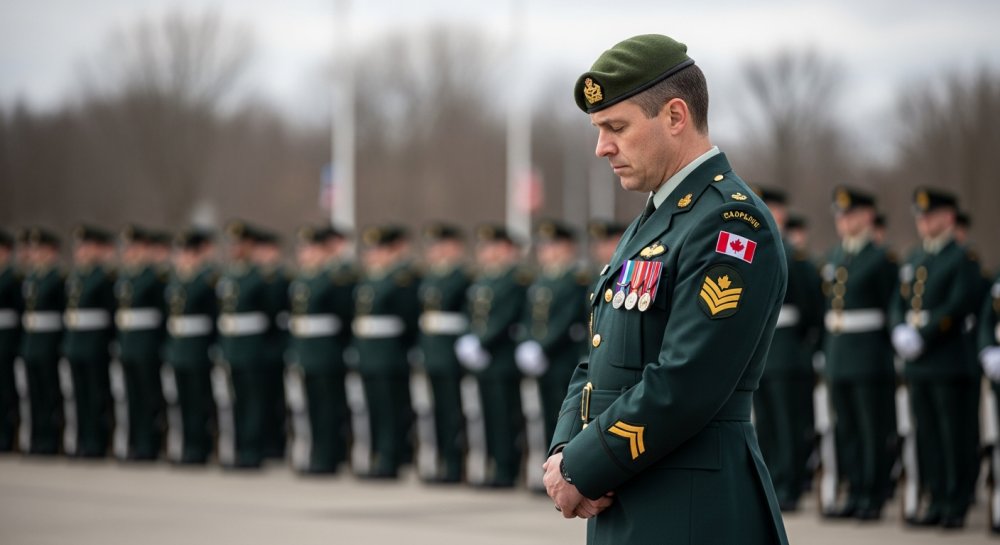
Canada Bans Military Chaplains From Speaking of God in Public

Faith Facts
- Canadian military chaplains are now prohibited from praying or mentioning God or the divine during public ceremonies and spiritual reflections
- Government officials claim the policy ensures religious neutrality, though critics argue true neutrality is impossible when faith is systematically silenced
- The directive treats chaplains as government representatives who must embrace secular messaging rather than fulfill their spiritual calling
A stunning new policy in Canada has effectively silenced the voice of faith within the nation’s armed forces. Military chaplains are no longer permitted to pray publicly or even reference God or the divine during spiritual reflections at official events. The directive marks an alarming shift toward state-enforced secularism that undermines the very purpose of the chaplaincy.
Under the new rules, chaplains serving in Canada’s military are being told they must function as government representatives first and spiritual leaders second—if at all. The policy demands public secularism in the name of religious neutrality, a concept that sounds fair on the surface but crumbles under scrutiny. When faith is banned from the public square, the default position is not neutrality—it is secularism itself, which is simply another worldview competing for dominance.
For centuries, military chaplains have provided spiritual care and comfort to service members, many of whom face life-and-death situations. Prayer and acknowledgment of the divine are central to that mission. Stripping chaplains of their ability to speak freely about God does not create a neutral environment; it creates a hostile one for people of faith.
The policy reflects a broader cultural trend in Western nations where religious expression is increasingly viewed as something to be managed, regulated, or removed from public life altogether. What is presented as inclusivity often becomes exclusivity—excluding the very beliefs that have shaped the moral foundations of free societies.
Canada’s move raises serious questions about freedom of conscience and religious liberty. If chaplains cannot perform their core spiritual duties, what purpose do they serve? The answer appears to be that they are being repurposed as secular counselors who happen to wear religious titles—a hollow representation of faith that serves the state’s agenda rather than the souls of those who serve.
True religious freedom respects the right of individuals and institutions to live out their beliefs openly, including in public settings. A government that demands silence about God in the name of neutrality is not being neutral—it is taking sides against faith. This is not progress; it is regression into a form of state control over conscience that should alarm all who value liberty.
Let us know what you think, please share your thoughts in the comments below.

Faith Facts
- The Christian Institute warns that UK government plans to grant cohabiting couples the same legal rights as married couples could further undermine the institution of biblical marriage
- The proposed policy would eliminate the legal distinction between marriage and cohabitation, potentially discouraging couples from making formal marriage commitments
- Christian leaders argue the policy could create new barriers to relationships by imposing legal entanglements on casual partnerships
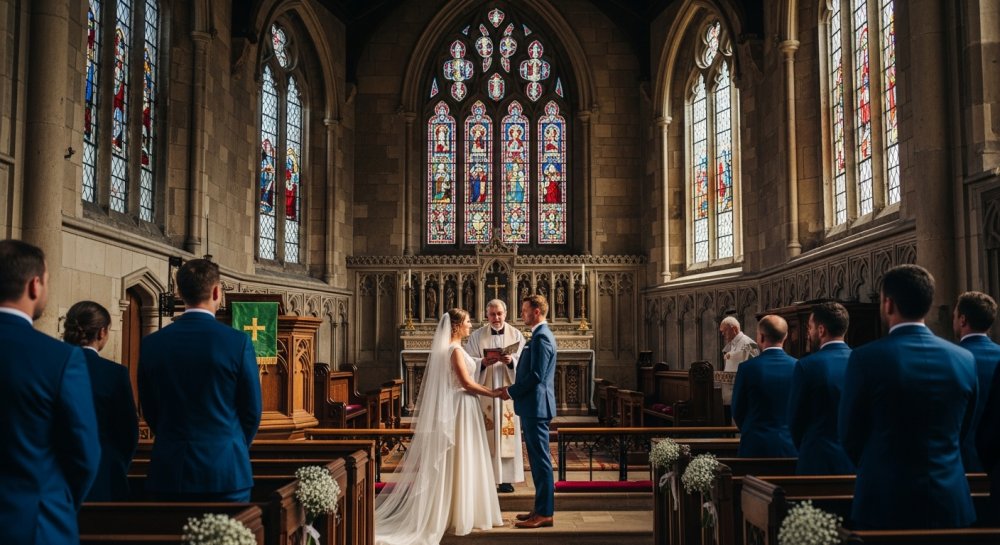
A prominent Christian advocacy organization in the United Kingdom is raising the alarm about government proposals that threaten to erase the legal boundaries between marriage and mere cohabitation. The Christian Institute has issued a strong warning that these plans represent yet another assault on the biblical institution of marriage.
The proposed policy would grant unmarried couples living together the same legal rights and protections traditionally reserved for those who have entered into the covenant of marriage. This radical shift in family law threatens to eliminate any meaningful legal distinction between committed marital unions and temporary living arrangements.
Christian leaders are sounding the alarm that such policies don’t just fail to support marriage—they actively work against it. By removing the unique legal protections and benefits of marriage, the government would eliminate one of the key reasons couples formalize their commitment before God and community.
The concerns go beyond simply discouraging marriage. The Christian Institute points out that imposing marriage-like legal obligations on cohabiting couples could actually prevent people from entering relationships at all, creating unintended barriers to community and connection.
This development represents the latest in a series of government actions across Western nations that chip away at the special status of marriage. For Christians who understand marriage as a sacred covenant established by God, these policy shifts represent a fundamental misunderstanding of the institution’s purpose and importance.
The traditional Christian view holds that marriage is not simply a legal arrangement between two people, but a divine institution with spiritual significance. It serves as the foundation for families, provides stability for raising children, and reflects the relationship between Christ and His church.
By treating casual cohabitation as legally equivalent to marriage, governments send a clear message that the commitment, sacrifice, and permanence inherent in marriage vows hold no special value. This devaluation of marriage has profound implications for society’s moral fabric and the wellbeing of future generations.
The proposed changes come at a time when marriage rates in Western nations are already in steep decline, and divorce rates remain high. Rather than strengthening marriage through supportive policies, governments appear determined to dismantle it altogether.
For Bible-believing Christians, the defense of marriage remains a critical priority. Scripture is clear about God’s design for marriage as a lifelong union between one man and one woman, and believers are called to uphold this standard even as the surrounding culture abandons it.
The Christian Institute’s warning serves as a wake-up call for believers on both sides of the Atlantic. As governments continue to redefine family structures and relationships, Christians must stand firm in proclaiming the truth about marriage and work to preserve its unique legal and cultural status.
Let us know what you think, please share your thoughts in the comments below.

Faith Facts
- Korean mission scholars gathered in Seoul to examine major shifts in global Christianity and mission strategy
- Studies focused on explosive Pentecostal growth in the Global South and diaspora communities
- New research frameworks proposed to better understand local church communities worldwide
A gathering of mission theologians in Seoul has brought to light remarkable changes occurring in how the Gospel is spreading across the globe. The conference examined critical developments that are redefining Christian mission work in the 21st century.
Korean scholars presented research on the dramatic expansion of Pentecostalism throughout the Global South, where spirit-filled worship and biblical faith are experiencing unprecedented growth. These regions now represent the future center of global Christianity, a shift that carries profound implications for how mission work is conducted.
The conference also addressed the important role of diaspora communities in spreading the faith. As Christians migrate across borders, they carry their witness with them, creating new opportunities for evangelism and church planting in regions that might otherwise remain unreached.
Researchers proposed innovative frameworks for studying local faith communities, recognizing that effective mission work requires deep understanding of cultural contexts while maintaining biblical fidelity. This approach honors both the unchanging truth of Scripture and the diverse ways God works among different peoples.
The Seoul gathering reflects a broader recognition that the center of Christian vitality has shifted southward and eastward from its historical roots in Europe and North America. Nations once considered mission fields are now sending missionaries themselves, demonstrating the power of the Great Commission to transform lives and cultures.
This development should encourage American believers that God’s Kingdom continues to advance worldwide, even as Western nations face increasing secularization. The growth of biblical Christianity in Asia, Africa, and Latin America testifies to the enduring power of the Gospel message.
The research presented underscores the importance of supporting global mission efforts and learning from the faith experiences of Christians in other cultures. As the body of Christ becomes increasingly international, American churches have much to gain from these partnerships.
Let us know what you think, please share your thoughts in the comments below.
Faith Facts
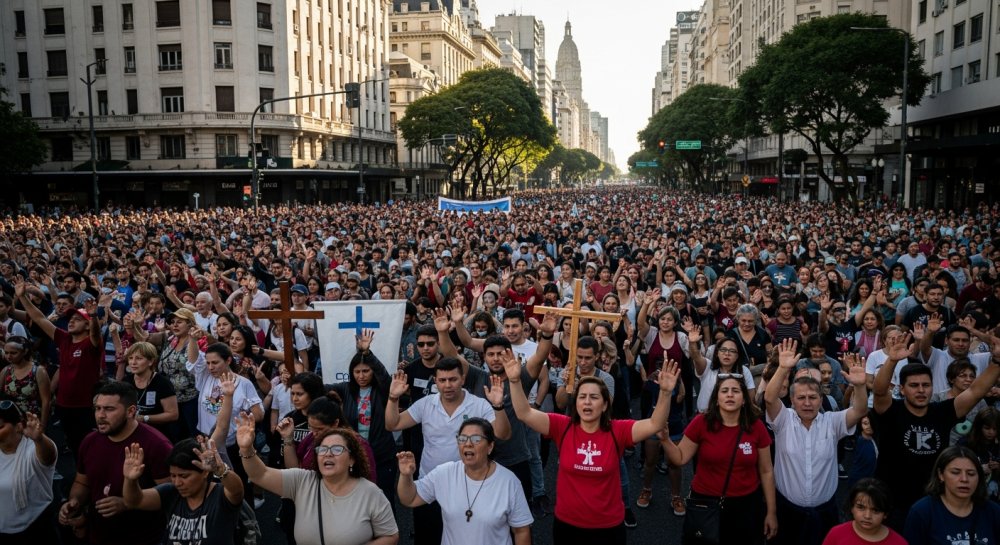
- Christians from churches across Argentina will march through central Buenos Aires in a public day of prayer, worship, and proclamation called ‘March for Jesus’
- The event demonstrates the continued vitality of Christian witness in South America despite increasing secularization worldwide
- The march represents a unified Christian witness across denominational lines in Argentina’s capital city
Believers from congregations throughout Argentina are preparing to take their faith to the streets of Buenos Aires in a powerful demonstration of Christian unity and public worship. The ‘March for Jesus’ will gather Christians from diverse backgrounds for a day dedicated to prayer, worship, and bold proclamation of the Gospel in the heart of the nation’s capital.
The event showcases the willingness of Argentine Christians to publicly declare their faith in an increasingly secular world. Rather than keeping their beliefs confined to church buildings, these faithful believers are stepping into the public square to make their voices heard and their presence known.
This march represents more than just a gathering—it’s a statement that Christianity remains a vital force in South American culture and society. While many Western nations have seen declining church attendance and public expression of faith, Argentina’s Christians are demonstrating that the Great Commission still compels believers to go into all the world and proclaim the Good News.
The unity displayed by Christians from various denominations coming together for this common purpose serves as an encouraging reminder that the body of Christ transcends organizational boundaries. When believers stand together in faith, they present a powerful witness to their communities and nations.
Such public demonstrations of faith serve an important purpose in a world that increasingly marginalizes religious expression. They remind both believers and non-believers alike that Christianity is not a private matter to be hidden away, but a transformative relationship with Jesus Christ that affects every aspect of life, including our public witness.
The March for Jesus in Buenos Aires stands as an example of what can happen when Christians refuse to be silenced or sidelined. It’s a reminder that faith, family, and freedom remain worth standing for, marching for, and proclaiming boldly in the public arena.
Let us know what you think, please share your thoughts in the comments below.


-

 Self-Reliance1 year ago
Trump’s Bold Move Uncovers Massive Social Security Fraud
-

 Faith1 year ago
New Clues Emerge in Noah’s Ark Mystery
-

 News1 year ago
Governor Walz’s Rhetoric Sparks National Controversy
-

 News1 year ago
Mel Gibson’s ‘The Passion of the Christ’ Sequel Title Announced
-

 Family1 year ago
Texas Lawmaker Targets Furries in Schools
-

 Freedom1 year ago
Maine Lawmaker Challenges Sports Fairness Controversy
-

 Family1 year ago
Canada’s Controversial Policy Sparks Ethical Debate
-
Faith9 months ago
Congress Hears Pleas for Nigerian Christians