
Faith
World’s Top Female Tennis Star Takes Bold Stand on Gender Testing


Faith Facts
- Aryna Sabalenka, the world’s number one women’s tennis player, publicly supported the Women’s Tennis Association’s new gender testing requirement for all competitors.
- The policy ensures that women’s sports remain reserved for biological females, protecting fair competition and safety in athletics.
- This decision reflects growing concerns among female athletes about maintaining the integrity of women’s sports amid increasing pressure to allow biological males to compete.
In a courageous stand for fairness in women’s athletics, Aryna Sabalenka has openly defended new measures designed to protect female competitors. The top-ranked women’s singles tennis player in the world expressed her support for the Women’s Tennis Association’s recently implemented gender testing requirement.
The policy mandates that all players must undergo gender verification testing before being permitted to compete in WTA events. This measure aims to ensure that biological females are not forced to compete against individuals who possess inherent physical advantages.
Sabalenka’s willingness to speak out on this issue demonstrates the real concerns many female athletes have about the future of women’s sports. While cultural elites often dismiss these concerns, competitors who have trained their entire lives understand what’s at stake when biological males enter women’s competitions.
The WTA’s decision comes as athletic organizations worldwide grapple with how to balance competing interests while maintaining fairness for female athletes. Traditional values have long recognized the biological differences between men and women, and competitive sports have reflected this reality for good reason.
Female athletes across multiple sports have increasingly voiced concerns about policies that allow biological males to compete in women’s categories. These concerns center on safety, fairness, and the preservation of opportunities that Title IX was designed to protect.
By implementing gender testing requirements, the WTA joins other sports organizations that have chosen to prioritize the safety and competitive integrity of women’s athletics. This decision represents a victory for common sense and biological reality over ideology.
Sabalenka’s public support for these measures is particularly significant given her status as the world’s top-ranked player. Her willingness to take a stand may encourage other athletes to speak honestly about their concerns without fear of backlash.
The debate over gender in sports touches on fundamental questions about fairness, biology, and the very nature of women’s athletics. As Christians and conservatives, we recognize that God created human beings male and female, and that these distinctions are meaningful and purposeful.
Protecting women’s sports is not discriminatory—it’s essential to ensuring that female athletes can compete on a level playing field. The physical advantages that biological males possess in strength, speed, and endurance are well-documented and cannot be dismissed.
Let us know what you think, please share your thoughts in the comments below.

Faith Facts
- Algeria has systematically sealed nearly all Evangelical churches since launching a crackdown in 2017
- Christian communities have been driven underground, practicing their faith in secret amid government persecution
- Believers describe their situation as an “internal exile” as they continue worshiping despite state opposition
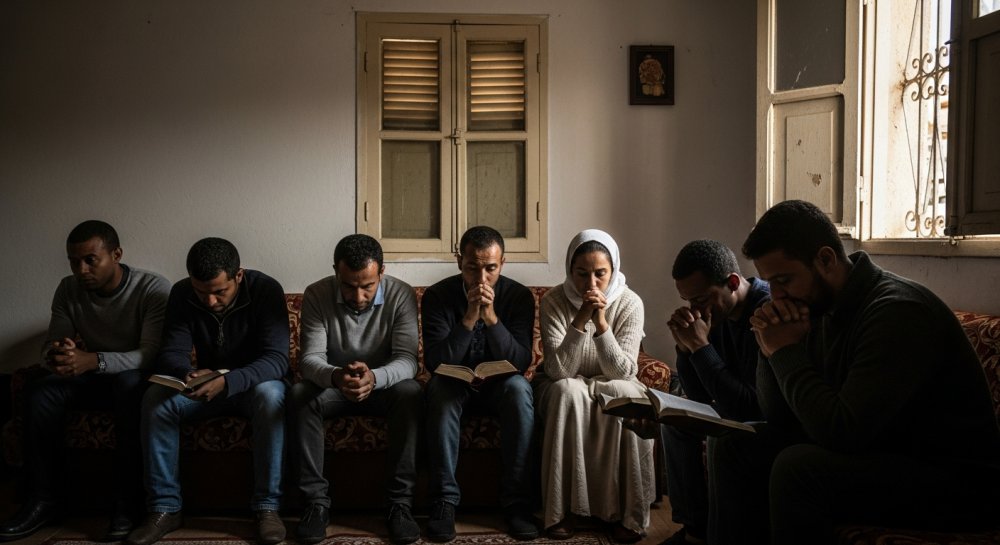
Christian communities in Algeria face severe religious persecution as government authorities continue enforcing a years-long campaign that has shuttered Protestant churches across the North African nation. What began as targeted closures in 2017 has escalated into a full-scale assault on Christian worship, forcing believers to practice their faith in secret.
The systematic closure of Evangelical churches represents one of the most aggressive anti-Christian campaigns in the region. Believers who once gathered openly to worship now meet in homes and hidden locations, reminiscent of the early church under Roman persecution.
Algerian Christians describe their current reality as an “internal exile,” stripped of their fundamental right to worship freely in their own country. Despite the threat of government retaliation, these faithful believers continue to gather, demonstrating the enduring power of Christian faith under persecution.
The crackdown reflects a broader pattern of religious intolerance targeting Christian minorities in predominantly Muslim nations. While Western nations champion religious freedom as a foundational human right, Christians in Algeria and throughout the Middle East and North Africa face systematic discrimination, harassment, and violence for their beliefs.
This persecution should serve as a wake-up call to Christians in America and throughout the free world. The religious liberty we often take for granted remains under assault in many parts of the globe, where believers risk everything simply to follow Jesus Christ.
The courage of Algeria’s underground church stands as a testament to the strength of Christian conviction. When governments attempt to silence the Gospel through intimidation and force, faithful believers respond not with violence but with steadfast devotion to Christ, meeting in secret to worship the God who cannot be contained by earthly powers.
American Christians must stand in solidarity with our persecuted brothers and sisters, lifting them up in prayer and advocating for their religious freedom. The same faith that sustains Algerian believers in their darkest hour calls us to action on their behalf.
Let us know what you think, please share your thoughts in the comments below.

Faith Facts
- Water is essential for all life on Earth yet remains extraordinarily rare throughout the known universe
- The unique physical and spiritual characteristics of water provide a powerful illustration of God’s grace in our lives
- Christians are called to recognize God’s provision through creation and give thanks for His abundant mercy
In a universe filled with countless stars and galaxies, one substance stands out as both essential and extraordinarily rare: water. This life-giving element that covers much of our planet is a cosmic treasure that points directly to the generosity and intentionality of our Creator.
Water’s ubiquity on Earth can cause us to overlook its true significance. Yet scientists confirm that liquid water is astonishingly uncommon in the vast expanse of space, making our blue planet a unique sanctuary for life in an otherwise barren cosmos.
The physical properties of water mirror spiritual truths that every believer should contemplate. Just as water cleanses, sustains, and refreshes our bodies, God’s grace purifies our souls, sustains our faith, and refreshes our spirits in times of trial.
Water’s ability to exist in multiple states—solid, liquid, and gas—while remaining the same substance reflects the unchanging nature of God’s grace, which adapts to meet our needs in every season of life. In drought or flood, in ice or steam, water remains water, just as God’s grace remains constant through all circumstances.
The molecular structure of water itself demonstrates divine design. Its unique ability to absorb heat, dissolve nutrients, and support life at the cellular level reveals the handiwork of an intentional Creator who fashioned the universe with precision and purpose.
When we turn on a faucet or watch rain fall from the sky, we witness a daily miracle that most of the universe cannot claim. This abundant provision on Earth stands as a testament to God’s special care for His creation and His people.
Scripture repeatedly uses water as a symbol of God’s grace and the work of the Holy Spirit. From the waters of creation to the living water Christ offers the woman at the well, the biblical narrative consistently connects this physical necessity with spiritual abundance.
As Christian conservatives committed to stewarding God’s creation, we must recognize that our respect for water flows from our reverence for the One who created it. Every drop is a reminder of divine providence and an invitation to worship the Giver rather than merely enjoying the gift.
The rarity of water in the cosmos should inspire gratitude in every believer’s heart. We live on a planet specifically designed to support life, blessed with resources that reflect the generosity of a loving Father who provides for His children.
In recognizing water as both a physical necessity and a spiritual symbol, we grow in our understanding of how God uses the natural world to teach us about His character. His grace, like water, is freely offered, life-sustaining, and absolutely essential for our survival.
Let us know what you think, please share your thoughts in the comments below.
Faith Facts
- Modern Christian culture has become obsessed with immediate results and visible success, mirroring secular society’s demand for instant gratification
- Scripture consistently shows God’s timeline operates across generations, not quarterly reports or election cycles
- True biblical faithfulness often requires commitment to work whose rewards may not be seen in our lifetime
In an era defined by instant gratification and measurable outcomes, the church faces a crisis of patience. Derek Hughes challenges believers to reconsider whether our pursuit of quick wins has caused us to abandon one of Christianity’s most powerful disciplines: slow, generational faithfulness.
American Christianity has increasingly adopted the metrics of corporate culture and political campaigns. We measure success in attendance numbers, quarterly giving reports, and election results. But this obsession with immediate, visible outcomes may be causing us to miss God’s deeper work.
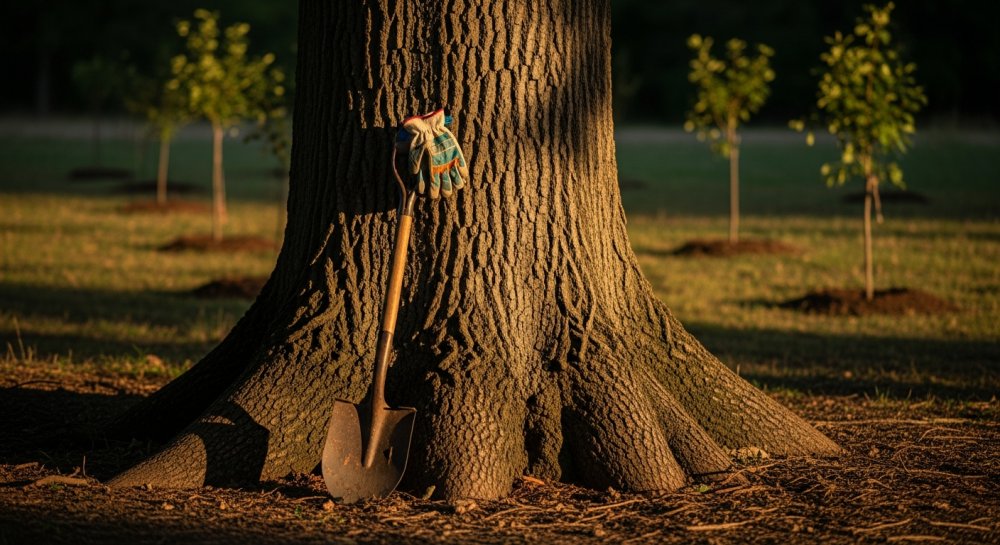
“We’ve forgotten how to plant trees under whose shade we’ll never sit,” Hughes observes. The wisdom of this perspective challenges the modern church’s tendency to prioritize programs that produce quick conversions over discipleship that shapes families for generations.
Throughout Scripture, God’s timeline consistently spans generations rather than news cycles. Abraham received promises he never saw fulfilled. Moses led a people to a land he could only glimpse from a distance. The prophets spoke of a Messiah they would never meet in their earthly lifetimes.
This biblical pattern stands in stark contrast to contemporary Christian culture’s demand for immediate validation. Social media has intensified this tendency, creating an environment where ministry success is measured in likes, shares, and viral moments rather than transformed lives and faithful obedience.
The consequences of this shift are profound. When churches focus exclusively on rapid growth and visible results, they often sacrifice depth for breadth. Discipleship programs give way to entertainment strategies. Formation of character becomes secondary to production of content.
“The question isn’t whether God is working,” Hughes notes. “The question is whether we have the patience to participate in work whose completion we may never witness.”
This challenge extends beyond individual congregations to the broader Christian witness in American culture. Conservative Christians often express frustration that cultural transformation doesn’t happen quickly enough, that elections don’t immediately reverse decades of secular drift.
But cultural renewal has never operated on election cycles. The great revivals of American history didn’t emerge from political campaigns but from faithful families, persistent prayer movements, and Christians committed to long-term presence in their communities.
Consider the abolitionist movement. Christians who opposed slavery in the early 1800s didn’t live to see emancipation. Those who laid the groundwork for the Civil Rights movement began their work generations before the 1960s victories. Lasting change required generational commitment.
The same principle applies to contemporary challenges facing Christian families and communities. Rebuilding a culture of life, strengthening marriage, protecting religious freedom—these battles won’t be won in a single election cycle or through one viral campaign.
Hughes points to the cathedral builders of medieval Europe as a model. These craftsmen dedicated their entire lives to structures they knew they wouldn’t see completed. Their children and grandchildren would continue the work. The cathedral wasn’t primarily about efficiency or immediate results—it was about offering their best work to God’s glory across generations.
This perspective doesn’t mean abandoning urgency or neglecting immediate needs. The gospel always demands present-tense obedience. But it does mean recognizing that some of God’s most important work happens slowly, beneath the surface, beyond the metrics we can measure.
For Christian parents, this means understanding that raising children in the faith isn’t about producing perfect teenagers or viral testimony videos. It’s about faithfully teaching, modeling, and praying—trusting that seeds planted today may bear fruit in their children’s children.
For churches, it means investing in discipleship processes that may not fill the sanctuary next month but will produce mature believers who can lead the next generation. It means valuing the faithful Sunday school teacher who has served for decades over the celebrity pastor who draws crowds but builds no lasting foundation.
The early church understood this principle. They planted churches knowing persecution might destroy them. They made disciples knowing many would face martyrdom. They preserved Scripture and doctrine for generations they would never meet. Their faithfulness wasn’t measured by quarterly growth but by covenant commitment.
“Perhaps the most counter-cultural witness Christians can offer today,” Hughes suggests, “is simply refusing to abandon commitments when results aren’t immediately visible.”
In a society that discards whatever doesn’t produce instant results, staying faithful to difficult work becomes itself a testimony. It demonstrates belief in a God whose timeline exceeds our comprehension, whose purposes outlast our plans.
This doesn’t mean being passive or fatalistic. Biblical faithfulness always involves active obedience, bold proclamation, and energetic service. But it means coupling that energy with patience, recognizing that we’re participants in a story much larger than our individual lifetimes.
The challenge for American Christians is whether we can resist our culture’s obsession with immediate results long enough to do work that matters for eternity. Can we commit to teaching our children truths they may not fully appreciate until they have children of their own? Can we build institutions and communities designed to serve generations we’ll never meet?
The answer to that question may determine whether the Christian witness in America continues to shallow itself through pursuit of quick wins or deepens through rediscovery of slow, faithful, generational commitment.
Let us know what you think, please share your thoughts in the comments below.


-

 Self-Reliance1 year ago
Trump’s Bold Move Uncovers Massive Social Security Fraud
-

 Faith1 year ago
New Clues Emerge in Noah’s Ark Mystery
-

 News1 year ago
Governor Walz’s Rhetoric Sparks National Controversy
-

 News1 year ago
Mel Gibson’s ‘The Passion of the Christ’ Sequel Title Announced
-

 Family1 year ago
Texas Lawmaker Targets Furries in Schools
-

 Freedom1 year ago
Maine Lawmaker Challenges Sports Fairness Controversy
-

 Family1 year ago
Canada’s Controversial Policy Sparks Ethical Debate
-
Faith8 months ago
Congress Hears Pleas for Nigerian Christians