Faith
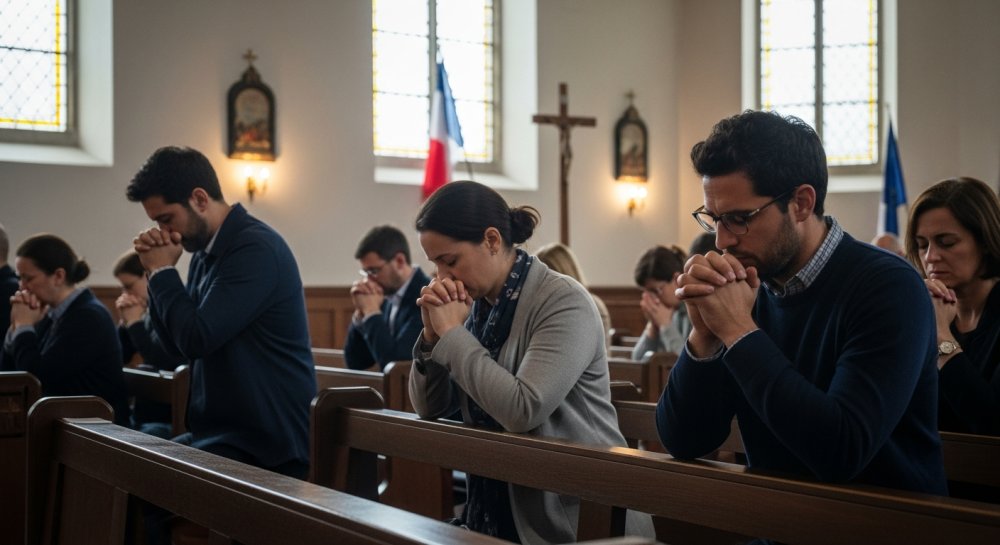
French Christians Raise Urgent Alarm Over New Euthanasia Mandate
Faith Facts
- France’s National Assembly approved an assisted dying bill, sparking serious concerns from evangelical Christians about threats to the sanctity of life
- The national evangelical alliance warns vulnerable citizens will face pressure to end their lives rather than receive compassionate care
- Christian leaders view this legislation as another assault on biblical values of human dignity and the inherent worth of every person
France’s National Assembly has passed a controversial assisted dying bill, and now Christian leaders across the nation are sounding the alarm about what this means for the most vulnerable members of society.
The national evangelical alliance issued a stern warning that this legislation will create dangerous pressure on elderly, disabled, and sick individuals to choose death over continued care. Rather than protecting the weak, Christian leaders argue, this law effectively encourages them to view themselves as burdens worthy of elimination.
This development represents yet another troubling departure from the Judeo-Christian values that once formed the foundation of Western civilization. Where the Bible teaches that every human life is created in the image of God and possesses inherent dignity from conception to natural death, secular governments increasingly embrace a utilitarian calculus that measures human worth by productivity and convenience.
French evangelicals recognize that true compassion means caring for the suffering, not eliminating the sufferer. They understand that legalizing assisted suicide doesn’t expand freedom—it creates an expectation that the vulnerable should consider ending their lives to avoid being a burden on family or society.
The pressure on vulnerable populations under such laws is well-documented in other nations that have traveled this path. Elderly patients report feeling obligated to choose death rather than continue receiving care. Those with disabilities face the implicit message that their lives are less valuable. The sick encounter doctors who present death as a reasonable medical option alongside treatment.
For Bible-believing Christians, this issue goes to the heart of what it means to be human and how a just society treats its weakest members. Scripture consistently calls God’s people to defend the vulnerable, care for the sick, and honor the elderly—principles that stand in direct opposition to state-sanctioned suicide.
The French evangelical alliance’s warning deserves serious attention from Americans watching similar debates unfold across the United States. What happens in France today could easily arrive on our shores tomorrow if Christians fail to stand firm on the sanctity of human life.
This battle is ultimately spiritual in nature. When societies reject God’s authority over life and death, they inevitably slide toward policies that devalue human existence. Only by returning to biblical truth about the inherent worth of every person can nations resist the culture of death that increasingly dominates secular governance.
French Christians are now called to be salt and light in their nation, speaking truth about human dignity and offering genuine compassion through sacrificial care for those who suffer. American believers should stand with them in prayer and learn from their courage to oppose laws that contradict God’s design for human flourishing.
Let us know what you think, please share your thoughts in the comments below.
Faith
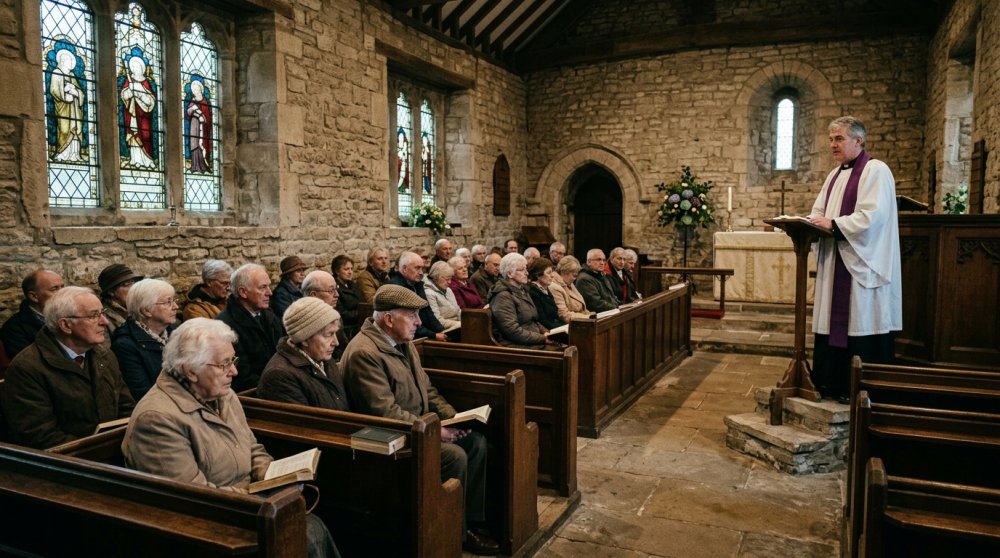
Anglican Church’s Reparations Fund Raises Questions About Faith and Historical Justice
Faith Facts
- The Church of England has established a reparations fund to address its historical ties to the transatlantic slave trade
- A reverend who previously opposed apologizing for historical actions now supports the church’s decision after studying Scripture on corporate sin and repentance
- The debate raises important questions about biblical accountability, forgiveness, and how Christians should respond to the sins of previous generations
The Church of England has taken a controversial step by creating a fund to address its historical connections to the slave trade, sparking renewed debate among Christians about how to properly respond to the sins of the past. The decision has prompted soul-searching even among those who previously questioned the wisdom of such gestures.
Rev George Pitcher, a former Church of England priest and journalist, admits he once dismissed the idea of apologizing for actions committed by people long dead. His perspective has since evolved through deeper engagement with Scripture and Christian theology.
“I used to think it was silly to say sorry for historical actions over which you had no control,” Pitcher acknowledges. His transformation came through studying biblical principles of corporate responsibility and the nature of repentance within the body of Christ.
The Church of England’s decision reflects a growing movement within some Christian denominations to confront uncomfortable truths about institutional involvement in historical injustices. However, the approach raises legitimate questions for American Christians about the proper biblical response to ancestral sins.
Conservative Christians have long emphasized individual accountability before God, as Scripture teaches each person will give account for their own actions. Romans 14:12 states clearly that “each of us will give an account of ourselves to God.” This principle of individual responsibility forms a cornerstone of Christian faith and American legal tradition.
Yet Scripture also contains examples of corporate repentance and acknowledgment of generational sin. The book of Nehemiah records prayers confessing “the sins we Israelites, including myself and my father’s family, have committed against you.” Daniel similarly confessed the sins of his people, even those committed before his birth.
The challenge for modern Christians lies in discerning the difference between acknowledging historical wrongs committed by institutions and accepting personal guilt for actions one neither committed nor condoned. This distinction matters both theologically and practically.
Critics of reparations programs argue they can create new injustices by holding current generations financially responsible for past sins. They point out that most Americans today had ancestors who arrived after slavery ended, fought to end it, or were themselves victims of different historical injustices. Collective guilt, they argue, contradicts both Scripture and American principles of individual justice.
Supporters counter that institutions which benefited from slavery have an obligation to address that legacy, particularly when those institutions still exist and retain wealth accumulated during that era. They distinguish between individual guilt and institutional responsibility.
The Church of England’s fund specifically addresses the church’s institutional involvement, not the personal guilt of current members. This approach attempts to thread the needle between denying uncomfortable history and imposing unfair burdens on the living.
For American Christians, the debate touches on fundamental questions about justice, mercy, and redemption. The gospel message centers on forgiveness and transformation—Christ died for sins we did commit, offering grace we didn’t earn. How should this inform our approach to sins we didn’t commit but whose effects may linger?
Scripture calls believers to “do justice, love mercy, and walk humbly” with God. It also warns against punishing children for their fathers’ sins. Balancing these principles requires wisdom, prayer, and honest dialogue rooted in biblical truth rather than political agendas.
The conversation about historical wrongs must also include the full context of history. While slavery remains one of humanity’s great evils, its abolition was driven largely by Christian conviction. Believers like William Wilberforce fought tirelessly to end the slave trade because their faith demanded it. This legacy of Christian opposition to slavery deserves equal acknowledgment.
Moving forward, Christians should focus on present-day injustices we can actively combat—human trafficking, persecution of believers, attacks on religious freedom, and the breakdown of families. These current evils demand our immediate attention and action.
The Church of England’s decision represents one denomination’s attempt to grapple with its past. American Christians need not reflexively embrace or reject such efforts, but should thoughtfully examine what Scripture teaches about repentance, justice, and reconciliation. The answers won’t satisfy everyone, but they must be grounded in biblical truth, not cultural pressure.
Ultimately, the church’s mission remains unchanged: proclaim the gospel, make disciples, and serve as salt and light in a broken world. Historical reckonings have value only insofar as they advance this mission and honor God’s Word. Any approach that divides believers along racial or generational lines contradicts the unity Christ died to create.
Let us know what you think, please share your thoughts in the comments below.
Faith
What Melting Ice Cream Teaches About Eternal Truth
Faith Facts
- Simple everyday experiences like eating ice cream can reveal profound spiritual truths about gratitude and eternity
- Jesus used parables from ordinary life to teach deeper theological lessons to His followers
- Christian teacher J.John draws parallels between melting ice cream and the fleeting nature of earthly pleasures
What could a melting ice cream cone possibly teach us about life, gratitude, and eternity? More than most people might imagine, according to Christian teacher J.John, who uses this simple summer treat as a powerful illustration of timeless spiritual truth.
Ice cream serves as a reminder that some things simply aren’t meant to last. Just as Jesus used parables drawn from everyday life to highlight deeper truths, J.John finds meaning in common experiences that resonate with modern believers.
The melting nature of ice cream becomes a metaphor for the temporary pleasures of this world. No matter how delicious or satisfying, ice cream cannot be preserved indefinitely—it requires immediate enjoyment or it will be lost. This fleeting quality mirrors the transient nature of earthly comforts and material possessions.
For Christians, this simple observation carries profound theological weight. Scripture repeatedly warns believers not to store up treasures on earth, where moth and rust destroy, but rather to focus on eternal rewards. The melting ice cream becomes a tangible illustration of this biblical principle.
The lesson extends beyond mere impermanence to gratitude. When we recognize that pleasurable moments are temporary gifts rather than permanent entitlements, we develop a deeper appreciation for them. Each lick of ice cream on a summer day becomes an opportunity for thankfulness rather than something taken for granted.
This approach to finding theological lessons in everyday experiences reflects a rich Christian tradition. Throughout history, believers have understood that God’s truth is woven into the fabric of creation itself. From the parables of Jesus—featuring seeds, soil, shepherds, and wedding feasts—to the Psalms celebrating the heavens declaring God’s glory, Scripture affirms that spiritual truth can be discovered in ordinary moments.
J.John’s ice cream illustration also speaks to the importance of living in the present moment. Just as ice cream must be enjoyed before it melts, opportunities for faithfulness, kindness, and witness may not always be available. The urgency of the Gospel message finds an unlikely companion in the urgency of eating ice cream before it drips away.
For families, this simple lesson offers a valuable teaching tool. Parents can use everyday experiences like enjoying ice cream to introduce children to deeper spiritual concepts in accessible ways. The melting cone becomes a conversation starter about what truly lasts and what fades away.
The contrast between temporary pleasures and eternal realities remains central to Christian teaching. While ice cream melts, the love of God endures forever. While earthly delights fade, the promises of Scripture stand firm. While our physical bodies age and decline, the soul destined for eternity with Christ has imperishable value.
This theological reflection on ice cream also challenges the modern obsession with preserving and extending every pleasure. American culture increasingly seeks to make everything permanent, controllable, and endlessly repeatable. Yet some of life’s greatest joys derive precisely from their fleeting nature—the sunset that lasts only minutes, the childhood that passes too quickly, the ice cream that won’t wait.
Accepting impermanence with grace and gratitude reflects spiritual maturity. It demonstrates trust that God provides what we need when we need it, rather than demanding to control and extend every good thing beyond its appointed time.
The ice cream lesson ultimately points believers toward eternity. If earthly pleasures are this delightful yet so temporary, how much more glorious must be the eternal pleasures at God’s right hand? The melting cone becomes not a cause for despair but a signpost pointing toward something infinitely better and eternally lasting.
J.John’s ability to draw spiritual insight from summer fun demonstrates the creativity and relevance that effective Christian teaching requires. Rather than remaining abstract or disconnected from daily life, the most powerful theological lessons often emerge from the most ordinary circumstances.
As believers navigate an increasingly complex world, finding God’s truth in simple pleasures like ice cream offers both comfort and challenge. It reminds us that every moment contains potential for spiritual growth, every experience can teach us about our Creator, and even the smallest joys can point us toward eternal realities.
Let us know what you think, please share your thoughts in the comments below.

Faith
Christian Singer’s Message for Those Burned by Church Wounds
Faith Facts
- Christian singer Franni Cash encourages those hurt by organized religion, reminding them God “can find you anywhere”
- Cash shared her personal experience with church leadership that misrepresented God’s character
- Her message offers hope to believers wounded by spiritual authority figures
Christian musician Franni Cash is reaching out to believers who have experienced pain in church settings with a powerful reminder: God’s presence isn’t confined to organized religious institutions. Her words come from personal experience navigating spiritual disappointment.
Cash opened up about encountering church leadership that failed to accurately represent God’s heart. The experience shaped her understanding of how God works beyond the walls of traditional religious structures.
“God can find you anywhere,” Cash emphasized, offering encouragement to those skeptical of organized religion due to past wounds.
Her message resonates with growing numbers of Christians who maintain strong faith while processing negative experiences with religious institutions. Many believers struggle to reconcile genuine spiritual encounters with painful memories of church hurt.
Cash’s transparency about her own journey provides validation for those who feel caught between their love for God and their disappointment with human representatives of the faith. Her testimony demonstrates that authentic relationship with Christ can survive and even thrive outside conventional church structures.
The singer’s encouragement speaks to a broader conversation within American Christianity about authenticity, spiritual abuse, and the difference between encountering God and encountering flawed human systems. Her perspective offers hope that God pursues His children regardless of where they find themselves spiritually.
For believers navigating similar struggles, Cash’s words serve as a reminder that God’s character remains constant even when His representatives fall short. Her message affirms that stepping back from organized religion doesn’t mean stepping away from God Himself.
Let us know what you think, please share your thoughts in the comments below.

-
Self-Reliance1 year agoTrump’s Bold Move Uncovers Massive Social Security Fraud
-

Faith1 year agoNew Clues Emerge in Noah’s Ark Mystery
-

News1 year agoGovernor Walz’s Rhetoric Sparks National Controversy
-

News1 year agoMel Gibson’s ‘The Passion of the Christ’ Sequel Title Announced
-

Family1 year agoTexas Lawmaker Targets Furries in Schools
-

Freedom1 year agoMaine Lawmaker Challenges Sports Fairness Controversy
-

Family1 year agoCanada’s Controversial Policy Sparks Ethical Debate
-
Faith8 months ago
Congress Hears Pleas for Nigerian Christians