
Faith
What Christian Zionism Gets Wrong About Biblical Holy War


Faith Facts
- The Hebrew scriptures must be understood through the lens of Christ’s advent, death, and resurrection
- Christian Zionist theology often misapplies Old Testament passages by removing them from their New Testament context
- Jesus fundamentally transformed the narrative of holy war and God’s covenant people
The Hebrew scriptures carry profound truth for believers, but they can be dangerously weaponized when passages are lifted out of the context of the whole Christian Bible. For Christians, the advent, death, and resurrection of Jesus Christ changes the entire narrative — transforming our understanding of God’s covenant, His people, and His purposes on earth.
This theological concern has become increasingly urgent as Christian Zionism influences American foreign policy and shapes Christian attitudes toward the ongoing conflict in Gaza. Many well-meaning believers cite Old Testament promises to Israel as justification for unconditional support of modern Israeli military actions, but this approach overlooks the radical shift Jesus brought to our understanding of Scripture.
The Christian faith rests on the conviction that Jesus is the fulfillment of Old Testament prophecy and promise. He didn’t abolish the Law and the Prophets, but fulfilled them in His own person. This means we cannot simply transpose ancient promises made to Old Testament Israel onto the modern nation-state established in 1948.
When Jesus came, He established a new covenant written on hearts rather than stone tablets. He redefined God’s people not by ethnicity or geography, but by faith in Him. As the Apostle Paul wrote, there is neither Jew nor Greek in Christ — all believers are Abraham’s seed and heirs according to the promise.
The concept of holy war undergoes dramatic transformation in the New Testament. Jesus explicitly rejected the way of the sword, teaching His followers to love their enemies and pray for those who persecute them. When Peter drew his sword to defend Jesus, Christ rebuked him and healed the wounded servant. Our weapons are not carnal but spiritual.
This doesn’t mean Christians should be indifferent to Israel’s security or the Jewish people’s historical suffering. It does mean we cannot baptize modern military campaigns with Old Testament conquest language while ignoring Christ’s teachings on peace, mercy, and enemy love.
The Gaza conflict presents heartbreaking complexity. Innocent lives have been lost on both sides. Hamas committed horrific acts of terrorism. Palestinian civilians face devastating humanitarian conditions. Israeli families live under constant threat. But labeling any side’s military action as “God’s will” based on selective Old Testament readings distorts the gospel.
Christian Zionism’s central error is reading the Bible as though the cross never happened. It treats Old Testament Israel and modern Israel as identical without accounting for the massive theological shift Jesus inaugurated. It elevates ethnic Israel over the international, multiethnic body of Christ that is now God’s primary covenant people.
True biblical interpretation requires reading the Old Testament through the lens of Christ. Every promise, every prophecy, every covenant finds its ultimate meaning in Him. He is the true Israel, the faithful Son who succeeded where national Israel failed. All who are in Christ share in that inheritance.
This perspective doesn’t diminish God’s ongoing care for Jewish people. Romans 9-11 makes clear that God has not rejected His ancient people, and we should pray for their salvation and flourishing. But it does mean conflating biblical Israel with modern geopolitical Israel is theologically confused.
The myth of Christian holy war has caused immense damage throughout church history — from the Crusades to colonial conquests justified by “Christian civilization.” We must not repeat those errors by baptizing contemporary conflicts with biblical language they don’t warrant.
Christians should be peacemakers, advocates for the vulnerable, voices for justice and mercy on all sides. We should support Israel’s right to exist and defend itself while also grieving Palestinian suffering and opposing actions that violate human dignity. We can hold both concerns simultaneously without contradiction.
Most importantly, we must let Jesus be Lord over our politics. When Scripture seems to endorse violence, conquest, or ethnic favoritism, we must ask how Christ fulfilled, transformed, or superseded those passages. We cannot cherry-pick Old Testament verses that suit our political preferences while ignoring the Prince of Peace who calls us to a different way.
The Bible is not a weapon to be wielded in service of nationalistic agendas. It is the living Word that reveals Jesus Christ, who broke down the dividing wall of hostility and created one new humanity in Himself. That is the gospel truth that should shape Christian engagement with every conflict, including the tragedy unfolding in the Holy Land.
Let us know what you think, please share your thoughts in the comments below.


Faith Facts
- Simple everyday experiences like eating ice cream can reveal profound spiritual truths about gratitude and eternity
- Jesus used parables from ordinary life to teach deeper theological lessons to His followers
- Christian teacher J.John draws parallels between melting ice cream and the fleeting nature of earthly pleasures
What could a melting ice cream cone possibly teach us about life, gratitude, and eternity? More than most people might imagine, according to Christian teacher J.John, who uses this simple summer treat as a powerful illustration of timeless spiritual truth.
Ice cream serves as a reminder that some things simply aren’t meant to last. Just as Jesus used parables drawn from everyday life to highlight deeper truths, J.John finds meaning in common experiences that resonate with modern believers.
The melting nature of ice cream becomes a metaphor for the temporary pleasures of this world. No matter how delicious or satisfying, ice cream cannot be preserved indefinitely—it requires immediate enjoyment or it will be lost. This fleeting quality mirrors the transient nature of earthly comforts and material possessions.
For Christians, this simple observation carries profound theological weight. Scripture repeatedly warns believers not to store up treasures on earth, where moth and rust destroy, but rather to focus on eternal rewards. The melting ice cream becomes a tangible illustration of this biblical principle.
The lesson extends beyond mere impermanence to gratitude. When we recognize that pleasurable moments are temporary gifts rather than permanent entitlements, we develop a deeper appreciation for them. Each lick of ice cream on a summer day becomes an opportunity for thankfulness rather than something taken for granted.
This approach to finding theological lessons in everyday experiences reflects a rich Christian tradition. Throughout history, believers have understood that God’s truth is woven into the fabric of creation itself. From the parables of Jesus—featuring seeds, soil, shepherds, and wedding feasts—to the Psalms celebrating the heavens declaring God’s glory, Scripture affirms that spiritual truth can be discovered in ordinary moments.
J.John’s ice cream illustration also speaks to the importance of living in the present moment. Just as ice cream must be enjoyed before it melts, opportunities for faithfulness, kindness, and witness may not always be available. The urgency of the Gospel message finds an unlikely companion in the urgency of eating ice cream before it drips away.
For families, this simple lesson offers a valuable teaching tool. Parents can use everyday experiences like enjoying ice cream to introduce children to deeper spiritual concepts in accessible ways. The melting cone becomes a conversation starter about what truly lasts and what fades away.
The contrast between temporary pleasures and eternal realities remains central to Christian teaching. While ice cream melts, the love of God endures forever. While earthly delights fade, the promises of Scripture stand firm. While our physical bodies age and decline, the soul destined for eternity with Christ has imperishable value.
This theological reflection on ice cream also challenges the modern obsession with preserving and extending every pleasure. American culture increasingly seeks to make everything permanent, controllable, and endlessly repeatable. Yet some of life’s greatest joys derive precisely from their fleeting nature—the sunset that lasts only minutes, the childhood that passes too quickly, the ice cream that won’t wait.
Accepting impermanence with grace and gratitude reflects spiritual maturity. It demonstrates trust that God provides what we need when we need it, rather than demanding to control and extend every good thing beyond its appointed time.
The ice cream lesson ultimately points believers toward eternity. If earthly pleasures are this delightful yet so temporary, how much more glorious must be the eternal pleasures at God’s right hand? The melting cone becomes not a cause for despair but a signpost pointing toward something infinitely better and eternally lasting.
J.John’s ability to draw spiritual insight from summer fun demonstrates the creativity and relevance that effective Christian teaching requires. Rather than remaining abstract or disconnected from daily life, the most powerful theological lessons often emerge from the most ordinary circumstances.
As believers navigate an increasingly complex world, finding God’s truth in simple pleasures like ice cream offers both comfort and challenge. It reminds us that every moment contains potential for spiritual growth, every experience can teach us about our Creator, and even the smallest joys can point us toward eternal realities.
Let us know what you think, please share your thoughts in the comments below.

Faith Facts
- Christian singer Franni Cash encourages those hurt by organized religion, reminding them God “can find you anywhere”
- Cash shared her personal experience with church leadership that misrepresented God’s character
- Her message offers hope to believers wounded by spiritual authority figures
Christian musician Franni Cash is reaching out to believers who have experienced pain in church settings with a powerful reminder: God’s presence isn’t confined to organized religious institutions. Her words come from personal experience navigating spiritual disappointment.
Cash opened up about encountering church leadership that failed to accurately represent God’s heart. The experience shaped her understanding of how God works beyond the walls of traditional religious structures.
“God can find you anywhere,” Cash emphasized, offering encouragement to those skeptical of organized religion due to past wounds.
Her message resonates with growing numbers of Christians who maintain strong faith while processing negative experiences with religious institutions. Many believers struggle to reconcile genuine spiritual encounters with painful memories of church hurt.
Cash’s transparency about her own journey provides validation for those who feel caught between their love for God and their disappointment with human representatives of the faith. Her testimony demonstrates that authentic relationship with Christ can survive and even thrive outside conventional church structures.
The singer’s encouragement speaks to a broader conversation within American Christianity about authenticity, spiritual abuse, and the difference between encountering God and encountering flawed human systems. Her perspective offers hope that God pursues His children regardless of where they find themselves spiritually.
For believers navigating similar struggles, Cash’s words serve as a reminder that God’s character remains constant even when His representatives fall short. Her message affirms that stepping back from organized religion doesn’t mean stepping away from God Himself.
Let us know what you think, please share your thoughts in the comments below.
Faith Facts
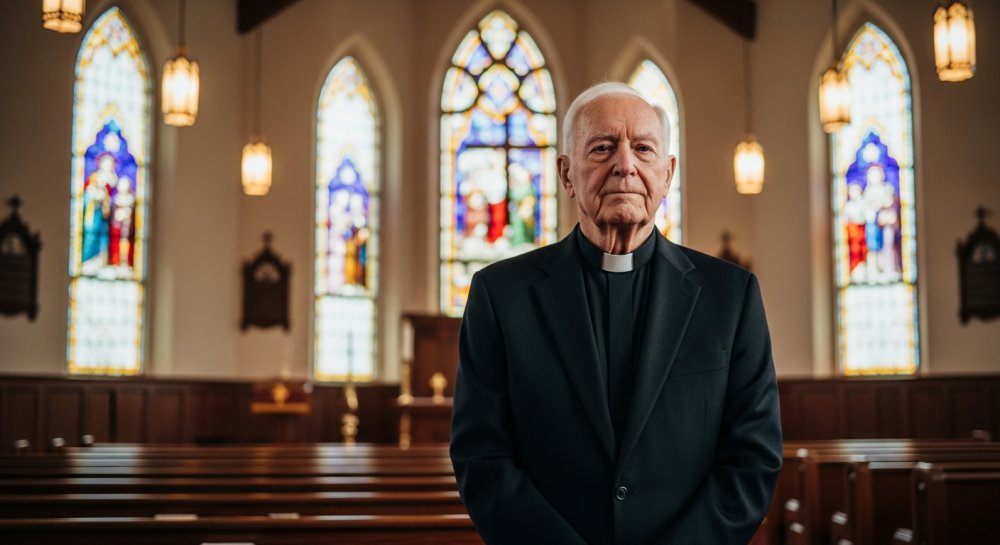
- Pastor Jerry Gumm, 82, continues to lead Richmond Road Baptist Church one year after a gunman killed his wife and daughter inside the sanctuary and shot him multiple times
- The pastor’s steadfast faith remains unshaken despite losing his family members in the horrific attack
- Gumm declares that the tragedy will not prevent him from continuing to worship and praise God
One year has passed since an unspeakable act of violence shattered the peace of a Kentucky church, but the resilience of its pastor stands as a powerful testament to the strength of Christian faith in the face of devastating loss.
Jerry Gumm, the 82-year-old pastor of Richmond Road Baptist Church in Lexington, Kentucky, has emerged from tragedy with his faith not only intact but stronger than ever. On that terrible day, a gunman entered his church and opened fire, taking the lives of his beloved wife and daughter while shooting Pastor Gumm multiple times.
Despite surviving severe injuries and losing two of the people he loved most in this world, Pastor Gumm remains resolute in his commitment to serving God. The elderly pastor has made clear that this horrific attack will not stop him from praising the Lord or leading his congregation.
His unwavering dedication to his faith exemplifies the Biblical promise that nothing can separate believers from the love of Christ—not tribulation, nor distress, nor persecution. Pastor Gumm’s testimony serves as an inspiration to Christians facing their own trials, demonstrating that true faith endures even through the darkest valleys.
The Richmond Road Baptist Church community has rallied around their pastor, witnessing firsthand what it means to trust in God’s sovereignty even when circumstances seem incomprehensible. Pastor Gumm’s continued ministry stands as a living example of Christian perseverance and the hope that sustains believers through unimaginable grief.
In an age when many might understandably turn away from faith after such tragedy, Pastor Gumm’s steadfast commitment to the Gospel reminds us that God’s grace is truly sufficient in our weakest moments. His story challenges believers to examine their own faith and ask whether they would have the spiritual fortitude to continue praising God after such devastating loss.
The church shooting that claimed two innocent lives and nearly took Pastor Gumm’s life as well represents the kind of senseless violence that has increasingly targeted houses of worship across America. Yet even in the face of such evil, the light of Christian faith refuses to be extinguished.
Let us know what you think, please share your thoughts in the comments below.


-

 Self-Reliance1 year ago
Trump’s Bold Move Uncovers Massive Social Security Fraud
-

 Faith1 year ago
New Clues Emerge in Noah’s Ark Mystery
-

 News1 year ago
Governor Walz’s Rhetoric Sparks National Controversy
-

 News1 year ago
Mel Gibson’s ‘The Passion of the Christ’ Sequel Title Announced
-

 Family1 year ago
Texas Lawmaker Targets Furries in Schools
-

 Freedom1 year ago
Maine Lawmaker Challenges Sports Fairness Controversy
-

 Family1 year ago
Canada’s Controversial Policy Sparks Ethical Debate
-
Faith8 months ago
Congress Hears Pleas for Nigerian Christians