
News
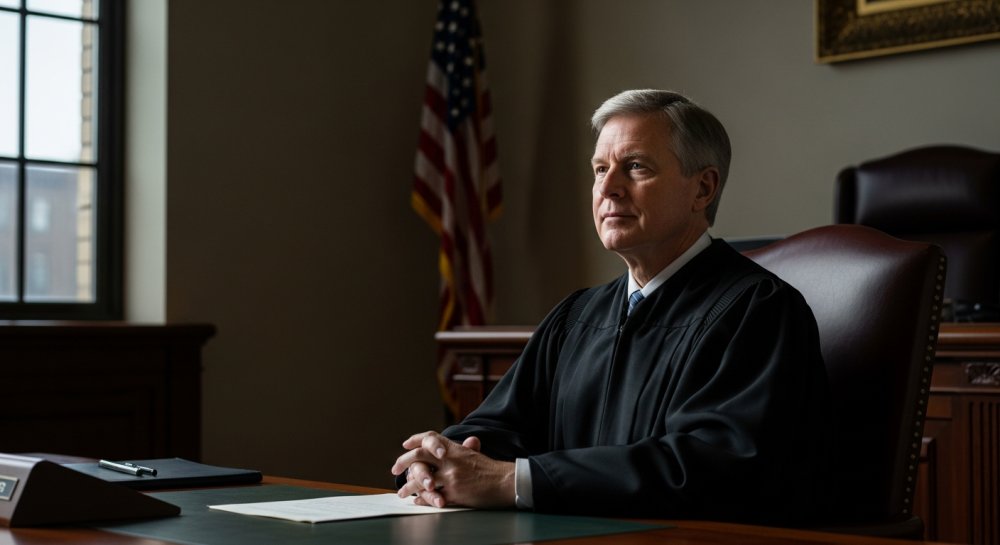
Conservative Disappointment in Justice Barrett May Be Premature

Faith Facts
- Justice Amy Coney Barrett, appointed by President Trump, has faced criticism from some conservatives for decisions perceived as liberal
- A detailed analysis of Barrett’s Supreme Court record reveals a strongly conservative voting pattern aligned with originalist principles
- Barrett’s judicial philosophy emphasizes textualism and restraint, which sometimes produces outcomes that disappoint political activists seeking specific results
Justice Amy Coney Barrett has drawn fire from some corners of the conservative movement, with critics labeling her a “liberal justice.” But does her actual record on the Supreme Court warrant such harsh judgment? A closer examination suggests the answer is no.
Since joining the nation’s highest court, Justice Barrett has consistently demonstrated a commitment to originalist interpretation and constitutional restraint. Her voting record aligns closely with other conservative justices, and her written opinions reflect a dedication to the text and original meaning of the Constitution—the very approach conservatives have championed for decades.
The frustration some feel toward Justice Barrett often stems from cases where she has applied the law faithfully, even when the outcome doesn’t align with desired political results. This is precisely what judicial independence looks like. A judge committed to the rule of law will sometimes reach conclusions that disappoint allies, not because of ideological drift, but because of fidelity to legal principles over political preferences.
Barrett’s approach reflects the judicial philosophy articulated by Justice Antonin Scalia, whom she clerked for and has cited as a formative influence. Scalia himself occasionally ruled in ways that frustrated conservatives when his originalist methodology led him there. True judicial conservatism means interpreting the Constitution as written, not rewriting it to achieve preferred outcomes—a practice conservatives rightly criticize when liberal justices engage in it.
Those who expected Justice Barrett to be a reliable vote for conservative political victories may have misunderstood the nature of constitutional judging. The role of a Supreme Court justice is not to advance a political agenda, but to faithfully interpret the law. When conservatives built the legal movement that led to Barrett’s appointment, the goal was to restore constitutional governance, not to create a mirror image of liberal judicial activism.
Barrett’s record includes strong conservative decisions on religious liberty, Second Amendment rights, and limits on federal power. She has shown herself to be exactly what President Trump promised when he nominated her: a jurist committed to the original meaning of the Constitution and the proper role of the judiciary.
The criticism Barrett faces may reflect unrealistic expectations rather than genuine cause for concern. Building a judiciary committed to constitutional principles requires patience and trust that judges will follow the law wherever it leads. That’s the difference between judicial conservatism and results-oriented judging.
For Christians and conservatives who value the rule of law, Justice Barrett’s commitment to textualism and originalism should be recognized as a strength, not a weakness. Her approach honors the Constitution as written and respects the proper separation of powers—principles that ultimately protect religious freedom and limit government overreach.
Let us know what you think, please share your thoughts in the comments below.


Faith Facts
- The first punk record emerged in the United Kingdom fifty years ago, marking the birth of a movement that embraced the marginalized and the outcast.
- Scripture records that Christ was born in a stable, lived without a place to lay His head, and was ultimately rejected by the religious elite of His day.
- The early Church grew rapidly by standing boldly against the cultural norms of the Roman Empire while offering hope to the broken and the forgotten.
The Church in the West is facing decades of declining attendance and influence. A new commentary argues that the solution lies in recovering the radical, counter-cultural spirit that once defined the faith.
Author Alex Rose claims that punk music succeeded because it welcomed those on the margins. She suggests the same principle could revive a struggling Church. The piece connects the DIY ethos of punk to the life and ministry of Jesus.
“Jesus was punk.”
Traditional believers have long understood that Christ came to upend worldly systems, not to conform to them. He overturned tables in the temple, healed on the Sabbath, and welcomed tax collectors and sinners. That same uncompromising spirit is what the commentary says modern congregations need to reclaim.
The argument frames punk not as a musical style alone but as a posture of resistance against complacency and institutional decay. Rose maintains that the Church must become more radical if it hopes to reverse long-term decline.
“If the Church is to buck the trend of long-term decline, it needs to get a lot more radical, she says.”
Conservative Christians can affirm the call to boldness without adopting the language or aesthetics of rebellion that historically opposed Christian morality. The early Church was radical precisely because it upheld the truth of Scripture and the lordship of Christ against a pagan culture. That same clarity and courage remain necessary today.
Many congregations already practice this radical faithfulness through unapologetic preaching, strong families, and service to the vulnerable. The decline in some denominations often correlates with theological compromise rather than insufficient rebellion.
Recovering the revolutionary nature of the gospel means returning to the authority of Scripture, the centrality of the cross, and the call to holy living. It does not require borrowing symbols from a movement that celebrated nihilism and moral disorder.
Let us know what you think, please share your thoughts in the comments below.

Faith Facts
- Scripture teaches believers to pray for those in prison and to remember the captive (Hebrews 13:3).
- Christian teaching holds that mercy shown to the vulnerable reflects the mercy believers have received from Christ.
- God’s Word encourages the pursuit of peace while standing for truth and righteousness (Matthew 5:9).
A 74-year-old American man who spent more than four years behind bars in Russia has been set free after facing accusations of fighting with Ukrainian forces.
The release marks the end of a lengthy and difficult ordeal for the elderly U.S. citizen, whose family and advocates had long pressed for his return home.
According to officials familiar with the case, the man had been detained in Russia since his arrest in 2021 on charges tied to the conflict in Ukraine.
Family members described the moment of release as a profound relief after years of separation and uncertainty.
“We are deeply grateful for his safe return and for the prayers of so many who stood with us,”
“This has been a heavy burden lifted from our family, and we give thanks to God for His mercy.”
The case highlights the continued dangers Americans face when traveling or living in regions of active conflict.
Christian advocates have urged continued prayer for those still detained abroad and for the families awaiting their loved ones’ return.
Let us know what you think, please share your thoughts in the comments below.

Faith Facts
- Scripture calls believers to uphold law and order as a gift from God for the protection of the innocent.
- Christian teaching affirms that nations have the right and duty to defend their borders and cultural heritage.
- The breakdown of civil authority always leads to the suffering of the most vulnerable, a principle repeatedly affirmed throughout biblical history.
More than half a million people took to the streets across France last weekend. What began as student protests over school funding has spiraled into widespread violence that threatens the very fabric of French society.
The unrest now carries consequences that extend far beyond typical demonstrations. Reports detail clashes with police, damage to public property, and growing fears that radical elements have hijacked the original cause.
“What began as student protests over school funding has become something far more dangerous, and America should take note.”
France’s experience serves as a warning to any nation that allows ideology to override common sense and lawful governance. The rapid escalation shows how quickly grievances can be exploited by those seeking to dismantle traditional institutions.
Christian Americans have long understood that freedom requires responsibility and that order is the foundation for flourishing communities. When that order collapses, families and churches bear the heaviest burden.
Let us know what you think, please share your thoughts in the comments below.


-

 Self-Reliance2 years ago
Trump’s Bold Move Uncovers Massive Social Security Fraud
-

 Faith2 years ago
New Clues Emerge in Noah’s Ark Mystery
-

 News2 years ago
Governor Walz’s Rhetoric Sparks National Controversy
-

 News2 years ago
Mel Gibson’s ‘The Passion of the Christ’ Sequel Title Announced
-

 Family2 years ago
Texas Lawmaker Targets Furries in Schools
-

 Freedom2 years ago
Maine Lawmaker Challenges Sports Fairness Controversy
-

 Family1 year ago
Canada’s Controversial Policy Sparks Ethical Debate
-
Faith11 months ago
Congress Hears Pleas for Nigerian Christians