
News
Texas Governor Takes Stand Against Big Tech Expansion in Rural Communities

Faith Facts
- Governor Greg Abbott is calling for a ban on new AI data centers in rural Texas neighborhoods to protect traditional communities.
- The governor’s position represents pushback against unchecked tech industry expansion into small-town America.
- Rural Texans are raising concerns about the impact of massive data centers on their quality of life and community character.
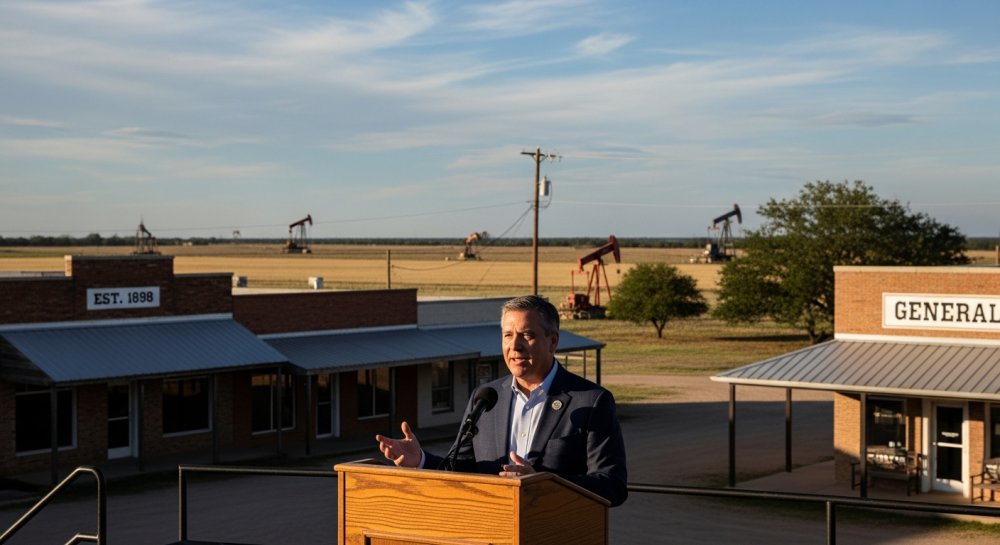
During a campaign stop in East Texas, Governor Greg Abbott made a bold declaration in defense of rural communities across the Lone Star State. The governor called for a complete prohibition on new artificial intelligence data centers in rural Texas neighborhoods, sending a clear message that not all progress comes at any cost.
Abbott’s stance reflects growing concerns among rural residents who fear their traditional way of life is being threatened by Silicon Valley’s relentless expansion. These massive data centers, while profitable for tech companies, bring concerns about infrastructure strain, environmental impact, and fundamental changes to the character of small-town communities.
The governor’s position demonstrates leadership on an issue that pits economic development against community preservation. While urban areas may have the infrastructure and capacity to absorb such facilities, rural neighborhoods operate on different principles – ones rooted in neighborliness, quiet living, and agricultural heritage.
Texas has long been a magnet for businesses fleeing overregulated states, but Abbott’s message is clear: growth must respect existing communities. Rural Texans didn’t build their towns and raise their families only to see them transformed overnight by corporations with no connection to local values or concerns.
The push for AI data centers in rural areas often comes with promises of jobs and tax revenue, but residents understand that such facilities can fundamentally alter their communities. From increased traffic and noise to demands on local utilities and services, the impacts extend far beyond property lines.
Governor Abbott’s call for this ban aligns with conservative principles of protecting property rights and local control. Rural communities should have a say in development that affects their daily lives, not have decisions imposed by distant corporate interests or state mandates that ignore local realities.
This issue also touches on broader questions about technology’s role in American life. While innovation drives progress, it shouldn’t steamroll the values and lifestyles that make places like rural Texas special. Faith, family, and community – these foundations of American life deserve protection from unchecked commercial expansion.
The governor’s stance may face opposition from business interests eager to capitalize on Texas’s low-regulation reputation, but Abbott appears willing to draw a line when it comes to preserving the character of rural communities. This balance between welcoming business and protecting residents shows responsible governance.
As artificial intelligence continues its rapid expansion, questions about where and how this technology integrates into American life will only grow more pressing. Governor Abbott’s position suggests that not every community needs to become a tech hub, and that traditional ways of life have value worth defending.
Let us know what you think, please share your thoughts in the comments below.


Faith Facts
- The Evangelical Press Association has launched a national search for a new executive director to lead the organization forward
- The position will oversee membership services, the annual convention, awards contest, and organizational finances
- The search represents an opportunity to strengthen Christian media’s voice in an increasingly secular media landscape
The Evangelical Press Association has announced the beginning of a national search for its next executive director, marking an important transition for one of America’s premier organizations dedicated to Christian journalism and media excellence.
The position carries significant responsibility for advancing the mission of faith-centered journalism across the nation. The incoming executive director will oversee the association’s membership operations, coordinate its annual convention that brings together Christian media professionals, manage the prestigious awards contest recognizing excellence in Christian journalism, and provide stewardship over the organization’s financial operations.
This leadership opportunity comes at a critical time when Christian voices in media face increasing pressure from secular culture and mainstream outlets that often marginalize or misrepresent people of faith. The Evangelical Press Association has long served as a vital network connecting Christian journalists, publishers, and media professionals committed to reporting news through a biblical worldview.
The organization has played an instrumental role in maintaining high standards for Christian journalism while fostering community among media professionals who share common values rooted in Scripture and traditional American principles. Through its annual convention and awards program, the association celebrates excellence in reporting that honors truth, upholds biblical values, and serves the Christian community.
The search for new leadership reflects the association’s commitment to continued growth and influence in an evolving media landscape. As secular media outlets increasingly dismiss or attack Christian perspectives, organizations like the Evangelical Press Association become even more essential in equipping and supporting journalists who refuse to compromise their faith in their professional work.
Christian media serves a unique and irreplaceable role in American society, providing news coverage that secular outlets often ignore or distort—from religious liberty battles to pro-life advocacy, from traditional family values to the persecution of Christians worldwide. The executive director position offers an opportunity to strengthen this vital ministry and expand its reach to new audiences hungry for trustworthy, faith-based journalism.
Let us know what you think, please share your thoughts in the comments below.
Faith Facts
- A 44-year-old North Carolina man was arrested in a church parking lot with multiple weapons, including flamethrowers and crossbows
- The arrest took place last weekend and prevented a potential threat to the congregation
- Law enforcement responded swiftly to protect the place of worship and its members
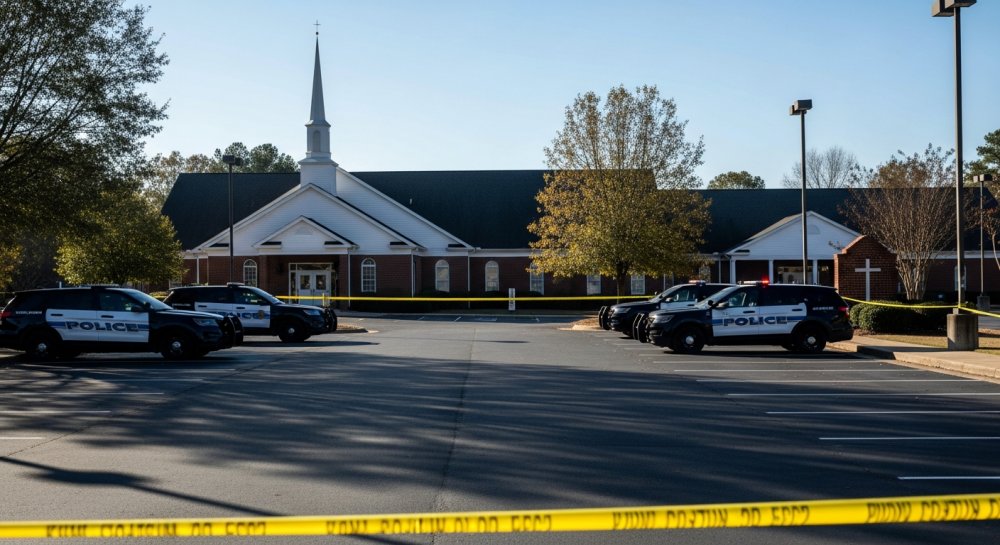
A deeply concerning incident unfolded last weekend when William S. Milliken III, 44, was taken into custody by law enforcement officials. The arrest occurred in the parking lot of a North Carolina church, where authorities discovered the suspect in possession of an alarming arsenal of weapons.
According to police reports, Milliken was found with flamethrowers, crossbows, and additional weapons in his vehicle. The discovery raised immediate concerns about the safety of the congregation and the sanctity of the church property.
Churches across America have become increasingly vigilant about security measures in recent years, as houses of worship have faced various threats. This incident serves as a sobering reminder of the importance of maintaining awareness and preparedness, even in places meant for peaceful worship and community gathering.
The swift response by law enforcement likely prevented what could have been a tragic situation. Authorities have not yet released details about Milliken’s motives or whether he had specific plans involving the church and its members.
This event highlights the ongoing need for church security protocols and the importance of community members reporting suspicious activity. Many congregations have implemented safety teams and training programs to protect their members while maintaining a welcoming environment for worship.
As investigations continue, the incident underscores the reality that our religious freedoms and the safety of our places of worship must be actively protected. The courage of first responders and the vigilance of community members play crucial roles in safeguarding our right to gather and worship freely.
Let us know what you think, please share your thoughts in the comments below.
Faith Facts
- Iran’s Christian population has grown exponentially through underground house churches despite severe persecution, with estimates ranging from 800,000 to over one million believers.
- The Islamic Republic’s brutal enforcement of religious law has paradoxically driven many Iranians away from Islam, with surveys suggesting up to 60% of young Iranians have rejected the faith.
- Iranian Christians face imprisonment, torture, and execution for their faith, yet the church continues to flourish in secret, representing one of the fastest-growing Christian movements worldwide.
As Iran’s Islamic regime shows signs of instability, American policymakers may be unprepared for the religious transformation quietly taking place beneath the surface of one of the world’s most oppressive theocracies. Decades of harsh religious enforcement have produced an unexpected result: a generation turning away from Islam and, in many cases, turning toward Christianity.
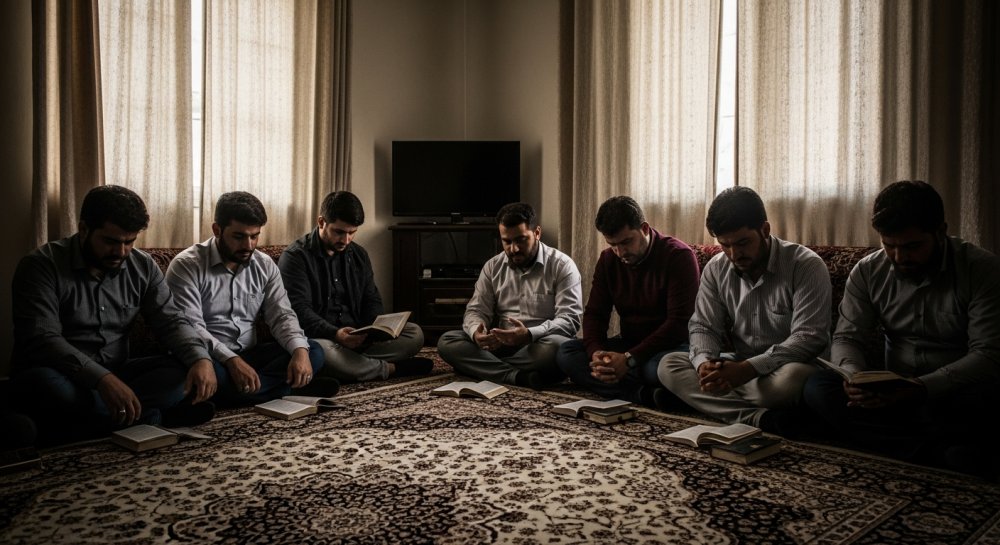
The Islamic Republic has ruled Iran with an iron fist since 1979, imposing strict Sharia law and brutally suppressing religious freedom. Yet this very oppression has sparked a spiritual rebellion that could reshape the Middle East. Underground house churches have multiplied across the nation, operating in secret to avoid the regime’s violent persecution.
“Iran is experiencing one of the fastest-growing Christian movements in the world,” according to multiple religious freedom organizations tracking persecution in the region. These conversions happen despite the very real threat of imprisonment, torture, and death for apostasy from Islam.
Young Iranians in particular have grown disillusioned with the regime’s violent interpretation of Islam. Forced religiosity has backfired spectacularly, with surveys indicating that a majority of Iranians under 40 have privately abandoned the faith that the government attempts to impose through fear and violence.
The Christian population in Iran, though difficult to measure due to security concerns, is estimated to have grown from perhaps 100,000 in the 1970s to between 800,000 and 1.5 million today. Most of these believers worship in secret house churches, risking everything to gather in Christ’s name.
This growth represents a profound irony: the regime’s attempt to create a pure Islamic state has instead pushed many Iranians into the arms of Christianity. Former Muslims describe their conversions as both spiritual awakenings and acts of resistance against an oppressive government that has conflated religious devotion with political submission.
American foreign policy has long operated under the assumption that Iran is a uniformly Muslim nation with little religious diversity. This misconception could prove costly if regime change comes. A post-Islamic Republic Iran might look very different from what Washington expects—more pluralistic, more Christian, and potentially more aligned with Western values of religious freedom.
The persecution of Iranian Christians remains severe. Believers caught gathering for worship face lengthy prison sentences in notorious facilities where torture is routine. Church leaders have been executed. Yet the church grows stronger, demonstrating the timeless truth that the blood of martyrs is the seed of the church.
Religious minorities beyond Christians have also suffered under the regime. Baha’is, Zoroastrians, Jews, and Sunni Muslims all face varying degrees of discrimination and persecution in a nation that claims religious legitimacy while denying basic religious freedom to its own citizens.
The United States has a strategic interest in understanding Iran’s changing religious landscape. When the regime eventually falls—whether through internal collapse, popular uprising, or external pressure—the nation that emerges may be far more receptive to American values and alliances than current policy assumes.
Iranian Christians have demonstrated remarkable courage and faith in the face of unimaginable persecution. Their testimony and their numbers suggest that Iran’s future may not be defined by the radical Islam that has characterized the past four decades, but by a spiritual hunger for truth and freedom that transcends political boundaries.
The transformation of Iran from an Islamic theocracy to a potentially post-Islamic society would represent one of the most significant geopolitical and spiritual shifts of our time. American Christians should be praying for their persecuted brothers and sisters in Iran, and American policymakers should be preparing for an Iran that looks nothing like the one they’ve studied for the past 45 years.
Let us know what you think, please share your thoughts in the comments below.


-

 Self-Reliance1 year ago
Trump’s Bold Move Uncovers Massive Social Security Fraud
-

 Faith1 year ago
New Clues Emerge in Noah’s Ark Mystery
-

 News1 year ago
Governor Walz’s Rhetoric Sparks National Controversy
-

 News1 year ago
Mel Gibson’s ‘The Passion of the Christ’ Sequel Title Announced
-

 Family1 year ago
Texas Lawmaker Targets Furries in Schools
-

 Freedom1 year ago
Maine Lawmaker Challenges Sports Fairness Controversy
-

 Family1 year ago
Canada’s Controversial Policy Sparks Ethical Debate
-
Faith7 months ago
Congress Hears Pleas for Nigerian Christians