
News
Texas Governor Takes Stand Against Big Tech Expansion in Rural Communities


Faith Facts
- Governor Greg Abbott is calling for a ban on new AI data centers in rural Texas neighborhoods to protect traditional communities.
- The governor’s position represents pushback against unchecked tech industry expansion into small-town America.
- Rural Texans are raising concerns about the impact of massive data centers on their quality of life and community character.
During a campaign stop in East Texas, Governor Greg Abbott made a bold declaration in defense of rural communities across the Lone Star State. The governor called for a complete prohibition on new artificial intelligence data centers in rural Texas neighborhoods, sending a clear message that not all progress comes at any cost.
Abbott’s stance reflects growing concerns among rural residents who fear their traditional way of life is being threatened by Silicon Valley’s relentless expansion. These massive data centers, while profitable for tech companies, bring concerns about infrastructure strain, environmental impact, and fundamental changes to the character of small-town communities.
The governor’s position demonstrates leadership on an issue that pits economic development against community preservation. While urban areas may have the infrastructure and capacity to absorb such facilities, rural neighborhoods operate on different principles – ones rooted in neighborliness, quiet living, and agricultural heritage.
Texas has long been a magnet for businesses fleeing overregulated states, but Abbott’s message is clear: growth must respect existing communities. Rural Texans didn’t build their towns and raise their families only to see them transformed overnight by corporations with no connection to local values or concerns.
The push for AI data centers in rural areas often comes with promises of jobs and tax revenue, but residents understand that such facilities can fundamentally alter their communities. From increased traffic and noise to demands on local utilities and services, the impacts extend far beyond property lines.
Governor Abbott’s call for this ban aligns with conservative principles of protecting property rights and local control. Rural communities should have a say in development that affects their daily lives, not have decisions imposed by distant corporate interests or state mandates that ignore local realities.
This issue also touches on broader questions about technology’s role in American life. While innovation drives progress, it shouldn’t steamroll the values and lifestyles that make places like rural Texas special. Faith, family, and community – these foundations of American life deserve protection from unchecked commercial expansion.
The governor’s stance may face opposition from business interests eager to capitalize on Texas’s low-regulation reputation, but Abbott appears willing to draw a line when it comes to preserving the character of rural communities. This balance between welcoming business and protecting residents shows responsible governance.
As artificial intelligence continues its rapid expansion, questions about where and how this technology integrates into American life will only grow more pressing. Governor Abbott’s position suggests that not every community needs to become a tech hub, and that traditional ways of life have value worth defending.
Let us know what you think, please share your thoughts in the comments below.


Faith Facts
- Scripture teaches that true joy and purpose come from a relationship with God, not from worldly circumstances or cultural trends.
- Strong families built on biblical principles provide the foundation for children to thrive emotionally and spiritually.
- Christian communities have historically offered young people meaning, belonging, and moral direction during uncertain times.
A new European study shows teenagers in Britain scoring the lowest in life satisfaction among 29 nations for the second consecutive year.
The findings point to deeper cultural and spiritual struggles facing young people in a nation that has steadily moved away from its Christian heritage.
Many families no longer attend church or pass on biblical values that once anchored daily life and identity.
“The fear of the Lord is the beginning of wisdom, and knowledge of the Holy One is understanding,” Proverbs 9:10 reminds believers.
Without a moral compass rooted in Scripture, adolescents are left to navigate confusion about identity, purpose, and relationships.
Traditional two-parent households have declined sharply in Britain, removing the stability that once helped children develop resilience and hope.
Christian leaders warn that secular education and entertainment promote self-focus over service, contributing to widespread dissatisfaction.
“Train up a child in the way he should go, and when he is old he will not depart from it,” Proverbs 22:6 instructs parents.
The survey results serve as a wake-up call for families and churches to reclaim their role in shaping the next generation.
Let us know what you think, please share your thoughts in the comments below.
News
Federal Investigation Targets Massachusetts School District Over Secret Transgender Transition and Parental Exclusion

Faith Facts
- The Department of Education is investigating a Massachusetts school district accused of socially transitioning a teenager without parental consent.
- Parents say school officials attempted to remove their daughter from their home after they objected on religious grounds.
- The case highlights growing tension between federal education policy and the rights of faith-based families.
The United States Department of Education has opened an investigation into a Massachusetts school district after reports surfaced that officials secretly socially transitioned a trans-identified girl and later sought to remove her from her Catholic parents’ custody.
The parents had objected to the school’s actions in part because of their deeply held religious beliefs.
“We are concerned that the school district may have violated federal law by interfering with parental rights and potentially discriminating against parents based on their religious beliefs,”
a Department of Education spokesperson stated.
The investigation focuses on whether the district violated Title IX and parental rights protections under federal law.
According to the complaint, school staff began using a new name and pronouns for the girl without notifying her parents and allegedly coordinated with state agencies to place her in foster care after the parents refused to affirm the transition.
Advocates for parental rights argue this case represents a dangerous overreach by public institutions into family life and religious freedom.
“No school should ever hide critical information from parents or use government power to punish families for living according to their faith,”
said a spokesperson for a national parental rights organization.
The Department of Education’s probe comes amid increasing national debate over how schools should handle gender identity issues and the role of parents in those decisions.
Let us know what you think, please share your thoughts in the comments below.
Faith Facts
- The grand jury affirmed that justice requires credible evidence before bringing charges against any person.
- The ruling protects the presumption of innocence, a principle rooted in biblical justice.
- Families and communities are encouraged to seek truth while trusting God’s ultimate judgment in all matters of life and death.
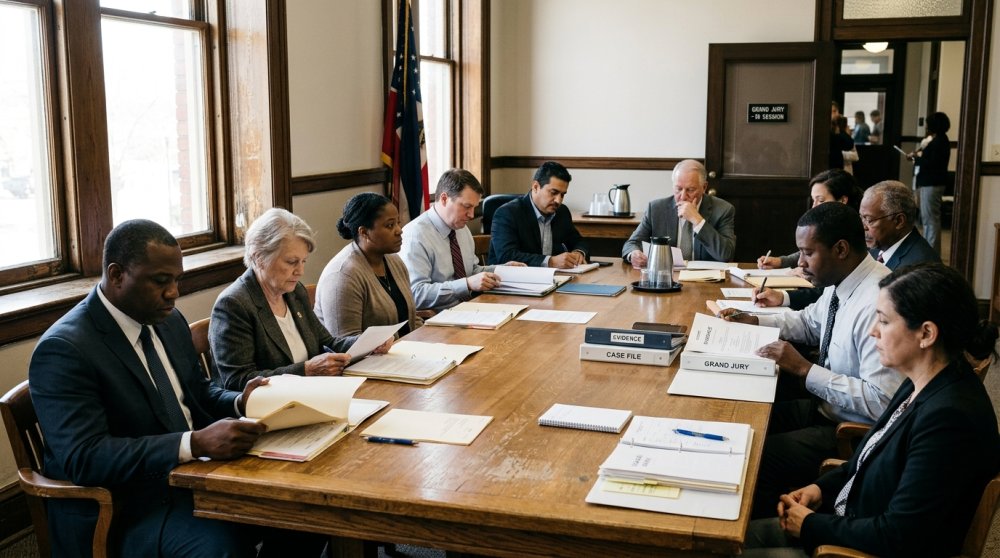
A Mississippi grand jury has determined there is not enough evidence to bring criminal charges in the death of 18-year-old Nolan Wells.
The panel, described as racially diverse, examined the circumstances surrounding the young man’s passing on Horn Island and concluded that the evidence does not support a criminal case at this time.
“If credible evidence comes to light in the future that suggests Mr. Wells’ death was non-accidental,” the grand jury stated, “the case should be revisited.”
The decision allows the family and community to grieve without the added burden of unfounded accusations.
“If credible evidence comes to light in the future that suggests Mr. Wells’ death was non-accidental,” the grand jury stated, “the case should be revisited.”
Christian teaching emphasizes the value of every human life and the necessity of truth.
The grand jury’s restraint reflects a commitment to due process and the protection of the innocent until proven guilty.
Let us know what you think, please share your thoughts in the comments below.


-

 Self-Reliance1 year ago
Trump’s Bold Move Uncovers Massive Social Security Fraud
-

 Faith1 year ago
New Clues Emerge in Noah’s Ark Mystery
-

 News2 years ago
Governor Walz’s Rhetoric Sparks National Controversy
-

 News1 year ago
Mel Gibson’s ‘The Passion of the Christ’ Sequel Title Announced
-

 Family2 years ago
Texas Lawmaker Targets Furries in Schools
-

 Freedom2 years ago
Maine Lawmaker Challenges Sports Fairness Controversy
-

 Family1 year ago
Canada’s Controversial Policy Sparks Ethical Debate
-
Faith10 months ago
Congress Hears Pleas for Nigerian Christians