
Faith
The Crisis Threatening America More Than Any Political Ideology

Faith Facts
- America’s founders established the nation on biblical principles and Christian values that created unprecedented prosperity and freedom
- The current cultural crisis stems from abandoning spiritual foundations rather than embracing any particular political ideology
- Restoring America’s biblical heritage is essential to preserving freedom and prosperity for future generations
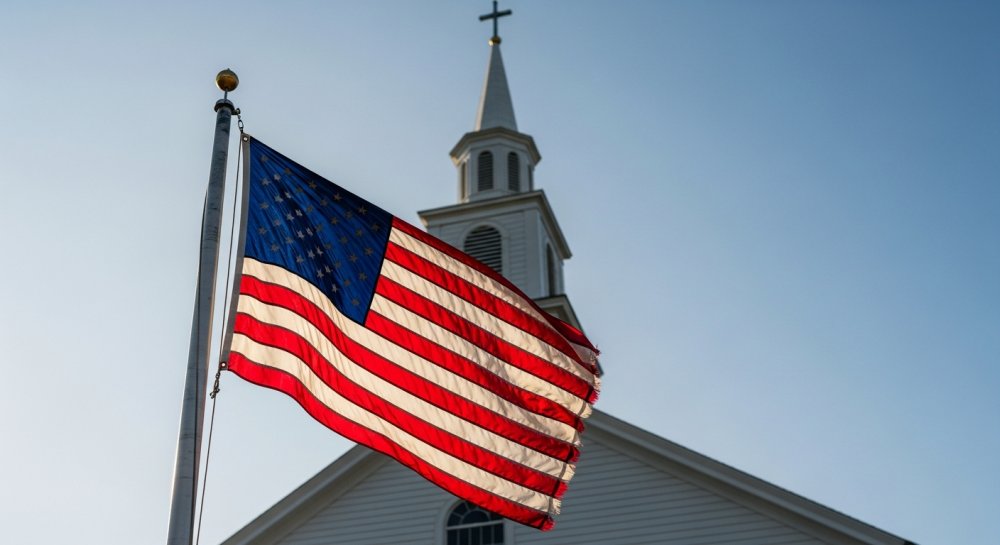
America stands at a crossroads. While political debates dominate headlines and social media feeds, a deeper crisis threatens the very foundation of our republic. The real danger facing our nation isn’t found in any political movement or economic system—it’s the spiritual decline that has steadily eroded the Christian values upon which this country was built.
Our Founding Fathers understood something that modern society has forgotten: a nation’s strength flows from its moral character, not its government programs. They established America on biblical principles, recognizing that rights come from God, not from man. This spiritual foundation created the freest, most prosperous nation in human history.
Yet today, we’ve witnessed a systematic removal of God from public life. Prayer has been banned from schools. The Ten Commandments have been stripped from courthouses. Biblical values are mocked in popular culture. This isn’t progress—it’s regression to a time when might made right and human dignity meant nothing.
The evidence of spiritual decline surrounds us. Family breakdown, rampant drug abuse, epidemic levels of depression and anxiety, rising suicide rates—these aren’t just statistics. They’re symptoms of a society that has lost its moral compass. When people abandon God, they don’t find freedom; they find chaos.
Our founders knew this truth intimately. John Adams declared that our Constitution was made only for a moral and religious people, warning it was wholly inadequate for any other. George Washington insisted that religion and morality were indispensable supports for political prosperity. Benjamin Franklin opened the Constitutional Convention with a call to prayer, recognizing divine providence as essential to their success.
These weren’t throwaway platitudes. They were fundamental convictions that shaped every aspect of American government and society. The separation of powers, checks and balances, individual rights—all reflected a biblical understanding of human nature and divine law.
Today’s problems require yesterday’s solutions. We don’t need more government programs or political reforms as much as we need spiritual renewal. America’s greatest need is a return to God—in our homes, our churches, our schools, and our public square.
This means rejecting the false gospel of secularism that promises fulfillment apart from God. It means embracing biblical truth about marriage, family, human dignity, and personal responsibility. It means teaching our children that their rights come from their Creator, not from government bureaucrats.
The path forward isn’t complicated, but it requires courage. Christians must reclaim their voice in the public square, speaking truth with love and conviction. Parents must prioritize their children’s spiritual formation over academic achievement or athletic success. Churches must preach the full counsel of God’s Word, not watered-down messages designed to avoid offense.
History proves that nations cannot survive without moral foundations. Rome fell not to barbarian armies but to internal moral decay. Every civilization that abandoned its spiritual roots eventually collapsed into tyranny or chaos. America will be no exception unless we change course.
The good news is that spiritual renewal is possible. Throughout history, God has sent revival to restore and rebuild fallen societies. America has experienced such awakenings before—powerful movements of prayer and repentance that transformed entire communities and shaped the nation’s direction.
We can experience another Great Awakening, but it must begin with individual repentance and commitment. Every Christian must ask: Am I living according to biblical values? Am I raising my children in the fear and admonition of the Lord? Am I speaking truth in my sphere of influence?
America’s future hangs in the balance. The choice before us isn’t between political parties or economic systems. It’s between the God who made us and the idols we’ve created. Between the wisdom of ages and the foolishness of the moment. Between freedom rooted in biblical truth and bondage disguised as liberation.
Our founders pledged their lives, fortunes, and sacred honor to establish a nation under God. That legacy calls us to similar commitment today. Not with muskets and minutemen, but with prayer and proclamation. Not on battlefield, but in boardrooms, classrooms, and living rooms across America.
The real problem facing America isn’t socialism, capitalism, or any other political ideology. It’s spiritual decline—the abandonment of the biblical principles that made this nation great. Until we address that fundamental issue, no political solution will provide lasting answers.
Reclaiming America’s past means returning to its spiritual roots. It means acknowledging God as the source of our rights and our hope. It means living according to His Word and teaching our children to do the same. It means putting faith first, family second, and political ideologies far behind.
Is this America’s future? That depends on whether we’re willing to reclaim our past—not a nostalgic return to some imagined golden age, but a genuine restoration of the biblical principles that made America exceptional. The choice is ours. The time is now.
Let us know what you think, please share your thoughts in the comments below.

Faith Facts
- The United Methodist Church recently adopted progressive stances on sexuality and gender that contradict traditional Methodist doctrine and Scripture
- Over 7,600 conservative congregations representing more than 2 million members have disaffiliated from the UMC since 2019
- The departing churches are maintaining John Wesley’s original teachings while the UMC hierarchy embraces secular cultural trends
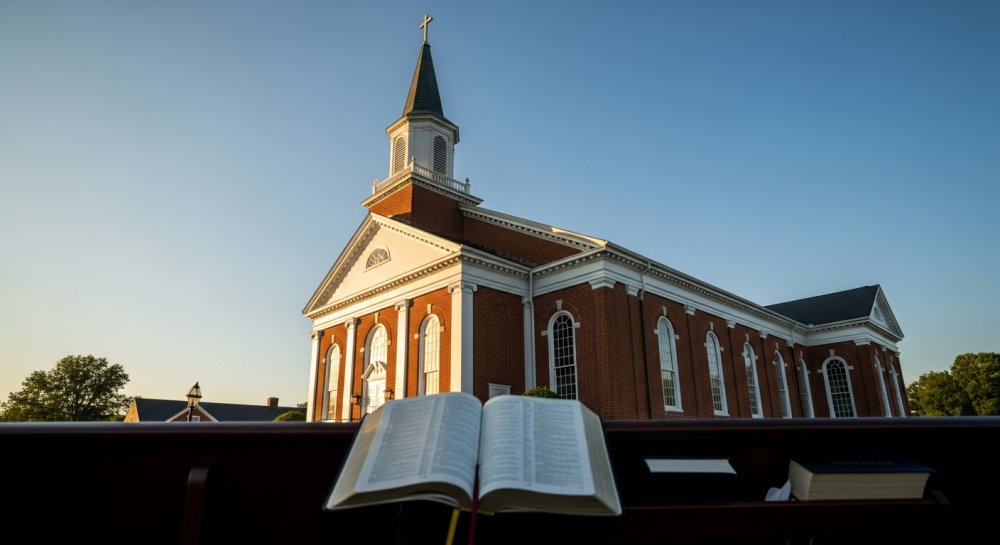
The ongoing split within the United Methodist Church has prompted many to ask a fundamental question: Who is actually abandoning the faith John Wesley established centuries ago?
The answer may surprise those who only follow mainstream media narratives.
When the UMC officially removed restrictions on same-sex marriage and ordination of non-celibate LGBTQ clergy in 2024, denominational leaders celebrated it as progress. But for millions of faithful Methodists, it represented a complete departure from biblical Christianity and the theology that defined their movement for generations.
The departing congregations aren’t leaving Methodism—they’re preserving it. These churches continue to uphold Wesley’s commitment to scriptural authority, orthodox Christian teaching, and the transformative power of the Gospel. They maintain the theological distinctives that made Methodism a powerful force for spiritual renewal in America and around the world.
Meanwhile, the institutional UMC has embraced the very cultural accommodation that Wesley himself warned against. The founder of Methodism emphasized personal holiness, biblical fidelity, and resistance to worldly compromise. Today’s UMC leadership promotes positions that would be unrecognizable to Wesley and the early Methodist pioneers.
The numbers tell the story. Thousands of churches representing some of the most vibrant, evangelistic, and missions-focused congregations in American Methodism have chosen to disaffiliate. These aren’t peripheral communities—they’re often the churches with the strongest youth ministries, the most active mission programs, and the deepest commitment to biblical preaching.
What remains in the UMC increasingly resembles mainline Protestant denominations that have been in numerical and spiritual decline for decades. When churches prioritize cultural relevance over biblical faithfulness, history shows the inevitable result: empty pews and theological confusion.
The conservative Methodist denominations emerging from this split—including the Global Methodist Church—are experiencing growth and renewed mission focus. They’re attracting not only disaffiliating UMC congregations but also new church plants led by younger pastors committed to orthodox Christianity.
This pattern repeats throughout church history. When institutional bodies drift from their theological foundations, faithful remnants preserve the original vision. The Reformation itself began when church leaders prioritized institutional power over biblical truth.
The irony is profound: those accused of leaving Methodism are actually the ones staying faithful to Methodist teaching. They hold to the same doctrines, embrace the same scriptural commitments, and pursue the same mission that defined Methodism from the beginning. The institutional UMC, by contrast, has adopted positions that explicitly contradict Methodist historical teaching and the clear witness of Scripture.
For conservative Christians watching this unfold, the lesson is clear. Denominations and institutions are only valuable insofar as they remain faithful to biblical truth. When leadership abandons that foundation, the truly faithful response isn’t blind institutional loyalty—it’s preserving authentic Christianity, even if that means forming new structures.
The exodus from the UMC also highlights a broader reality in American Christianity. Millions of believers are tired of churches that sound more like the culture than like Scripture. They’re hungry for leaders who will teach biblical truth without apology, even when that truth conflicts with popular opinion.
As this realignment continues, one thing becomes increasingly evident: the future of vibrant, growing Christianity in America belongs to those who refuse to compromise biblical teaching for cultural acceptance. The churches departing the UMC understand this. They’re not abandoning Methodism—they’re fighting to preserve it for future generations.
Let us know what you think, please share your thoughts in the comments below.
Faith Facts
- Former royal chaplain accuses King Charles III of betraying Christian faith by emphasizing multi-faith inclusivity over Christian Gospel
- King Charles pledged to ‘protect the space for Faith’ in a multi-faith nation rather than defend the Christian faith specifically
- Critics argue the monarch has abandoned his coronation duty as ‘Defender of the Faith’ and head of the Church of England
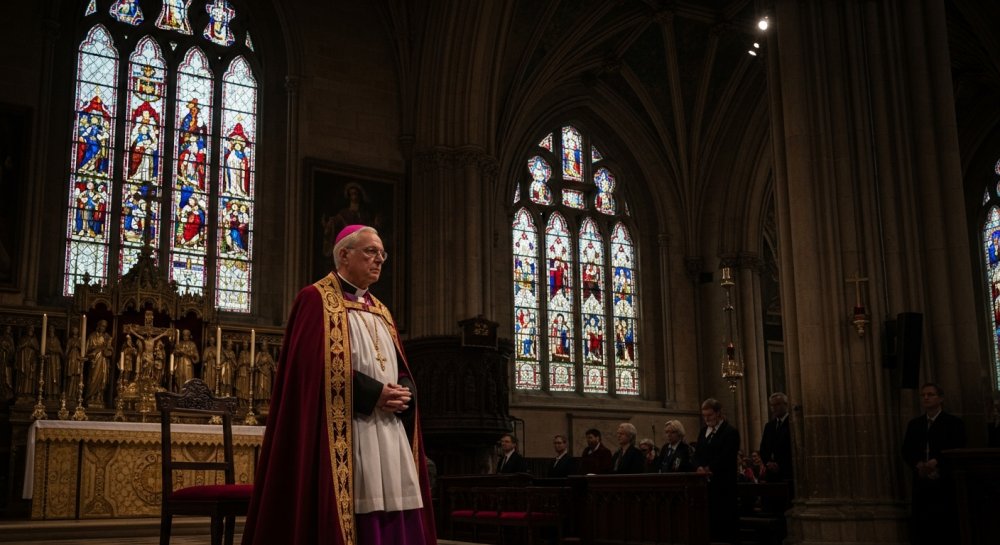
A former royal chaplain has delivered a sharp rebuke to King Charles III, accusing the monarch of betraying his Christian faith and the sacred duties of his office. The criticism centers on the King’s pledge to “protect the space for Faith within the multi-faith nation” rather than upholding the explicit Christian foundations of the British monarchy.
The controversy highlights a growing tension between Britain’s historic Christian identity and the modern push for religious pluralism. As the constitutional head of the Church of England and holder of the title “Defender of the Faith,” King Charles has unique responsibilities to uphold Christian teachings and doctrine.
The former chaplain’s accusations suggest the King has prioritized political correctness and contemporary multicultural sensibilities over the Gospel message of Jesus Christ. This represents a fundamental shift from the traditional understanding of the monarch’s role as protector and defender of the Christian faith in Britain.
Critics argue that by emphasizing a “multi-faith” approach, King Charles has effectively diluted the Christian character of the monarchy and the nation it represents. The Church of England has served as the established church since the 16th century, with the monarch serving as its Supreme Governor.
The debate reflects broader concerns among Christian conservatives about the erosion of Christian values and identity in Western nations. Many believers see the embrace of religious pluralism as undermining the unique truth claims of Christianity and the Gospel message of salvation through Jesus Christ alone.
During his coronation, King Charles took an oath to maintain “the Laws of God and the true profession of the Gospel” and to preserve “the Protestant Reformed Religion established by law.” Some observers now question whether his multi-faith approach represents a departure from these solemn vows.
The former chaplain’s criticism underscores the responsibility of Christian leaders, including monarchs, to proclaim the exclusive claims of Christ rather than treating all religions as equally valid paths. This principle resonates deeply with evangelicals and traditional Christians who believe in the Great Commission to spread the Gospel to all nations.
Britain’s Christian heritage has shaped its laws, culture, and institutions for centuries. The monarchy itself derives its authority and legitimacy from Christian tradition and biblical principles of governance.
As Western societies increasingly embrace religious diversity and relativism, Christian leaders face mounting pressure to accommodate other faith traditions. However, many believers argue this accommodation comes at the cost of biblical truth and faithful witness to Jesus Christ.
The controversy surrounding King Charles reflects broader questions about the role of Christianity in public life and whether Christian leaders should adapt their message to contemporary cultural expectations. For traditional believers, the answer remains clear: faithfulness to the Gospel must take precedence over cultural accommodation.
Let us know what you think, please share your thoughts in the comments below.
Faith Facts
- A 61-year-old Catholic man with advanced dementia died after spending nearly a year in a Pakistani jail on blasphemy charges
- Pakistan’s controversial blasphemy laws continue to be weaponized against religious minorities, particularly Christians
- The case highlights the urgent need for international pressure on Pakistan to protect religious freedom and end the abuse of blasphemy accusations
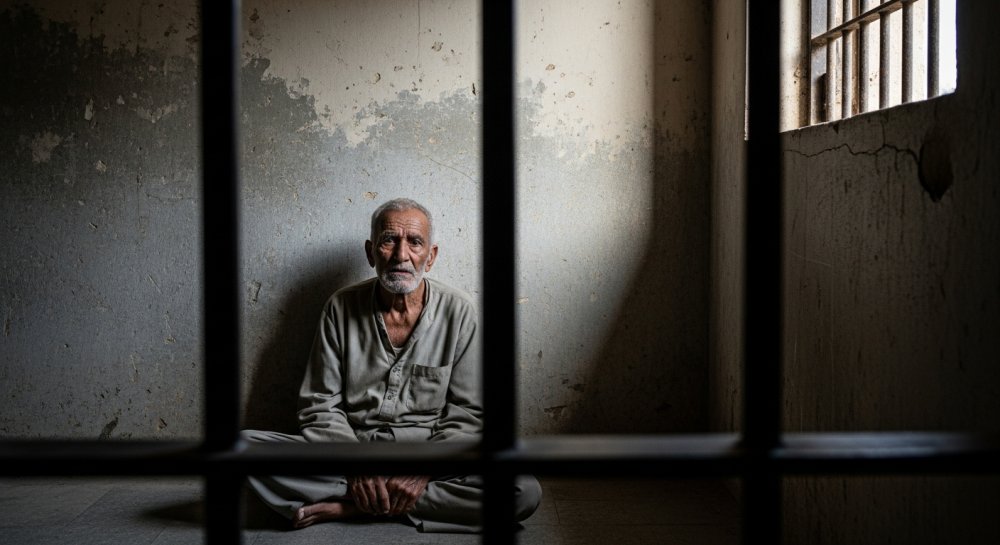
A heartbreaking case out of Pakistan has once again exposed the brutal persecution Christians face under the nation’s notorious blasphemy laws. A 61-year-old Catholic man suffering from advanced dementia has died after spending nearly a year behind bars awaiting trial on what sources confirm was a false blasphemy charge.
The elderly man’s deteriorating mental condition was well-documented, yet he was denied basic human dignity and medical care while imprisoned. His death underscores a disturbing pattern in Pakistan, where blasphemy accusations are routinely weaponized against Christians and other religious minorities, often with devastating consequences.
Pakistan’s blasphemy laws carry severe penalties, including death, and are frequently abused to settle personal scores or target vulnerable populations. Christians, who make up a small minority in the overwhelmingly Muslim nation, are disproportionately affected by these unjust prosecutions. Even unproven accusations can lead to mob violence, extended imprisonment, and as this tragic case demonstrates, death.
The man’s family and advocates had pleaded for his release, citing his severe mental impairment and inability to understand the charges against him. These pleas fell on deaf ears as he languished in a cell, denied the compassionate care any human being — let alone someone in his fragile state — deserves.
This is not an isolated incident. Pakistan consistently ranks among the world’s worst countries for religious persecution. Christian communities live under constant threat, facing discrimination in employment, education, and the legal system. False blasphemy charges have become a tool of oppression, and the international community has been far too silent.
American Christians must stand in solidarity with our persecuted brothers and sisters overseas. We must demand that our government use diplomatic and economic pressure to hold Pakistan accountable for these human rights abuses. Religious freedom is a God-given right, and no one should be imprisoned or killed for their faith.
The death of this innocent man is a sobering reminder that while we enjoy the blessings of liberty, millions around the world suffer for simply professing the name of Jesus Christ. Our prayers are with his family and all those who continue to endure persecution for their faith.
Let us know what you think, please share your thoughts in the comments below.


-

 Self-Reliance1 year ago
Trump’s Bold Move Uncovers Massive Social Security Fraud
-

 Faith1 year ago
New Clues Emerge in Noah’s Ark Mystery
-

 News1 year ago
Governor Walz’s Rhetoric Sparks National Controversy
-

 News1 year ago
Mel Gibson’s ‘The Passion of the Christ’ Sequel Title Announced
-

 Family1 year ago
Texas Lawmaker Targets Furries in Schools
-

 Freedom1 year ago
Maine Lawmaker Challenges Sports Fairness Controversy
-

 Family1 year ago
Canada’s Controversial Policy Sparks Ethical Debate
-
Faith7 months ago
Congress Hears Pleas for Nigerian Christians