
Faith
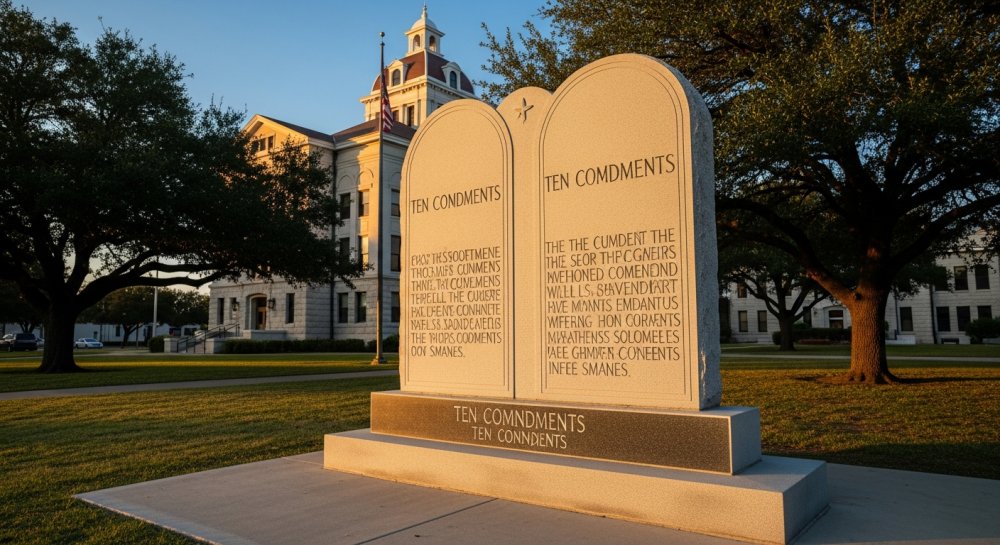
Texas County Delivers Four-Word Reply to Ten Commandments Demand

Faith Facts
- Van Zandt County Commissioners in Texas responded to the Freedom From Religion Foundation’s demand to remove a Ten Commandments monument with a four-word reply: “come and take it”
- The county erected the Ten Commandments display on the courthouse lawn in February, citing the monument’s historical and legal significance to American law
- The phrase “come and take it” references the 1835 Battle of Gonzales during the Texas Revolution, representing Texas’s tradition of defending rights and freedoms
A Texas county has drawn a line in the sand over religious liberty, refusing to bow to pressure from a secular advocacy group demanding removal of the Ten Commandments from public property. Van Zandt County Commissioners delivered a defiant four-word response rooted in Texas history: “come and take it.”
The Freedom From Religion Foundation sent a letter to Van Zandt County officials demanding the removal of a Ten Commandments monument recently erected on the courthouse lawn in Canton, Texas. The Wisconsin-based organization claimed the display violated the constitutional separation of church and state.
County officials rejected that argument outright. Through their attorney, the commissioners responded that the monument serves an educational and historical purpose, recognizing the Ten Commandments’ foundational role in American legal tradition. The display includes historical context explaining its significance in the development of Western law and the American justice system.
The phrase “come and take it” carries deep significance in Texas culture. It originated during the 1835 Battle of Gonzales, the first military engagement of the Texas Revolution. When Mexican forces demanded Texans surrender a small cannon, the colonists responded with a flag bearing the cannon’s image and the words “Come and Take It,” then successfully defended their position.
This historical reference underscores the county’s determination to resist what officials view as government overreach and attacks on religious expression in the public square. For many in the county, the monument represents not only the moral foundation of American law but also the right of communities to acknowledge their religious heritage.
The county’s legal position rests on several Supreme Court precedents, including the 2005 case Van Orden v. Perry. In that decision, the Court ruled that a Ten Commandments monument on the grounds of the Texas State Capitol was constitutional, recognizing the historical and educational context of such displays.
Van Zandt County officials argue their monument follows the same constitutional guidelines. The display presents the Ten Commandments within a broader historical framework, explaining their influence on legal codes throughout history. This contextual approach has proven successful in defending similar monuments against legal challenges nationwide.
The Freedom From Religion Foundation has targeted similar displays across the country for decades, sending demand letters to municipalities and filing lawsuits when their requests are denied. The organization maintains that any government acknowledgment of religious texts violates the First Amendment’s Establishment Clause.
However, conservative legal scholars and religious liberty advocates argue the Constitution protects, rather than prohibits, such acknowledgments of America’s religious heritage. They contend that the founders never intended to scrub all religious references from public life, but rather to prevent the establishment of a national church or the coercion of religious belief.
The dispute highlights a broader cultural battle over the role of faith in American public life. For traditional communities like Van Zandt County, displays of the Ten Commandments represent an acknowledgment of the moral principles that shaped the nation’s founding. For secular activists, they represent an unconstitutional government endorsement of religion.
Van Zandt County, located about 60 miles east of Dallas, has a population of approximately 60,000 residents. The largely rural county reflects the conservative values common to much of Texas, where public expressions of faith remain deeply woven into community life.
County officials have indicated they are prepared to defend their position in court if necessary. They view the monument as an important educational tool and a recognition of the foundational principles that have guided American justice for centuries.
The case joins a growing number of similar disputes across the nation as communities push back against efforts to remove religious symbols and references from public spaces. From nativity scenes to crosses on public land, these battles reflect fundamental disagreements about the relationship between faith and government in American society.
For supporters of the Van Zandt County monument, the county’s response represents a welcome stand for religious liberty and local self-governance. They see it as a defense of the right of communities to honor their values and history without interference from outside advocacy groups.
As the dispute continues, Van Zandt County has become a symbol of resistance to what many conservatives view as an aggressive campaign to erase Christian influence from American public life. The county’s willingness to fight for its monument has earned praise from religious liberty organizations and citizens who believe America’s religious heritage deserves recognition and protection.
Let us know what you think, please share your thoughts in the comments below.

Faith Facts
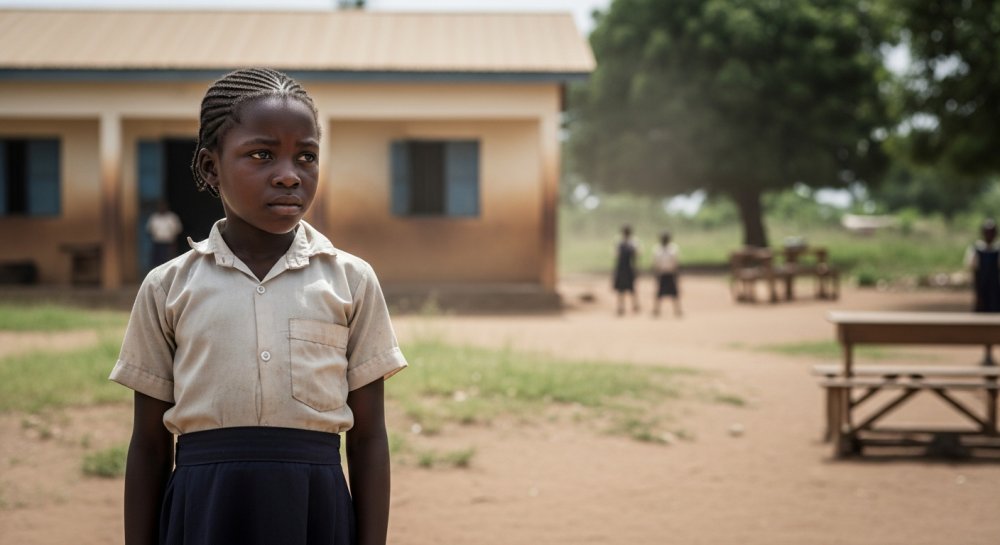
- Christian schoolgirl Leah Sharibu was abducted by Islamic extremists eight years ago in Nigeria and remains in captivity
- She was the only Christian among the abducted Dapchi schoolgirls who refused to convert to Islam, resulting in her continued detention while others were released
- Christian advocacy groups are intensifying efforts to secure her freedom, declaring eight years of captivity is unacceptable
A Nigerian Christian schoolgirl kidnapped by Islamic extremists continues to languish in captivity eight years after her abduction, as faith-based advocacy organizations renew calls for her release. Leah Sharibu’s prolonged detention stands as a sobering reminder of the persecution Christians face in regions dominated by Islamic terrorist groups.
Sharibu was among a group of schoolgirls abducted from their school in Dapchi, Nigeria, by extremist militants. While most of her classmates were eventually freed and returned home, Leah remains a prisoner to this day. The reason for her continued captivity is her unwavering Christian faith—she reportedly refused to renounce her beliefs and convert to Islam, a demand made by her captors.
Christian advocacy groups around the world are rallying support for Leah’s release, emphasizing that eight years of imprisonment for refusing to abandon one’s faith is an unconscionable violation of human rights and religious freedom. These organizations are calling on governments and international bodies to apply pressure for her safe return to her family.
The case highlights the ongoing threat faced by Christian communities in Nigeria and across parts of Africa, where Islamic extremist groups regularly target believers. Churches have been attacked, pastors killed, and young people like Leah abducted—all in attempts to force conversions or eliminate Christian presence in these regions.
Leah’s story has become a powerful symbol of Christian steadfastness under persecution. Her refusal to deny Christ, even at the cost of her freedom, echoes the testimonies of martyrs throughout church history who chose faith over compromise. For believers worldwide, her courage serves as both an inspiration and a call to action.
Advocacy groups stress that the international community must not forget Leah Sharibu or the countless other Christians suffering persecution for their faith. They argue that religious freedom is a fundamental human right that deserves protection and that abandoning believers like Leah to their captors sends a dangerous message to extremist groups.
The Nigerian government has faced criticism for its response to the ongoing crisis of Christian persecution within its borders. While some efforts have been made to combat terrorism, many feel insufficient action has been taken to protect Christian communities or secure the release of hostages like Leah.
As the eighth anniversary of her abduction passes, Christians around the world are being urged to pray for Leah’s safe return and for an end to the persecution of believers in Nigeria and beyond. Faith leaders emphasize that prayer, combined with advocacy and diplomatic pressure, remains the most powerful tool for securing justice and freedom.
Let us know what you think, please share your thoughts in the comments below.
Faith Facts
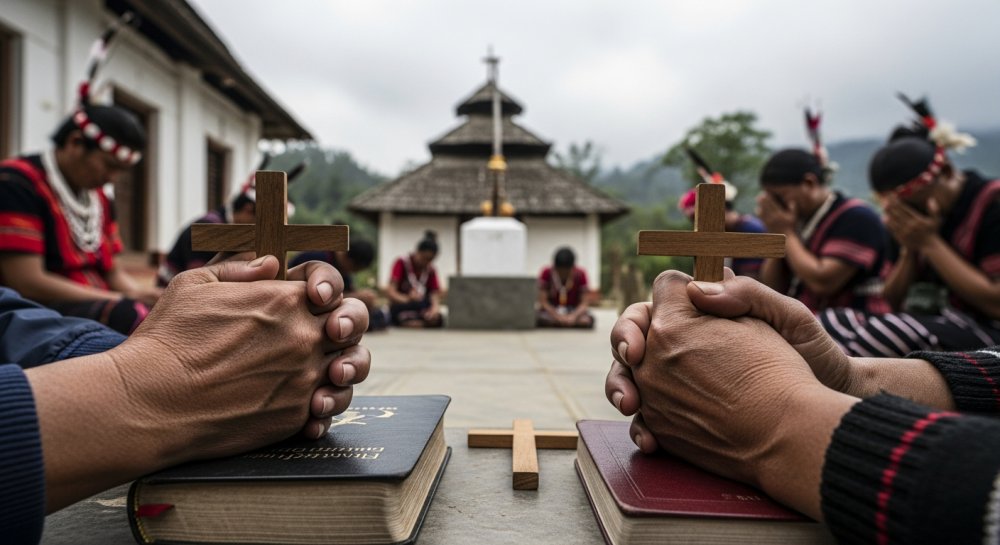
- Four bodies have been identified among six recovered in Manipur, India, as tribal violence between predominantly Christian communities continues to escalate
- The number of missing persons has dropped from 20 to 2, though retaliatory attacks persist between Kuki-Zo and Naga groups
- Christian pastors are confirmed among the deceased hostages, highlighting the tragic impact on religious leadership in the region
A heartbreaking cycle of violence has gripped the northeastern Indian state of Manipur, where Christian communities find themselves caught in deadly tribal conflict. Among the victims are pastors who served their flocks in this troubled region, their deaths marking a devastating blow to local congregations already suffering under ongoing tensions.
Authorities have confirmed that four of the six bodies recovered this week have been identified. The grim discoveries come as the number of people unaccounted for has dropped from 20 to just two, offering some measure of closure to grieving families while the region remains engulfed in crisis.
The violence represents an especially painful chapter for the Christian community in Manipur, as both the Kuki-Zo and Naga groups involved in the conflict are predominantly Christian. This reality underscores the tragic consequences when tribal and ethnic divisions override shared faith and values.
Retaliatory attacks have continued despite the recovery of hostages, creating a dangerous cycle that threatens to further destabilize the region. The pattern of abductions between the groups has left communities living in fear and uncertainty about what may come next.
The loss of pastoral leaders in this violence is particularly significant for Christian communities that depend on these shepherds for spiritual guidance during times of crisis. Their deaths leave congregations without the very voices that could help promote peace and reconciliation in accordance with biblical teachings.
The situation in Manipur serves as a sobering reminder of the persecution and challenges faced by Christians in various parts of the world. It also highlights the urgent need for prayer and support for believers navigating complex cultural and tribal dynamics while maintaining their witness for Christ.
As these predominantly Christian communities struggle with internal conflict, the broader Christian world is called to remember our brothers and sisters in prayer. The path forward requires divine intervention to break the cycle of violence and restore the peace that can only come through Christ.
Let us know what you think, please share your thoughts in the comments below.
Faith Facts
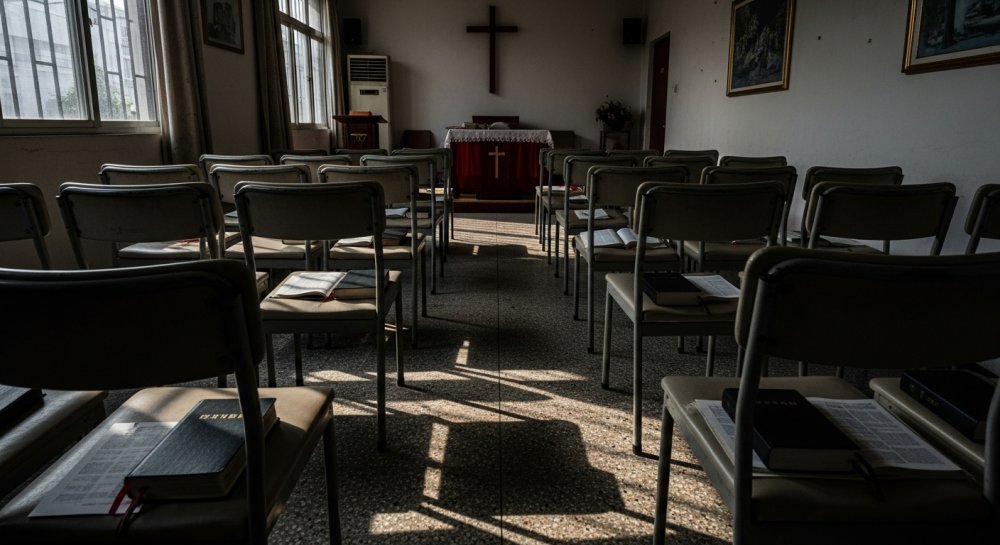
- Chinese Communist Party authorities raided a Protestant house church during Sunday worship services, detaining two church leaders and dozens of members, including children
- The crackdown represents the latest escalation in the CCP’s ongoing campaign against unregistered Christian churches that refuse state control
- House churches in China continue to face intensified persecution as the communist regime tightens restrictions on religious freedom
The Chinese Communist Party has once again demonstrated its hostility toward religious freedom by raiding a Protestant house church during Sunday worship services. Authorities detained two church leaders along with dozens of congregation members, including children, in what marks another disturbing chapter in the regime’s war against Christianity.
The raid targeted an influential Protestant house church, one of many unregistered congregations that operate outside the government’s tightly controlled religious framework. These independent churches refuse to submit to the state-sanctioned Three-Self Patriotic Movement, which requires Christian teachings to align with Communist Party ideology.
For American Christians who value religious liberty as a foundational freedom, this crackdown serves as a sobering reminder of what happens when governments seek to control faith. The detention of children alongside their pastors and parents reveals the totalitarian nature of the Chinese regime, which sees even the youngest believers as threats to its authority.
House churches have existed in China for decades as faithful Christians have sought to worship God according to their conscience rather than government dictates. These congregations have grown substantially in recent years, despite—or perhaps because of—increasing persecution. Estimates suggest tens of millions of Chinese Christians worship in underground churches, unwilling to compromise their faith for state approval.
The Communist Party’s intensified crackdown on religious expression accelerated under President Xi Jinping, who has implemented increasingly restrictive policies on Christianity, Islam, and other faiths. Churches have been demolished, crosses torn down, Bibles confiscated, and pastors imprisoned. The regime views independent religious gatherings as competing centers of loyalty that challenge the Party’s absolute control over Chinese society.
This latest raid underscores the courage required to practice Christianity in communist China. Believers face constant surveillance, harassment, detention, and in some cases, lengthy prison sentences. Yet they continue to gather, teach their children about Jesus, and proclaim the Gospel despite severe consequences.
American Christians should not take their religious freedom for granted. What happens in China demonstrates what occurs when governments reject God-given rights in favor of state supremacy. Supporting persecuted believers through prayer, advocacy, and awareness remains a biblical imperative for the global Church.
The detention of children in this raid particularly highlights the CCP’s determination to prevent the next generation from embracing Christianity. Communist authorities understand that faith passed from parents to children threatens their ideological monopoly. By targeting families and young believers, the regime attempts to sever the transmission of Christian values across generations.
Let us know what you think, please share your thoughts in the comments below.


-

 Self-Reliance1 year ago
Trump’s Bold Move Uncovers Massive Social Security Fraud
-

 Faith1 year ago
New Clues Emerge in Noah’s Ark Mystery
-

 News1 year ago
Governor Walz’s Rhetoric Sparks National Controversy
-

 News1 year ago
Mel Gibson’s ‘The Passion of the Christ’ Sequel Title Announced
-

 Family1 year ago
Texas Lawmaker Targets Furries in Schools
-

 Freedom1 year ago
Maine Lawmaker Challenges Sports Fairness Controversy
-

 Family1 year ago
Canada’s Controversial Policy Sparks Ethical Debate
-
Faith7 months ago
Congress Hears Pleas for Nigerian Christians