
Faith
Seminary Professors Issue Urgent Warning About AI in Christian Education


Faith Facts
- Two prominent evangelical professors are urging seminary faculty worldwide to address artificial intelligence’s growing influence on theological education
- Experts warn that AI poses both unprecedented opportunities and serious risks to how Christian students learn, write, and develop critical thinking skills
- The call comes as AI tools rapidly transform traditional classroom dynamics and academic integrity standards across Christian higher education
As artificial intelligence continues its rapid integration into every corner of American life, two leading voices in evangelical theological education are sounding the alarm about its transformative impact on seminary classrooms. Their message is clear: Christian educators must engage with this technology now, understanding both its potential benefits and its serious limitations.
The professors are urging seminary faculty across the globe to take seriously the challenge AI presents to traditional Christian education. The technology is already reshaping fundamental aspects of how students approach their studies—from writing assignments to theological reasoning itself.
This isn’t simply about detecting plagiarism or monitoring academic dishonesty. The deeper concern involves how AI may fundamentally alter the way future pastors, missionaries, and Christian leaders develop their capacity for critical thinking and theological discernment. These skills have traditionally been honed through rigorous study, prayerful reflection, and intellectual struggle—processes that AI threatens to short-circuit.
The rapid adoption of AI tools by students has created an urgent need for Christian institutions to establish clear guidelines and theological frameworks. Without proper guardrails, there’s risk that seminarians may become overly dependent on technology that cannot replicate the spiritual dimension of theological study or the formation of godly character.
Yet the professors also recognize that AI isn’t going away. Rather than simply resisting the technology, they advocate for a balanced approach that acknowledges legitimate educational applications while maintaining the irreplaceable human and spiritual elements of preparing men and women for ministry.
The challenge for Christian educators is to discern how AI can serve theological education without supplanting the essential work of the Holy Spirit in forming faithful servants of Christ. This requires wisdom, discernment, and a commitment to upholding traditional Christian values even as technology evolves.
For conservative Christians who value both intellectual rigor and spiritual formation, this conversation couldn’t be more timely. The question isn’t whether AI will impact Christian education—it already has. The question is whether Christian institutions will lead in establishing faithful, biblically-grounded approaches to this technology, or simply react to changes imposed from secular culture.
As these professors make clear, the stakes are high. The next generation of Christian leaders is being trained today, and the methods and tools they use will shape the church for decades to come. Faithful stewardship demands that Christian educators engage thoughtfully with AI, neither embracing it uncritically nor rejecting it out of fear.
Let us know what you think, please share your thoughts in the comments below.

Faith Facts
- Many local churches remain virtually unknown to their surrounding communities despite decades of presence on the same corner
- Christian congregations are facing a visibility crisis that prevents them from fulfilling the Great Commission effectively
- Church leaders are being called to rethink their approach to community engagement and Gospel outreach in an increasingly disconnected society
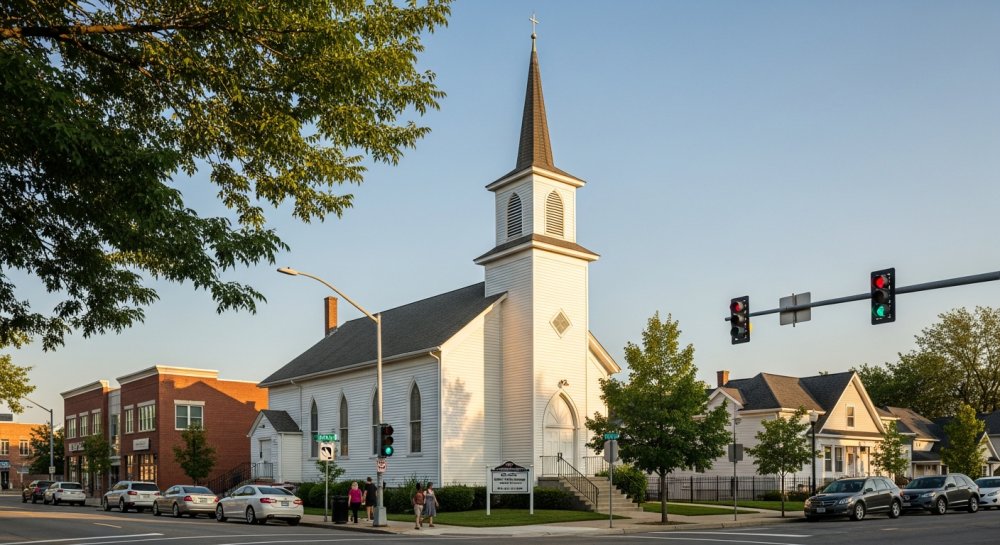
Across America, a troubling reality confronts the faithful: churches that have stood as pillars in their neighborhoods for generations are somehow invisible to the very people they were called to serve. The building may be visible, the sign may be posted, but the mission remains hidden from view.
This isn’t a problem of physical presence. These congregations occupy real estate, maintain their properties, and gather weekly for worship.
Yet something fundamental has shifted in how the American church connects with its community. In an age where visibility seems effortless—where businesses advertise on every platform and causes trend on social media—too many houses of God remain anonymous to their neighbors. The disconnect raises a critical question for believers committed to the Great Commission: How can we share the transforming power of Christ with people who don’t even know we’re here?
The challenge isn’t new, but it has intensified. Previous generations could rely on cultural Christianity and community tradition to draw people through their doors. Today’s reality demands intentionality. Churches can no longer assume that simply opening their doors on Sunday morning constitutes effective witness to a watching world.
For pastors and church leaders, this represents both a wake-up call and an opportunity. The Gospel hasn’t changed, but the methods of sharing it must evolve to reach an increasingly unchurched population. Traditional approaches that worked when America was more culturally Christian no longer suffice in a post-Christian landscape.
The solution begins with honest assessment. Church leaders must ask themselves hard questions: Does our community know what we believe? Do our neighbors understand that they’re welcome? Are we actively serving the practical needs around us, or have we become an insular social club?
Visibility in the modern context means more than a building and a sign. It requires deliberate community engagement—serving in schools, supporting local businesses, addressing real needs with the love of Christ. It means Christians must be salt and light beyond the four walls of their sanctuary.
Social media and digital presence matter, but they cannot replace authentic relationships. The most effective witness remains person-to-person, neighbor-to-neighbor, life-to-life. When church members actively live out their faith in their workplaces, neighborhoods, and civic spaces, the entire congregation becomes visible.
Some churches have embraced this challenge with remarkable results. They’ve moved beyond simply inviting people to church and started bringing the church to the people—hosting community meals, offering practical assistance, creating spaces where the unchurched feel welcomed rather than judged.
This isn’t about compromising biblical truth or watering down the Gospel. It’s about remembering that Jesus himself went to where people were. He met them in their need, spoke to their circumstances, and demonstrated the Father’s love before calling them to repentance and new life.
The American church stands at a crossroads. We can continue operating as we always have, content with our insider culture while the world passes by unaware. Or we can reclaim our calling as ambassadors of Christ, determined to make Him known in every neighborhood, on every corner, to every person God has placed within our reach.
For churches willing to step out from behind their stained glass and into their communities, the harvest remains plentiful. People are spiritually hungry, searching for meaning, longing for authentic connection. They’re looking for hope in a troubled world. The question is whether they know where to find it.
The crisis of invisibility is ultimately a crisis of mission. When churches hide in plain sight, they fail to fulfill the purpose for which they exist. The remedy requires courage, creativity, and a willingness to prioritize Gospel advancement over institutional comfort.
Our communities need to know we’re here—not because we want to fill pews, but because we serve a Savior who transforms lives and offers hope that this broken world desperately needs.
Let us know what you think, please share your thoughts in the comments below.

Faith Facts
- More than 13,000 young Christians gathered across two Manila venues on Philippine Independence Day for The Send Philippines mobilization event
- Organizers emphasize this marks the beginning of a sustained, multi-church initiative rather than a one-time gathering
- The event strategically took place on June 12, connecting spiritual mobilization with Philippine national independence
A powerful gathering of faith swept through Manila on June 12, as thousands of young believers assembled to answer a call that organizers say will resonate far beyond a single day. The Send Philippines brought together more than 13,000 young people across two venues in the Manila area, marking what leaders describe as the launch of an ongoing movement rather than a standalone event.
The timing proved significant, as the gathering coincided with Philippine Independence Day. This connection between spiritual awakening and national identity underscored the event’s deeper purpose: mobilizing a generation of Filipino Christians for long-term kingdom work.
What sets this gathering apart from typical youth conferences is the organizers’ stated commitment to sustained mobilization. Rather than creating a temporary spiritual high that fades after the final worship song, The Send Philippines represents the starting point of a coordinated, multi-church initiative designed to channel young people’s passion into lasting ministry impact.
The dual-venue format allowed organizers to accommodate the overwhelming response while maintaining the event’s participatory nature. Thirteen thousand young voices united in worship and commitment signals something significant stirring among Filipino believers—a recognition that their generation carries both privilege and responsibility in advancing the Gospel.
This mobilization reflects a broader pattern emerging across Asia, where young Christians are increasingly stepping forward to take ownership of their faith and their role in the Great Commission. The Philippines, with its strong Christian heritage and youthful population, stands positioned to become a sending nation rather than merely a mission field.
The multi-church approach proves essential to the initiative’s sustainability. By bringing together congregations across denominational lines, The Send Philippines creates infrastructure for ongoing collaboration that extends well beyond the excitement of a single gathering.
For American Christians watching this development, the Filipino mobilization offers both encouragement and challenge. It demonstrates that God continues raising up laborers from unexpected places, while reminding Western believers that the center of global Christianity has shifted southward and eastward.
The connection to Independence Day adds layers of meaning. Just as the Philippines celebrates freedom from colonial rule, these young believers are declaring spiritual independence from passivity and cultural Christianity, choosing instead active discipleship and mission engagement.
Let us know what you think, please share your thoughts in the comments below.

Faith Facts
- Pastor Seth Troutt offers a biblical alternative to modern influencer culture’s vision of masculinity
- The rise of figures like Andrew Tate reveals young men’s desperate search for purpose and direction
- True biblical manhood is rooted in humility, discipline, responsibility, and servant leadership
As a generation of young American men searches for meaning and purpose in an increasingly confused culture, one pastor is pointing them back to Scripture’s timeless model of masculinity.
Pastor and author Seth Troutt is offering a biblical vision of manhood that stands in stark contrast to the messages flooding social media from popular influencers. While figures like Andrew Tate have captured massive followings among young men seeking direction, Troutt argues that only God’s Word provides the true foundation for masculine identity.
The popularity of controversial influencers reveals a hunger among young men that the church must address with biblical truth. Rather than allowing secular voices to define manhood for this generation, Christian leaders are called to present Scripture’s countercultural vision of strength, leadership, and purpose.
Troutt’s approach centers on core biblical principles: humility before God, personal discipline, taking responsibility, and serving others sacrificially. This model directly challenges both the passive, directionless masculinity promoted by progressive culture and the pride-driven, self-centered masculinity marketed by some secular influencers.
The crisis of masculinity in America is real and urgent. Young men are struggling with identity, purpose, and direction at alarming rates. Suicide rates, educational achievement gaps, and lack of life direction point to a generation desperately needing solid biblical teaching about what it means to be a man.
The church has a unique opportunity and responsibility to fill this void with truth. Scripture offers a robust, compelling vision of manhood—men who lead with love, protect with courage, provide through hard work, and point others to Christ through humble service.
Biblical masculinity is not about domination or passivity, but about stewarding God-given strength and leadership for His glory and others’ good. It calls men to be both tender and tough, gentle and firm, humble and confident—all grounded in submission to Christ.
As cultural confusion intensifies, faithful pastors and teachers must boldly proclaim what God’s Word says about manhood. The next generation is listening, searching, and hungry for truth that resonates with how God created them.
The answer to our masculinity crisis isn’t found in self-help gurus or social media influencers, but in the eternal Word of God and the perfect example of Jesus Christ—the ultimate man who combined perfect strength with perfect love.
Let us know what you think, please share your thoughts in the comments below.


-

 Self-Reliance1 year ago
Trump’s Bold Move Uncovers Massive Social Security Fraud
-

 Faith1 year ago
New Clues Emerge in Noah’s Ark Mystery
-

 News1 year ago
Governor Walz’s Rhetoric Sparks National Controversy
-

 News1 year ago
Mel Gibson’s ‘The Passion of the Christ’ Sequel Title Announced
-

 Family1 year ago
Texas Lawmaker Targets Furries in Schools
-

 Freedom1 year ago
Maine Lawmaker Challenges Sports Fairness Controversy
-

 Family1 year ago
Canada’s Controversial Policy Sparks Ethical Debate
-
Faith7 months ago
Congress Hears Pleas for Nigerian Christians