
Faith
A Hidden Crisis in Christian Compassion That Demands Our Attention

Faith Facts
- Up to 80% of children in orphanages worldwide have at least one living parent, revealing a family separation crisis rather than true orphan care
- Research shows orphanages can cause lasting trauma and developmental delays in children, even when well-intentioned
- Family-based care models align more closely with biblical principles of preserving families and protecting the vulnerable
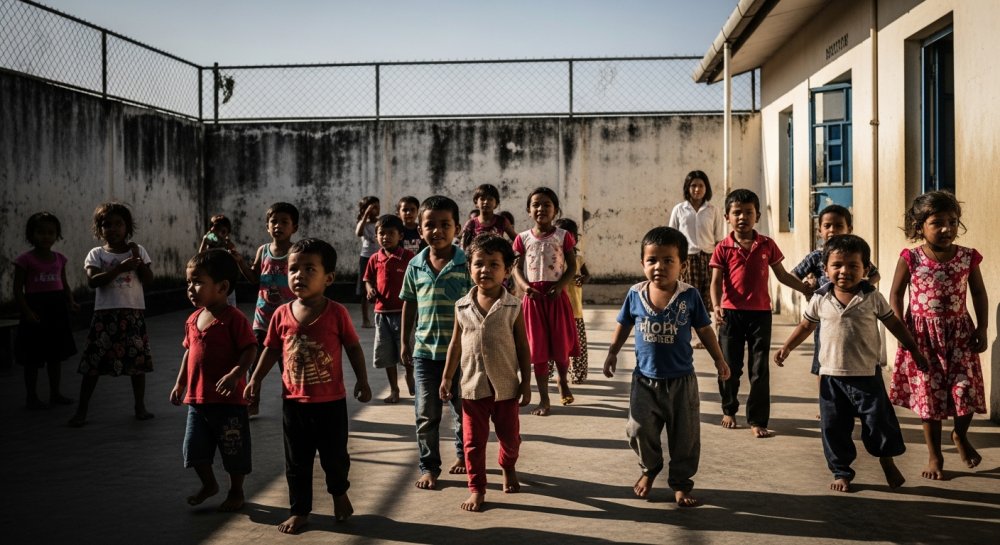
For generations, American Christians have supported orphanages around the world with the best of intentions — answering the biblical call to care for the fatherless and vulnerable. But a growing body of evidence suggests our compassion may be inadvertently causing harm to the very children we seek to help.
The uncomfortable truth is that most children in orphanages aren’t actually orphans. According to research, up to 80% of children living in institutional care have at least one living parent.
These facilities often separate children from families struggling with poverty, not because parents don’t love their children, but because they lack resources to care for them. When well-meaning donors fund orphanages, they can unintentionally create an economic incentive that pulls families apart rather than strengthening them.
“We must ask ourselves: are we truly serving these children in the way God intends, or are we simply making ourselves feel better?” says one child welfare advocate familiar with faith-based missions.
The science is clear: children thrive in families, not institutions. Research consistently shows that orphanages — even clean, well-staffed ones — can cause developmental delays, attachment disorders, and lasting psychological trauma. Children need the consistent love and attention of a parent or caregiver, something institutional care simply cannot provide.
This doesn’t mean Christians should abandon their calling to care for vulnerable children. Rather, it means we must redirect our resources toward solutions that truly honor God’s design for families.
Family preservation programs that provide economic support, parenting education, and community resources can keep families together. Foster care and domestic adoption within a child’s own culture and country offer family-based alternatives. Supporting kinship care — placing children with extended family members — maintains crucial family connections.
The biblical mandate is clear: God places the lonely in families (Psalm 68:6). He is a father to the fatherless (Psalm 68:5). Our calling isn’t simply to house children, but to ensure they experience the love, belonging, and security that can only come through family.
“True religion before God the Father is this: to care for orphans and widows in their distress,” James 1:27 reminds us. But caring for them means doing what’s actually best for them, not what makes us feel good.
This shift requires American churches to become more informed donors and mission partners. Before supporting any children’s ministry overseas, churches should ask hard questions: Are children truly orphaned, or could family reunification be possible? Does this organization prioritize family preservation? What is the plan for each child to grow up in a permanent family?
The transition away from orphanage support isn’t easy. Many Christians have deep emotional connections to specific facilities they’ve visited or supported for years. But our commitment must be to the welfare of children, not to institutions.
Countries like Rwanda have led the way, closing orphanages and moving children into family-based care with remarkable success. Christian organizations can support this biblical model of care rather than perpetuating systems that separate families.
As believers, we are called to defend the cause of the weak and fatherless, to maintain the rights of the poor and oppressed (Psalm 82:3). That defense means advocating for what research and Scripture both confirm: children belong in families.
Our heavenly Father adopted us into His family — not into an institution. If we truly want to reflect His heart, we must ensure the same for vulnerable children around the world.
Let us know what you think, please share your thoughts in the comments below.


Faith Facts
- NASA Artemis II pilot Victor Glover, a member of the Southeast Church of Christ in Friendswood, Texas, just completed humanity’s first lunar mission in 53 years, traveling a record-breaking 252,756 miles around the moon.
- The Christian astronaut says grace was essential for survival in the minivan-sized capsule, with the crew constantly giving and receiving grace during their 10-day journey.
- During a 40-minute communications blackout behind the moon, Glover’s spontaneous first response was to pray, describing prayer as both a planned ritual and an organic response to witnessing God’s creation.
After looping around the moon on NASA’s first lunar mission in 53 years, Artemis II pilot Victor Glover shared his remarkable story of faith, prayer, and exploration with an exclusive audience. Glover and his crewmates — Americans Reid Wiseman and Christina Koch and Canadian Jeremy Hansen — traveled 252,756 miles, a new record for human spaceflight.
The 50-year-old Christian astronaut, a member of the Southeast Church of Christ in Friendswood, Texas, spoke candidly about how his faith shaped and was shaped by the life-changing mission. Drawing from the unique perspective of his 10-day journey, Glover offered insights that reveal how deeply God’s presence can be felt even in the farthest reaches of space.
Here are three powerful takeaways from this faithful explorer’s reflections on his historic mission:
1. Grace shapes life on Earth and in deep space.
Inside the Orion capsule — roughly the size of a minivan — four astronauts lived and worked in a confined space, where success depended on character just as much as skill. Over three years, the four members of the Artemis II crew worked with specialized NASA operational psychologists in preparation for life in orbit.
Their training extended beyond spaceflight, ranging from learning from British historians about the moon’s historical and religious significance to studying creative language with an English professor. This holistic preparation reveals a recognition that human excellence requires more than technical prowess — it requires wisdom, perspective, and the ability to work together in trying circumstances.

“We worked as hard at all the facets of this, and we still probably forgot something, but we did it intentionally — that is the point,” Glover said.
“We were willing and intentional, and we went and reached out to the people who could help us.”
The preparation shaped not only his readiness to manage tasks on the mission but also, in Glover’s case, personal faith practices, including reading the Bible and focusing on prayer. One theme remained consistent among the crew throughout the years of preparation and eventual execution: grace.
“There was a heaping of grace in that capsule. We had to give and receive grace continually.”
Although the crew named the capsule “Integrity,” Glover noted that it also could have been called “Grace,” mirroring the dependence required for living in close quarters. This acknowledgment of mutual dependence and the need for continual forgiveness reflects biblical wisdom that applies whether we’re on Earth or orbiting the moon.
2. Prayer in orbit was planned — and unplanned.
From hundreds of thousands of miles away, Earth appeared small from the window of the Orion capsule — “about the size of your thumb,” Glover said. That perspective shift brought with it profound spiritual moments.
Prayer during the mission, he said, became both structured and spontaneous. Before launch, it was intentional, part of a ritual that included preparation, speaking to his family and grounding himself. But once in orbit, prayer also emerged unexpectedly through the awe of exploring space.

“Your natural response is to call on God,” Glover said.
“The number of times that I heard, ‘Oh, my God,’ and it was truly the only thing that made sense.”
At one point during the Artemis II mission, the crew lost communication with Earth for about 40 minutes as the moon blocked radio signals. In the blackout, with no anchor point for orientation or contact with mission control, Glover paused his geological observations of the lunar surface.
For several moments, only the sounds of the capsule systems and the crew’s voices filled the cabin. With his headset still on, Glover’s first response was to pray to God.
“It welled up inside of me,” he said of the prayer, “and that’s something I’m actually going to spend more time thinking about. It’s kind of the ritual versus the response, what was just truly authentic and organic — and was a response to what we were seeing and experiencing.”
This distinction between ritualistic prayer and spontaneous communion with God speaks to the authentic relationship believers can have with their Creator. In moments of isolation and awe, prayer became not just a practice but a natural expression of the human soul reaching toward its Maker.
3. Landing on Earth brought a new perspective for Glover.
The farther Glover and the Artemis II mission traveled from Earth, the more he began to consider what it means, as Christians, to bring faith into unexplored places — and what it means that God is always present. This is a powerful reminder that there is nowhere in creation where God is not sovereign.
“We need to appreciate God in that new place,” he said.
“The weak link coming into that circumstance is us. It’s not that beautiful creation that we’re surrounded by.”
Having served aboard the International Space Station in 2020 and 2021, Glover already carried a perspective on Earth that few had experienced. But the moon mission further developed his view of how to share his experiences with others.

As the spacecraft splashed down April 10 near San Diego, one defining moment came in the medical bay as crewmate Wiseman wept with a chaplain. The scene reminded Glover that exploration reveals human dependence through the lens of achievement. Even in humanity’s greatest technological triumphs, we remain vulnerable creatures in need of God and one another.
“I have a commitment to share this experience in a way that isn’t me telling you about this one once-in-a-lifetime experience I’ve had,” Glover said.
“It’s to give it to you.”
From that view 252,756 miles away, Glover’s mission to the far side of the moon deepened his belief that exploration should draw people to God — and to each other. His journey reminds us that the heavens truly do declare the glory of God, and that scientific achievement need not be divorced from spiritual wonder.
“When I say you’re more like me than you think, or I am more like you, or we are more like one another — we’re all weak mortal beings that won’t be here forever, and we need help,” he said.
“We need God’s help, and we need each other’s help.”
This profound admission from a man who has achieved what only a handful of humans in history have accomplished speaks volumes. At our core, whether we’re standing on Earth or floating 250,000 miles above it, we remain God’s creation — finite, dependent, and in need of grace.
Let us know what you think, please share your thoughts in the comments below.

Faith Facts
- Youth unemployment has reached record levels, leaving many young adults struggling to find work despite their qualifications
- Rather than succumbing to disillusionment, Christian young people are turning to faith in God’s unchanging promises during uncertain times
- Believers are discovering that trusting God opens doors to unexpected opportunities even when the promised future seems out of reach
For countless young Americans today, the path to a stable career and financial independence feels increasingly out of reach. Despite doing everything right—earning degrees, building resumes, and sending out applications—many are facing a job market that simply isn’t delivering on the promises they were told to believe in.
Youth unemployment has climbed to unprecedented levels, creating a generation caught between preparation and opportunity. The disconnect between education and employment has left many wondering if their efforts will ever pay off.
Yet in the midst of this frustration, some young Christians are choosing a different response than despair. Rather than allowing circumstances to dictate their outlook, they’re anchoring themselves in something more reliable than economic trends or employment statistics.
The temptation to become bitter or disillusioned is real and understandable. When you’ve followed the prescribed formula—study hard, get good grades, pursue higher education—only to find the door to stability closed, it shakes your confidence. The future that was promised by teachers, guidance counselors, and society at large simply isn’t materializing for many.
But what happens when the world’s promises fail? For believers, this becomes an opportunity to test whether their faith is built on temporal circumstances or eternal truth.
Scripture reminds us that God’s character doesn’t fluctuate with economic cycles. His faithfulness isn’t dependent on employment rates, and His provision doesn’t rely on human systems functioning perfectly. While worldly institutions may crumble or fail to deliver, God remains steadfast.
This doesn’t mean ignoring the very real challenges of unemployment or pretending financial stress doesn’t exist. Rather, it means choosing to view those challenges through the lens of faith rather than fear. It means believing that God can work through closed doors just as powerfully as He works through open ones.
The unexpected benefit of uncertainty is that it forces us to depend on God rather than on our own carefully laid plans. When the conventional path forward is blocked, we become more open to the unconventional opportunities God may be placing before us. Sometimes what looks like a detour is actually a divine redirection.
Young believers facing unemployment are discovering that this season, though difficult, can be formative. It’s teaching them resilience, humility, and the difference between worldly security and spiritual security. These aren’t lessons that come easily, but they’re invaluable for a life of faith.
Rather than measuring success by society’s standards—the prestige of a job title or the size of a paycheck—this generation has the opportunity to redefine success through biblical values: faithfulness, character, service, and trust in God’s timing.
The path forward may not look like what was expected, but for those who trust in the Lord, it can lead somewhere better than they imagined. God has a history of taking people through wilderness seasons before bringing them into their purpose. Joseph endured slavery and imprisonment before becoming second-in-command of Egypt. David was anointed as king but spent years fleeing for his life before taking the throne.
For young Americans struggling to find work today, the call is to remain faithful in the waiting. Keep pursuing opportunities, but don’t let rejection define your worth. Keep developing your gifts, but recognize that your value comes from being made in God’s image, not from what you produce. Keep trusting that the God who created you has a plan for your life that no economic downturn can thwart.
This generation wasn’t promised an easy road, but they have access to the same God who has sustained His people through every trial in history. That’s a foundation worth building on, and a hope that won’t disappoint.
Let us know what you think, please share your thoughts in the comments below.
Faith Facts
- Albert and Ellen Bryan established Churches of Christ in both Tripoli, Libya, and Tehran, Iran during the 1950s, serving U.S. servicemen and civilians during the Cold War
- Their grandson, Lt. Gen. John Bradley, continued their legacy of service through 41 years in the Air Force and humanitarian work in Afghanistan through the Lamia Afghan Foundation
- Today, over 1 million Iranians worship Christianity in secret despite severe persecution, with 250 believers arrested in 2025 alone for “propaganda contrary to Islam”
Officially, fewer than 150,000 of Iran’s 93 million people claim Christianity as their faith, most of them from Armenian and Assyrian backgrounds, according to a government census. Unofficially, at least 1 million more Iranians worship in secret, and their numbers are growing, claim organizations that track religious movements.
Iranian authorities arrested more than 250 of those worshipers last year on charges of “propaganda contrary to the holy religion of Islam.” That’s nearly double the number arrested on such charges the previous year, according to a report from Open Doors, Christian Solidarity Worldwide and other nonprofits.
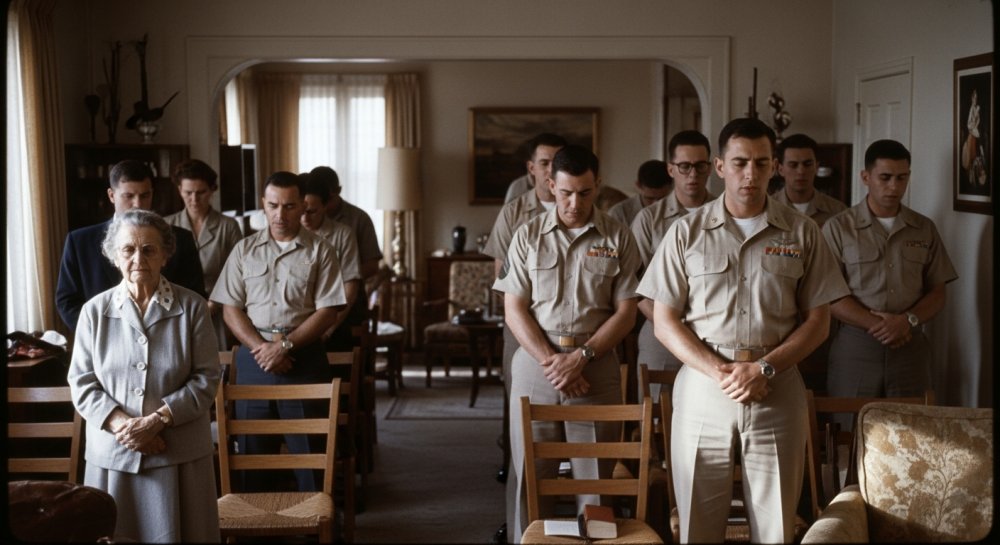
It’s difficult to imagine a time when Churches of Christ — much less, congregations comprised of U.S. servicemen — met freely in Iran and other predominantly Muslim countries, including Libya. But Churches of Christ did once exist in the capitals of Tehran and Tripoli, thanks to the work of Christians including Albert and Ellen Bryan.
A Humble Beginning in Tennessee
Born near Lebanon, Tennessee, in 1892, Albert H. Bryan Sr. was the son of a farmer who also taught in a one-room schoolhouse near his farm. Two of Albert’s brothers earned medical degrees from Vanderbilt University in Nashville, Tennessee.
One became a medical missionary in China in the 1920s and was imprisoned by the Japanese when they invaded. The Japanese later released the brother, who returned to the U.S.
Albert, meanwhile, stayed on the farm and married Ellen Waters Baker, who grew up in nearby Watertown, Tennessee. Albert took over teaching at the school when his father died.
Although he never went to college, Albert studied civil engineering through mail-order courses and got a job with the Tennessee Highway Department. He helped plan some of the first paved highways in Middle Tennessee.
Then Albert took a job in the civil engineering office at Arnold Air Force Base near Tullahoma, Tennessee. He attempted to retire in the early 1950s, but the U.S. Army Corps of Engineers asked him to change his plans and move to Libya.
Building God’s Kingdom in North Africa
At the time, the U.S. operated Wheelus Air Force Base, just east of Tripoli. Albert and Ellen moved there in early 1953.
During the Cold War, Wheelus was the largest U.S. military facility outside the U.S. Albert worked in the civil engineering department, assisting in building projects on the base.
“He and my grandmother right away started a church in their home,” said his grandson, John Bradley. “They were longtime members of the Church of Christ.”
In addition to being a self-taught civil engineer, Albert became a minister, baptizing new converts in the Mediterranean Sea. Eventually, the Tripoli Church of Christ purchased its own meeting place with the help of the College Street Church of Christ in Lebanon.
Bradley has a photo of the building, complete with North African-style pointed arches. “There is a note on the back of the photo that says it was the first ‘non-Muslim’ church ever allowed by Libya in Tripoli,” Bradley said.
From Libya to Iran
After four years, the Bryans returned to the U.S., though not for long. The Corps asked Albert to do similar engineering work in Tehran, so he and Ellen packed their bags for Iran.
“Again, my grandfather and grandmother started holding church services in their Tehran home,” Bradley said. “There were many U.S. military and civilians working there who attended those services.
I do not know if they were ever allowed to buy a building in Tehran for church services.”
During the couple’s time in Tehran, U.S. President Dwight Eisenhower visited Iran’s ruler, Shah Mohammad Reza Pahlavi.
“My grandparents saw a huge parade down a boulevard in December 1959 with the president and the shah sitting together in a Cadillac convertible,” Bradley said.
The Bryans returned to the U.S. again in 1962. Seven years later, Muammar Gaddafi seized control of Libya and ordered the closure of U.S. air bases there.
A decade later, in 1979, Pahlavi fled Tehran in the midst of the Iranian Revolution. The freedoms that had allowed American Christians to worship openly vanished.
A Legacy of Faith and Service
Albert became an elder of the College Street church, eventually serving alongside his son-in-law and Bradley’s father, Leonard K. Bradley Sr. Ellen Bryan died in 1973 at age 86.
Albert followed her in 1986 at age 91.
The couple’s sons served in the military. Albert Bryan Jr. fought in the Army in World War II.
Robert Bryan graduated from West Point before earning a doctorate in nuclear engineering. Charles Bryan attended the U.S. Naval Academy in Annapolis, Maryland, and flew reconnaissance missions during the Vietnam War.
“The sweetest man I ever knew,” said his grandson, John Bradley. “He was so kind. He was a wonderful husband to my very sweet grandmother. All the grandchildren loved them so much.”
Bradley himself served in the Air Force for 41 years. He flew 337 combat missions in Vietnam, received the Distinguished Flying Cross and earned the rank of lieutenant general before retiring.
In 2008, Bradley and his wife, Jan, launched the Lamia Afghan Foundation, named for a 9-year-old girl who pushed her way through a crowd to ask the general for boots during his tour in Afghanistan. Through the foundation, the Bradleys provided more than 3.5 million pounds of humanitarian aid to Afghanistan, built seven schools and clinics and provided prosthetics for children injured in their country’s decades of conflict.
“I always wanted to be like Papa,” Bradley said of his grandfather. “I have fallen short, but I keep trying. The work Jan and I do in Afghanistan through our foundation, we feel, is trying to help very needy people have some hope of improving their lives.”
Although laws prevented the Bradleys from evangelizing Afghans, “people there, of course, knew we were Christians,” he said.
Taking a cue from Jesus’ words in Matthew 25:40, “I looked at our work as doing for ‘the least of these.'”
Let us know what you think, please share your thoughts in the comments below.


-

 Self-Reliance1 year ago
Trump’s Bold Move Uncovers Massive Social Security Fraud
-

 Faith1 year ago
New Clues Emerge in Noah’s Ark Mystery
-

 News1 year ago
Governor Walz’s Rhetoric Sparks National Controversy
-

 News1 year ago
Mel Gibson’s ‘The Passion of the Christ’ Sequel Title Announced
-

 Family1 year ago
Texas Lawmaker Targets Furries in Schools
-

 Freedom1 year ago
Maine Lawmaker Challenges Sports Fairness Controversy
-

 Family1 year ago
Canada’s Controversial Policy Sparks Ethical Debate
-
Faith6 months ago
Congress Hears Pleas for Nigerian Christians