
Faith
Why the Biblical Vision of Your Calling Is Far Bigger Than You Think


Faith Facts
- The biblical concept of shalom encompasses far more than personal peace—it includes the flourishing of communities, cultures, and creation itself
- God’s mission for believers extends beyond traditional church activities to include every sphere of work and cultural influence
- The exile of Israel provides a powerful model for how Christians should engage with secular society while maintaining their faith identity
For too long, American Christians have confined their understanding of God’s calling to a narrow set of activities: church programs, evangelism efforts, small group Bible studies, and altar calls. While these spiritual disciplines remain essential to Christian formation, they represent only a fraction of the biblical vision for how believers are called to partner with God in the world.
The truth is, Scripture presents a vision of vocation and mission that encompasses every dimension of human life and society.
This fuller vision centers on the Hebrew concept of shalom—a word often translated simply as “peace” but which carries far deeper meaning. Shalom describes the flourishing of all creation under God’s design: right relationships between people and God, among individuals and communities, and between humanity and the created world. It represents wholeness, justice, beauty, abundance, and harmony across every dimension of existence.
When God calls His people to be salt and light, He isn’t limiting that influence to Sunday morning services or evangelistic crusades. He’s commissioning believers to bring His kingdom values into education, business, healthcare, the arts, government, science, agriculture, technology, and every other domain of human endeavor.
The exile of Israel provides a compelling biblical example of this comprehensive approach to faithful living. When the Babylonians conquered Judah and carried God’s people into captivity, it would have been natural for the Israelites to withdraw, to create isolated religious communities, to simply wait for rescue while avoiding contamination from pagan culture.
Instead, God gave them radically different instructions through the prophet Jeremiah. He told them to build houses and settle down, to plant gardens and eat their produce, to marry and have children, to seek the prosperity and welfare of the city where they had been exiled. This wasn’t surrender or compromise—it was faithful engagement motivated by love for neighbors and confidence in God’s sovereignty.
The exiles were called to maintain their distinct identity as God’s covenant people while simultaneously contributing to the common good of a society that didn’t share their faith. They were to pray for Babylon, to work for its flourishing, to be exemplary citizens and neighbors—all while refusing to worship false gods or abandon their core convictions.
This exile paradigm offers a powerful framework for Christians in contemporary America. Like the Israelites in Babylon, believers today live in an increasingly secular culture that often rejects biblical values. The temptation exists either to withdraw into Christian subcultures or to assimilate completely, losing distinctive witness.
The biblical alternative is robust engagement: Christians excelling in their professions, creating beauty through artistic gifts, developing innovations that serve human needs, establishing just business practices, advocating for vulnerable populations, stewarding natural resources wisely, and strengthening the institutions that hold communities together. All of this constitutes kingdom work—partnering with God to manifest shalom in every direction.
When a Christian teacher brings patience, creativity, and genuine care to students, that’s kingdom work. When a believing entrepreneur builds a company culture of integrity and invests profits in community development, that’s kingdom work. When a faithful nurse treats each patient with dignity reflecting the image of God, that’s kingdom work. When a Christian artist creates work that reveals truth, beauty, and goodness, that’s kingdom work.
This comprehensive vision doesn’t diminish the importance of evangelism or church life—it situates them within God’s larger purposes for His creation. Personal salvation matters eternally because God loves each individual. Corporate worship forms and sustains the community of faith. But redeemed individuals and gathered churches exist not as ends in themselves, but as God’s instruments for advancing His kingdom and demonstrating His character across all of life.
American Christianity needs this fuller perspective now more than ever. Cultural challenges require not retreat but faithful presence. Political divisions call not for tribalism but for principled engagement grounded in love for God and neighbor. Economic injustices demand not merely charity but structural wisdom. Environmental degradation requires not indifference but responsible stewardship rooted in our identity as image-bearers of the Creator.
The shalom vision empowers Christians to bring their faith to bear on these complex challenges without reducing them to simplistic spiritual formulas. It affirms that God cares about education policy and medical ethics, about artistic expression and scientific discovery, about criminal justice and agricultural practices. It recognizes that while all human efforts remain tainted by sin until Christ returns, God still calls His people to pursue goodness, truth, and beauty in every sphere of life.
This perspective also guards against the opposite error: assuming that political activism, social programs, or cultural influence constitute the entirety of Christian mission. The shalom vision is comprehensive precisely because it refuses to separate spiritual and material concerns, individual transformation and social renewal, evangelism and justice, worship and work.
Just as the Israelites in exile maintained their prayer life, observed the Sabbath, taught their children God’s law, and looked forward to redemption while also contributing to Babylonian society, contemporary Christians must sustain vibrant spiritual practices while fully engaging their callings in the world. The vertical relationship with God fuels and directs the horizontal engagement with culture.
Recovering this biblical vision requires intentionality. Churches must equip members not only for ministry within the congregation but for faithful presence in their workplaces and communities. Christian education should prepare students to think Christianly about every academic discipline and professional field. Believers need theological frameworks that connect Sunday worship with Monday’s work, that see all legitimate vocations as potential arenas for glorifying God and serving neighbors.
The exile example reveals that God’s people can thrive and contribute even in contexts that don’t acknowledge Him as Lord. It demonstrates that faithfulness doesn’t require controlling political power or cultural dominance, but rather excellence, integrity, compassion, and wisdom wherever God has placed us. It shows that seeking shalom in every direction—working for the flourishing of our cities, institutions, and neighbors—is itself an act of worship and obedience.
For Christians concerned about the direction of American culture, this vision offers hope grounded not in political strategies or culture war victories, but in the ordinary faithfulness of believers living out kingdom values in countless contexts. It’s the cumulative impact of millions of Christians doing their work with excellence, treating people with dignity, speaking truth with grace, creating beauty that points beyond itself, and building institutions and relationships that reflect God’s justice and love.
This is the partnership with God that Scripture envisions: not a narrow religious sphere separated from “real life,” but the transformation of all of life under Christ’s lordship. It’s a vision big enough to encompass the diversity of gifts, callings, and contexts among God’s people. And it’s a vision desperately needed in our time.
Let us know what you think, please share your thoughts in the comments below.

Faith Facts
- Scripture teaches that the Holy Spirit intercedes for believers with groanings too deep for words when human language fails.
- Christian tradition holds that God hears the heart’s cry even when spoken prayer seems impossible.
- Believers are encouraged to draw near to God in faith trusting His promises of presence and comfort.
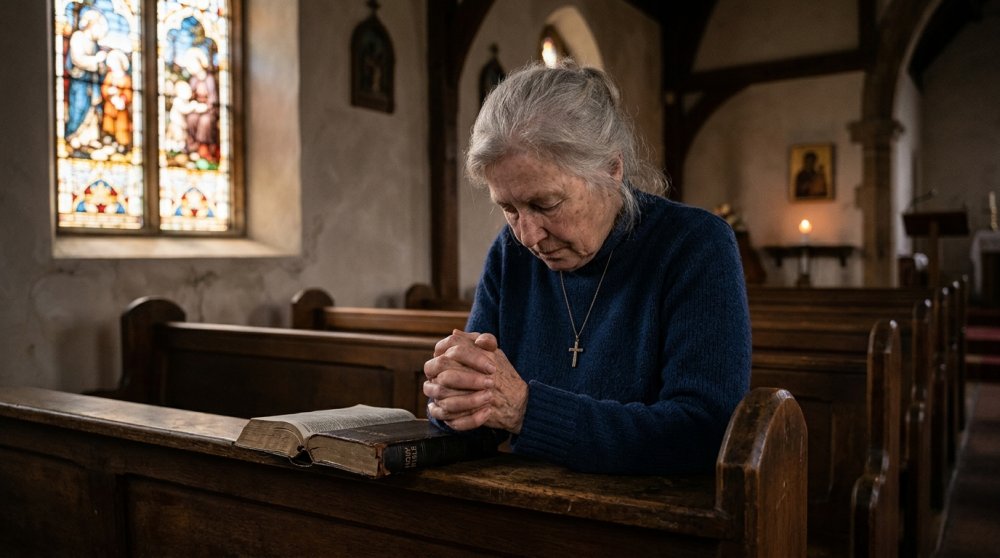
What do you do when you need God and cannot find the words to pray? The question strikes at the core of every believer’s walk with Christ.
Scripture offers both comfort and direction in such moments. Romans 8 reminds us that the Spirit Himself intercedes for us.
“Likewise the Spirit helps us in our weakness. For we do not know what to pray for as we ought, but the Spirit himself intercedes for us with groanings too deep for words.”
This divine intercession assures Christians that their prayers need not be eloquent to reach heaven. God values sincerity over polished phrases.
Many saints throughout history have testified to seasons of wordless communion with the Lord. Their experience echoes the truth that presence often matters more than perfect speech.
“Be still, and know that I am God.”
Psalm 46:10 continues to guide believers who struggle to articulate their needs. Silence before the throne can become its own powerful prayer.
Practical steps include opening the Bible and allowing God’s Word to speak when personal words fail. Reading Scripture slowly can stir the heart toward renewed trust.
Some Christians also find strength by simply repeating the name of Jesus or by offering a single honest sentence such as “Lord have mercy.”
“The Lord is near to all who call on him, to all who call on him in truth.”
Psalm 145:18 reinforces the promise that God draws close to those who seek Him even without polished prayers. His faithfulness does not depend on our eloquence.
Ultimately the answer to wordless seasons lies in resting on God’s character rather than on our own ability to perform. The Father knows what His children need before they ask.
Let us know what you think, please share your thoughts in the comments below.

Faith Facts
- Christian believers are facing declining reading habits and rising biblical illiteracy.
- Crossmap Book Club is a new digital lending library designed to make faith-based books widely accessible.
- The platform encourages community building and deeper spiritual growth among believers.
Amid declining reading habits and biblical illiteracy, a new Christian digital lending library is seeking to make faith-based literature more accessible while helping believers build community and deepen their spiritual lives.
Let us know what you think, please share your thoughts in the comments below.
Faith Facts
- Wendy Wong and her husband Anawin Rungrotpanthawee have provided housing, meals, and daily Bible study for up to thirty abandoned children in northern Thailand for the past decade.
- The couple began their work among the Akha hill tribe in Chiang Rai, offering education and discipleship to children who would otherwise have no path beyond elementary school.
- Despite having little money, Wong and her husband continue to welcome children recommended by local churches, trusting God to supply every need.
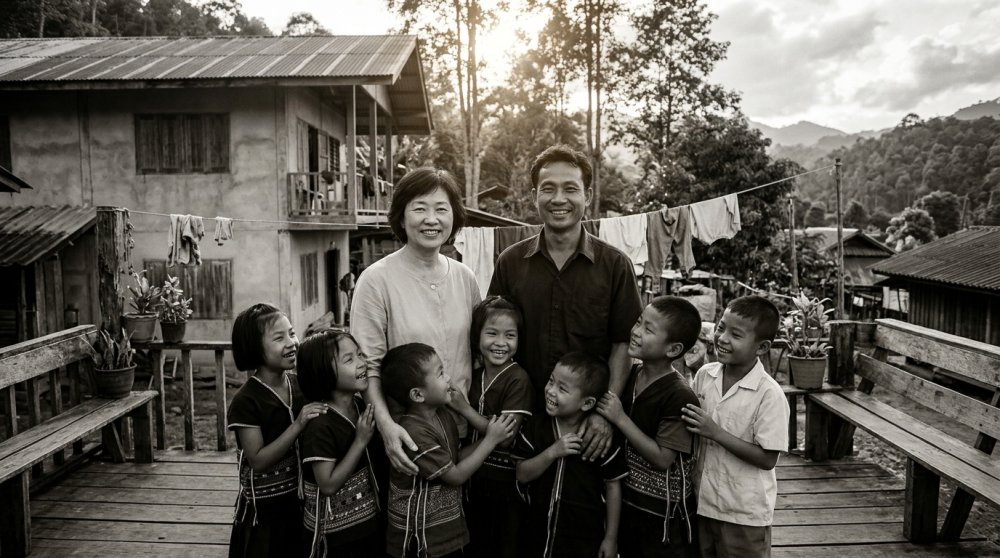
Wendy Wong was born in Hong Kong and married Anawin Rungrotpanthawee from Thailand. Seventeen years ago the newly married couple planted churches among the Akha people in the mountains near Chiang Rai.
Ten years ago they opened their home to children who had no one else. The work began with one or two children and grew as older teens moved on and new children arrived. Today as many as thirty youngsters live with them at the Eternal Life Student Centre, a ministry supported by Agape Asia and Churches of Christ.
Recently Wong spoke about the heartbreaking situations that bring children to the centre and the ways God is restoring hope and raising a new generation whose futures are no longer defined by their past.
“Much of our work takes place outside the city in small villages such as Blossom Village, where many residents belong to the Akha hill tribe. Many visitors have never heard of the Akha people until they come here and see their communities firsthand.
“We realized that many of the children in the village had no opportunity to continue their education. The village had only two elementary schools, and once students finished primary school, there was nowhere for them to continue their studies. We provide after-school care to about 110 students. It’s a program in Blossom Village that helps students with the languages, reading, mathematics and Bible. These children are sent to us by their parents in hopes that we can further develop them for future success.
“We want these children to have opportunities that their village can’t provide, so we began bringing them into the city where they could attend middle school and beyond. We provide everything they need — housing, meals, school tuition, books, clothing and daily Bible study.
“Ten years ago, we welcomed our first group of 17 students.”
“The other way we take care of children is through the Eternal Life Student Centre. We have 30 kids with us, and the youngest one is 8. The oldest one is almost 18. Ten come from Blossom Village. The remaining 20 come from other communities. Some have lost both parents. Others live with grandparents or relatives who cannot provide for them. Some are children of undocumented immigrants. Others have been orphaned because of conflict and war.
“Many of the ministers, churches and church members throughout the region know about our ministry. They regularly recommend children who need help.
“When we can, we make home visits to evaluate each family’s situation. When we see genuine need, we welcome the child into our home.
“Most of the children, when they first come to see us, are very nervous. They don’t know how to handle a relationship with strangers, and most of them just don’t know how to take care of themselves. They just don’t know how to live with a schedule, a timetable.
“Most of the children, when they first come to see us, are very nervous. They don’t know how to handle a relationship with strangers, and most of them just don’t know how to take care of themselves.”
“After several months, most of them are more cheerful. They love our center, they like their home and they start to know that having a schedule is very good in their lives. And then they enjoy playing together, eating together. Now they just love to be living in a group that has become their family.
“Some of the young people who have grown up with us are still faithfully involved in church. Others have stepped away because of the pressures of society and the difficult work environments they now face. In Thailand, many aspects of culture conflict with biblical teaching, so discipleship requires continual encouragement, teaching and honest conversations about how to live faithfully in today’s world.”
“Although they were not Christians, my parents eventually accepted my calling. They later visited us in Thailand and saw the ministry firsthand. They watched the children we were raising and recognized that God was using our lives to make a real difference. Today, they fully support what we do.
“Financially, we have very little. We have never accumulated much wealth or many possessions. I cannot give my parents expensive gifts or provide them with financial security. But I can tell them that I am doing exactly what God has called me to do.
“They now understand that while we may appear poor by the world’s standards, we are rich in purpose, rich in faith and rich in the joy of serving Christ.”
Let us know what you think, please share your thoughts in the comments below.


-

 Self-Reliance2 years ago
Trump’s Bold Move Uncovers Massive Social Security Fraud
-
 Faith2 years ago
New Clues Emerge in Noah’s Ark Mystery
-

 News2 years ago
Governor Walz’s Rhetoric Sparks National Controversy
-

 News2 years ago
Mel Gibson’s ‘The Passion of the Christ’ Sequel Title Announced
-

 Family2 years ago
Texas Lawmaker Targets Furries in Schools
-

 Freedom2 years ago
Maine Lawmaker Challenges Sports Fairness Controversy
-

 Family2 years ago
Canada’s Controversial Policy Sparks Ethical Debate
-
Faith12 months ago
Congress Hears Pleas for Nigerian Christians