
Faith
Iraqi Christian Woman Overturns Government’s Muslim Registration in Landmark Victory

Faith Facts
- An Iraqi court ruled in favor of a Christian woman who was automatically registered as Muslim by the state, allowing her religious identity to be legally corrected.
- Iraqi law automatically registers children with unmarried or unidentified fathers as Muslims, creating significant legal and personal hardships for Christians.
- The landmark ruling could establish an important precedent for protecting religious freedom rights of Iraqi Christians facing state-imposed religious classifications.
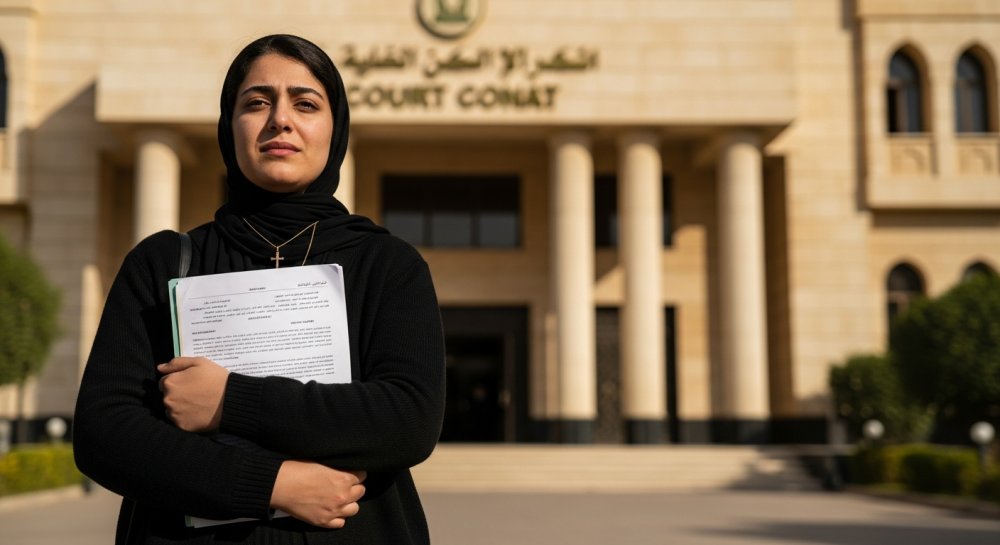
In a significant victory for religious freedom in Iraq, a court has ruled in favor of a young Christian woman who challenged the government’s automatic registration of her as Muslim. The decision allows her to have her true religious identity legally recognized in official state records. The case highlights the ongoing struggle Christians face in Iraq, where government policies can override individual faith and family heritage.
Under Iraqi law, children born to unmarried mothers or those with unidentified fathers are automatically registered as Muslims in the civil status database, regardless of their actual religious background or family practice. This policy has created severe complications for Christian families, affecting everything from marriage rights to inheritance and educational opportunities.
The woman’s legal battle focused on correcting her official religious status to reflect her Christian faith and upbringing. Iraqi Christians have long voiced concerns about such automatic classifications, which they say violate fundamental religious freedom principles and create barriers to practicing their faith openly.
Religious freedom advocates view the court’s decision as a potential turning point. The ruling could establish legal precedent that protects other Christians from having their religious identity overridden by state databases, allowing them to maintain their faith heritage in official records.
Iraq’s Christian population has declined dramatically in recent decades due to persecution, conflict, and discriminatory policies. Many have fled the country, reducing what was once a vibrant Christian community of over one million to fewer than 250,000 today. Legal challenges like automatic Muslim registration have compounded the difficulties Christians face in remaining in their ancestral homeland.
The case underscores the importance of religious freedom protections in the Middle East, where Christian minorities often face institutional barriers to practicing their faith. For Iraqi Christians, the ability to have their religious identity accurately recorded in government documents is not merely administrative—it affects their daily lives, legal rights, and ability to pass their faith to future generations.
Christian advocacy groups monitoring religious freedom in Iraq have welcomed the court’s decision as a step forward. They emphasize that protecting the right to religious identity is essential for preserving Iraq’s remaining Christian community and upholding fundamental human rights standards.
The ruling arrives at a critical time for Iraqi Christians, who continue to face pressure from both government policies and social forces that threaten their presence in the region. Legal victories like this one offer hope that religious minorities can secure greater protection under Iraqi law.
Let us know what you think, please share your thoughts in the comments below.

Faith Facts
- Brazilian football legend Dani Alves shared his testimony with 40,000 people at an evangelistic event in Madrid after encountering Christ during his time in prison
- Alves, one of football’s most decorated players with over 40 major titles, was sentenced to four and a half years in prison in 2024 for sexual assault
- The athlete’s public testimony reveals a dramatic spiritual transformation that occurred behind bars, demonstrating how faith can reach people even in their darkest moments
One of the most celebrated footballers in history recently stood before tens of thousands to share a story not of athletic triumph, but of spiritual redemption. Dani Alves, whose trophy cabinet rivals any player in the sport’s history, testified to a life-changing encounter with Jesus Christ that occurred in the most unlikely of places—a prison cell.
At a major evangelistic gathering in Madrid, Alves addressed 40,000 attendees about his dramatic conversion experience. The Brazilian defender, known for his exceptional career spanning Barcelona, Juventus, and Paris Saint-Germain, found himself facing not cheering crowds but the harsh reality of incarceration following a 2024 conviction for sexual assault that resulted in a four-and-a-half-year sentence.
It was during this lowest point that Alves experienced what he describes as a transformative encounter with Christ. His testimony speaks to the power of faith to reach into the darkest circumstances and bring light, hope, and genuine transformation.
The football star’s journey to faith represents a radical departure from the life of fame, wealth, and worldly success he had known. With more than 40 major titles to his name—making him one of the most decorated players in football history—Alves had achieved everything the sport could offer. Yet it was only in losing everything that he found what truly mattered.
His willingness to publicly share his testimony demonstrates a humility and authenticity that resonates with the Christian message of redemption. No one is beyond the reach of God’s grace, and no sin is too great for His forgiveness when there is genuine repentance.
Alves’ story echoes countless biblical accounts of individuals who encountered God in their moments of greatest need. From the Apostle Paul’s conversion on the road to Damascus to the thief on the cross who received Christ’s promise of paradise, Scripture is filled with examples of radical transformation through faith.
The athlete’s public testimony at such a massive evangelistic event also highlights an important truth: God can use anyone’s story, no matter how broken or complicated, for His glory. What the world might view as a fall from grace, God can redeem and use as a powerful witness to His transforming power.
For many in attendance at the Madrid event, Alves’ testimony likely served as a powerful reminder that success, fame, and achievement cannot fill the God-shaped void in the human heart. Only a genuine relationship with Christ can bring the peace, purpose, and transformation that every soul seeks.
The Brazilian’s journey also speaks to the importance of prison ministry and outreach to the incarcerated. Behind bars, away from the distractions and temptations of the world, many find themselves confronted with spiritual questions they had long avoided. It’s in these vulnerable moments that the Gospel can break through hardened hearts.
While Alves’ past actions cannot be erased or excused, his testimony points to the Christian truth that God offers forgiveness and new life to all who genuinely repent and turn to Him. This is the scandalous grace of the Gospel—that Christ died for sinners, and through Him, anyone can be made new.
His story serves as both a warning about the consequences of sin and a powerful testament to the redemptive power of Christ. It reminds us that no life is irredeemable in God’s eyes, and that His grace extends even to those whom society might write off as beyond hope.
As Alves continues his faith journey, his public testimony stands as an encouragement to believers and an invitation to those who have yet to encounter Christ. His message is clear: transformation is possible, redemption is real, and God’s love reaches into the deepest darkness to bring light and life.
Let us know what you think, please share your thoughts in the comments below.

Faith Facts
- Recent high-profile abuse scandals reveal a pattern of power misuse across institutions, including churches
- Christians are called to examine their own use of power and influence, no matter how small
- Scripture provides a clear model for servant leadership that heals rather than harms
In an age marked by scandal after scandal involving powerful figures abusing their positions, it’s tempting for believers to grow discouraged. From corporate boardrooms to political offices, and tragically even within church walls, stories of exploitation and harm have become all too common. But Patrick Regan argues that this cultural moment presents Christians with a crucial opportunity for self-examination and transformation.
The pattern is unmistakable: those entrusted with authority often use it to serve themselves rather than those in their care. This betrayal of trust damages not only individual victims but undermines faith in institutions themselves. For Christians, these revelations should prompt serious reflection about how we wield whatever influence God has given us.
“We should take the opportunity to examine ourselves, and ask how we can use whatever power and influence we have to heal, not hurt,” Regan emphasizes.
This isn’t just about high-profile leaders. Every Christian exercises some form of power or influence—whether in our families, workplaces, churches, or communities. The question isn’t whether we have power, but how we use it. Do we leverage our positions to build others up, or do we subtly manipulate situations for our own benefit?
The biblical model stands in stark contrast to worldly power structures. Jesus himself, though possessing all authority, chose the path of servant leadership. He washed his disciples’ feet, touched lepers, and ultimately laid down his life. This is the pattern Christians are called to follow—using whatever influence we have not for personal gain, but for the good of others and the glory of God.
In practical terms, this means accountability. It means creating structures that prevent abuse rather than enabling it. It means listening to those with less power and taking their concerns seriously. It means choosing transparency over secrecy, and service over status.
The healing our culture desperately needs won’t come from new laws alone, though proper governance matters. Real transformation comes when people of faith model a different way—when Christians demonstrate that power and abuse don’t have to go together. We can show a watching world that authority exercised in submission to Christ looks radically different from worldly power plays.
This is our opportunity. Rather than becoming cynical or disengaged, believers can lead the way in creating cultures of accountability, protection, and genuine care. We can be the ones who use whatever influence we have—large or small—to heal wounds rather than inflict them.
The path forward requires honesty about our own temptations and blind spots. It requires humility to accept correction and wisdom to build safeguards. Most importantly, it requires daily surrender to the One who showed us that true greatness is found in service, and that the greatest power is exercised in self-giving love.
Let us know what you think, please share your thoughts in the comments below.
Faith Facts
- Christian charities Home for Good and Safe Families UK are calling on British churches to address a critical shortage of foster families across the nation.
- The organizations are urging church communities to actively support vulnerable children by becoming foster parents or supporting foster care efforts.
- The initiative highlights the church’s historical role in caring for orphans and vulnerable children as a biblical mandate.
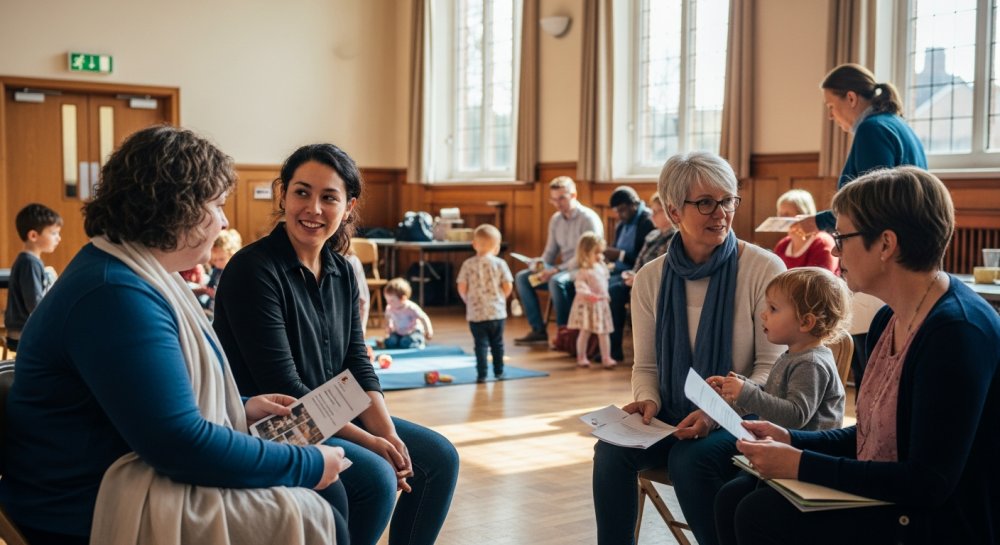
Christian charities across Britain are issuing an urgent call to churches to address a growing crisis in the nation’s foster care system. Home for Good and Safe Families UK are leading the charge, asking congregations to return to the biblical roots of caring for vulnerable children in need of loving homes.
The shortage of foster families has reached critical levels across the United Kingdom, leaving countless children without the stable, nurturing environments they desperately need. These Christian organizations believe the church is uniquely positioned to answer this call, drawing on a rich history of caring for orphans and the marginalized as commanded in Scripture.
“Pure religion and undefiled before God and the Father is this, To visit the fatherless and widows in their affliction,” James 1:27 reminds believers. This biblical imperative is at the heart of the campaign, which seeks to mobilize Christian families who can offer not just temporary shelter, but genuine love grounded in faith.
Home for Good has been at the forefront of encouraging churches to develop comprehensive fostering and adoption ministries. Their vision extends beyond individual families taking in children to creating entire church communities that rally around foster families with practical support, prayer, and long-term commitment.
Safe Families UK operates on a similar model, providing short-term care for children whose parents are facing temporary crises. This preventative approach keeps families together while ensuring children remain safe during difficult seasons, offering a compassionate alternative that reflects Christian values of both justice and mercy.
The organizations emphasize that churches can contribute in multiple ways beyond direct fostering. Congregations can offer respite care, provide meals, donate supplies, offer transportation, or simply befriend foster families who often feel isolated in their journey. Every act of support strengthens the network of care around vulnerable children.
Britain’s foster care crisis reflects broader cultural shifts away from traditional family structures and community support systems. As government resources stretch thin and fewer families step forward, the need for faith-based solutions grows more urgent. Churches have an opportunity to demonstrate the practical outworking of Christian love in a society hungry for authentic care.
For American Christians watching this development, the parallels are striking. The United States faces similar challenges in its foster care system, with hundreds of thousands of children awaiting permanent homes. The British example offers a model of how churches can mobilize effectively to meet this need, turning faith into action that transforms young lives.
The call goes beyond mere charity—it’s about reclaiming the church’s historic mission to be a family for the fatherless. In an age when institutional trust has eroded and government programs struggle to meet demand, communities of faith possess the relational networks, moral foundations, and long-term commitment necessary to provide genuine stability for children in crisis.
Home for Good and Safe Families UK are not asking churches to shoulder this burden alone, but to partner with existing systems while bringing the unique resources of faith communities: unconditional love, spiritual guidance, and extended family networks that can surround children with support extending far beyond a single household.
As these organizations press forward with their mission, they invite believers to prayerfully consider how God might be calling them to participate in caring for vulnerable children. Whether through direct fostering, adoption, supporting foster families, or advocating for better policies, every Christian has a role to play in ensuring no child faces the world alone.
Let us know what you think, please share your thoughts in the comments below.


-

 Self-Reliance1 year ago
Trump’s Bold Move Uncovers Massive Social Security Fraud
-

 Faith1 year ago
New Clues Emerge in Noah’s Ark Mystery
-

 News1 year ago
Governor Walz’s Rhetoric Sparks National Controversy
-

 News1 year ago
Mel Gibson’s ‘The Passion of the Christ’ Sequel Title Announced
-

 Family1 year ago
Texas Lawmaker Targets Furries in Schools
-

 Freedom1 year ago
Maine Lawmaker Challenges Sports Fairness Controversy
-

 Family12 months ago
Canada’s Controversial Policy Sparks Ethical Debate
-
Faith6 months ago
Congress Hears Pleas for Nigerian Christians