
News
Why This Christian Paper Refuses to Go Fully Digital Despite Rising Costs


Faith Facts
- The Christian Chronicle is maintaining its print edition despite $56,000 monthly printing and mailing costs after overwhelming reader support
- Readers emphasized the irreplaceable value of physical newspapers for faith-based news, with many saying they read cover-to-cover when holding the paper
- The publication exceeded its $168,000 fundraising goal for transition costs and now has a $100,000 matching gift available for spring donations
In an era when many publications have abandoned print entirely, The Christian Chronicle is charting a different course. Despite facing substantial financial pressures, the faith-focused newspaper is listening to its readers and keeping the presses running.
The publication’s move to independent nonprofit status has brought multiple challenges, including printing and mailing costs that now total approximately $56,000 per month for 12 annual issues. That’s more than half a million dollars per year just to produce the physical newspaper.
President and CEO Erik Tryggestad posed a direct question to readers in January: Should the Chronicle stop printing? The response was clear and passionate.
“I believe I am more likely to read it cover-to-cover, as I do now,” one reader responded. “I usually keep it out on the counter and read it over the course of a few days. With digital, it wouldn’t be in plain sight for me to keep going back to.”
The feedback revealed something publishers across America are rediscovering: physical newspapers create reading habits that digital formats often can’t replicate. Readers spoke about the tangible nature of holding news in their hands, the ability to read at their own pace and place, and even their appreciation for features like the crossword puzzle.
The Chronicle has invested significantly in its digital presence, offering downloadable PDFs of the print edition, expanded online coverage with video content, and active social media engagement on Facebook, Instagram, X, and TikTok. An award-winning podcast is also being enhanced.
Yet none of these digital offerings could substitute for what readers value most about the printed page. Many suggested they would accept bimonthly or even quarterly print editions rather than lose the physical newspaper entirely.
“Having a central location of news for the church helps (to) keep the community feeling part of the larger Christian family,” one reader explained.
The publication is adapting to financial realities while honoring reader preferences. This year, the Chronicle is experimenting with 10 issues instead of 12 to help manage costs while maintaining the print presence readers cherish.
The transition to independence has brought some growing pains. A database migration resulted in some subscribers receiving duplicate copies. The publication is asking affected readers to contact Sawmi Sektak at [email protected] or call (405) 425-5070 to resolve the issue.
Readers should also note a new mailing address. The Chronicle has separated from Oklahoma Christian University’s postal box and now receives mail at PO Box 5240, Edmond, OK 73083-5240. Correspondence can also be sent directly to the office at 2801 E Memorial Rd. Ste 102, Edmond, OK 73013.
Despite the challenges, there’s good news on the financial front. The Chronicle set an ambitious goal of raising $168,000 for one-time transition and equipment costs. Thanks to reader support, that goal was not only met but exceeded.
Currently, a $100,000 matching gift has been secured for the spring appeal. Funds raised will support the publication’s ongoing coverage, including the “Who Are We?” series. Contributions can be made by mailing checks to the address above or through the donate button at christianchronicle.org.
The story of The Christian Chronicle illustrates a broader truth: when publications serve their audiences well and maintain their core mission, readers respond. In a media landscape increasingly dominated by digital-only operations, this faith-focused newspaper is proving that print still has a vital role in connecting Christian communities.
The publication’s commitment to continuing its print edition reflects both financial stewardship and servant leadership. By listening to readers and adapting thoughtfully rather than abandoning what works, the Chronicle is charting a sustainable path forward that honors both its mission and its audience.
Let us know what you think, please share your thoughts in the comments below.

Faith Facts
- A jury found evidence that Jonathan Fletcher committed abuse, but his dementia diagnosis prevents prosecution and accountability
- Church of England safeguarding failures allowed alleged abuse to continue unchecked for years despite multiple warnings and complaints
- Victims are denied proper justice due to both the perpetrator’s condition and the institution’s inadequate response to protect the vulnerable
The case of Jonathan Fletcher has exposed deep flaws in how the Church of England handles abuse allegations, leaving victims without the justice they deserve. While Fletcher’s dementia diagnosis legally shields him from prosecution despite jury findings of abuse, the greater tragedy lies in the church’s systemic safeguarding failures that allowed the alleged abuse to continue for years.
Christian institutions bear a sacred responsibility to protect the vulnerable and hold wrongdoers accountable. When churches fail in this duty, they not only betray victims but also undermine the witness of Christ’s love and justice in the world.
The Fletcher case reveals a pattern of institutional inadequacy where complaints were reportedly dismissed or minimized rather than properly investigated. Multiple individuals raised concerns over an extended period, yet the church’s safeguarding mechanisms failed to trigger appropriate interventions that could have prevented further harm and preserved the possibility of legal accountability.
This failure represents more than administrative oversight—it reflects a breakdown in the church’s fundamental mission to shepherd God’s people with integrity and protect those who cannot protect themselves. Scripture calls believers to “defend the weak and the fatherless” and to “uphold the cause of the poor and the oppressed.”
For victims who courageously came forward, the double blow of inadequate institutional response followed by the impossibility of legal justice due to the perpetrator’s condition compounds their trauma. They have been failed not once but repeatedly—first by the alleged abuse itself, then by the church’s insufficient response, and finally by circumstances that prevent criminal prosecution.
The Church of England must urgently reform its safeguarding protocols to ensure swift, thorough investigation of all allegations. Transparency, accountability, and victim-centered policies should replace the defensive posture that has characterized too many institutional responses to abuse claims.
Churches must remember that their highest allegiance is to truth and righteousness, not institutional reputation. When leaders prioritize protecting the institution over protecting the vulnerable, they abandon the gospel they claim to proclaim.
This case serves as a sobering reminder that safeguarding is not merely a legal compliance issue but a moral imperative rooted in Christian duty. Every church must examine its own policies and culture to ensure that victims are heard, believed, and protected—and that perpetrators face swift consequences regardless of their status or position.
The victims in this case will not see earthly justice, but their stories must not be silenced or forgotten. Their courage in coming forward should drive comprehensive reforms that prevent future failures and demonstrate that the church truly stands with the oppressed rather than the powerful.
Let us know what you think, please share your thoughts in the comments below.
Faith Facts
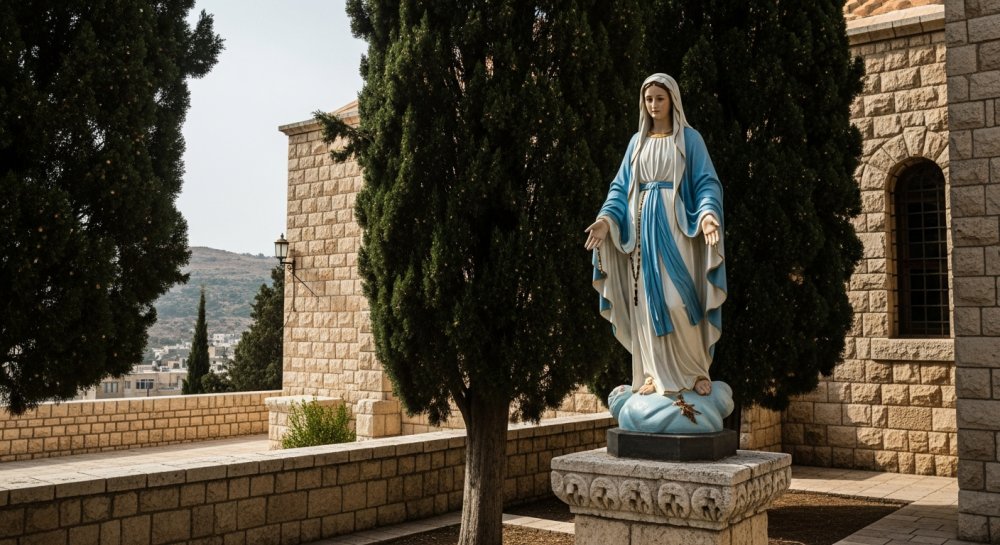
- Two Israeli Defense Forces soldiers have been sentenced to weeks in military prison for desecrating a Virgin Mary statue in southern Lebanon.
- The incident is part of a pattern of religious disrespect, following a separate IDF desecration of a crucifix in the same region.
- The military prison sentences represent the IDF’s response to internationally condemned acts against Christian holy symbols.
Two Israeli Defense Forces soldiers are heading to military prison for their role in desecrating a statue of the Virgin Mary in southern Lebanon. The sentences mark a significant disciplinary action following international outcry over the treatment of Christian religious symbols in the region.
The soldiers will spend weeks behind bars for their actions against the sacred statue. This punishment comes as the IDF faces mounting criticism over respect for Christian sites and symbols during military operations.
The IDF views the incident with utmost severity and emphasizes that the conduct of the soldier completely deviates from the values expected of its personnel.
Following an initial review, the image in question was taken several weeks ago. The incident will be investigated, and… https://t.co/fi2gQXzdYj
— LTC Ariella Mazor (@LTC_Ariella) May 6, 2026
This incident represents the second known case of IDF personnel desecrating Christian religious items in southern Lebanon. A separate incident involved the desecration of a crucifix in the same area, raising concerns among Christian communities worldwide about the protection of their holy sites.
The military prison sentences signal the IDF’s acknowledgment of the seriousness of these violations. However, questions remain about whether additional safeguards will be implemented to prevent future incidents of religious desecration.
Christian communities in Lebanon and around the world have expressed deep concern over these acts. The Virgin Mary holds profound significance for Christians across denominations, making the desecration particularly offensive to believers globally.
The timing of these incidents has raised awareness about the vulnerability of Christian heritage sites in conflict zones. Many Christian leaders have called for stronger international protections for religious sites and symbols during military operations.
Military officials have not disclosed the specific actions taken against the statue or the identities of the soldiers involved. The length of the prison sentences also remains unspecified beyond the characterization of “weeks.”
These developments underscore ongoing tensions in the region and the challenges of maintaining respect for religious diversity during armed conflicts. The incidents have sparked broader conversations about religious freedom and the protection of Christian communities in the Middle East.
Let us know what you think, please share your thoughts in the comments below.
Faith Facts
- A California junior high school faced parent backlash for hosting an assembly celebrating America’s 250th anniversary due to its connection with Turning Point USA.
- Parents objected to the conservative organization’s involvement in what they deemed a patriotic educational event.
- The controversy highlights growing tensions over how American history and patriotism are taught in public schools.
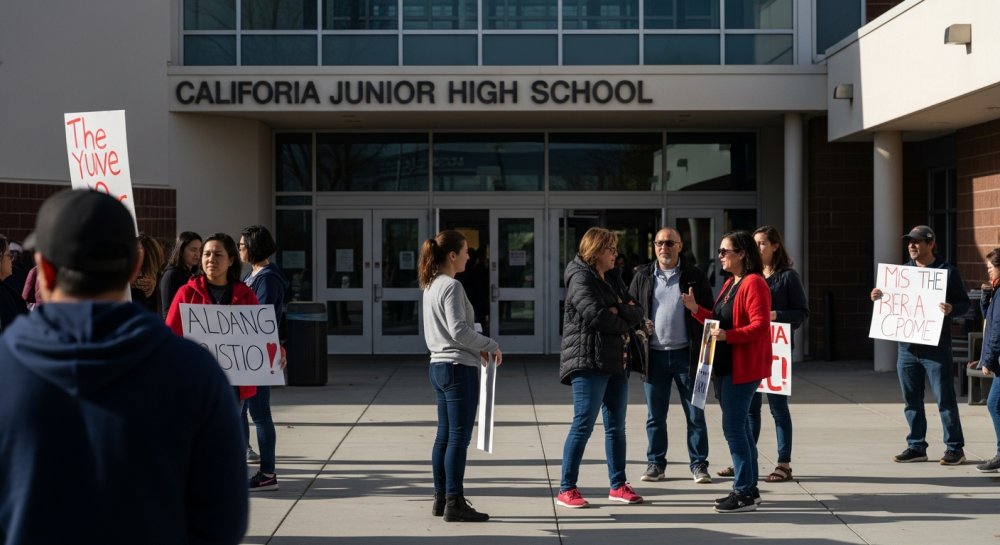
Parents at a California junior high school launched protests against a planned assembly designed to celebrate the upcoming 250th anniversary of America’s founding. The source of their objection? The event’s association with Turning Point USA and other conservative organizations.
The assembly was intended to foster patriotic sentiment and educate students about America’s founding principles as the nation approaches its semiquicentennial celebration in 2026. However, some parents expressed concern that the involvement of conservative groups would politicize what should be a unifying celebration of American history.
Turning Point USA, founded by Charlie Kirk, is a conservative youth organization that promotes free markets, limited government, and traditional American values on high school and college campuses across the nation. The group has become a lightning rod for controversy in educational settings, with supporters praising its efforts to provide alternative viewpoints and critics claiming it brings partisan politics into schools.
The incident reflects a broader cultural battle playing out in school districts nationwide over curriculum content, patriotic education, and the role of outside organizations in shaping school programming. Conservative parents have increasingly advocated for more robust civics education and patriotic celebrations, while some progressive parents worry about what they perceive as political indoctrination.
For many faith-based and conservative families, the controversy underscores concerns about the erosion of patriotic education in American schools. They argue that celebrating the nation’s founding and teaching students about America’s exceptional history rooted in Judeo-Christian values should be noncontroversial educational priorities.
The pushback against a patriotic assembly raises questions about whether American schools can find common ground in celebrating the nation’s history and founding principles. As the 250th anniversary of American independence approaches, schools across the country will likely face similar challenges in navigating how to commemorate this historic milestone.
The debate also highlights the increasing polarization around basic civic education, with even celebrations of American history becoming flashpoints in the ongoing culture wars. What previous generations might have considered straightforward patriotic programming now generates significant controversy in many communities.
Let us know what you think, please share your thoughts in the comments below.


-

 Self-Reliance1 year ago
Trump’s Bold Move Uncovers Massive Social Security Fraud
-

 Faith1 year ago
New Clues Emerge in Noah’s Ark Mystery
-

 News1 year ago
Governor Walz’s Rhetoric Sparks National Controversy
-

 News1 year ago
Mel Gibson’s ‘The Passion of the Christ’ Sequel Title Announced
-

 Family1 year ago
Texas Lawmaker Targets Furries in Schools
-

 Freedom1 year ago
Maine Lawmaker Challenges Sports Fairness Controversy
-

 Family12 months ago
Canada’s Controversial Policy Sparks Ethical Debate
-
Faith6 months ago
Congress Hears Pleas for Nigerian Christians