
Faith
Nine Million More Americans Want to Read the Bible


Faith Facts
- Nine million additional Americans expressed interest in the Bible’s message compared to last year, according to the American Bible Society’s new State of the Bible report.
- Despite this increased openness, actual Bible reading and engagement declined from 2024 levels across the United States.
- The findings reveal a growing curiosity about Scripture among Americans even as consistent engagement has decreased.
A newly released national study from the American Bible Society reveals a fascinating paradox in American spiritual life: while fewer Americans are actively reading the Bible, millions more are expressing genuine interest in what Scripture has to say.
The State of the Bible report shows that Bible reading and engagement have declined from last year’s levels. Yet at the same time, openness to the Bible has grown significantly, with 9 million more Americans now expressing interest in its message since 2024.
This represents a remarkable opportunity for the church and Christian communities across the nation. While regular Bible engagement has dropped, the hearts of millions are becoming more receptive to God’s Word.
The data suggests that many Americans recognize something is missing in their lives and are increasingly willing to consider that the Bible might hold answers they need. This growing openness comes at a critical time when our nation faces mounting challenges to traditional values and the family structure that has sustained American society for generations.
The research indicates that while cultural forces may be pulling people away from consistent Scripture reading, there remains a deep hunger for truth and meaning that only God’s Word can satisfy. The fact that interest is rising even as engagement falls points to barriers that churches and ministries must work to overcome.
Christian leaders have long understood that the Bible transforms lives, strengthens families, and builds communities rooted in eternal truth. This new data confirms that millions of Americans are ready to receive that message—they simply need the right invitation and support to take the next step.
The American Bible Society’s findings underscore the importance of meeting people where they are. With 9 million more Americans open to Scripture, this represents one of the most significant evangelism opportunities in recent years.
For believers committed to sharing the Gospel and seeing lives changed through God’s Word, this report should serve as both encouragement and a call to action. The harvest is ready, and the laborers must be prepared to help curious seekers become committed readers of Scripture.
Let us know what you think, please share your thoughts in the comments below.


Faith Facts
- A new Netflix documentary examines the rise of secular masculinity influencers who are shaping an entire generation of young men outside church influence
- Christian leaders warn the Church has largely abdicated its role in teaching biblical manhood, leaving a vacuum filled by profit-driven online personalities
- The documentary highlights how young men are increasingly turning to secular sources for identity formation rather than Scripture and faith communities
A troubling new Netflix documentary has exposed a crisis that should concern every Christian parent and pastor in America. “Inside the Manosphere” reveals how millions of young men are learning what it means to be masculine from secular influencers who profit by promoting resentment, shallow relationships, and consumerist ideology.
The question demanding an answer is straightforward: How did the Church allow this to happen? For generations, Christian communities provided clear, biblical teaching on manhood rooted in servant leadership, sacrificial love, and Christ-like character.
That foundation has eroded. Today’s young men are growing up in a cultural moment that simultaneously attacks traditional masculinity while offering no positive alternative grounded in truth. Into this void have stepped online personalities who monetize male insecurity and anger.
These influencers build followings by inflaming appetite rather than disciplining it. They teach contempt for women rather than honor. They promote self-serving ambition rather than sacrificial service.
The documentary serves as an uncomfortable mirror for American Christianity. While the Church has been occupied with other priorities, an entire generation of young men has been catechized by voices that directly contradict biblical wisdom about masculinity, sexuality, and purpose.
The solution is not complicated, though it will require intentionality. Churches must reclaim their role as the primary source of masculine identity formation. This means older Christian men must actively mentor younger men, fathers must model biblical manhood in their homes, and pastors must preach clearly about what Scripture actually teaches regarding male identity and calling.
Young men are searching for answers about who they are and what they should become. The question is whether they will find those answers in Scripture and the Christian community, or whether they will continue turning to secular sources that profit from their confusion.
The Netflix documentary has done the Church a service by exposing this crisis. Now the responsibility falls to Christian leaders and families to respond with urgency. The stakes could not be higher for the next generation of American men.
Let us know what you think, please share your thoughts in the comments below.

Faith Facts
- The World Evangelical Alliance and the International Jewish Committee on Interreligious Consultations have formally relaunched dialogue initiatives focused on religious freedom and human dignity
- The partnership unites evangelical theologians, scholars, and church leaders with Jewish counterparts to combat rising antisemitism worldwide
- Both faith communities share foundational Biblical values and face increasing persecution in secular and hostile regions
In a significant move to strengthen religious liberty worldwide, the World Evangelical Alliance has joined forces with the International Jewish Committee on Interreligious Consultations to reestablish formal dialogue between evangelical Christians and Jewish leaders. The renewed partnership marks a critical moment as both communities face mounting challenges to their fundamental freedoms.
The collaboration brings together respected theologians, biblical scholars, and church leaders from both traditions for sustained engagement on issues that threaten believers across the globe. At the heart of their discussions are the alarming rise of antisemitism, attacks on religious freedom, and the erosion of respect for human dignity rooted in the image of God.
This alliance reflects the deep spiritual and historical connections between Christians and the Jewish people. Evangelicals recognize the Jewish roots of their faith and understand that the defense of religious liberty for one faith community strengthens protections for all believers. As persecution of Christians intensifies in many nations, and antisemitic violence resurfaces even in Western democracies, cooperation between these communities becomes increasingly vital.
The formal dialogue structure provides a framework for ongoing consultation and coordinated responses to threats facing both communities. It represents a commitment to mutual understanding grounded in shared reverence for Scripture and recognition of God-given human dignity.
Both evangelical Christians and Jewish communities have long championed religious freedom as a fundamental human right. This partnership demonstrates that when people of faith stand together in defense of Biblical values, they can more effectively resist secular ideologies that seek to marginalize religious expression and undermine traditional beliefs.
The relaunching of this dialogue sends a powerful message: communities of faith will not be divided or silenced. Instead, they will unite around timeless truths to defend the freedom to worship, teach, and live according to their deeply held convictions.
Let us know what you think, please share your thoughts in the comments below.
Faith Facts
- Lutheran theologians attempted to unify with the Eastern Orthodox Church in the 16th century, seeking common ground with the ancient apostolic tradition
- Philip Neri, a Catholic reformer known for his joyful approach to evangelism, died this week in Christian history, leaving a legacy of faith renewal in Renaissance Rome
- Historic events from this week demonstrate how Christians across different traditions have sought unity while maintaining theological convictions
Throughout Christian history, believers have wrestled with questions of unity, doctrine, and the visible expression of Christ’s Church on earth. This week marks several significant moments when those tensions came to the forefront, shaping the faith communities we know today.
Each of these events reveals something profound about the nature of Christian witness and the ongoing dialogue between tradition and reform.
Lutheran Attempt at Orthodox Unity
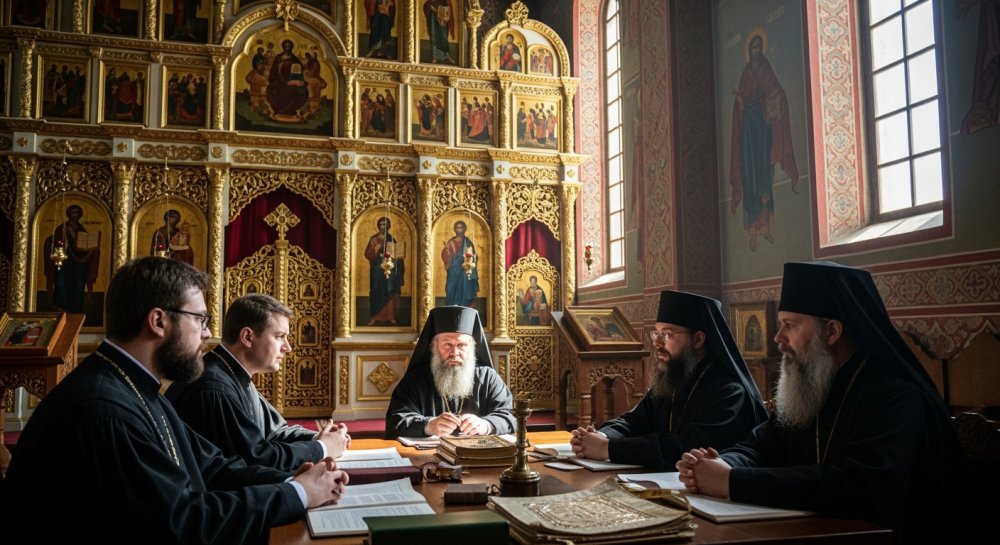
In the late 16th century, Lutheran theologians from Tübingen made an extraordinary attempt to find common ground with the Eastern Orthodox Church. The effort represented a bold vision for Christian unity that transcended the growing divisions of the Reformation era.
The correspondence between German Lutheran scholars and Patriarch Jeremias II of Constantinople began with genuine hopes for reconciliation. Both sides shared concerns about certain Roman Catholic practices and sought to find a path that honored apostolic tradition while affirming key Reformation insights.
However, fundamental differences over the nature of salvation, the role of tradition, and liturgical practices ultimately prevented any formal union. The exchange nonetheless demonstrated that even in an age of sharp theological division, Christians sought bridges across ancient boundaries.
The dialogue revealed how deeply both Protestants and Orthodox valued connection to the early Church, even as they interpreted that heritage differently.
Philip Neri’s Legacy of Joy
Philip Neri, who died on May 26, 1595, offered a distinctive model of Christian reformation—one marked by joy, accessibility, and personal spiritual renewal rather than institutional confrontation. His approach to evangelism in Renaissance Rome drew thousands to a deeper faith through warmth and genuine relationship.
Unlike many reformers of his era who emphasized doctrinal precision above all else, Neri focused on making the faith alive and personal for ordinary believers. He founded the Congregation of the Oratory, a community of priests who lived together but took no vows, combining spiritual discipline with flexibility.
Neri’s ministry demonstrated that reformation could happen through personal holiness and joyful witness as much as through theological debate. His emphasis on confession, spiritual direction, and community created lasting renewal in the Catholic Church.
His canonization as a saint reflected the Catholic Church’s recognition that spiritual vitality comes through personal transformation, not merely structural change.
Lessons for Today’s Church
These historical moments offer insight for contemporary Christians navigating questions of unity and division. The Lutheran-Orthodox dialogue reminds us that unity requires more than good intentions—it demands engagement with hard theological questions that have real consequences for how we worship and live.
Philip Neri’s example shows that the most lasting reforms often come through personal holiness and joyful witness rather than primarily through controversy. Both approaches—careful theological work and vibrant personal faith—have their place in the Body of Christ.
As American Christians face increasing cultural pressure and internal divisions, these historical examples call us to pursue both truth and unity with wisdom. We must hold firm to biblical convictions while seeking genuine understanding across traditions.
The witness of history challenges us to be as serious about our theology as the Lutherans and Orthodox were, and as winsome in our faith as Philip Neri was.
Let us know what you think, please share your thoughts in the comments below.


-

 Self-Reliance1 year ago
Trump’s Bold Move Uncovers Massive Social Security Fraud
-

 Faith1 year ago
New Clues Emerge in Noah’s Ark Mystery
-

 News1 year ago
Governor Walz’s Rhetoric Sparks National Controversy
-

 News1 year ago
Mel Gibson’s ‘The Passion of the Christ’ Sequel Title Announced
-

 Family1 year ago
Texas Lawmaker Targets Furries in Schools
-

 Freedom1 year ago
Maine Lawmaker Challenges Sports Fairness Controversy
-

 Family12 months ago
Canada’s Controversial Policy Sparks Ethical Debate
-
Faith6 months ago
Congress Hears Pleas for Nigerian Christians