
Faith
Massachusetts Church Wins Right to Shelter the Homeless

Faith Facts
- A Massachusetts judge ruled that Trinity Church in Concord can operate an emergency homeless shelter on its property despite neighborhood opposition.
- The decision upheld the Dover Amendment, a state law protecting religious institutions’ right to use their property for religious and educational purposes.
- The church’s emergency shelter ministry serves vulnerable homeless individuals during the coldest winter months, exemplifying biblical commands to care for those in need.
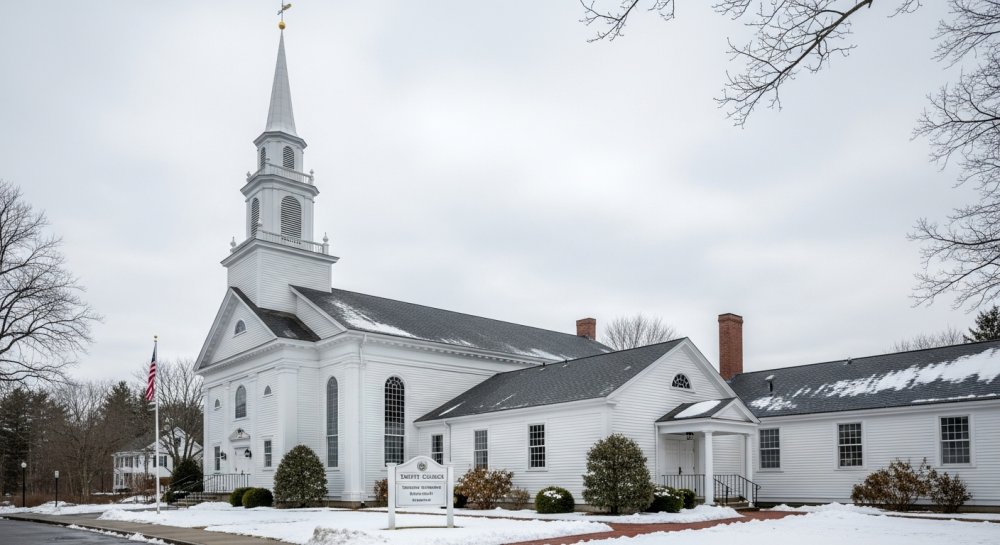
A Massachusetts judge has delivered a victory for religious freedom and compassionate ministry, ruling that Trinity Church in Concord may continue operating an emergency homeless shelter on its property. The decision came despite opposition from some local residents and reinforces the constitutional protections churches have to carry out their faith-based missions.
The ruling centers on the Dover Amendment, a Massachusetts law that protects religious and educational institutions from restrictive local zoning ordinances. Judge Judith C. Cutler of the Massachusetts Land Court determined that the church’s emergency shelter falls squarely within its protected religious mission to serve “the least of these,” as commanded in Scripture.
Trinity Church’s emergency shelter operates during the coldest months of the year, providing temporary refuge for homeless individuals when conditions outside become life-threatening. This ministry directly reflects the biblical mandate to care for the poor, the stranger, and those without shelter—a calling that lies at the heart of Christian faith and practice.
The case highlights an ongoing tension in many American communities where neighbors sometimes resist faith-based charitable works in residential areas. However, the court recognized that preventing churches from such ministries would fundamentally undermine their religious freedom and their ability to live out their faith in tangible ways.
The Dover Amendment has long been recognized as an important protection for religious liberty in Massachusetts, preventing local governments from using zoning laws to discriminate against churches or restrict their religious activities. This case reaffirms that protection extends to charitable ministries that flow directly from religious conviction and biblical teaching.
For Trinity Church, the ruling represents more than a legal victory—it affirms their God-given calling to serve the most vulnerable members of their community. The emergency shelter embodies the Christian principle that faith without works is dead, and that true religion includes caring for widows, orphans, and those in distress.
The decision also sends an important message to churches across America facing similar challenges. Religious institutions have constitutional protections to carry out their missions, and courts will uphold those rights when local opposition threatens to shut down ministries that serve the poor and homeless.
As winter temperatures threaten the lives of those without shelter, Trinity Church’s emergency ministry provides not just warmth and safety, but also demonstrates the transformative love of Christ in action. The ruling ensures that this vital work can continue, protecting both religious freedom and the lives of vulnerable individuals.
Let us know what you think, please share your thoughts in the comments below.

Faith Facts
- The Church of England has voted to engage with a controversial Palestinian Christian document known as Kairos Palestine II
- Palestinian Christian Jack Nassar urges the church to listen to the lived experiences of his community in the Holy Land
- The document addresses the ongoing struggles and perspectives of Christians living in Palestinian territories
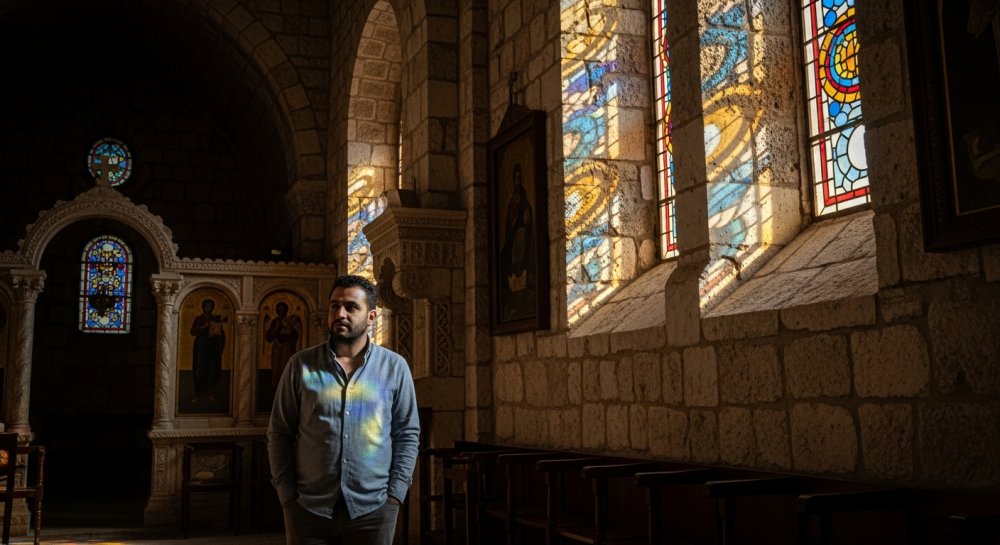
A Palestinian Christian is calling on the global Church to pay closer attention to the voices and experiences of believers living in the Holy Land. Jack Nassar welcomed the Church of England’s recent decision to engage with a document that has sparked both support and controversy among Western Christians.
The document, known as Kairos Palestine II, represents the testimony and concerns of Palestinian Christians regarding their daily reality. While its contents have divided opinion, Nassar argues that the fundamental issue goes beyond agreement or disagreement with specific positions.
“Whether you agree with it or not, the lived experience of Palestinian Christians deserves the dignity of being heard and believed,” Nassar said.
The Church of England’s vote to formally ‘hear’ the document marks a significant moment for Palestinian Christian advocacy. For many in the West, the very existence of a thriving Christian community in Palestinian territories comes as a surprise, despite Christianity’s roots in the region.
Palestinian Christians trace their heritage directly to the earliest days of the faith, maintaining an unbroken presence in Bethlehem, Jerusalem, and surrounding areas for two millennia. Today, however, this ancient community faces mounting pressures that threaten its continued existence in the land where Christ walked.
Nassar emphasized that hearing these voices doesn’t require Western Christians to abandon their own perspectives or political positions. Rather, it’s about extending Christian compassion and acknowledging the struggles of fellow believers who live under circumstances most Americans can scarcely imagine.
The Kairos Palestine documents—the first released in 2009 and the second more recently—emerged from Palestinian Christian leaders seeking to articulate their community’s challenges and calling for solidarity from the global Church. These documents have proven divisive, with some viewing them as necessary prophetic witness and others as politically problematic.
For Nassar and many Palestinian Christians, the core request remains simple: that their brothers and sisters in Christ would listen with open hearts to their testimony. They seek not necessarily agreement, but the basic Christian courtesy of being heard with respect and having their experiences acknowledged as valid.
The diminishing Christian population in the Middle East has become a concern for believers worldwide. In Palestinian territories, economic hardship, political instability, and lack of opportunity have driven many Christian families to emigrate, threatening the future of communities that have maintained the faith since apostolic times.
As Western churches grapple with how to respond to complex Middle Eastern realities, Palestinian Christians ask for what all believers should extend to one another: a willingness to listen, to pray, and to bear one another’s burdens as Scripture commands.
Let us know what you think, please share your thoughts in the comments below.
Faith Facts
- A Christian small group leader discovered the unexpected power of Scripture memorization when comforting a struggling brother in Christ
- What seemed like random Bible verses became exactly the words needed in a moment of crisis
- The experience transformed one believer’s view on the necessity of hiding God’s Word in our hearts
Derek Hughes never thought Scripture memorization was essential to his faith walk. Like many modern Christians, he relied on the accessibility of Bible apps and search engines when he needed God’s Word. But a powerful encounter in his small group would completely reshape his understanding of why believers have treasured memorized Scripture for millennia.
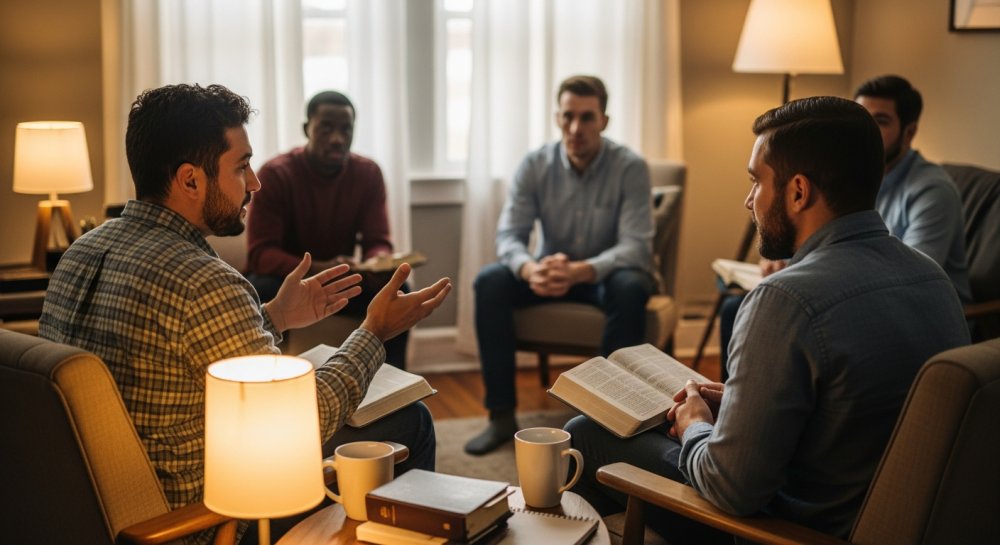
During a regular small group meeting, one of the men opened up about the heavy burdens crushing his spirit. As Derek listened with compassion, he searched his mind for the right words of encouragement, the perfect pastoral response that would bring comfort and hope.
Instead, what came to him were a couple of Bible verses he had memorized seemingly at random—passages he’d committed to memory for his own spiritual growth, not anticipating they would ever be needed for someone else. In the moment, Derek hesitated, wondering if these particular scriptures were even relevant to his friend’s specific struggles.
Then came the response that would change Derek’s perspective forever. The man looked at him with tears in his eyes and shared that those verses were exactly what he needed to hear—the precise words from God’s Word that spoke directly to his heart and circumstances.
This divine appointment illustrates a profound truth that our grandparents’ generation understood instinctively: there is irreplaceable value in storing God’s Word in our hearts through memorization. When the Holy Spirit needs to bring a specific scripture to mind—whether for our own encouragement or to minister to others—He can only remind us of what we’ve already learned.
The Psalmist declared this truth thousands of years ago: “I have hidden your word in my heart that I might not sin against you” (Psalm 119:11). Scripture memorization isn’t about legalism or showing off biblical knowledge. It’s about equipping ourselves to be used by God in moments when we don’t have time to pull out our phones and search for the right passage.
In our technology-dependent culture, we’ve outsourced memory to our devices. While Bible apps are wonderful tools, they cannot replace the supernatural work that happens when Scripture becomes part of our mental and spiritual framework. Memorized verses are available in hospital rooms at 3 AM, in conversations where pulling out a phone would be inappropriate, and in spiritual battles when we need God’s Word as our sword.
Derek’s experience reminds us that God prepares us in advance for the ministry opportunities He’s planning to bring our way. The verses Derek had memorized for his own benefit became exactly what another believer desperately needed to hear. This is how the body of Christ is meant to function—each member equipped with God’s truth, ready to speak life when the Spirit prompts.
For families raising children in an increasingly secular culture, Scripture memorization takes on even greater importance. When our kids face peer pressure, doubt, or spiritual attack, the verses they’ve hidden in their hearts will be their defense. No one can take away what’s been memorized, making it one of the most valuable spiritual inheritances we can give the next generation.
The traditional practice of Scripture memory isn’t outdated or unnecessary—it’s more vital than ever in a world that desperately needs the unchanging truth of God’s Word. Derek learned this lesson not in a seminary classroom, but in a living room where the Holy Spirit orchestrated a divine appointment that only memorized Scripture could fulfill.
Let us know what you think, please share your thoughts in the comments below.
Faith Facts
- Finnish Christian attorney Ville Hoikkala has represented immigrants, asylum seekers, and criminal defendants for over 20 years
- Finland’s justice system features small police forces, high clearance rates, and rehabilitative prisons with low recidivism
- Hoikkala has witnessed multiple conversions to Christianity among clients, including those from Muslim backgrounds
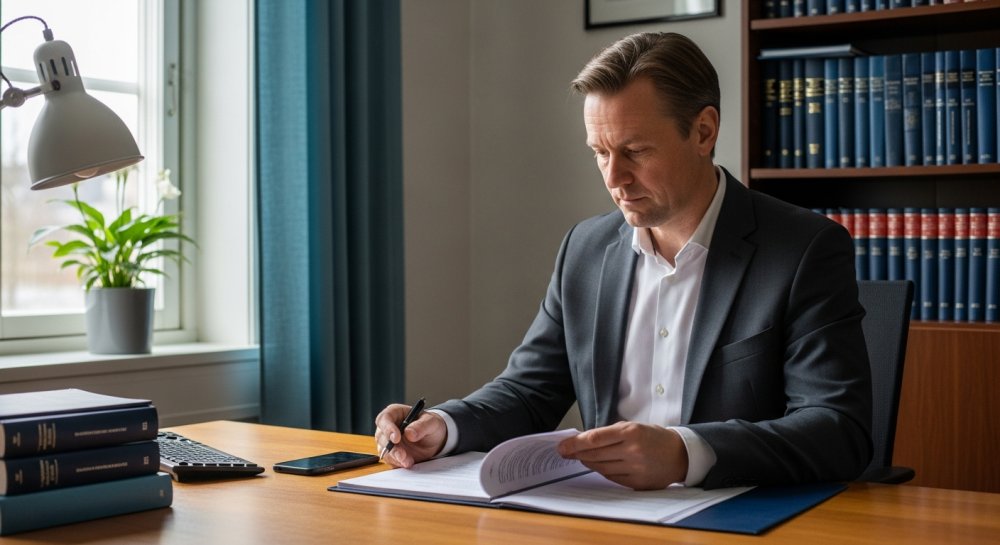
A Finnish Christian lawyer with more than two decades of experience representing immigrants, asylum seekers, and criminal defendants is sharing powerful insights about justice, redemption, and the transformative power of faith in Christ.
Ville Hoikkala, whose extensive legal practice has given him a front-row seat to both the depths of human depravity and the heights of spiritual transformation, says his work has reinforced his understanding of mankind’s fallen nature while simultaneously demonstrating God’s power to change hearts.
In Finland’s justice system, crime truly doesn’t pay. The nation maintains relatively small police forces, yet achieves remarkably high clearance rates for crimes committed. When offenders are caught, they face a rehabilitative prison system designed to restore rather than simply punish.
“Criminality is not a good career choice in Finland,” Hoikkala observed, noting the practical deterrents built into the Nordic nation’s approach to law enforcement.
The Finnish legal system’s emphasis on rehabilitation over retribution aligns with Christian principles of redemption and restoration. Prisons in Finland feature programs aimed at preparing inmates to rejoin society as productive citizens, resulting in significantly lower recidivism rates than many Western nations.
Throughout his career, Hoikkala has witnessed numerous clients come to faith in Jesus Christ, including individuals from Muslim backgrounds who discovered the Gospel while facing criminal charges or navigating the immigration system. These conversions represent the kind of radical life transformation that secular rehabilitation programs cannot achieve on their own.
The attorney’s experience defending those society often overlooks or condemns reflects the biblical call to serve “the least of these.” His work demonstrates how Christians can engage with broken legal systems and broken people while maintaining their witness and values.
For American Christians watching debates over immigration policy, criminal justice reform, and the role of faith in public life, Hoikkala’s example offers an important perspective. Upholding the rule of law and maintaining secure borders need not conflict with showing compassion to individuals caught in difficult circumstances.
His testimony also reminds believers that no one is beyond the reach of God’s saving grace. Whether representing a refugee seeking asylum or a criminal defendant facing serious charges, Hoikkala has seen firsthand that Christ can redeem anyone who turns to Him in repentance and faith.
The Finnish model’s success in combining firm law enforcement with rehabilitative justice challenges Americans to consider whether our own system has drifted too far toward either harsh punishment without restoration or lenient policies that fail to protect public safety.
As Christians engage in national conversations about immigration and criminal justice, Hoikkala’s work demonstrates the importance of maintaining both truth and grace—upholding God’s standards for justice while extending His mercy to sinners in need of salvation.
Let us know what you think, please share your thoughts in the comments below.


-

 Self-Reliance1 year ago
Trump’s Bold Move Uncovers Massive Social Security Fraud
-

 Faith1 year ago
New Clues Emerge in Noah’s Ark Mystery
-

 News1 year ago
Governor Walz’s Rhetoric Sparks National Controversy
-

 News1 year ago
Mel Gibson’s ‘The Passion of the Christ’ Sequel Title Announced
-

 Family1 year ago
Texas Lawmaker Targets Furries in Schools
-

 Freedom1 year ago
Maine Lawmaker Challenges Sports Fairness Controversy
-

 Family1 year ago
Canada’s Controversial Policy Sparks Ethical Debate
-
Faith8 months ago
Congress Hears Pleas for Nigerian Christians