
Faith
Finnish Lawyer’s Two Decades Defending Immigrants Reveals Unexpected Truth About Crime


Faith Facts
- Finnish Christian attorney Ville Hoikkala has represented immigrants, asylum seekers, and criminal defendants for over 20 years
- Finland’s justice system features small police forces, high clearance rates, and rehabilitative prisons with low recidivism
- Hoikkala has witnessed multiple conversions to Christianity among clients, including those from Muslim backgrounds
A Finnish Christian lawyer with more than two decades of experience representing immigrants, asylum seekers, and criminal defendants is sharing powerful insights about justice, redemption, and the transformative power of faith in Christ.
Ville Hoikkala, whose extensive legal practice has given him a front-row seat to both the depths of human depravity and the heights of spiritual transformation, says his work has reinforced his understanding of mankind’s fallen nature while simultaneously demonstrating God’s power to change hearts.
In Finland’s justice system, crime truly doesn’t pay. The nation maintains relatively small police forces, yet achieves remarkably high clearance rates for crimes committed. When offenders are caught, they face a rehabilitative prison system designed to restore rather than simply punish.
“Criminality is not a good career choice in Finland,” Hoikkala observed, noting the practical deterrents built into the Nordic nation’s approach to law enforcement.
The Finnish legal system’s emphasis on rehabilitation over retribution aligns with Christian principles of redemption and restoration. Prisons in Finland feature programs aimed at preparing inmates to rejoin society as productive citizens, resulting in significantly lower recidivism rates than many Western nations.
Throughout his career, Hoikkala has witnessed numerous clients come to faith in Jesus Christ, including individuals from Muslim backgrounds who discovered the Gospel while facing criminal charges or navigating the immigration system. These conversions represent the kind of radical life transformation that secular rehabilitation programs cannot achieve on their own.
The attorney’s experience defending those society often overlooks or condemns reflects the biblical call to serve “the least of these.” His work demonstrates how Christians can engage with broken legal systems and broken people while maintaining their witness and values.
For American Christians watching debates over immigration policy, criminal justice reform, and the role of faith in public life, Hoikkala’s example offers an important perspective. Upholding the rule of law and maintaining secure borders need not conflict with showing compassion to individuals caught in difficult circumstances.
His testimony also reminds believers that no one is beyond the reach of God’s saving grace. Whether representing a refugee seeking asylum or a criminal defendant facing serious charges, Hoikkala has seen firsthand that Christ can redeem anyone who turns to Him in repentance and faith.
The Finnish model’s success in combining firm law enforcement with rehabilitative justice challenges Americans to consider whether our own system has drifted too far toward either harsh punishment without restoration or lenient policies that fail to protect public safety.
As Christians engage in national conversations about immigration and criminal justice, Hoikkala’s work demonstrates the importance of maintaining both truth and grace—upholding God’s standards for justice while extending His mercy to sinners in need of salvation.
Let us know what you think, please share your thoughts in the comments below.

Faith Facts
- Parents in Connecticut challenged a state law that removed religious exemptions for school vaccine requirements.
- The lawsuit was dismissed after a judge ruled the exemptions are not protected under existing religious freedom statutes.
- The decision leaves families with no legal recourse when their sincerely held beliefs conflict with state mandates.
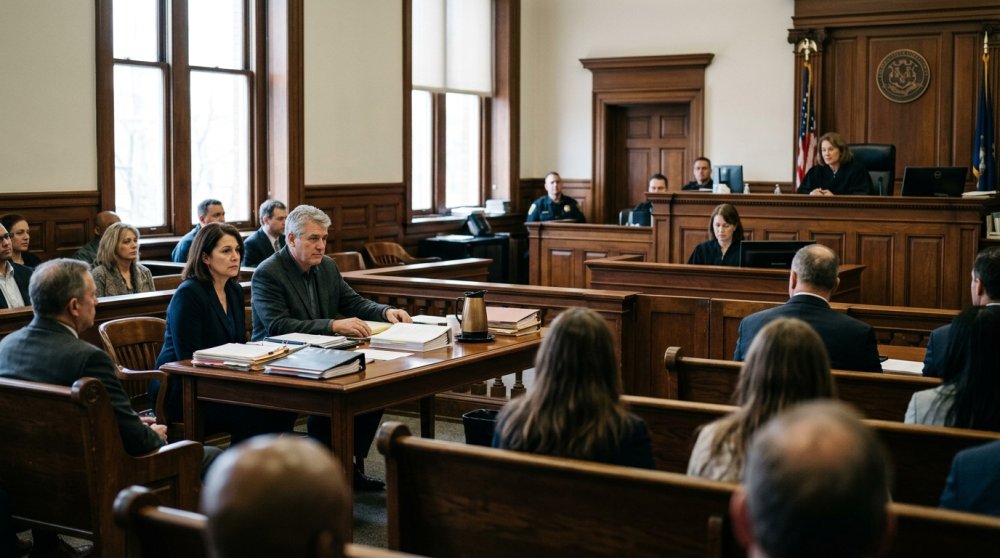
Parents who filed suit to protect their right to decline vaccines on religious grounds saw their case dismissed by a Connecticut judge. The court ruled that the state law eliminating religious exemptions does not violate the state’s religious freedom protections.
The decision means children whose parents hold sincere religious objections to certain vaccines will still be required to receive them in order to attend public school. Families who believe vaccination conflicts with their faith now face limited options within the state.
“The plaintiffs have failed to demonstrate that the religious exemptions are protected under the state religious freedom law,” the ruling stated.
Advocates for parental rights argue the ruling prioritizes government mandates over deeply held beliefs. They warn that similar efforts to remove religious exemptions could spread to other states if left unchallenged.
Critics of the original law contend it undermines the principle that parents, not the state, hold primary responsibility for medical decisions involving their children. They say the ruling sets a troubling precedent that could erode other conscience protections.
Let us know what you think, please share your thoughts in the comments below.

Faith Facts
- Crieve Hall Church of Christ in Nashville remains committed to a cappella worship, male leadership in preaching and communion, and a statement of faith that affirms “correctly handling His Word without adding to or taking from it.”
- Lipscomb University, four miles away, now welcomes instrumental worship, female speakers, and lecturers from various Christian traditions, reflecting a widening theological gap within Churches of Christ.
- Both the Connect Conference at Crieve Hall and the Lipscomb Faith and Leadership Forum stressed discipleship, biblical faithfulness, and spiritual growth, yet neither event made significant mention of the other.
Two events unfolded just four miles apart in Nashville, yet the theological distance between them felt far greater. One gathering championed what attendees called “sound preaching” rooted in Scripture alone. The other focused on discerning the cultural moment and leading faithfully in changing times.
Crieve Hall Church of Christ hosted its sixth annual Connect Conference, drawing 1,322 believers from more than 300 congregations. Organizers described the three-day meeting as “rooted firmly in Scripture and centered on Christ,” with sessions on evangelism, discipleship, and spiritual growth.
“I love the sound preaching,” said attendee Tonja McRady. “All it means to me is that it comes from the Bible. Are you preaching from the whole Bible, the whole counsel of God?”
Meanwhile, Lipscomb University held its inaugural Faith and Leadership Forum for about 160 ministers and leaders. Sessions addressed faith and politics, ministry burnout, and discipleship in a digitally saturated world. Bible professor Leonard Allen described the two streams as “conservative mainstream” and “moderate mainstream” Churches of Christ.
“With truth becoming loose and malleable in our time, we need more focus on the essentials of the faith,” Allen said. “This was a key theme at the Forum.”
The central question remains: What qualifies as essential? At Connect, speakers repeatedly pointed to “one Lord, one faith, one baptism” from Ephesians 4 and stressed the necessity of baptism and proper biblical leadership.
“What if we just settle on going with what God says, God’s way?” asked minister Hiram Kemp. “God doesn’t want our creativity. He wants our compliance. It’s been revealed to us in Scripture.”
At Lipscomb, participants wrestled with cultural decline and spiritual seeking. Allen noted that 40 million Americans have left the faith in the past quarter-century, yet many young people still search for meaning.
“Is America standing on the edge of spiritual renewal, or are we witnessing the continuing, steady decline of Christian faith in America?” Allen asked. “The old patterns are no longer stable. New patterns have not yet emerged. It seems there is energy but also confusion all around.”
Both gatherings closed with calls for unity, yet each framed it differently. Matt Cook at Connect warned, “Unity without truth is just togetherness.” Carlus Gupton at Lipscomb urged leaders to pursue Holy Spirit-formed leadership that is “calm, steady and deeply rooted in Christ.”
Gupton later reflected, “The proximity of these two conferences actually gives me more reason for hope than concern. Connect seeks to strengthen Christians in biblical faithfulness, discipleship, evangelism and spiritual growth. The Faith and Leadership Forum seeks to equip church leaders for faithful, discerning leadership in a changing culture.”
Let us know what you think, please share your thoughts in the comments below.

Faith Facts
- Christians are called to redeem every tool for God’s glory and the spread of the Gospel.
- Artificial intelligence is a human creation and remains under God’s sovereign authority.
- Believers must approach emerging technologies with wisdom rooted in Scripture.
Christians around the world are asking an important question as artificial intelligence grows more powerful. How can this technology be captured for the glory of God and the advancement of the Gospel?
Scripture teaches that every good gift comes from above. Technology itself is not evil, but its use must be directed by truth and righteousness.
AI systems are built by people and trained on data created by people. They reflect human choices and remain limited by the boundaries God has established.
Believers have a responsibility to guide these tools toward purposes that honor Christ and serve others. That includes sharing the Gospel, protecting life, and strengthening families.
“Whether therefore ye eat, or drink, or whatsoever ye do, do all to the glory of God,” 1 Corinthians 10:31 reminds us.
Churches and ministries are already exploring ways to use AI for translation, accessibility, and discipleship resources. These efforts must stay anchored in sound doctrine and prayerful discernment.
At the same time, Christians are right to raise concerns about privacy, truth, and the temptation to place ultimate trust in machines rather than in the Lord.
“Trust in the Lord with all thine heart; and lean not unto thine own understanding,” Proverbs 3:5 declares.
Ultimately, the future belongs to the One who created all things, not to any algorithm or invention of man. AI will never have the final word over humanity.
Let us know what you think, please share your thoughts in the comments below.


-

 Self-Reliance1 year ago
Trump’s Bold Move Uncovers Massive Social Security Fraud
-

 Faith1 year ago
New Clues Emerge in Noah’s Ark Mystery
-

 News2 years ago
Governor Walz’s Rhetoric Sparks National Controversy
-

 News1 year ago
Mel Gibson’s ‘The Passion of the Christ’ Sequel Title Announced
-

 Family1 year ago
Texas Lawmaker Targets Furries in Schools
-

 Freedom2 years ago
Maine Lawmaker Challenges Sports Fairness Controversy
-

 Family1 year ago
Canada’s Controversial Policy Sparks Ethical Debate
-
Faith10 months ago
Congress Hears Pleas for Nigerian Christians