
Faith
Why Faith Communities Are Being Left Behind by Modern Funders

Faith Facts
- Ethnic minority faith communities face systemic barriers in accessing traditional funding sources
- A new church-backed initiative is working to transform how faith-based organizations receive financial support
- Faith communities have historically served the whole person—physical, spiritual, and emotional needs—but funders often ignore this holistic approach
For generations, faith communities across America have understood something that secular institutions are only beginning to grasp: people need more than just their material needs met. Churches, ministries, and faith-based organizations have always served the whole person—body, mind, and spirit.
Yet when it comes to funding, these same communities often find themselves shut out of traditional grant programs and philanthropic opportunities.
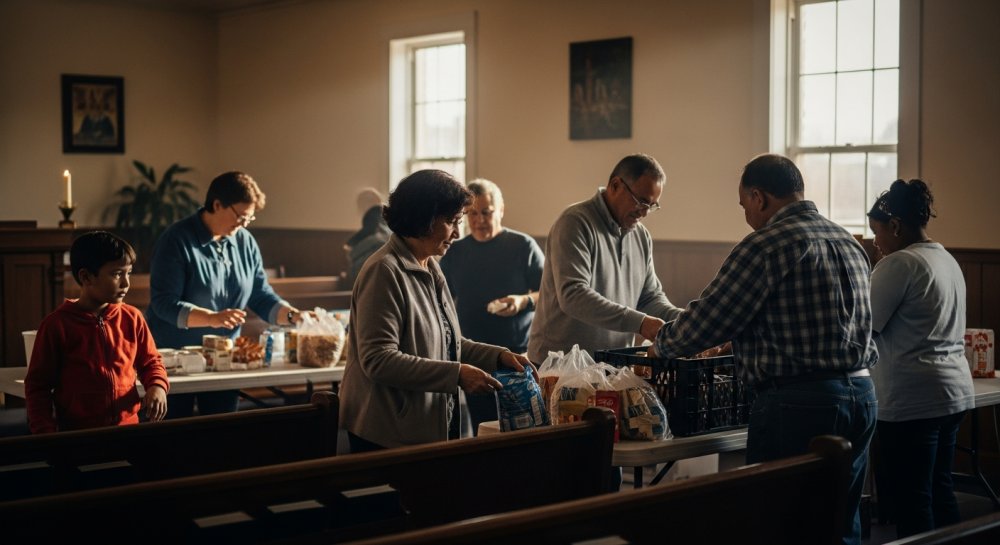
Ethnic minority faith communities in particular face significant challenges in accessing the resources they need to continue their vital work. These congregations serve some of our nation’s most vulnerable populations, providing everything from food assistance and job training to counseling and spiritual guidance.
But the funding landscape has not kept pace with their holistic model of care.
A new church-backed initiative is working to change this disparity. The program recognizes that faith communities don’t just address isolated problems—they build relationships, foster community, and address root causes of poverty and social breakdown.
This is the model that has sustained American communities for centuries, grounded in biblical principles of loving your neighbor and caring for the least among us.
Traditional funders often require faith organizations to separate their spiritual mission from their social services, demanding a compartmentalized approach that goes against the very nature of ministry. This creates an impossible choice: compromise your faith identity or forgo funding.
For many minority congregations with limited resources, this has meant struggling to maintain programs that are transforming lives.
The church-backed funding initiative takes a different approach, one that respects the integral role of faith in community transformation. It recognizes that when a church feeds the hungry, it doesn’t just hand out food—it builds dignity, creates connection, and often opens doors to spiritual renewal.
When a ministry offers job training, it does so within a framework of purpose and eternal value that secular programs simply cannot replicate.
This holistic model isn’t new—it’s as old as the Church itself. From the earliest days of Christianity, believers have understood that caring for physical needs and spiritual needs go hand in hand.
Jesus didn’t just preach; He healed the sick and fed the multitudes. The early Church didn’t just worship; they shared resources and cared for widows and orphans.
America’s faith communities, particularly those serving minority populations, continue this biblical tradition every day. They deserve funders who understand and support their mission—not ones who ask them to compromise it.
As our nation faces increasing division and social challenges, the holistic approach of faith-based community service has never been more needed. These organizations don’t just treat symptoms; they address the spiritual poverty that underlies so many of our societal problems.
The new funding initiative represents a crucial step toward recognizing the unique and irreplaceable role of faith communities in American life.
Let us know what you think, please share your thoughts in the comments below.


Faith Facts
- Evangelist J.John will keynote the newly launched Church Leaders Conference at CRE 2026 in England this October
- The Church Resources Exhibition (CRE), formerly the Christian Resources Exhibition, is bringing focused leadership training to UK church leaders
- The conference represents a strategic investment in equipping Christian leaders for effective ministry in challenging times
A prominent voice in Christian evangelism is set to address church leaders across the United Kingdom as they gather for a major new conference this fall. The announcement signals a renewed focus on strengthening pastoral leadership in an era when churches face mounting cultural and spiritual challenges.
The Church Resources Exhibition (CRE), a well-established gathering for Christian ministry professionals, has announced that evangelist J.John will serve as a keynote speaker for its newly launched Church Leaders Conference. The event will take place in England this October, bringing together pastors, ministry leaders, and church staff for focused training and encouragement.
J.John has built a reputation for clear, accessible presentations of biblical truth combined with practical application for everyday Christian living. His ministry has reached audiences across denominational lines, making him a fitting choice for a conference designed to serve the broader church community in the United Kingdom.
The Church Resources Exhibition has operated under various names over its history, previously known as the Christian Resources Exhibition. The organization serves as a hub for churches seeking practical resources, ministry tools, and professional development opportunities for their leadership teams.
The introduction of a dedicated Church Leaders Conference represents an expansion of CRE’s mission. Rather than focusing solely on resources and materials, the new conference component addresses the personal and professional development needs of those shepherding congregations in an increasingly secular society.
Church leaders in the UK face distinctive pressures as Christianity’s cultural influence continues to decline across Western Europe. Attendance trends, generational gaps, and hostile social attitudes toward traditional Christian teaching create an environment where pastoral encouragement and strategic training carry heightened importance.
By bringing together leaders from various streams of British Christianity, the conference creates opportunities for collaboration, mutual support, and shared learning. Such gatherings can help combat the isolation that many pastors experience, particularly those serving smaller congregations without extensive staff support.
The selection of J.John as a keynote speaker suggests the conference will emphasize evangelistic zeal alongside practical ministry skills. His track record includes major public evangelistic campaigns that have drawn thousands, as well as more intimate teaching settings focused on discipleship and spiritual formation.
October’s conference will provide an opportunity for British church leaders to refocus on core mission priorities while gaining fresh tools for effective ministry. In a cultural climate that increasingly marginalizes Christian voices, such gatherings offer crucial support for those called to proclaim truth without compromise.
The expansion from a resource exhibition to include a dedicated leadership conference reflects growing recognition that churches need more than materials and programs—they need leaders equipped with vision, biblical grounding, and practical wisdom for navigating complex ministry challenges.
Let us know what you think, please share your thoughts in the comments below.


Faith Facts
- 88% of UK Evangelicals believe they can openly practice their faith, but 48% say speaking publicly is getting harder.
- Around 35% of believers have encountered non-criminal hostility, including verbal abuse and social pressure regarding their convictions.
- While 60% of Christians are comfortable being open at work, many in politics and education face intense scrutiny for traditional views.
While British Christians maintain the legal right to worship and share their faith, a significant cultural shift is creating a more hostile environment for public testimony.
A recent study found that nearly half of UK Evangelicals feel expressing their biblical values has become increasingly difficult over the last five years due to social polarization.
The report underscores that the primary challenge for the modern church is not legal restriction, but navigating a culture that often marginalizes Christian morality.
“This tension — between objective freedoms and subjective experience — sits at the heart of this report,” the document states regarding the current climate.
Believers are encouraged to move beyond mere defense of rights toward a confidence that allows them to contribute constructively to society with integrity and compassion.
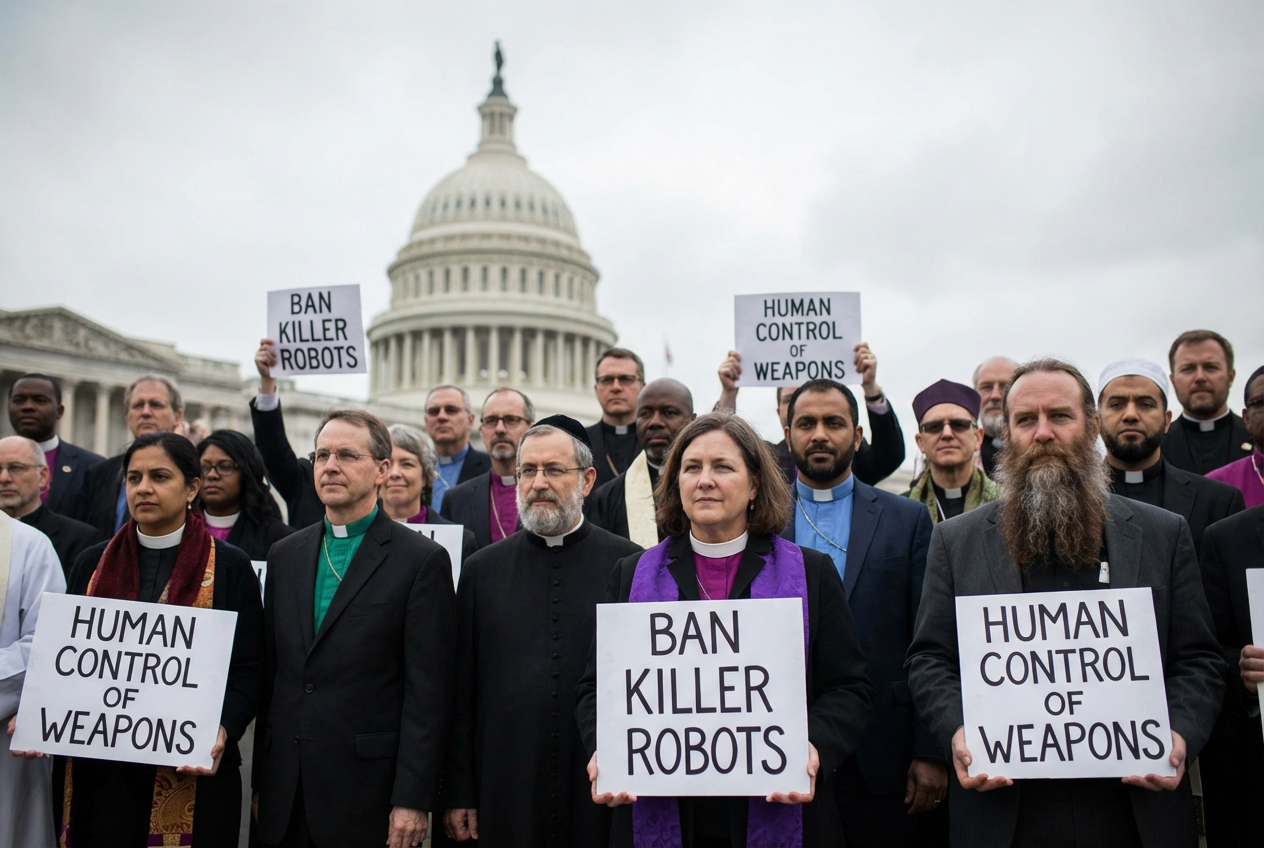
A coalition of faith leaders is urging Congress to establish strict legal boundaries on the military use of autonomous weapons. They argue that the decision to take a human life must never be delegated to a machine devoid of moral conscience.
As AI tools integrate into defense systems, these shepherds of faith emphasize that human beings must remain the final decision-makers. They believe the sanctity of life is a sacred obligation that technology cannot comprehend or respect.
Faith Facts
- Decisions involving the gravity of ending a human life require moral and spiritual discernment that machines lack.
- Current federal laws lack comprehensive limits on AI-enabled weapons, potentially allowing autonomous killing without human oversight.
- Technological systems often falter in unfamiliar circumstances and cannot weigh collateral damage against military necessity with human compassion.
The coalition warns that machines are unable to grasp the truth that every person is a beloved neighbor or family member. This move to protect human dignity reflects a commitment to biblical values in an increasingly digital world.
“As a matter of conscience, we believe that such a decision must never be delegated to a machine.”
Upholding the distinction between combatants and civilians is a foundational principle of justice that requires human judgment. Without human intervention, the ethical framework of warfare risks total collapse under the complexity of automated systems.


-

 Self-Reliance1 year ago
Trump’s Bold Move Uncovers Massive Social Security Fraud
-

 Faith1 year ago
New Clues Emerge in Noah’s Ark Mystery
-

 News1 year ago
Governor Walz’s Rhetoric Sparks National Controversy
-

 News1 year ago
Mel Gibson’s ‘The Passion of the Christ’ Sequel Title Announced
-

 Family1 year ago
Texas Lawmaker Targets Furries in Schools
-

 Freedom1 year ago
Maine Lawmaker Challenges Sports Fairness Controversy
-

 Family11 months ago
Canada’s Controversial Policy Sparks Ethical Debate
-
Faith5 months ago
Congress Hears Pleas for Nigerian Christians