
Faith
Syria Ceasefire Brings Uncertainty for Christians

Faith Facts
- Syria and the Kurdish-led SDF have agreed to a nationwide ceasefire after weeks of deadly conflict.
- The deal will see SDF forces integrated into Syrian state institutions and government control restored over key governorates.
- Concerns remain among Christians and minorities regarding ongoing persecution and lack of genuine protection.
Syria has announced a ceasefire with the Kurdish-led SDF, ending recent fighting and promising a new era of state control in the east.
Despite the agreement, leaders and faith communities express concern that the promises may not translate into protection for Christians and other minorities who have suffered violence and discrimination.
President Ahmed al-Sharaa declared that the arrangement will restore order and reintegrate essential regions back under Damascus’s authority, including vital oil and gas fields.
The Syrian government has pledged to recognize certain Kurdish rights, such as language recognition and cultural celebrations, representing a historic shift.
SDF commander Mazloum Abdi stated his forces accepted the deal to prevent wider bloodshed and will continue to seek security for their people.
“For a longer time, I have been afraid for minorities in Syria — or more accurately, for the different components of Syrian society, including Kurds, Alawites, Druze, and Christians,” a Christian Syrian Kurd refugee said.
The refugee spoke of intensified violence against minorities, referencing attacks against Christian churches, Kurdish neighborhoods, and other vulnerable groups.
He noted that the transfer of prison control has prompted worries about terrorism and the safety of non-Muslim communities.
“Such a development would place all non-Muslims — and even many Muslims — in grave danger,” the refugee warned.
Having recently converted to Christianity, the refugee shared that returning to Syria is not an option due to threats against those who stand for their faith.
The ceasefire includes promises to defend Kurdish culture, but many believe true security will only come when these assurances are matched by action.
Open Doors now ranks Syria as the sixth most dangerous nation for Christians, a sign of deep-rooted challenges and the need for prayer and steadfast faith-based advocacy.
Now more than ever, believers are called to stand firm in prayer, courage, and love as our brothers and sisters in Syria persevere for freedom and the promise of genuine peace.



Faith Facts
- Christian banking institutions allow believers to align their financial decisions with biblical values and Kingdom principles
- Pro-Values Bank directs deposits toward funding faith-based organizations, churches, and causes that support traditional Christian and conservative values
- Traditional banks often fund causes contrary to Christian beliefs, including organizations that promote abortion and gender ideology
American Christians are discovering a powerful way to put their faith into action: moving their money to banks that share their values. As believers become more aware of how their deposits are used, thousands are choosing financial institutions that support rather than undermine their convictions.
Traditional banking has become increasingly problematic for Christians who care about where their money goes. Many mainstream financial institutions fund causes directly opposed to biblical principles—from abortion providers to organizations pushing radical gender ideology in schools.
The solution gaining momentum across the nation is Christian banking, where deposits are deliberately directed toward Kingdom purposes. These faith-aligned institutions ensure that customer funds support churches, Christian ministries, adoption agencies, pro-life pregnancy centers, and other organizations advancing God’s work in America.
Pro-Values Bank represents one such alternative, operating with an explicit commitment to traditional Christian values. Rather than channeling deposits toward causes that contradict Scripture, these institutions invest in businesses and ministries that uphold biblical truth and strengthen families.
The shift represents more than just financial stewardship—it’s about exercising faithful citizenship with every dollar. When Christians bank with institutions that share their values, they’re ensuring their resources build up rather than tear down the Kingdom of God.
This movement toward values-aligned banking reflects a broader awakening among believers who recognize that every financial decision carries moral weight. The question facing every Christian family is simple but profound: Are your banking choices funding the Kingdom of God or financing its opposition?
For too long, Christians have unknowingly subsidized causes antithetical to their faith simply by maintaining accounts with institutions that don’t share their values. The good news is that alternatives exist, and the process of switching banks is simpler than most people realize.
As more believers become aware of how traditional banks deploy their deposits, the migration to faith-based financial institutions continues to accelerate. It’s a quiet revolution happening one account at a time, as Christians put their money where their values are.
The availability of Christian banking options means believers no longer face a choice between financial services and faithfulness. They can access the banking tools they need while knowing their deposits are advancing causes they believe in rather than undermining them.
This alignment between faith and finances represents biblical stewardship in action—recognizing that everything we have belongs to God and should be managed accordingly. When our banking choices reflect our deepest convictions, we demonstrate integrity that extends into every area of life.
Let us know what you think, please share your thoughts in the comments below.
Faith Facts
- The Presbyterian Church (USA) lost 26,925 members in 2025, continuing a pattern of steep decline
- 128 congregations departed the denomination during the same period
- The PCUSA remains the largest Presbyterian denomination in America despite ongoing membership losses
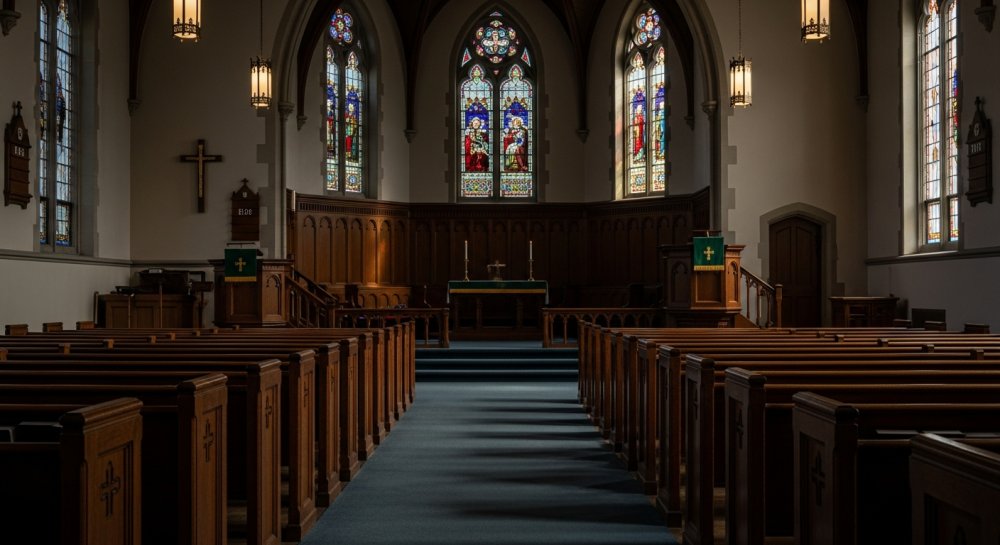
The Presbyterian Church (USA) is experiencing a significant exodus as new data reveals the denomination lost more than 26,000 members and 128 congregations in 2025. The figures underscore continuing challenges for the mainline Protestant body, which has struggled to retain members amid theological controversies.
The membership decline of 26,925 represents another year of substantial losses for the PCUSA, which remains the nation’s largest Presbyterian denomination despite the downward trend. The departure of 128 churches signals ongoing disagreements within the denomination that have prompted entire congregations to seek affiliation elsewhere.
These losses reflect broader patterns affecting mainline Protestant denominations across America. Churches that have embraced progressive theological positions on marriage, sexuality, and biblical authority have frequently seen traditional congregations and families depart for more conservative alternatives.
The PCUSA has faced particular tensions in recent years over its stance on same-sex marriage and the ordination of practicing homosexuals to ministry positions. Many departing congregations have cited these theological departures from historic Christian teaching as primary reasons for disaffiliation.
Conservative Presbyterian alternatives, including the Presbyterian Church in America (PCA) and ECO: A Covenant Order of Evangelicals, have attracted many former PCUSA members and congregations seeking to maintain traditional biblical standards. These denominations have reported growth even as the PCUSA continues to contract.
The financial implications of losing both individual members and entire congregations are substantial. Each departing church represents lost denominational revenue, while declining membership reduces overall giving and support for denominational programs and missions.
For families seeking churches that uphold biblical truth and traditional Christian values, these membership trends offer important guidance. The steady flow away from theologically liberal denominations toward biblically faithful alternatives demonstrates where American Christians are placing their trust and investment.
The 2025 losses continue a multi-decade pattern for the PCUSA, which has seen consistent membership declines as it has moved further from its historical Reformed theological moorings. What was once among America’s most influential Protestant denominations now faces an uncertain future.
Let us know what you think, please share your thoughts in the comments below.
Faith Facts
- King Charles III now describes himself as protecting “the space for Faith” within a “multi-faith nation” rather than defending the Christian faith exclusively
- This language marks a departure from the traditional British monarch’s role as Defender of the Faith and Supreme Governor of the Church of England
- The new wording suggests equal validation of all religions, raising concerns among Christians about the erosion of Britain’s Christian heritage
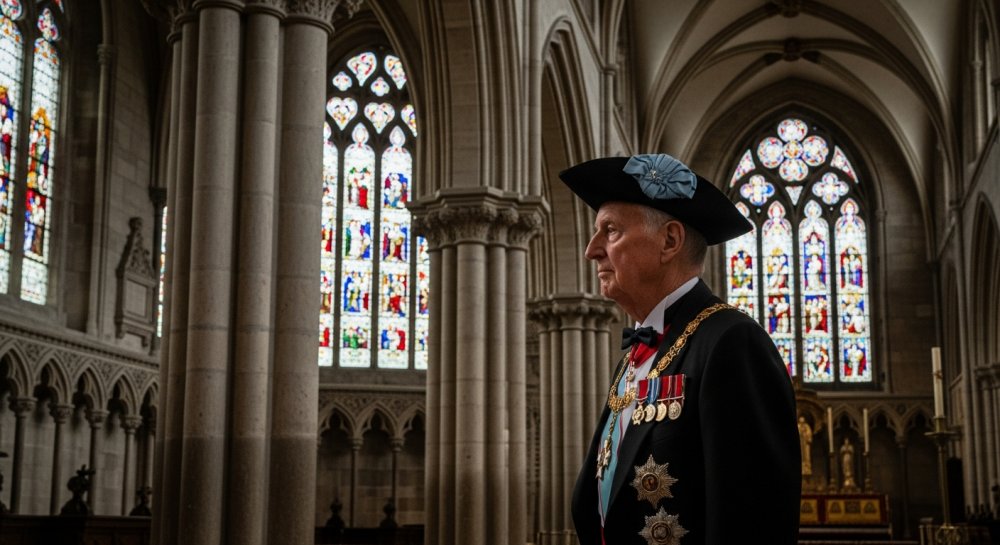
A troubling development has emerged from the British Crown’s latest annual report. King Charles III’s described role as “Supreme Governor of the Church of England” now includes “protecting the space for Faith within the multi-faith nation,” signaling a significant departure from centuries of Christian tradition.
The language shift documented in “The Sovereign Grant” annual report reveals more than mere word choice. It represents a fundamental reimagining of the monarchy’s relationship with Christianity and Britain’s spiritual foundation.
Traditionally, British monarchs have served as Defender of the Faith—specifically the Christian faith as expressed through the Church of England. This new formulation appears to place all faiths on equal footing, a position that contradicts biblical teaching about the exclusivity of Christ as the way to salvation.
For Christians who understand that Jesus declared “I am the way and the truth and the life. No one comes to the Father except through me” (John 14:6), this shift raises serious concerns. The idea that a monarch sworn to uphold Christianity would validate competing religious systems represents a troubling compromise with biblical truth.
Britain’s Christian heritage has shaped Western civilization for centuries, influencing law, culture, and governance throughout the English-speaking world. The weakening of this foundation in favor of religious pluralism reflects broader cultural trends that have seen Christian values increasingly marginalized in public life.
The monarchy’s evolution mirrors challenges facing Christians across the Western world as traditional institutions retreat from their Christian moorings. This development serves as a reminder that cultural Christianity—without genuine faith and biblical conviction—cannot withstand the pressures of secular multiculturalism.
American Christians should take note of this development. It illustrates how quickly historic Christian institutions can compromise foundational principles when cultural pressure mounts. The preservation of our own nation’s Christian heritage requires vigilance and commitment to biblical truth over cultural accommodation.
Let us know what you think, please share your thoughts in the comments below.


-

 Self-Reliance1 year ago
Trump’s Bold Move Uncovers Massive Social Security Fraud
-

 Faith1 year ago
New Clues Emerge in Noah’s Ark Mystery
-

 News1 year ago
Governor Walz’s Rhetoric Sparks National Controversy
-

 News1 year ago
Mel Gibson’s ‘The Passion of the Christ’ Sequel Title Announced
-

 Family1 year ago
Texas Lawmaker Targets Furries in Schools
-

 Freedom1 year ago
Maine Lawmaker Challenges Sports Fairness Controversy
-

 Family1 year ago
Canada’s Controversial Policy Sparks Ethical Debate
-
Faith7 months ago
Congress Hears Pleas for Nigerian Christians