
Family
When Everything Fell Apart With a Newborn in Her Arms


Faith Facts
- A Christian wife faced the devastating revelation of her husband’s infidelity just four days after giving birth to their baby.
- The husband disclosed multiple affairs spanning their nearly 20-year marriage, compounding the betrayal and trauma.
- Through faith and community support, she found the strength to navigate the crisis and rebuild her life while caring for a newborn.
The moment when life should have been filled with joy turned into an unimaginable nightmare. With a four-day-old baby in her arms, one Christian wife’s world shattered when her husband confessed to infidelity. The betrayal was compounded when he revealed the affair wasn’t an isolated incident — he had been unfaithful throughout their nearly two-decade marriage.
For many Christians facing such devastating circumstances, the natural response is to question everything: their judgment, their worth, and even their faith. But it’s precisely in these darkest moments that God’s grace becomes most evident. The path forward isn’t easy, but it is possible.
The early days following such a revelation are marked by shock, grief, and the overwhelming challenge of caring for a newborn while processing trauma. Traditional values emphasize the sanctity of marriage and the importance of family, making the decision about how to move forward even more complex. Yet biblical wisdom also recognizes that trust, once broken so profoundly, requires genuine repentance and restoration — not just words, but transformed behavior.
Christian community becomes essential during these trials. Fellow believers who walk alongside those in crisis provide prayer support, practical help, and the reminder that no one is alone in their suffering. Church families often step up to provide meals, childcare, and the listening ear that grieving spouses desperately need.
Scripture offers comfort and guidance for those navigating betrayal. Psalm 34:18 promises that “The Lord is close to the brokenhearted and saves those who are crushed in spirit.” This isn’t just theological comfort — it’s a practical reality that countless believers have experienced in their darkest hours.
The journey through such profound betrayal requires wisdom about boundaries, forgiveness, and the difference between the two. Forgiveness doesn’t mean accepting continued abuse or deception. It means releasing bitterness while still maintaining healthy boundaries and seeking truth. Christian counseling and pastoral guidance become crucial resources for navigating these complex decisions.
For mothers facing this crisis with young children, the dual responsibility of processing personal trauma while caring for vulnerable little ones requires extraordinary strength. That strength often comes from unexpected sources: a supportive church community, professional Christian counselors, faithful friends, and above all, a personal relationship with Christ that anchors the soul when everything else is shaking.
The reality is that marriages can survive infidelity — but only when there is genuine repentance, complete transparency, and a commitment to rebuilding trust over time. When patterns of deception span decades, however, restoration becomes exponentially more difficult. Each situation requires prayerful discernment and godly counsel.
Whatever the outcome, faith provides the foundation for healing. God’s love remains constant even when human love fails. His promises endure even when marriage vows are broken. And His plan for restoration and redemption extends beyond any earthly relationship.
The testimony of those who have walked through such fires and emerged with faith intact serves as powerful encouragement for others facing similar trials. Their stories remind us that God specializes in redeeming what seems irredeemable and bringing beauty from ashes.
Let us know what you think, please share your thoughts in the comments below.

Faith Facts
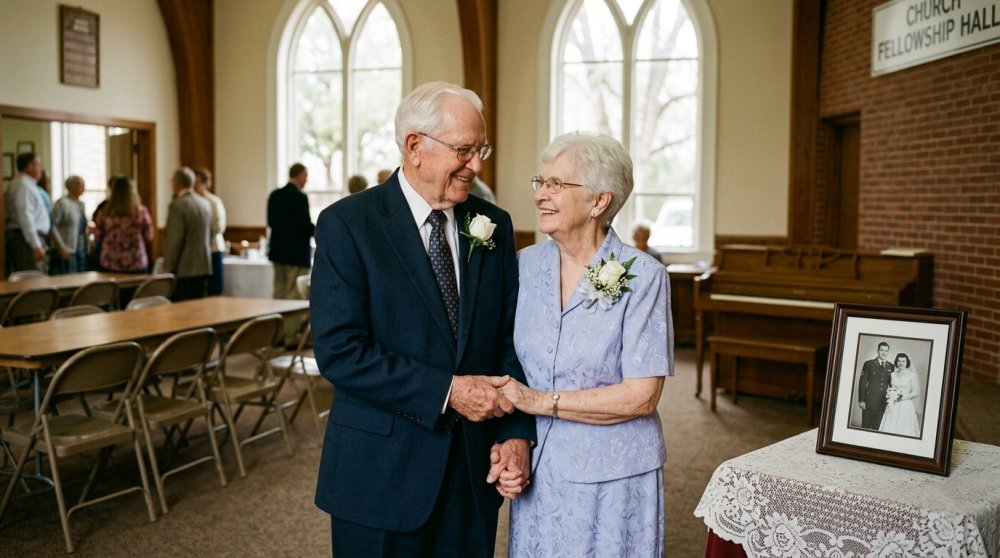
- Clyde and Gwen Antwine celebrated 70 years of marriage rooted in Christian service and missionary work across Europe and the United States.
- The couple met at a youth camp in Texas and built their relationship on shared faith, mission trips, and a commitment to mentoring young Christians.
- They helped establish a healthy church in Zurich, Switzerland, and continued to serve faithfully at Memorial Road Church of Christ in Oklahoma.
The Antwines first met as teenagers at a two-week encampment at Abilene Christian University. Clyde was 15 years old and sold his FFA prize-winning steer for $40 to attend. That is where he first saw Gwen, then 14, and asked to take her picture.
He carried that photograph in his wallet for five years before they reunited at Abilene Christian during his sophomore year. They married six months later.
“The last day of camp, I worked up the courage to ask her if I could take her picture, and she posed. And I put that picture in my wallet. I didn’t even know her name. I just knew she was pretty.”
After Clyde graduated, the couple boarded a boat for Europe in 1959. They served seven years in Zurich, helping to strengthen a young congregation of the Church of Christ. Their work laid a foundation that still bears fruit today.
Later the Antwines served in the German cities of Augsburg and Munich. After nearly two decades overseas, they returned to the United States. Clyde became missionary in residence at Oklahoma Christian University while Gwen served as office manager for The Christian Chronicle.
“Gwen would get you laughing and see the positive side when things got tough, and Clyde, in his quiet voice, would somehow say the exact words you needed to hear to keep you spiritually grounded.”
Their legacy continues through the many students they mentored for mission work. The Antwines never sought recognition. Their only goal was to prepare others for Kingdom service.
Today, Clyde still carries that original photograph of Gwen from their teenage years. Their story stands as a clear testimony of enduring love, steadfast faith, and lifelong commitment to the Lord’s work.
Let us know what you think, please share your thoughts in the comments below.

Faith Facts
- Ashley Flynn’s family states she “wanted her life to point people to Jesus.”
- She is remembered as a mother of two who “loved Jesus with her whole heart.”
- The case centers on the tragic loss of a Christian wife and mother whose testimony continues to inspire faith.
The family of the late Ashley Flynn is remembering the slain mother of two as someone who “loved Jesus with her whole heart” after her husband Caleb was found guilty of murdering her as the defendant’s family maintains his innocence.
Let us know what you think, please share your thoughts in the comments below.
Faith Facts
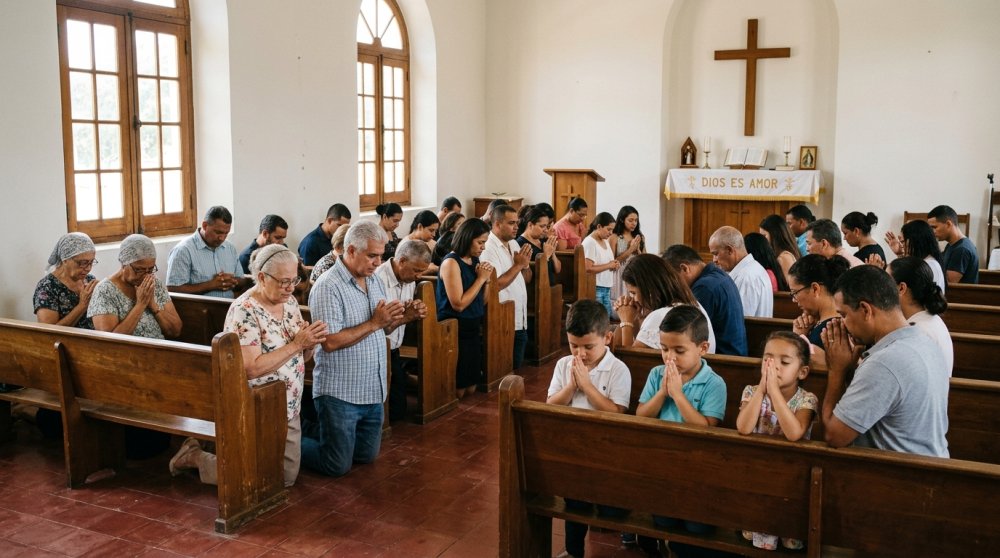
- Christians across Puerto Rico are gathering for six days of prayer for families, churches and the island’s future.
- The island is a U.S. territory located in the Caribbean.
- The multi-day prayer initiative reflects a commitment to faith, family and national values.
Christians across Puerto Rico are gathering this week for six days of prayer for families, churches and the future of the island, a U.S. territory in the Caribbean.
Believers are uniting in churches and communities to seek God’s guidance and blessing over their households and the territory’s future.
Participants are lifting up concerns ranging from family stability and spiritual renewal to economic growth and cultural preservation.
Let us know what you think, please share your thoughts in the comments below.


-

 Self-Reliance2 years ago
Trump’s Bold Move Uncovers Massive Social Security Fraud
-

 Faith2 years ago
New Clues Emerge in Noah’s Ark Mystery
-

 News2 years ago
Governor Walz’s Rhetoric Sparks National Controversy
-

 News2 years ago
Mel Gibson’s ‘The Passion of the Christ’ Sequel Title Announced
-

 Family2 years ago
Texas Lawmaker Targets Furries in Schools
-

 Freedom2 years ago
Maine Lawmaker Challenges Sports Fairness Controversy
-

 Family1 year ago
Canada’s Controversial Policy Sparks Ethical Debate
-
Faith11 months ago
Congress Hears Pleas for Nigerian Christians