
Faith
Canterbury Cathedral Graffiti Sparks Outcry

Faith Facts
- A new graffiti-style art exhibit in Canterbury Cathedral has drawn strong criticism from faith leaders and public figures.
- Critics argue the installation is disrespectful to the holy site and compromises its sacred character.
- Supporters of the cathedral’s leadership claim the exhibit aims to engage young people in spiritual questions.
Concerns have arisen over a controversial graffiti-inspired art display at Canterbury Cathedral.
Many see it as diminishing the reverence owed to a house of worship, with figures like US Vice President JD Vance branding it
“really ugly.”
The installation features raw questions scrawled temporary on cathedral walls, such as:
“Is illness sin?”
“Why did you create hate when love is by far more powerful?”
The Rev Marcus Walker stated
“The leadership of Canterbury Cathedral may no longer have a sense of the sacred, but millions do, and they have a duty to keep this a place of prayer and worship for the rest of us, not turn it into a private plaything of the elites.”
Emma Trimble of GB News claimed the project made the sacred
“profane”
and suggested young people desire authentic faith, not trendy expressions.
Former MEP Annunziata Rees-Mogg described the display as
“illegible, unaesthetic, disrespectful nonsense.”
The Very Rev David Monteith, Dean of Canterbury, argued that the art bridges cultural divides and voices the concerns of the younger generation.
As believers, it is vital to guard the sanctity of our places of worship, uphold tradition, and encourage youth to seek truth in Christ through reverence and faith.


Faith Facts
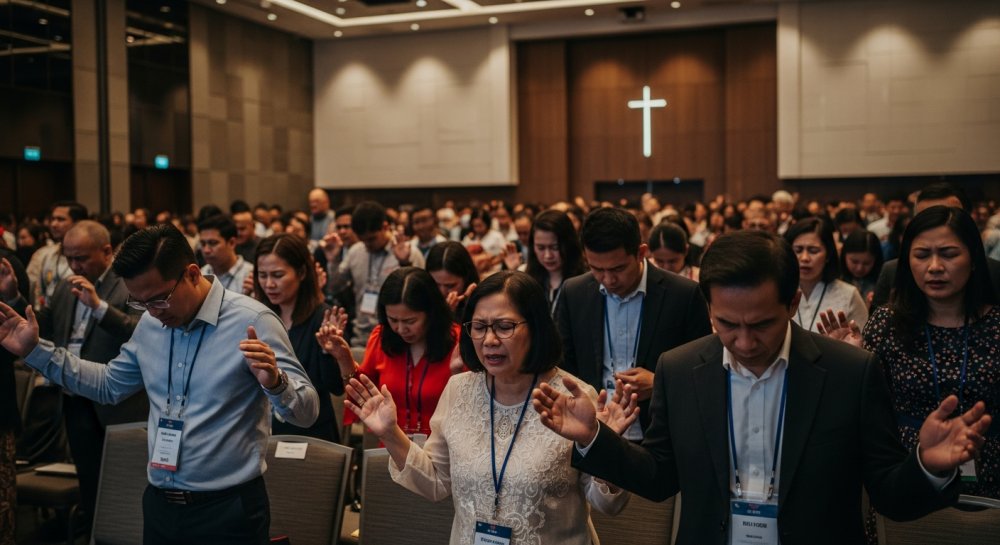
- The Asia Conference on Church & Mission concluded with leaders from 25 nations committing to specific disciple-making efforts in their own congregations
- Speakers emphasized that church transformation must begin with senior leaders themselves, not with programs or strategies
- Conference organizers challenged attendees to name one congregation they will personally shepherd toward authentic disciple-making in the coming year
Christian leaders from across Asia gathered in Alabang, Metro Manila, for the Asia Conference on Church & Mission, which concluded Thursday evening with a powerful challenge: transformation must start from within. Delegates from 25 nations were pressed to leave not with vague good intentions, but with concrete commitments to shepherd specific congregations toward genuine disciple-making.
The conference’s closing message underscored a critical truth often overlooked in modern church growth strategies—real change begins at the top. Rather than focusing on programs, marketing, or organizational restructuring, speakers emphasized that senior leaders must first be transformed themselves before they can effectively lead their churches in making disciples.
This approach reflects a biblical pattern seen throughout Scripture, where God consistently calls leaders to personal repentance and renewal before using them to transform communities. From Moses at the burning bush to Peter’s restoration after denying Christ, the pattern is clear: God transforms leaders first, then uses them to transform others.
The emphasis on personal accountability marks a refreshing departure from conference culture that often sends attendees home inspired but unchanged. By requiring each delegate to name a specific congregation or community they will personally invest in over the next year, organizers built in concrete accountability for real-world impact.
This focus on disciple-making rather than mere church attendance or program participation aligns with Jesus’ Great Commission to “make disciples of all nations.” Too often, churches measure success by attendance numbers or budget size rather than by the spiritual maturity and missionary engagement of their members.
The gathering of leaders from 25 Asian nations also highlights the growing vitality of Christianity across the continent. While churches in Europe and North America face declining attendance and influence, Asian Christianity continues to grow rapidly, often under challenging circumstances including persecution and government restrictions.
The conference’s conclusion in Metro Manila is significant, as the Philippines remains the most Christian nation in Asia, with over 90% of its population identifying as Christian. The nation serves as a hub for missionary training and deployment throughout the region.
By challenging leaders to begin transformation within their own hearts and churches before attempting to change the broader culture, the conference embraced a model that has proven effective throughout church history. Revival movements from the First Great Awakening to the Azusa Street Revival began not with political engagement or social programs, but with leaders who first allowed God to transform their own hearts.
The call to name a specific congregation represents a practical application of the biblical principle that faith without works is dead. Rather than leaving inspired but unchanged, delegates were pressed to identify exactly where and how they will apply what they learned.
As Asian Christianity continues to grow and mature, conferences like this one play a crucial role in shaping the future direction of the global church. The emphasis on disciple-making and personal transformation suggests a healthy focus on spiritual depth rather than mere numerical growth.
The challenge issued to these 25 nations of leaders—to start from within and personally shepherd specific communities—may seem small compared to grand visions of transforming entire nations. Yet it reflects the kingdom principle Jesus taught: the mustard seed that starts small but grows into something far greater than its humble beginnings.
Let us know what you think, please share your thoughts in the comments below.
Faith Facts
- Christianity offers the only worldview that truly explains the existence and purpose of pleasure
- A culture fixated on immediate gratification consistently fails to provide lasting fulfillment
- Biblical wisdom reveals that true joy comes through honoring God’s design for human flourishing
The Christian worldview is not hostile to pleasure. In fact, Christianity is the only worldview that can truly explain why pleasure exists at all.
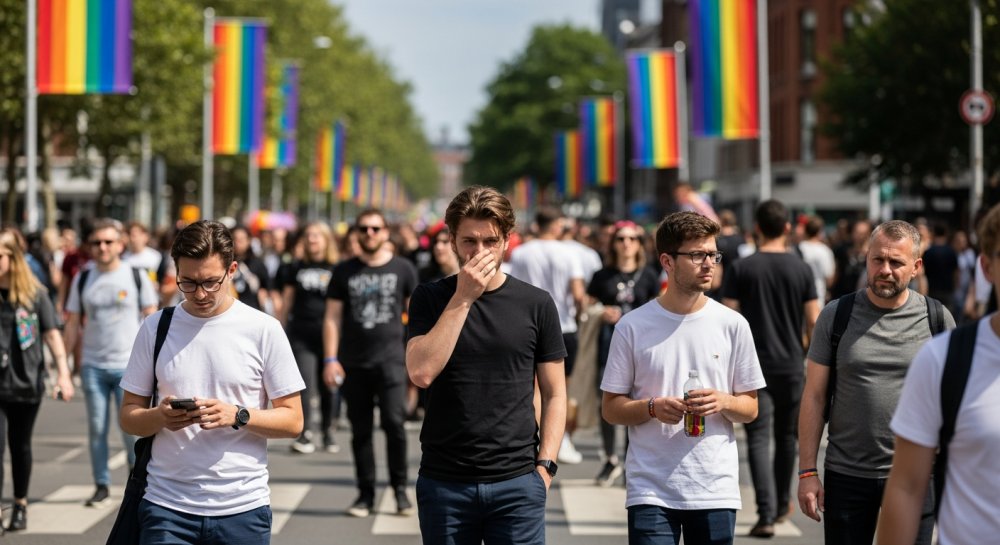
While our culture celebrates various forms of self-gratification, particularly during designated months of recognition, it consistently fails to deliver on its central promise: genuine happiness and fulfillment. This represents one of the great ironies of our time — a society obsessed with pleasure finds itself increasingly empty.
Scripture teaches that God created pleasure for our good, but within a framework of purpose and design. When we pursue pleasure as an end in itself, disconnected from the Creator who fashioned it, we find only temporary satisfaction that quickly fades.
The Christian understanding recognizes that human beings are made for something greater than momentary gratification. We are created in God’s image with eternal souls, designed for relationship with our Maker and with one another in ways that honor His design.
True pleasure — the kind that satisfies deeply and endures — comes not from rebellion against God’s standards but from aligning our lives with His purposes. This is the path to genuine joy that our culture, in its pursuit of autonomy, has abandoned.
When we reject God’s design for human sexuality, marriage, and family, we don’t liberate ourselves into greater pleasure. Instead, we cut ourselves off from the very source of lasting joy.
The answer to our culture’s emptiness isn’t more celebration of self-directed desire, but a return to the wisdom of our Creator. Only in Him do we find the abundant life He promises — a life where pleasure finds its proper place within His good design.
Let us know what you think, please share your thoughts in the comments below.
Faith Facts
- First Baptist Dallas broke ground on a new sanctuary nearly two years after a devastating fire destroyed their historic building
- The congregation is targeting Easter 2028 for the debut of the new sanctuary
- The groundbreaking ceremony marks a milestone of faith and resilience for one of America’s most prominent evangelical churches
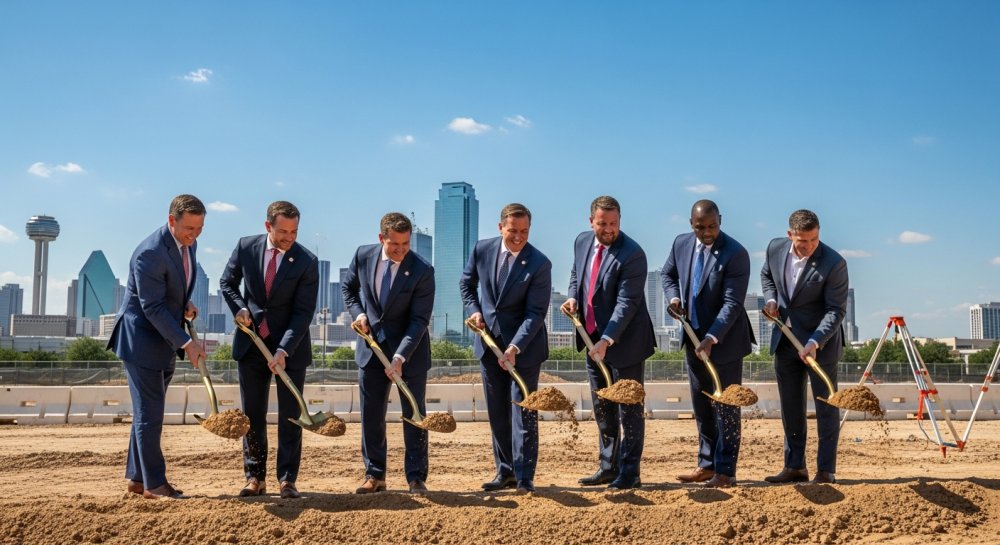
In a powerful display of faith and determination, First Baptist Dallas held a groundbreaking ceremony marking the official start of their rebuilding process. The historic church was devastated by fire nearly two years ago, but the congregation has remained steadfast in their commitment to restore their spiritual home.
The new sanctuary represents more than just bricks and mortar—it symbolizes the unwavering spirit of a Christian community that refused to be defeated by tragedy. Church leaders and members gathered to celebrate this significant milestone in their journey of restoration.
First Baptist Dallas has long stood as a beacon of evangelical Christianity in America, known for its bold proclamation of biblical truth and traditional values. The congregation’s resilience in the face of this devastating loss demonstrates the enduring power of faith and community.
The ambitious timeline targets Easter 2028 for the debut of the new sanctuary, a fitting resurrection timeline that mirrors the hope and renewal central to the Christian faith. This sacred deadline gives special meaning to the rebuilding effort, connecting the physical restoration of the church building to the spiritual renewal celebrated at Easter.
The groundbreaking ceremony brought together church members who have weathered this storm together, maintaining their worship and fellowship despite the loss of their historic sanctuary. Their perseverance serves as an inspiration to Christian communities across the nation facing their own challenges.
As construction begins, the project stands as a testament to what can be accomplished when a faith community remains united in purpose and committed to their mission. The new sanctuary will continue First Baptist Dallas’s legacy of proclaiming the Gospel and upholding Christian values in an increasingly secular culture.
Let us know what you think, please share your thoughts in the comments below.


-

 Self-Reliance1 year ago
Trump’s Bold Move Uncovers Massive Social Security Fraud
-

 Faith1 year ago
New Clues Emerge in Noah’s Ark Mystery
-

 News1 year ago
Governor Walz’s Rhetoric Sparks National Controversy
-

 News1 year ago
Mel Gibson’s ‘The Passion of the Christ’ Sequel Title Announced
-

 Family1 year ago
Texas Lawmaker Targets Furries in Schools
-

 Freedom1 year ago
Maine Lawmaker Challenges Sports Fairness Controversy
-

 Family1 year ago
Canada’s Controversial Policy Sparks Ethical Debate
-
Faith7 months ago
Congress Hears Pleas for Nigerian Christians