Connect with us

Faith

Why Western Missionaries Must Surrender Control to Reach the Lost

Published

on

Faith Facts

  • Missions leaders are calling for a fundamental shift in how Western churches approach global evangelism, prioritizing indigenous leadership over traditional expatriate control.
  • Experts warn that cultural imperialism in missions work has hindered the gospel’s effectiveness, as Western funding and decision-making power often overshadow local believers who understand their own cultures best.
  • The Biblical mandate for global evangelism remains unchanged, but modern missionaries must embrace humility and servant leadership, working under rather than over local Christian leaders in foreign fields.

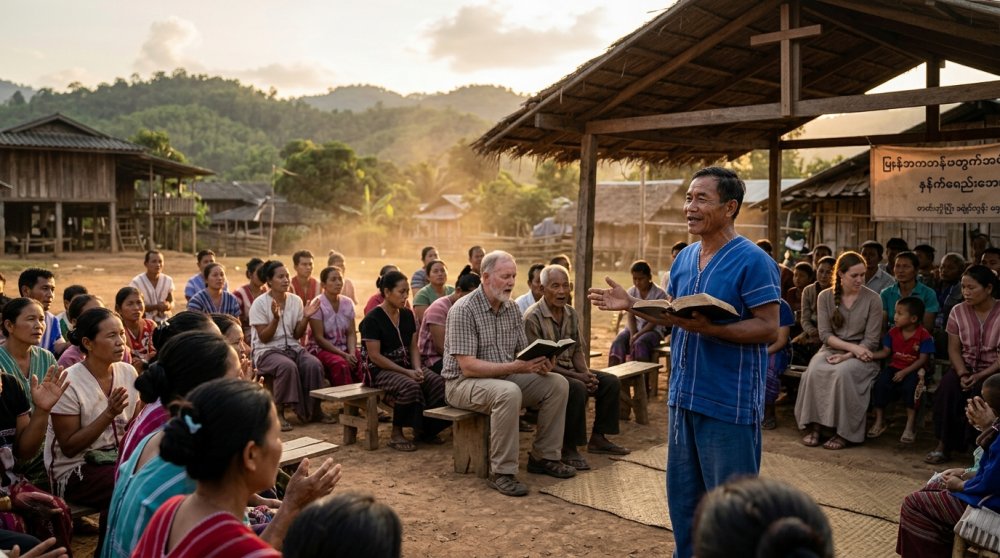
The Great Commission given by Jesus Christ remains as urgent today as it was 2,000 years ago—to go into all nations and preach the gospel. But according to missions experts, the way American Christians have been carrying out that command may need a radical transformation.

The mission itself isn’t ours to direct—it belongs to God. Yet those wielding influence in the missions community, typically through financial control and strategic planning, have too often lost sight of that fundamental truth.

Reaching unreached people groups with the saving message of Jesus Christ demands a posture change from Western believers. The old model of doing missions through, with, or by partnering with indigenous leaders is no longer sufficient. Expatriate missionaries must now be willing to serve under the leadership of local believers who know their own cultures, languages, and contexts far better than outsiders ever could.

This shift challenges decades of missionary practice where American and European Christians controlled the purse strings and set the priorities. While Western churches have invested billions of dollars and sent thousands of missionaries over the past century, cultural blind spots and an unwillingness to truly empower local leadership have sometimes impeded the gospel’s advance.

Indigenous Christian leaders are already on the ground in their own nations. They speak the language fluently, understand cultural nuances that take expatriates years to grasp, and don’t carry the baggage of being foreign outsiders. When Western missionaries insist on maintaining control—even with good intentions—they can inadvertently communicate that local believers aren’t capable or trusted to lead their own churches and evangelistic efforts.

The call isn’t to abandon cross-cultural missions or stop supporting the global spread of Christianity. American churches have unique resources, training capabilities, and experiences that can bless believers worldwide. But the question is one of posture: Are we coming as humble servants willing to follow local leadership, or as benefactors who expect gratitude and control in return for our support?

Scripture provides clear models of servant leadership. Jesus Himself, though He was God, took on the form of a servant. Paul adapted his approach to different cultural contexts, becoming “all things to all people” for the sake of the gospel. The early church sent missionaries, but also recognized and empowered local leaders like Timothy, Titus, and the elders in every city.

For missions work to be truly effective in today’s world, Western Christians must embrace the uncomfortable work of surrendering control. That means allowing indigenous leaders to set priorities, make decisions, and determine strategies—even when they differ from what American donors might prefer. It means trusting that the Holy Spirit works just as powerfully through believers in Africa, Asia, and Latin America as He does through those in the United States.

This isn’t about political correctness or accommodation to cultural relativism. It’s about recognizing that the gospel transcends Western culture and that God has raised up faithful leaders in every nation who are best equipped to reach their own people. When expatriate missionaries come alongside these leaders with genuine humility and a willingness to serve rather than lead, the kingdom of God advances far more effectively.

The harvest remains plentiful, and the laborers are still few. But perhaps what’s needed most isn’t more American missionaries going to tell others how to do ministry—it’s more American Christians willing to support, serve, and learn from indigenous leaders who are already faithfully advancing God’s mission in their own nations.

Let us know what you think, please share your thoughts in the comments below.

Continue Reading
Click to comment

Leave a Reply

Your email address will not be published. Required fields are marked *

Faith

What This Boxing Champion Credits for Her Historic Career

Published

on

Faith Facts

  • Irish boxing champion Katie Taylor openly credits her Christian faith as the foundation of her historic career and unprecedented success in women’s boxing
  • Taylor has consistently spoken about prayer, Scripture reading, and reliance on God throughout her journey from Olympic gold to undisputed world champion
  • As she prepares for her farewell fight at Croke Park, the athlete says her faith gives her peace about leaving the sport at the pinnacle of success

In a world where professional athletes often credit their talent, training regimens, or coaches for their success, Irish boxing legend Katie Taylor stands apart. The undisputed lightweight champion has never shied away from identifying the true source of her strength: her unwavering Christian faith.

As Taylor prepares for what many expect to be her final bout at Dublin’s iconic Croke Park stadium, her story serves as a powerful testament to how faith can sustain an athlete through impossible odds. From her early days dreaming of Olympic glory when women’s boxing wasn’t even an Olympic sport, to becoming a two-weight world champion, Taylor has consistently pointed upward in gratitude.

“My faith has been the anchor throughout everything,”

Taylor has said repeatedly throughout her career, emphasizing that her relationship with Jesus Christ provided stability during both triumph and adversity.

Taylor’s journey reads like a modern-day biblical narrative of patience and perseverance. She began boxing at a time when the sport offered no Olympic pathway for women, no professional opportunities, and little public recognition. Yet she persisted, training with the same discipline and dedication as if the world stage already awaited her.

When women’s boxing was finally added to the 2012 London Olympics, Taylor seized her moment, capturing gold and becoming an instant national hero in Ireland. But even in that pinnacle moment of achievement, she deflected praise from herself.

Throughout her professional career, which has seen her become undisputed champion across multiple weight classes, Taylor has maintained daily spiritual disciplines. She begins each day with prayer and Scripture reading, finding guidance and strength in God’s Word before facing the physical demands of elite athletic competition.

Her faith has also shaped how she conducts herself in a sport not always known for grace and humility. Taylor has earned respect not just for her lightning-fast hands and technical brilliance, but for her sportsmanship, dignity, and refusal to engage in the trash-talking that often dominates pre-fight promotion.

This approach stems directly from her Christian convictions about how to treat others, even opponents. She has spoken about praying for her competitors and viewing each person in the ring as someone created in God’s image, worthy of respect regardless of the battle they’re about to wage.

As Taylor faces the emotional challenge of stepping away from the sport that has defined much of her adult life, she demonstrates the peace that comes from a faith-centered perspective. Rather than clinging desperately to fame or fearing an identity crisis, she approaches retirement with the confidence that her worth isn’t tied to championship belts or crowd applause.

Her farewell fight at Croke Park will mark the end of a remarkable boxing career, but Taylor sees it as simply one chapter in a larger story written by a faithful God. She has expressed gratitude for every opportunity, every victory, and even every setback that refined her character and deepened her dependence on Christ.

For young Christian athletes watching Taylor’s career, she provides a blueprint for maintaining faith under the intense pressures of elite competition. Her example shows that acknowledging God’s role in success doesn’t diminish an athlete’s achievements—it properly frames them within eternal perspective.

Taylor’s influence extends far beyond the boxing ring. In Ireland and around the world, she has demonstrated that a woman can be both fiercely competitive and deeply devout, both a champion fighter and a humble servant of Christ. These identities don’t conflict; they complement and strengthen each other.

As the final bell approaches on her storied career, Katie Taylor leaves a legacy that transcends sports statistics. She showed the world what it looks like to pursue excellence while keeping faith first, to compete with killer instinct while maintaining Christian character, and to achieve impossible dreams while giving all glory to God.

Let us know what you think, please share your thoughts in the comments below.
Continue Reading

Faith

Over 5,000 Christians Gather for Family-Focused Faith Revival in Tennessee

Published

on

Faith Facts

  • More than 5,000 Christians from across the nation gathered in Sevierville, Tennessee for the annual Polishing the Pulpit conference, with an additional 2,300 attending a sister event in Branson, Missouri
  • The weeklong event featured Bible teaching sessions for all ages, from toddlers to grandparents, with keynote messages exploring Jesus Christ’s role as the Great Physician healing every aspect of life
  • Families from military communities and across the country described the conference as a vital opportunity for spiritual renewal, fellowship, and strengthening faith in the next generation

In the foothills of the Great Smoky Mountains, thousands of Christian families converged for a powerful week of worship, Bible study, and spiritual renewal. The Polishing the Pulpit conference in Sevierville, Tennessee drew believers from as far as Hawaii, Maine, and even Australia for intensive Christian education that strengthened faith across generations.

Dan Winkler, minister for the Spring Meadows Church of Christ in Spring Hill, Tennessee, delivered a compelling message about Jesus as the Great Physician during the keynote series.

“He went to the university of hard knocks. He majored in humanity, not humanities. He graduated summa cum laude because he never made anything but A-plus. And he stepped into his post-grad work to become the Great Physician, not doing classes online but on the front line — healing the leper, giving sight to the blind, making whole the lame. And he can make a difference in your life.”

The conference’s family-focused approach sets it apart from typical religious gatherings. From toddlers to grandparents, attendees found age-appropriate biblical instruction throughout the week. Popular sessions filled to capacity, with many standing at room edges or sitting on floors to hear teachings on theology, Christian living, and scriptural truth.

Ellis Thorne, a 43-year-old member of the U.S. Coast Guard who worships with the North Hamilton Church of Christ in Soddy Daisy, Tennessee, brought three generations of his family to the event.

“One of the great things about Polishing the Pulpit is there’s something for the entire family,” said Thorne, who attended with his parents, wife, and three children ages 6 to 12. “And, you know, it’s extremely important to us to make our family as strong as possible in Christ.”

For military families like the Thornes who relocate frequently, the annual gathering provides crucial continuity. “It’s not just our physical family, but I’m in the military, and we have to move around a lot, and so there’s a lot of people that we get to see here that (are) part of our Christian family from various congregations — as far away as Hawaii, Maine, South Carolina, Alabama.”

“We get to reunite with our family here and many people that my kids were very close to when they were growing up,” he added. “It’s just a great experience to be around and show them how many people that there are that love the Lord and want to do his will.”

Chanel Smith, 41, made the journey from New Orleans with her husband, children, and in-laws for her fourth time attending. The Smith family worships with the Degaulle Drive Church of Christ.

“It’s been really great because there’s classes for the kids, and it’s just a really good time for my husband and I to recharge because we both work,” she said. “It gives us time to recharge and really focus in on God.”

From Small Beginnings to National Movement

The conference’s humble origins stand in stark contrast to its current scope. In 1994, three preachers and alumni of Faulkner University in Montgomery, Alabama — Allen Webster, Mark Howell, and Floyd Bailey — began meeting to workshop sermon plans, rotating among their offices in different states.

As word spread, the gathering expanded to include other preachers, then church elders, deacons, youth ministers, and eventually all church members. The first Sevierville conference in 2008 drew just under 1,000 attendees. Growth necessitated adding a second location in Branson in 2024.

Allen Webster, now 60 and director of Polishing the Pulpit, reflected on the conference’s remarkable expansion.

“You look back on it, and you see the hand of God in it. We always wanted it to glorify God, and we wanted it to be good for his kingdom. … It’s amazing what God has done with this.”

Webster, who also founded the House to House, Heart to Heart ministry, emphasized the conference’s multigenerational impact. “When you’re a parent … it really helps to broaden the educational experience with others who reinforce what you’re teaching. So that helps them to see a wider spectrum of the brotherhood and reinforce the Scriptural teaching.”

This year’s keynote series explored lesser-discussed aspects of Jesus Christ, examining how the Savior heals and transforms every part of a Christian’s life as physician, counselor, and redeemer.

“Let’s bring Jesus back into the focus,” Webster said. “What does the church need now? We need to be close to him. You know, we need to understand him. … So it’s just a new way to look at some old truths.”

Worship and Fellowship Draw Thousands

Beyond the teaching sessions covering theology, doctrine, Scripture, Christian lifestyle, culture, and law, the conference featured extensive a cappella congregational singing. Evening singing sessions in the convention center atrium drew over 1,000 voices in traditional hymns and worship songs.

Tiffany Bryan, a 19-year-old first-time attendee from the West Metro Church of Christ in Yukon, Oklahoma, found the worship particularly moving.

“The singing was really, really good. Like, it was tear jerking.”

Bryan attended after encouragement from her sister Zoey, who had experienced the Branson conference. The young woman emphasized the importance of Christians understanding their beliefs more deeply.

“Sometimes we just trust everything the preacher says, you know,” she explained after attending a session on “The Myth of Neutrality.” “And sometimes we just walk along not doing anything … not doing our part.”

The conference’s reach extends internationally. Andrew Young traveled from Queensland, Australia, where he serves as a missionary preacher for the Gipps Street Church of Christ in Toowoomba. The former salesman and father of three first attended while studying at the Southeastern Institute of Biblical Studies in Knoxville, Tennessee.

“In the entire country of Australia, there are 1,700 members of the Church of Christ, which basically means there are more Christians in this room than there are in the entire country of Australia,” Young said from his exhibitor space, where he was raising funds for a 12-seat church bus to transport workers to rural congregations across Queensland, a region nearly three times the size of Texas.

“It’s insane to think that you get this many people who are like-minded Christians, like-minded in our belief. … It was just unbelievable to have that many people together singing, praising God. It was just amazing.”

The conference continues to serve as a vital gathering point for Christian families seeking to strengthen their faith, educate their children in biblical truth, and connect with fellow believers committed to living according to Scripture. As American culture increasingly challenges traditional Christian values, events like Polishing the Pulpit provide essential community and spiritual fortification for families determined to raise the next generation in the faith.

Let us know what you think, please share your thoughts in the comments below.
Continue Reading

Faith

Why Mockery After Tragedy Reveals the Battle We Face

Published

on

Faith Facts

  • A death at Big Church Festival prompted not only grief but widespread mockery of Christian faith on social media and in public forums
  • The hostile response demonstrates that even in spiritually hungry times, opposition to God and His people remains a constant reality
  • Christians are called to remain steadfast and grieved but unsurprised when facing cultural hostility toward the faith

When tragedy strikes, the natural human response is compassion and solidarity. But the aftermath of a recent death at Big Church Festival revealed something darker lurking beneath the surface of our culture. Alongside genuine expressions of grief and condolence, a wave of insults and mockery directed at the Christian faith flooded social media and public discourse.

This response should grieve us deeply as believers. Yet it should not surprise us.

We live in what many describe as a spiritually hungry society—one where mindfulness apps flourish, where yoga studios fill with seekers, where interest in meditation and alternative spirituality grows each year. People are searching for meaning, for transcendence, for something beyond the material world. But despite this hunger, or perhaps because of it, hostility toward the God of the Bible and toward His people remains fierce and unrelenting.

The mockery that followed this tragedy is a stark reminder that we are still in a spiritual battle. This is not a battle fought with physical weapons or political power. It is a battle for hearts, minds, and souls—a battle that has raged since the Garden of Eden and will continue until Christ returns.

Scripture warns us repeatedly to expect opposition. Jesus Himself told His disciples they would be hated because of Him. The Apostle Paul wrote that the message of the cross is foolishness to those who are perishing. Peter encouraged believers not to be surprised at the fiery trial they were experiencing, as though something strange were happening to them.

The hostility we see is not new. It is the same ancient rebellion against God dressed in modern language and amplified by social media platforms. When tragedy strikes believers, some see it not as an opportunity for empathy but as a chance to question God’s goodness, to mock faith, and to dismiss Christianity as naive or dangerous.

This reaction reveals a profound spiritual reality: the human heart, apart from God’s grace, is at enmity with Him. No amount of cultural sophistication or spiritual curiosity can bridge that gap. Only the transforming power of the Holy Spirit can turn a mocker into a worshiper, a scoffer into a servant.

As Christians, our response to such hostility must be rooted in both truth and love. We grieve—for the loss of life, for the pain of those who mourn, and for the hardness of heart displayed by mockers. We stand firm in our faith, knowing that our hope is not in the approval of the world but in the unchanging character of God.

We also recognize that behind the mockery are people made in God’s image, people who are themselves spiritually lost and in desperate need of the gospel. Our calling is not to return insult for insult, but to entrust ourselves to Him who judges justly, and to continue proclaiming the good news with gentleness and respect.

The tragedy at Big Church Festival and the mockery that followed remind us that the spiritual battle is real and ongoing. But they also remind us that our faith is not dependent on favorable circumstances or cultural acceptance. It is anchored in the resurrection of Jesus Christ and the promise that one day every knee will bow and every tongue confess that He is Lord.

Until that day, we press on—grieved by hostility, but not defeated by it. We love our enemies, pray for those who persecute us, and trust that God is working all things together for the good of those who love Him. The battle may be fierce, but the victory is already won.

Let us know what you think, please share your thoughts in the comments below.
Continue Reading

Trending