
Faith
Why One Word Is Dividing Christians and Threatening Our Civilization

Faith Facts
- Christian apologist Wes Huff ignited controversy by challenging the term ‘Judeo-Christian’ and its role in describing Western civilization
- The debate reveals a deeper conflict over whether Jewish heritage should be recognized as foundational to Christian and Western values
- Defenders argue ‘Judeo-Christian’ represents shared moral foundations that built Western civilization, not just theological agreement
A single social media post has unleashed a firestorm that goes far beyond semantics. Christian apologist Wes Huff’s recent commentary on the term “Judeo-Christian” has sparked intense debate among believers, revealing fault lines that threaten our understanding of Western civilization itself.
The controversy centers on whether the phrase “Judeo-Christian” accurately describes the foundation of American and Western values. Critics of the term argue it blurs important theological distinctions between Judaism and Christianity. Supporters counter that it recognizes the shared moral heritage that has shaped our nation.
This isn’t merely an academic dispute. At stake is how we understand the very foundations of religious liberty, human dignity, and the rule of law — principles that have made America exceptional.
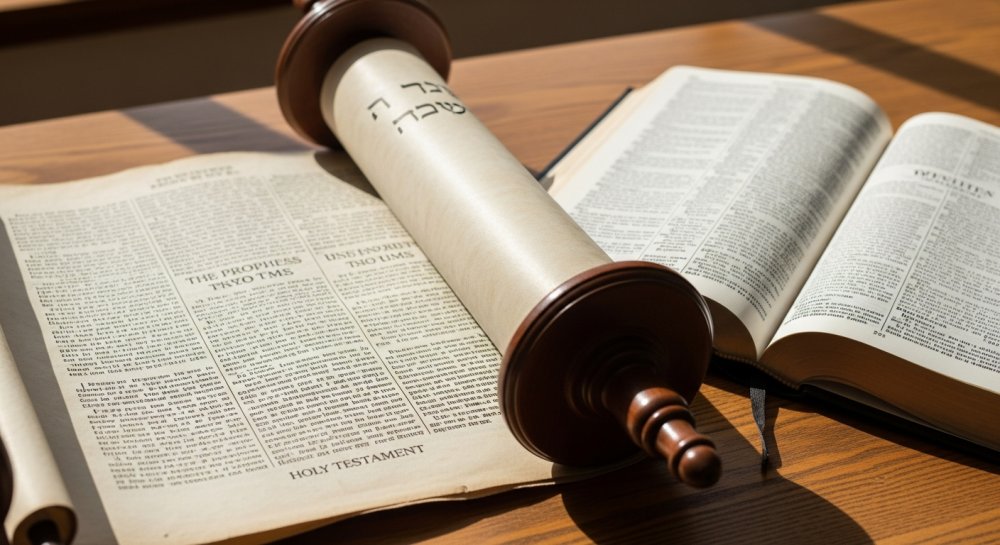
The term “Judeo-Christian” gained prominence in the 20th century as Americans sought to articulate the common values that united believers against totalitarian ideologies. It acknowledges that Christianity emerged from Jewish roots and that both faiths share the Old Testament as sacred scripture. The Ten Commandments, the prophets, and the moral law revealed to Moses form common ground.
Those who oppose the phrase often point to fundamental theological differences. Christians believe Jesus is the Messiah; Jews do not. Christianity proclaims salvation through Christ alone, a claim Judaism rejects. These are not minor disagreements — they are essential matters of eternal consequence.
Yet defenders of “Judeo-Christian” argue the term describes civilization, not theology. It recognizes that Western legal systems, concepts of human rights, and moral frameworks emerged from a heritage shared by both faiths. The alternative, they warn, is to deny the Jewish foundations of Christianity itself.
The debate has exposed an uncomfortable truth: some who reject “Judeo-Christian” do so not from theological precision but from a desire to distance Christianity from its Jewish origins entirely. This tendency carries disturbing echoes of ancient heresies that sought to sever the faith from its biblical roots.
America’s Founders understood this connection clearly. They drew extensively from the Hebrew Bible in shaping the republic. John Adams declared that the Hebrews had done more to civilize the world than any other nation. Our system of government reflects principles found in both testaments of Scripture.
The current controversy also reflects deeper currents in American religious life. As secularism advances, some Christians seek sharper boundaries and clearer distinctions. Others believe our moment demands emphasizing common ground among those who honor biblical revelation.
What’s certain is that rejecting the concept of shared Judeo-Christian heritage plays into the hands of those who want to erase faith from public life entirely. Secularists are happy to divide believers over terminology while they dismantle the foundations both communities hold dear.
The phrase “Judeo-Christian” doesn’t require Christians to compromise on the exclusivity of Christ or the necessity of the Gospel. It simply acknowledges historical and moral reality. Christianity did not emerge in a vacuum. Jesus was Jewish. The apostles were Jewish. The early church was rooted in synagogue and temple.
To reject this heritage is to reject the very soil from which our faith grew. It is to embrace a rootless Christianity disconnected from the story of God’s covenant people. Such a faith cannot sustain civilization because it has severed itself from the civilization-building tradition that runs from Abraham through the prophets to Christ and the apostles.
The term matters because ideas have consequences. How we describe our heritage shapes how we defend it. If we cannot articulate what makes Western civilization distinct — and worth preserving — we will lack the moral vocabulary to resist those who seek its destruction.
This debate arrives at a critical moment. Traditional values face unprecedented assault. Religious liberty stands threatened. The moral consensus that once united Americans has fractured. In such times, believers cannot afford unnecessary division over matters that need not divide us.
Christians can and should maintain their theological convictions with absolute clarity. Jesus Christ is Lord, and there is no salvation apart from Him. But we can also acknowledge that the moral framework supporting human dignity, justice, and freedom rests on foundations Christianity shares with Judaism.
The alternative is a Christianity cut off from its roots, unable to explain its own history or defend the civilization it helped build. That serves no one except those who want faith banished from public life altogether.
Let us know what you think, please share your thoughts in the comments below.


Faith Facts
- Christians are called to redeem every tool for God’s glory and the spread of the Gospel.
- Artificial intelligence is a human creation and remains under God’s sovereign authority.
- Believers must approach emerging technologies with wisdom rooted in Scripture.
Christians around the world are asking an important question as artificial intelligence grows more powerful. How can this technology be captured for the glory of God and the advancement of the Gospel?
Scripture teaches that every good gift comes from above. Technology itself is not evil, but its use must be directed by truth and righteousness.
AI systems are built by people and trained on data created by people. They reflect human choices and remain limited by the boundaries God has established.
Believers have a responsibility to guide these tools toward purposes that honor Christ and serve others. That includes sharing the Gospel, protecting life, and strengthening families.
“Whether therefore ye eat, or drink, or whatsoever ye do, do all to the glory of God,” 1 Corinthians 10:31 reminds us.
Churches and ministries are already exploring ways to use AI for translation, accessibility, and discipleship resources. These efforts must stay anchored in sound doctrine and prayerful discernment.
At the same time, Christians are right to raise concerns about privacy, truth, and the temptation to place ultimate trust in machines rather than in the Lord.
“Trust in the Lord with all thine heart; and lean not unto thine own understanding,” Proverbs 3:5 declares.
Ultimately, the future belongs to the One who created all things, not to any algorithm or invention of man. AI will never have the final word over humanity.
Let us know what you think, please share your thoughts in the comments below.
Faith Facts
- The little log church has stood along the historic Oregon Trail route, serving as a steadfast reminder of Christian faith amid the rugged American frontier.
- U.S. Highway 191 passes near this enduring structure, connecting modern travelers to the spiritual legacy of pioneer families who settled the West.
- The church continues to bear witness to the traditional values of faith, family, and freedom that shaped our nation’s westward expansion.
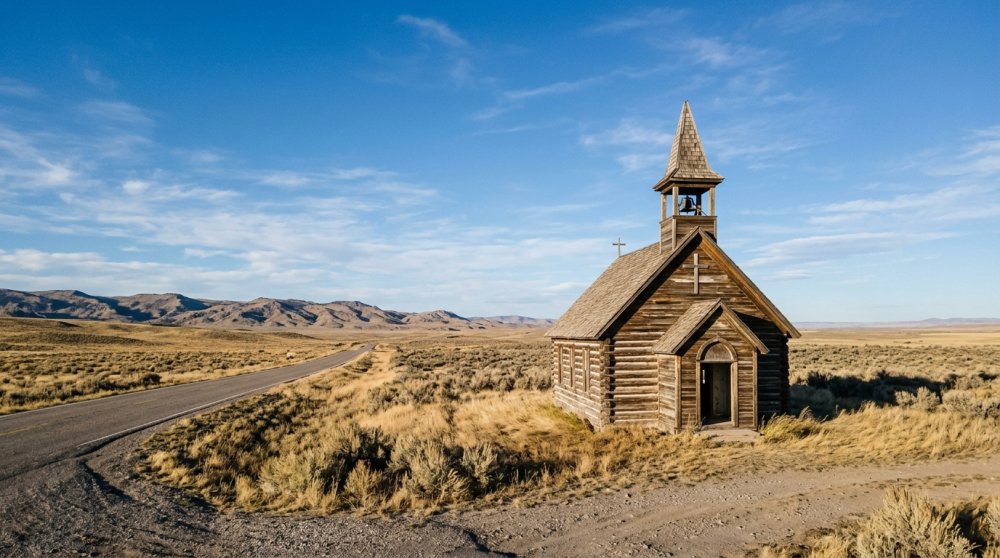
Along U.S. Highway 191 stands a little log church that looks as though it has occupied this windswept landscape since the days of wagon trains.
The humble structure serves as a tangible link to the pioneer families who carried their Bibles and their faith across the plains in search of new beginnings.
Its weathered logs and simple steeple rise against the vast Western sky, a quiet testament to the enduring strength of Christian witness in America.
Travelers passing by are reminded that the values of hard work, self-reliance, and devotion to God helped build this nation from the ground up.
Let us know what you think, please share your thoughts in the comments below.
Faith Facts
- Scripture teaches that creation groans under the weight of sin and awaits redemption
- Christian teaching holds that believers are called to reflect God’s compassion through practical help
- History shows the church has long been first on the scene after floods, fires, and storms
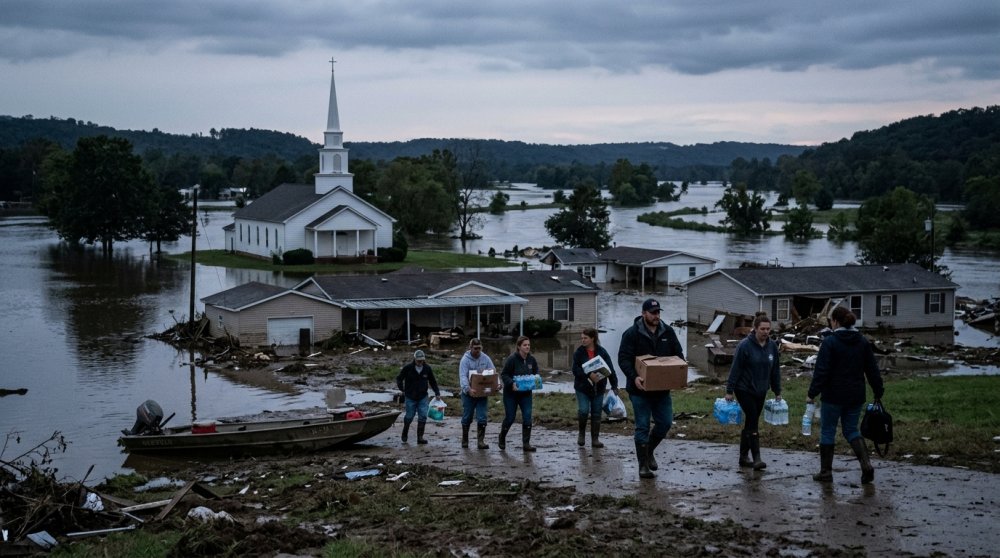
Every natural disaster reminds us that we live in a fallen world — that mankind’s sin irreparably marred the world’s original perfection.
We call these events “natural disasters,” but the reality is that these tragedies are anything but “natural.”
Let us know what you think, please share your thoughts in the comments below.


-

 Self-Reliance1 year ago
Trump’s Bold Move Uncovers Massive Social Security Fraud
-

 Faith1 year ago
New Clues Emerge in Noah’s Ark Mystery
-

 News2 years ago
Governor Walz’s Rhetoric Sparks National Controversy
-

 News1 year ago
Mel Gibson’s ‘The Passion of the Christ’ Sequel Title Announced
-

 Family1 year ago
Texas Lawmaker Targets Furries in Schools
-

 Freedom1 year ago
Maine Lawmaker Challenges Sports Fairness Controversy
-

 Family1 year ago
Canada’s Controversial Policy Sparks Ethical Debate
-
Faith10 months ago
Congress Hears Pleas for Nigerian Christians