
Self-Reliance
Why Gambling Contradicts Biblical Principles of Stewardship


Faith Facts
- The Bible teaches that believers are called to be good stewards of the resources God has entrusted to them.
- Scripture consistently warns against the love of money and the pursuit of wealth through dishonest gain.
- Christian teaching emphasizes that true prosperity comes through honest work and wise investment, not through games of chance.
Investing creates a win/win for all involved, but the opposite is true in gambling. For me to win, others must lose.
“A faithful man will be richly blessed, but one eager to get rich will not go unpunished.”
The contrast between investing and gambling reveals a fundamental difference in purpose and outcome. When individuals invest in productive enterprises, they contribute to economic growth that benefits workers, communities, and families across the nation.
Gambling, however, operates on a zero-sum principle where one person’s gain necessarily comes at another’s expense. This stands in direct opposition to the biblical call to love our neighbors as ourselves.
“The plans of the diligent lead surely to abundance, but everyone who is hasty comes only to poverty.”
Christian families across America have witnessed how gambling addiction destroys marriages, devastates household finances, and leaves children without the stable homes they need. The ripple effects extend far beyond the individual gambler to entire communities that bear the social costs.
Traditional American values have long emphasized hard work, thrift, and prudent financial management as pathways to prosperity. These principles align with Scripture’s wisdom about building wealth through honest means rather than seeking shortcuts through games of chance.
Let us know what you think, please share your thoughts in the comments below.

Faith Facts
- God calls believers to be good stewards of both time and treasure, as both are gifts from Him.
- Scripture teaches that those who are faithful in little things will be trusted with greater responsibilities.
- Christian families who manage their hours wisely often find greater peace and financial stability.
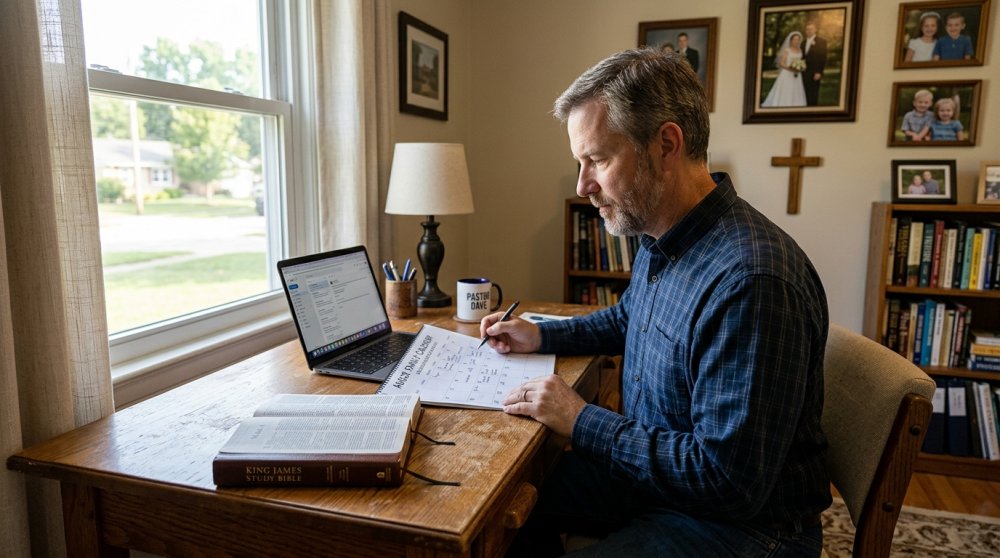
When you wonder where your money went, ask where your time went. Chuck explains why the way you spend your hours shapes the way you manage your money.
Time is one of the most valuable resources God has entrusted to us. Every hour spent idly or without purpose can quietly slip into wasted dollars, missed opportunities, and unnecessary expenses. Faithful stewardship begins with recognizing that each moment carries eternal weight and practical consequences.
Many Americans find themselves surprised by mounting bills and shrinking savings, yet the root cause often traces back to how their days are ordered. Distractions, poor planning, and a lack of discipline erode both time and finances in equal measure. The habits formed in the quiet hours of the morning set the course for the entire household budget.
“The plans of the diligent lead surely to abundance, but everyone who is hasty comes only to poverty.”
Chuck highlights six common ways that careless time use drains a family’s resources. Late fees pile up when bills are forgotten. Impulse purchases happen during rushed errands. Productivity at work slips when mornings begin without direction, leading to lost raises or missed promotions. Families that fail to schedule meals often spend far more on takeout. Even simple tasks like oil changes or home maintenance get delayed until they become costly repairs.
These patterns rarely appear dramatic in a single day, yet over months and years they quietly undermine financial security. Christian households that bring order to their calendars often discover unexpected margin in their budgets. The discipline of rising early, planning the day, and guarding against distraction yields both spiritual and material fruit.
“Commit your work to the Lord, and your plans will be established.”
Reclaiming time is not merely a financial strategy but an act of worship. When believers order their days under God’s wisdom, they position their families for blessing rather than burden. The choice to manage hours faithfully today plants seeds of provision for tomorrow.
Let us know what you think, please share your thoughts in the comments below.

Faith Facts
- The rose, bud, and thorn reflection invites believers to examine life through a biblical lens of gratitude, hope, and endurance.
- Scripture calls Christians to give thanks in all circumstances and to trust God’s timing for future blessings.
- Recognizing both blessings and challenges strengthens faith and deepens dependence on the Lord.
Christians are often encouraged to pause and take stock of their spiritual journey. One simple yet powerful way is to consider the roses, buds, and thorns in daily life.
The rose represents what is deeply pleasing right now—the answered prayers, the joy of family, and the peace that comes from walking with Christ. These moments remind believers of God’s faithful provision.
The bud symbolizes opportunities and growth still waiting to unfold. Whether it is a new ministry, a restored relationship, or a door opening in unexpected ways, the bud points to God’s ongoing work.
The thorn speaks of present difficulties and trials. Pain, uncertainty, and spiritual warfare are part of the Christian walk, yet Scripture assures that God uses even thorns to shape character and draw hearts closer to Him.
“Give thanks in all circumstances; for this is God’s will for you in Christ Jesus.”
“And we know that in all things God works for the good of those who love him, who have been called according to his purpose.”
Reflecting on roses, buds, and thorns helps believers maintain an eternal perspective. Gratitude for today’s blessings fuels hope for tomorrow’s promises and strengthens perseverance through present trials.
Let us know what you think, please share your thoughts in the comments below.

Faith Facts
- Scripture warns believers to test every spirit and hold fast to what is good.
- The Bible teaches that Satan can appear as an angel of light, making discernment essential for Christians.
- Faith in Christ provides protection against deceptive spiritual forces that seek to mislead people.
Most paranormal television programs rely on sensational editing and unverified claims rather than solid evidence. Many viewers tune in for entertainment while overlooking the spiritual risks involved.
Yet some reported encounters reflect real spiritual activity that goes beyond tricks of the camera. The greater concern lies not in seeing something unusual but in failing to recognize the true source behind it.
Christians are called to exercise spiritual discernment rather than curiosity when facing reports of the supernatural. Without biblical grounding, people can be drawn into practices that Scripture clearly condemns.
“Beloved, do not believe every spirit, but test the spirits to see whether they are from God.”
Traditional Christian teaching emphasizes that the real battle is not against ghosts or haunted houses but against principalities and powers described in Ephesians 6. Entertainment often trivializes these realities and leaves audiences spiritually unprepared.
Let us know what you think, please share your thoughts in the comments below.


-

 Self-Reliance2 years ago
Trump’s Bold Move Uncovers Massive Social Security Fraud
-

 Faith2 years ago
New Clues Emerge in Noah’s Ark Mystery
-

 News2 years ago
Governor Walz’s Rhetoric Sparks National Controversy
-

 News2 years ago
Mel Gibson’s ‘The Passion of the Christ’ Sequel Title Announced
-

 Family2 years ago
Texas Lawmaker Targets Furries in Schools
-

 Freedom2 years ago
Maine Lawmaker Challenges Sports Fairness Controversy
-

 Family1 year ago
Canada’s Controversial Policy Sparks Ethical Debate
-
Faith11 months ago
Congress Hears Pleas for Nigerian Christians