
Faith
Why Conservative Christians Struggle to Spot Gospel Distortions in Politics

Faith Facts
- American evangelicals face challenges in identifying how political movements may inadvertently distort Gospel teachings
- The relationship between conservative politics and Christian faith requires careful discernment and biblical grounding
- Understanding the distinction between political alignment and Gospel truth remains essential for faithful witness
Christians across America find themselves navigating an increasingly complex landscape where political affiliation and faith identity have become deeply intertwined. The question of how believers maintain Gospel clarity while engaging in the public square has never been more pressing.
For decades, evangelicals have aligned with conservative political values on issues fundamental to Christian teaching—the sanctity of life, traditional marriage, religious liberty, and parental rights. These alignments reflect deeply held biblical convictions that transcend partisan politics.
Yet the very strength of this alliance can sometimes make it difficult to recognize when political messaging begins to drift from scriptural truth. When patriotism, national identity, and Christian faith become inseparable in practice, believers may struggle to apply biblical discernment to political movements that claim to champion their values.
The challenge isn’t unique to one side of the political spectrum. Throughout history, both progressive and conservative movements have attempted to co-opt Christian language and symbols to advance agendas that may not fully align with biblical teaching.
What makes discernment particularly challenging for evangelicals is that many political positions do genuinely reflect Christian moral concerns. Protection of the unborn, defense of religious freedom, and support for family structures are biblical imperatives. When political leaders champion these causes, it naturally creates strong bonds of appreciation and loyalty.
However, Christians are called to a higher allegiance than any political party or earthly leader. The Gospel of Jesus Christ stands above and judges all human institutions and ideologies. Maintaining this perspective requires constant vigilance and a willingness to speak prophetically even to those who claim to be allies.
The path forward requires believers to hold firmly to biblical truth while engaging thoughtfully in civic life. This means supporting policies that align with Christian values while remaining free to critique any leader or movement when it deviates from Gospel principles.
American Christians must remember that their primary identity is in Christ, not in any political affiliation. The Kingdom of God transcends earthly kingdoms, and the Gospel message cannot be reduced to any political platform.
As believers continue to navigate these turbulent cultural waters, the need for biblical literacy, prayer, and community discernment has never been greater. The Church must equip its members to think critically and biblically about all truth claims, regardless of their political source.
Let us know what you think, please share your thoughts in the comments below.

Faith Facts
- British Prime Minister Keir Starmer issued a formal apology for the government’s historic forced adoption practices that separated unwed mothers from their babies between the 1950s and 1970s.
- A Christian charity is calling for concrete action beyond the apology to support victims and ensure such practices never happen again.
- The forced adoption scandal affected tens of thousands of families, with young mothers coerced into giving up their children under intense social and institutional pressure.
A Christian charity has urged the British government to move beyond words and take concrete steps to address one of the nation’s darkest social welfare chapters. Prime Minister Keir Starmer recently issued a formal apology for forced adoption practices that tore families apart for decades. But for many, an apology alone is not enough.
Between the 1950s and 1970s, tens of thousands of unwed mothers in England were pressured, shamed, and coerced into surrendering their babies for adoption. Many were told they were unfit parents simply because they were unmarried. The practice left deep, lasting scars on mothers and children alike — wounds that still ache today.
The Christian charity, which advocates for vulnerable families, acknowledged the significance of the prime minister’s apology. However, they emphasized that words must be accompanied by tangible support for survivors. This includes access to counseling, records, and reunion services for those separated by state-sanctioned coercion.
“We welcome the apology, but we urge the government to take meaningful action,” the charity stated. “These mothers and children deserve more than acknowledgment — they deserve justice, healing, and the resources to rebuild what was stolen from them.”
The forced adoption era reflects a time when society judged and punished women for circumstances that today would be met with compassion and support. Many of these mothers were young, vulnerable, and deeply faithful — yet they were treated as moral failures rather than children of God in need of grace.
Christian values teach us that every life has dignity and every family bond is sacred. The state’s interference in these relationships violated the sanctity of motherhood and the God-given bond between parent and child. Recognizing this wrong is a vital first step, but restoration requires commitment.
Advocates are calling on the UK government to establish dedicated support services, ensure access to adoption records, and provide pathways for families to reconnect. They also want assurances that current child welfare policies respect parental rights and the integrity of the family unit.
For Christians, the issue is deeply personal. It touches on the value of life, the importance of family, and the responsibility of governments to protect — not destroy — the bonds that bind us together. As believers, we are called to speak for those who cannot speak for themselves and to champion justice for the oppressed.
The apology is a recognition of harm done. Now comes the harder work: making things right. Survivors deserve more than symbolic gestures — they deserve healing, truth, and a government that honors the sacredness of family.
Let us know what you think, please share your thoughts in the comments below.
Faith Facts
- One of Iran’s last remaining historic Protestant churches faces government confiscation under the Islamic regime
- Christian worshippers have been threatened with imprisonment if they continue to gather at the threatened church
- The move represents another escalation in Iran’s systematic persecution of religious minorities, particularly Christians
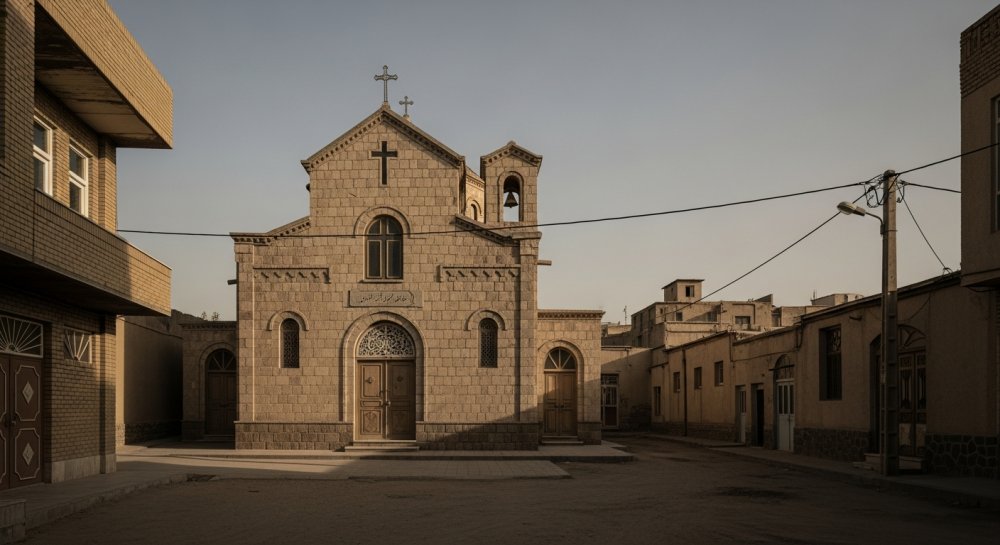
One of the last remaining historic Protestant churches in Iran is facing the threat of confiscation by the Iranian government, drawing renewed international attention to the Islamic regime’s brutal treatment of religious minorities and Christians in particular.
The development marks yet another chapter in the systematic persecution of believers who refuse to bow to the authoritarian Islamic government. Christian worshippers have been warned they face imprisonment if they continue to gather at the threatened church, according to reports from religious freedom advocates monitoring the situation.
Iran’s Islamic regime has long targeted Christian communities, viewing them as a threat to the state-imposed religious orthodoxy. The country’s few remaining historic churches represent the last visible remnants of Christianity’s ancient presence in Persia, making them particularly vulnerable to government seizure under laws that favor Islamic institutions.
Religious freedom advocates have consistently ranked Iran among the world’s worst persecutors of Christians. The regime routinely arrests pastors, raids house churches, and subjects believers to torture and lengthy prison sentences simply for practicing their faith.
The threatened confiscation comes as the Iranian government continues to crack down on all forms of religious expression outside state-controlled Islam. House churches have been forced underground, and converts from Islam to Christianity face particularly severe persecution, including the death penalty under the regime’s strict interpretation of Islamic law.
American Christians and religious freedom organizations have long called for stronger international pressure on Iran to protect religious minorities. The situation highlights the stark contrast between nations founded on Judeo-Christian principles of religious liberty and authoritarian regimes that deny basic human rights to believers.
The targeting of this historic Protestant church serves as a reminder of the ongoing global persecution of Christians, which often receives insufficient attention from Western media and political leaders. As the Iranian regime continues its assault on religious freedom, advocates are urging prayer and action on behalf of persecuted believers.
Let us know what you think, please share your thoughts in the comments below.
Faith Facts
- A Kentucky church held a Vacation Bible School skit depicting spiritual warfare using military-style characters shooting at a representation of the devil
- The pastor defended the performance as an illustration of biblical spiritual warfare, not a promotion of violence
- Critics online expressed concern about the imagery used in the children’s ministry program
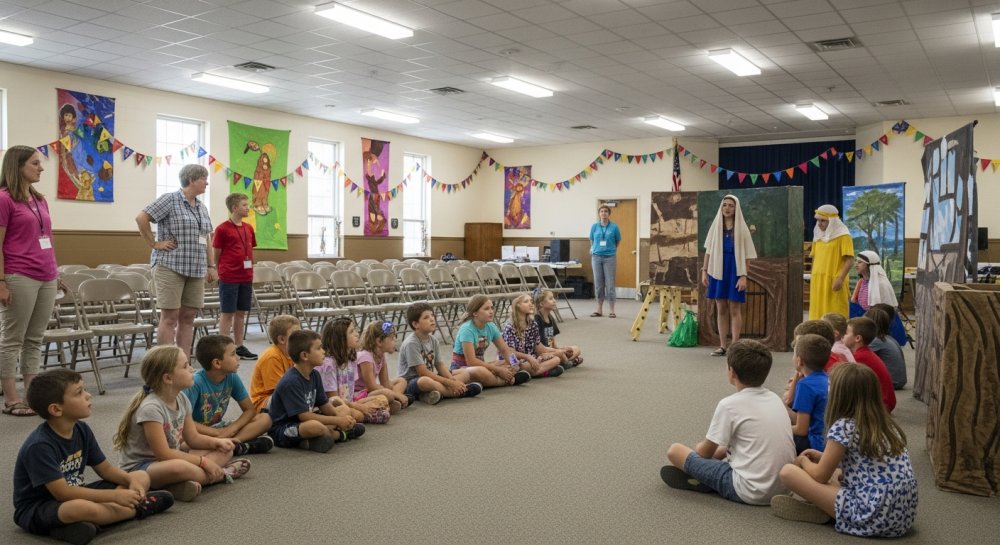
A Kentucky pastor is standing by his church’s Vacation Bible School program after a dramatic skit portraying spiritual warfare drew sharp criticism on social media. The performance featured military-style characters engaging in a symbolic battle against the devil, using imagery that some viewers found controversial.
The skit, designed to teach children about the biblical concept of spiritual warfare, depicted characters in tactical gear confronting and “shooting” a representation of Satan. Video clips of the performance circulated online, prompting both support and criticism from viewers across the country.
The pastor defended the church’s approach, emphasizing that the portrayal was meant to illustrate the spiritual battle Christians face according to Scripture. He explained that the church wanted to present the reality of spiritual conflict in a way that would resonate with today’s children and teens.
Supporters of the church argue that the Bible clearly teaches about spiritual warfare, pointing to passages such as Ephesians 6:12, which states believers wrestle “not against flesh and blood, but against principalities, against powers, against the rulers of the darkness of this age.” They maintain that creative presentations help younger generations understand these spiritual truths.
Critics, however, expressed concern about the use of gun imagery in a children’s ministry setting. Some questioned whether the military-style presentation might confuse young minds about the nature of spiritual conflict or normalize violence in a church context.
The debate highlights ongoing tensions in American churches about how to communicate biblical truths to younger generations while remaining culturally sensitive. Churches across the nation increasingly face scrutiny over their teaching methods and creative presentations, especially when videos go viral on social media.
Many conservative Christians have rallied to the church’s defense, arguing that believers should not retreat from bold presentations of biblical truth simply because they might offend secular sensibilities. They contend that spiritual warfare is a real concept taught throughout Scripture and should not be watered down to avoid controversy.
The incident also reflects broader cultural divisions about faith expression in public spaces. As churches seek to make biblical concepts relevant and engaging for children raised in a digital age, they sometimes employ dramatic illustrations that previous generations might not have used.
Church leaders note that Vacation Bible School programs have long used creative skits, costumes, and dramatic presentations to teach Scripture. They argue that the current controversy reflects how social media can amplify disagreements and create conflict where local communities might have handled discussions more gracefully.
The pastor emphasized that the church’s intent was never to promote physical violence but rather to teach children about the spiritual armor of God and the reality of spiritual opposition that believers face. He expressed hope that the controversy would lead to meaningful conversations about how churches can effectively communicate timeless biblical truths in contemporary contexts.
Let us know what you think, please share your thoughts in the comments below.


-

 Self-Reliance1 year ago
Trump’s Bold Move Uncovers Massive Social Security Fraud
-

 Faith1 year ago
New Clues Emerge in Noah’s Ark Mystery
-

 News1 year ago
Governor Walz’s Rhetoric Sparks National Controversy
-

 News1 year ago
Mel Gibson’s ‘The Passion of the Christ’ Sequel Title Announced
-

 Family1 year ago
Texas Lawmaker Targets Furries in Schools
-

 Freedom1 year ago
Maine Lawmaker Challenges Sports Fairness Controversy
-

 Family1 year ago
Canada’s Controversial Policy Sparks Ethical Debate
-
Faith7 months ago
Congress Hears Pleas for Nigerian Christians