
Faith
Why American Christians Must Hear What the Majority World Church Is Saying


Faith Facts
- Christianity scholar Alexander Chow urges Western believers to listen to theological voices from Africa, Asia, and Latin America where Christianity is growing fastest
- The Majority World now represents the largest population of Christians globally, shifting the center of Christian thought away from traditional Western institutions
- The future vitality of the global Church depends on cross-cultural theological dialogue and mutual learning among believers worldwide
A leading scholar in World Christianity is calling on American and Western believers to pay attention to the transforming voices emerging from the global Church. Alexander Chow, Senior Lecturer in Theology and World Christianity at New College, University of Edinburgh, delivered a compelling message during a lecture series at China Evangelical Seminary in April that challenges traditional assumptions about where Christian wisdom originates.
For centuries, Western seminaries and theological institutions dominated Christian thought and doctrine. But the landscape of global Christianity has dramatically shifted. The majority of the world’s Christians now live in Africa, Asia, and Latin America—regions experiencing explosive Church growth while Western nations face declining church attendance and secularization.
Chow’s presentation emphasized that the future health and vitality of Christianity worldwide hinges on Western Christians developing what he calls “ears to hear” the theological insights coming from brothers and sisters in the Majority World. These regions aren’t just mission fields anymore—they’re becoming the theological centers of gravity for 21st-century Christianity.
The Majority World Church brings fresh perspectives on Scripture, worship, community life, and faithful witness in contexts often marked by persecution, poverty, and rapid cultural change. These believers frequently demonstrate a vibrancy and commitment to the Gospel that challenges comfortable Western Christianity.
For American Christians concerned about the erosion of biblical values in our culture, there’s much to learn from believers in nations where following Christ costs something significant. Their theology is forged in the fires of real-world challenges, producing insights that speak powerfully to issues of faithfulness, sacrifice, and Kingdom priorities.
This call to listen doesn’t mean abandoning sound doctrine or biblical authority. Rather, it recognizes that God is at work throughout His global Church, and that believers from different cultures and contexts can help us see dimensions of Scripture and Christian life we might otherwise miss.
The shift also has implications for how American churches approach missions and international partnerships. Instead of a one-way flow of resources and teaching from West to East and North to South, the future calls for genuine partnership where mutual learning and respect define the relationship.
As Christianity continues to decline in Europe and faces cultural pressure in North America, the vitality and growth of the Majority World Church offers both encouragement and instruction. Their commitment to biblical faith in difficult circumstances provides a model for Western believers navigating an increasingly secular and hostile culture.
The challenge for American Christians is humility—recognizing that we don’t have all the answers and that God may be speaking powerfully through believers whose voices we’ve historically marginalized or ignored. This doesn’t diminish the rich theological heritage of Western Christianity, but it does invite us into a fuller, more global understanding of the Body of Christ.
Let us know what you think, please share your thoughts in the comments below.


Faith Facts
- A Pakistani court acquitted a Catholic man of blasphemy charges on Monday, July 6, in a rare legal victory for religious minorities in the Muslim-majority nation.
- Pakistan’s blasphemy laws carry severe penalties, including the death sentence, and are frequently used to target Christians and other religious minorities.
- The acquittal represents a significant moment for religious freedom advocates who have long called for reform of Pakistan’s blasphemy statutes.
In a remarkable turn of events, a Pakistani court has granted freedom to a Catholic man who faced blasphemy accusations, marking an unusual victory in a country where such charges often result in tragedy for Christians. The Monday ruling brings hope to religious freedom advocates who have witnessed countless believers persecuted under Pakistan’s stringent blasphemy laws.
The defendant’s lawyer confirmed the acquittal, which stands as a beacon of judicial fairness in a legal landscape that has historically been perilous for religious minorities. Pakistan’s blasphemy laws have long drawn international criticism for their severe penalties and the ease with which they can be weaponized against innocent believers.
Christians in Pakistan live under constant threat of false accusations that can result in mob violence, lengthy imprisonment, or death sentences. This acquittal demonstrates that the truth can still prevail in Pakistan’s courts, though such outcomes remain tragically rare.
The case highlights the ongoing persecution of Christians throughout the Muslim-majority nation, where followers of Christ often face discrimination, violence, and legal jeopardy simply for practicing their faith. Religious freedom organizations have consistently documented the abuse of blasphemy laws as a tool for settling personal scores or silencing religious minorities.
While this verdict offers a glimmer of hope, it does not erase the reality that Pakistan remains one of the world’s most dangerous places for Christians to live. Believers there continue to need our prayers and international advocacy as they navigate a legal system that too often fails to protect their fundamental rights.
This acquittal serves as a reminder of the importance of standing with our persecuted brothers and sisters around the world. American Christians must remain vigilant in supporting religious freedom globally and holding nations accountable for protecting the God-given rights of all people to worship freely.
Let us know what you think, please share your thoughts in the comments below.
Faith Facts
- The Church of England is facing a crisis of purpose as it drifts from its transcendent Christian mission
- Recent controversies reveal a church prioritizing secular political activism over spiritual leadership and Biblical authority
- This institutional decline serves as a warning for all Christian denominations about the dangers of abandoning foundational faith principles
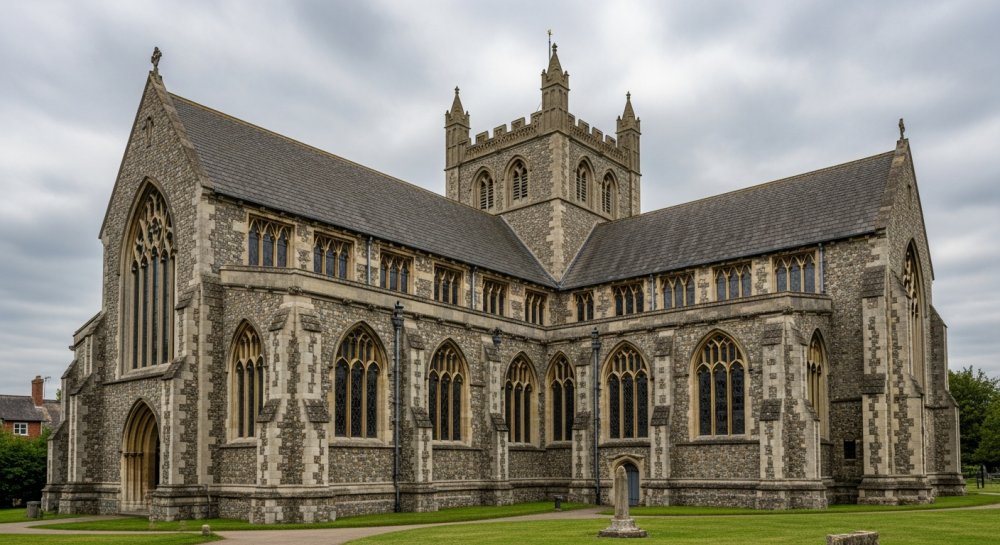
The Church of England stands at a crossroads, embodying a cautionary tale for Christian institutions worldwide. What was once a pillar of Christian faith and tradition in the United Kingdom now struggles with an identity crisis that raises fundamental questions about its very reason for existence.
This dramatic situation illustrates what happens when Christianity loses sight of its transcendent purpose. The institution that once championed the Gospel and provided spiritual leadership to millions has increasingly shifted its focus toward secular concerns and political activism, leaving many faithful Christians wondering where Biblical authority fits in its mission.
The church’s drift from its foundational purpose reflects a broader challenge facing Christian institutions across the Western world. When churches prioritize cultural acceptance over eternal truth, when they replace worship with worldly wisdom, and when they substitute political platforms for spiritual power, they cease to fulfill their God-given mandate.
The Church of England was established to proclaim the Gospel, administer the sacraments, and shepherd souls toward eternal salvation. These core functions demand unwavering commitment to Biblical truth and Christian doctrine. Yet recent years have witnessed the church entangled in controversies that suggest institutional priorities have shifted dramatically away from these essential purposes.
For American Christians watching from across the Atlantic, the Church of England’s struggles offer vital lessons. Our own churches must remain vigilant against the temptation to conform to cultural pressures that contradict Scripture. The call to be in the world but not of it remains as relevant today as ever.
When Christian institutions abandon their transcendent purpose—pointing people toward God, proclaiming salvation through Jesus Christ, and upholding Biblical truth—they lose their reason for being. No amount of social programming, political engagement, or cultural accommodation can substitute for faithful proclamation of the Gospel and adherence to God’s Word.
The question “What is the Church of England for?” should have a clear answer rooted in Scripture and the Great Commission. Any church that cannot articulate its divine purpose with clarity and conviction has already begun to lose its way. American churches must learn from this example and remain firmly anchored to Biblical truth, regardless of cultural winds.
This serves as a sobering reminder that churches exist not to mirror society but to transform it through the power of the Gospel. When that mission becomes obscured or abandoned, the church becomes just another institution among many, having lost the very thing that makes it the church—its commitment to Christ and His Word.
Let us know what you think, please share your thoughts in the comments below.

Faith Facts
- Scripture consistently warns that prosperity and ease can lead believers away from dependence on God, while suffering often refines and strengthens faith
- Throughout history, times of persecution have produced some of the most devoted Christians, while periods of comfort have frequently preceded spiritual decline
- The Christian life calls believers to take up their cross daily, suggesting that difficulty rather than ease is the expected path of discipleship
One of the oldest questions facing Christianity remains one of the most emotionally powerful: If God is good, why does He allow suffering? Yet examining Scripture and church history reveals a troubling counterpoint—comfort may pose a far greater threat to the soul than hardship ever could.
The Bible repeatedly addresses this paradox. Throughout the Old Testament, Israel’s prosperity often preceded their turning away from God, while exile and difficulty brought repentance and renewal.
Jesus Himself warned about the spiritual dangers of wealth and comfort. His words about the difficulty of the rich entering the kingdom of heaven weren’t condemnation of prosperity itself, but recognition of its spiritual hazards.
The early church thrived under persecution. When comfort came with Constantine’s endorsement, compromise followed. This pattern has repeated throughout Christian history—persecution purifies while prosperity often corrupts.
C.S. Lewis observed this dynamic in “The Problem of Pain,” noting that God whispers to us in our pleasures but shouts in our pains. Suffering gets our attention in ways comfort never does.
Modern American Christianity illustrates this danger. With unprecedented material blessings and religious freedom, many churches have drifted from biblical orthodoxy. Theology has been watered down to accommodate comfortable lives rather than calling believers to sacrificial discipleship.
The prosperity gospel represents perhaps the most obvious corruption—promising believers health and wealth rather than calling them to take up their cross. But subtler compromises affect many more churches, where the goal becomes making attendees comfortable rather than challenging them toward holiness.
Scripture consistently presents suffering as a tool God uses for refinement. James instructs believers to “count it all joy” when facing trials because testing produces steadfastness. Peter reminds suffering Christians that they share in Christ’s sufferings and will share in His glory.
This doesn’t mean Christians should seek suffering or that God causes evil. Rather, it recognizes that in a fallen world, God uses difficulty to accomplish what comfort cannot—dependence on Him rather than self-sufficiency.
Comfort tempts us to forget our need for God. When life runs smoothly, prayer becomes perfunctory. When we’re healthy and prosperous, we trust our own abilities rather than divine providence.
Suffering strips away these illusions. In pain, we remember our frailty. In loss, we recognize what truly matters. In persecution, we discover what we actually believe versus what we merely claimed to believe.
History’s most devoted Christians often emerged from hardship. The martyrs, the reformers, the missionaries who sacrificed everything—their faith was forged in fire, not luxury.
This presents uncomfortable implications for American believers enjoying unprecedented comfort. Are we being spiritually weakened by our ease? Have we traded discipleship for a religious version of the American Dream?
The answer isn’t to romanticize suffering or reject legitimate blessings. Rather, it’s to recognize comfort’s spiritual dangers and guard against them through intentional discipline and sacrifice.
Believers must examine whether their lives reflect the costly discipleship Jesus described or merely a comfortable religion that demands little. Are we storing up treasures on earth or in heaven? Do we seek first God’s kingdom or our own comfort?
Churches bear responsibility too. Rather than offering a therapeutic message focused on personal fulfillment, faithful preaching must call believers to self-denial and cross-bearing. The goal isn’t to make attendees comfortable but to make them holy.
As Western Christianity faces increasing hostility, many believers may discover what persecuted Christians worldwide already know—suffering can be a gift that reveals what comfort obscures. Hardship clarifies priorities, strengthens faith, and draws believers closer to God in ways prosperity rarely does.
The question isn’t whether God should eliminate suffering, but whether we have the spiritual maturity to handle comfort without it destroying our souls. History and Scripture suggest that for most believers, prosperity poses greater spiritual danger than persecution ever could.
Let us know what you think, please share your thoughts in the comments below.


-

 Self-Reliance1 year ago
Trump’s Bold Move Uncovers Massive Social Security Fraud
-

 Faith1 year ago
New Clues Emerge in Noah’s Ark Mystery
-

 News1 year ago
Governor Walz’s Rhetoric Sparks National Controversy
-

 News1 year ago
Mel Gibson’s ‘The Passion of the Christ’ Sequel Title Announced
-

 Family1 year ago
Texas Lawmaker Targets Furries in Schools
-

 Freedom1 year ago
Maine Lawmaker Challenges Sports Fairness Controversy
-

 Family1 year ago
Canada’s Controversial Policy Sparks Ethical Debate
-
Faith8 months ago
Congress Hears Pleas for Nigerian Christians