
Faith
When the Church Stops Celebrating Your Work

Faith Facts
- A former ministry leader experienced a drop in church status after transitioning to business, revealing how congregations subtly prioritize “sacred” over “secular” work
- Despite biblical teaching that all work reflects God’s image and serves His kingdom, many churches inadvertently devalue marketplace vocations
- The Genesis creation account establishes that God Himself worked, blessing all honest labor as part of His design for human flourishing
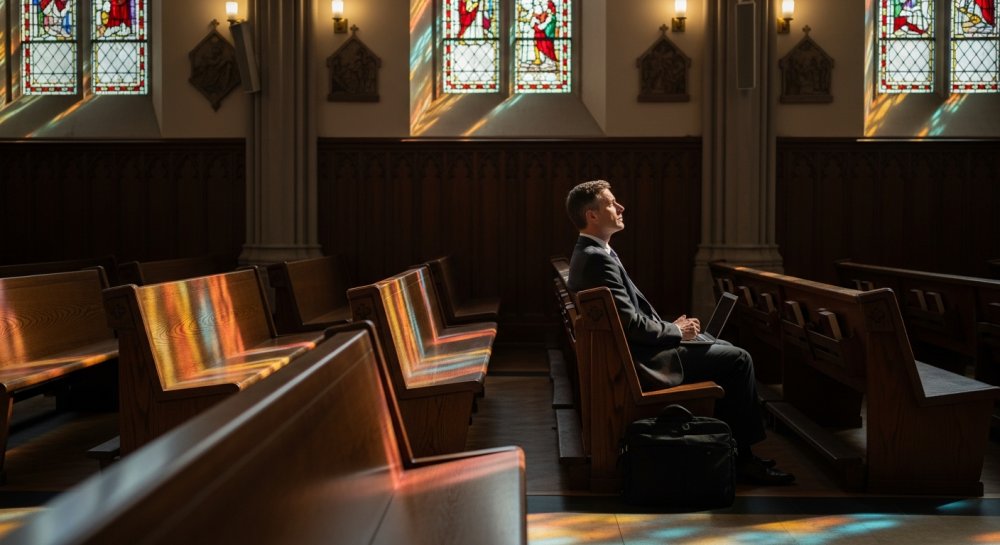
Derek Hughes noticed something troubling when he reduced his ministry hours to focus on building a business. The subtle shift in how fellow believers treated him spoke volumes about what the Church truly values.
Where once his work garnered respect and prayer support, his new entrepreneurial venture seemed to register as less significant, less worthy of celebration. It’s a phenomenon countless Christians encounter when their vocations fall outside traditional ministry roles.
“I felt the quiet drop in status that comes when Christian work is no longer the focus,” Hughes reflected, naming an experience many recognize but few discuss openly.
The question cuts to the heart of how we understand God’s design for human work. Does the Creator who fashioned us in His image and commanded us to steward His creation actually care about spreadsheets, sales calls, and business plans? Or are those merely necessary distractions from “real” kingdom work?
Scripture provides a clear answer, beginning with the very first chapter of Genesis. God Himself worked, bringing order from chaos, creating beauty and function, and calling His labor “good.” When He made humanity in His image, that divine reflection included the capacity and calling to work—to cultivate, create, and care for His world.
The doctrine of vocation affirms that all honest work, performed as unto the Lord, serves His purposes and advances His kingdom. A teacher shaping young minds, a nurse providing compassionate care, an accountant ensuring financial integrity—each fulfills a divine calling equal in dignity to pastoral ministry.
Yet our churches often communicate a different message. We pray for missionaries but not for entrepreneurs. We commission church planters but not educators entering public schools. We celebrate those entering seminary while offering little recognition for believers pursuing excellence in law, medicine, or the trades.
This sacred-secular divide doesn’t reflect biblical Christianity. It echoes instead a Gnostic distortion that views material reality as inferior to spiritual pursuits. But the God who declared His physical creation “very good” and who will one day restore all things doesn’t share that contempt for ordinary work.
The Apostle Paul made tents while planting churches, never viewing his craftsman work as less valuable than his apostolic ministry. Jesus spent most of His earthly life as a carpenter, not a rabbi. The vast majority of biblical figures—from Joseph to Daniel to Lydia—served God faithfully through marketplace vocations.
When churches fail to honor all legitimate work, they diminish the Gospel’s scope. They suggest that God’s redemptive purposes are narrower than Scripture reveals, confined to specifically religious activities rather than encompassing the totality of human flourishing.
This misunderstanding carries practical consequences. Believers spend the majority of their waking hours in workplaces that God cares deeply about, yet they receive little theological formation or pastoral support for navigating those environments faithfully. They’re left to conclude that their “real” Christian life happens elsewhere—on Sundays or in Bible studies—while their work remains spiritually neutral territory.
The truth offers far richer possibilities. When we recognize that our work matters to God, we can pursue excellence not merely for personal advancement but as an act of worship. We can demonstrate integrity, practice generosity, and extend compassion as kingdom witnesses right where we are. We can ask how our specific skills and responsibilities might serve our neighbors’ good and reflect God’s character.
Churches that embrace this biblical vision equip believers differently. They teach discernment for ethical workplace dilemmas. They help members identify how their particular vocations contribute to human flourishing. They pray specifically for the challenges their congregants face on Monday, not just the church programs scheduled for Sunday.
This doesn’t mean all work holds equal strategic importance for gospel advancement or that vocational ministry deserves no special recognition. But it does mean that the software developer debugging code and the pastor preparing sermons both engage in work that matters eternally when done for God’s glory.
Hughes’s experience of losing status within his church community reveals a gap between what we profess and what we practice. We affirm that all of life belongs to God while functionally treating most of life as less important than explicitly religious activities.
Closing that gap requires intentionality. It means celebrating vocational diversity in our congregations. It means preaching that connects Sunday’s truths to Monday’s challenges. It means recognizing that the kingdom of God advances not only through evangelism and discipleship but also through believers bringing salt and light to every sphere of society.
The Genesis account establishes work as part of God’s original, pre-fall design for humanity. Even in paradise, Adam was given meaningful tasks. Work wasn’t the curse—the frustration and futility that entered through sin was. Christ’s redemption restores not only our relationship with God but also the goodness of work itself.
When churches embrace this comprehensive view of vocation, they unleash the full potential of their congregations. Believers no longer see their work as merely funding ministry that happens elsewhere. They recognize their daily labor as ministry itself, opportunities to love neighbors, serve the common good, and display God’s character in tangible ways.
This vision doesn’t diminish the importance of pastors, missionaries, and other vocational ministers. Rather, it elevates everyone else to stand alongside them as equally called, equally valued participants in God’s redemptive work.
The question Hughes raised deserves our honest reflection: Does our church culture genuinely believe that Monday belongs to God? Do we celebrate marketplace vocations with the same enthusiasm we reserve for those entering full-time ministry? Do we equip believers to see their work as sacred calling rather than secular necessity?
The answers matter because they shape how Christians engage the world. When we limit “real” ministry to church programs, we retreat from culture. When we recognize all vocations as divine callings, we advance God’s kingdom in every corner of society.
American Christians have a rich heritage of engaging culture through faithful work in all spheres. From business leaders who built companies on biblical principles to educators who shaped generations with wisdom grounded in truth, believers have historically understood that their vocations mattered to God and served His purposes.
Recovering that vision today requires both theological clarity and cultural change within our churches. We must teach the full biblical doctrine of vocation. We must honor diverse callings. We must equip believers for faithful work in every field. And we must celebrate the kingdom impact of Christians serving excellently wherever God has placed them.
Let us know what you think, please share your thoughts in the comments below.


Faith Facts
- God’s design for human sexuality is rooted in marriage between one man and one woman.
- Scripture teaches that our bodies are temples of the Holy Spirit and should be honored accordingly.
- Christian teaching holds that sexual expression outside of biblical marriage leads to spiritual harm.
New legislation targeting extreme violent pornography marks a step toward protecting families from harmful content.
James Mildred, a Christian commentator, welcomes the criminalization of violent pornographic material while calling for broader restrictions.
“New legislation will criminalise some of the most extreme forms of violent pornography.”
Mildred argues that partial restrictions fail to address the deeper moral concerns surrounding all pornography.
The Christian perspective emphasizes that pornography in any form contradicts God’s intended purpose for human sexuality.
“James Mildred welcomes the change, but argues that God’s design for sex means porn should be banned altogether.”
This position reflects traditional Christian teaching that sexual intimacy belongs exclusively within the covenant of marriage.
Let us know what you think, please share your thoughts in the comments below.
Faith Facts
- The Bible affirms the sanctity of human life from conception, grounding the pro-life position in Scripture.
- James Talarico’s claim that Scripture is silent on abortion overlooks multiple passages that protect the unborn.
- Christian teaching on life is rooted in the unchanging Word of God rather than shifting cultural arguments.
While the Bible does not use the modern term abortion, the absence of contemporary terminology does not mean the absence of biblical teaching. Scripture consistently affirms the value of life in the womb and condemns the shedding of innocent blood.
Old Testament law explicitly protects the unborn child, establishing a moral framework that transcends modern political debates.
Psalm 139 declares that God forms each person in the womb, knitting them together with purpose and intention.
“For you created my inmost being; you knit me together in my mother’s womb.”
This divine craftsmanship leaves no room for treating the unborn as disposable.
The prophetic witness in Jeremiah reinforces this truth, showing that God knows and calls individuals before birth.
“Before I formed you in the womb I knew you, before you were born I set you apart.”
Such language underscores the personhood and destiny of the child from the earliest moments of existence.
New Testament teaching on love and justice further strengthens the case for defending the defenseless.
Proverbs 24 warns against failing to rescue those being led away to death, a command that applies directly to the unborn.
Christian voters and lawmakers who uphold these biblical principles stand in continuity with generations of believers who treasured life as a gift from God.
Let us know what you think, please share your thoughts in the comments below.

Faith Facts
- Actress Danica McKellar credits Candace Cameron Bure with leading her to a personal relationship with Jesus Christ.
- McKellar is best known for her childhood role as Winnie Cooper on the beloved family series “The Wonder Years.”
- Bure, a committed believer, has consistently used her platform to point others toward faith and traditional values.
Danica McKellar opened up about the meaningful influence of her longtime friend Candace Cameron Bure in her journey toward faith. The two former child stars developed a friendship that extended far beyond their early careers in Hollywood.
McKellar explained that Bure was the one who introduced her to Jesus in a personal way. Their shared history in the entertainment industry gave McKellar a trusted voice to hear when spiritual matters came up.
“Wonder Years” actress Danica McKellar shares how fellow child star Candace Cameron Bure helped bring her to Jesus.
McKellar has spoken openly about her growing faith and the importance of surrounding herself with fellow believers. She has described how that friendship helped anchor her during seasons of change and uncertainty.
The story reflects a pattern seen among many in Hollywood who quietly seek truth and community outside the spotlight. For McKellar, that path led her straight to the feet of Jesus through the faithful witness of a friend.
Let us know what you think, please share your thoughts in the comments below.


-

 Self-Reliance2 years ago
Trump’s Bold Move Uncovers Massive Social Security Fraud
-

 Faith2 years ago
New Clues Emerge in Noah’s Ark Mystery
-

 News2 years ago
Governor Walz’s Rhetoric Sparks National Controversy
-

 News2 years ago
Mel Gibson’s ‘The Passion of the Christ’ Sequel Title Announced
-

 Family2 years ago
Texas Lawmaker Targets Furries in Schools
-

 Freedom2 years ago
Maine Lawmaker Challenges Sports Fairness Controversy
-

 Family1 year ago
Canada’s Controversial Policy Sparks Ethical Debate
-
Faith11 months ago
Congress Hears Pleas for Nigerian Christians