
Family
When the Call Came, His Friend’s Faith Became the Story

Faith Facts
- Steve Lackmeyer, an award-winning Oklahoma journalist and man of faith, survived pancreatic cancer after early detection led to a successful Whipple procedure
- The complex seven-hour surgery, performed by transplant surgeons, removed all traces of cancer — a result Lackmeyer calls a miracle
- Despite frustrations with organized religion, Lackmeyer’s faith in God strengthened profoundly through his cancer journey and recovery
OKLAHOMA CITY — It’s a call you never want to receive.
“I’ve got cancer,” your loved one says. Not only that, but it’s pancreatic cancer — often a death sentence.
Immediately, your brain goes into a fog.
The person on the line was Steve Lackmeyer, a happily married father of two and one of my best and oldest friends.
Both journalism majors, we met as students at Oklahoma Christian University in the late 1980s. For four years, we worked late nights together at the student newspaper The Talon, covering everything from tuition hikes to presidential campaign rallies.
My junior year, I worked up the nerve to ask out a smart, gorgeous freshman named Tamie. To my shock and delight, she said yes.
The only problem: My brother, Scott, was headed home to Texas that weekend and taking our shared 1984 Ford LTD station wagon with him.
Enter Lackmeyer: He knew geeks like us didn’t land dates with girls like Tamie often. So he loaned me his blue 1986 Hyundai Excel that Friday night. I mention the car’s color because it — like my future bride’s smile and everything else about that night — remains etched in my memory.
Tamie and I celebrated our 36th wedding anniversary this spring.
Lackmeyer is one of the few people who remember that Tamie and I adopted the pet name “Slush Puppie” for each other. From time to time, he still razzes us about it.
One year at Oklahoma Christian, Lackmeyer roomed with David Duncan, now the preaching minister for the Memorial Church of Christ in Houston.
Even back then, Lackmeyer’s healthy journalistic skepticism impressed Duncan.
“Steve always makes me smile because he never takes anything at face value,” Duncan said.
“He always assumes there may be a story behind the story. Listening to him brainstorm those possible angles was a lot of fun in college because nothing was off the table. He would consider every possibility, no matter how serious or absurd. It was always fun even when dealing with difficult issues.”
The C-word
Since 1990, Lackmeyer has worked as a reporter and editor for The Oklahoman, Oklahoma City’s daily newspaper.
He has won numerous awards for his coverage, from the 1995 federal building bombing to the city’s downtown revitalization to its courting of the NBA. He has written seven books about Oklahoma City history and was inducted into the Oklahoma Journalism Hall of Fame in 2022.
If this wasn’t a serious column, I’d point out that Lackmeyer also has done humorous things like — early in his Oklahoman career — offer to take this writer behind the scenes of the nighttime cops beat and then lock his keys in the company car at a gang shooting scene. Suffice it to say that the late, great city editor Gene Triplett was not happy with my friend that night.
But I digress.
Back to the important stuff: Lackmeyer met his own out-of-his-league bride, Wendy, in 1995 and married her in 1998.
The couple later fostered and adopted two abused boys through the Oklahoma Department of Human Services. Their younger son, whom my friend calls “Squirrel” on social media, is now 21. He has developmental disabilities but is the kindest, politest young man you could ever hope to meet.
While Lackmeyer and I are both extremely busy with life and work, we catch up at least every few months over a meal or a movie or maybe a Thunder game.
But when he left a voicemail for me in late April, I couldn’t help but notice the serious tone in his voice.
I called him back immediately, and that’s when he uttered the C-word.
Expired warranty
Lackmeyer explained that he’d been working hard — nothing new there — and pursuing stories such as an “America at 250” piece on the global retail giant Walmart.
His reporting trip to Walmart’s Bentonville, Ark., headquarters for USA Today — The Oklahoman is a part of its national network — left him feeling extremely tired. He turned 60 at the end of March.
“I guess that’s when your warranty expires,” he joked.
Besides fatigue, symptoms including jaundice and itchiness made it clear he needed to see a doctor.
During the COVID-19 pandemic, he had experienced severe nausea and stomach pain but delayed seeking medical attention until almost too late. The surgeon who removed his gallbladder warned him not to make that mistake again.
This time, a bile duct obstruction seemed to be the problem, and an outpatient surgery was scheduled.
“One theory was, ‘Maybe it’s a stray gallstone that stayed behind when the gallbladder was removed,'” Lackmeyer said.
But actually, a mass — a cancerous one — was pressing against his bile duct and pancreas, the surgery found.
A major reason pancreatic cancer is so deadly: It usually doesn’t cause symptoms in the early stages, as the Cleveland Clinic notes. By the time it’s discovered, it’s frequently too late to treat.
“But that’s not what happened here,” my friend told me.
“Because it was pressing against the bile duct, it gave me an early warning.”
More precisely, it gave him a chance — but no guarantee — to survive, he shared in our initial call.
After that, he began undergoing tests to see if he might qualify for a Whipple procedure, also called a pancreaticoduodenectomy. It’s a complex operation that can have serious risks but often saves lives, according to the Mayo Clinic.
In recent years, exercise and medication have helped my friend lose 200 pounds and drastically improve his physical health. Still, the medical team needed to make sure his heart could handle such an operation.
By early June, he got the official word: His surgery was a go.
“I realize that I’m extremely blessed to have this opportunity … to have a good chance of a positive outcome,” he said as we headed to see “Project Hail Mary” about a week before the operation.
“But there are times when I don’t sleep well,” he acknowledged.
“There are times when I’ve got bad dreams. I’m not going to say I’ve not cried or gotten edgy at times, but I’m trying to be very positive. I’m blessed to have a great group of friends.”
One of those friends — Duncan, his old roommate — called and prayed on the phone with Lackmeyer.
The call happened while Lackmeyer was sitting in a Home Depot parking lot. After the amen, he went to smell the flowers inside the home improvement retailer.
While in the Home Depot, he heard Bob Marley’s “Three Little Birds (Don’t Worry About A Thing)” playing.
He took it as a sign.
Complicated faith
Cancer has a way of making a man contemplate his own mortality.
My friend is no exception.
When I mentioned — before the surgery — that I might write a column about him and needed to confirm a few details, he quipped, “Oh, this is going to be one really cool obituary.”
“It’s not an obituary,” I replied with a laugh.
“It’s a living legacy.”
Lackmeyer believes in Jesus and has been baptized. He has read the Bible “inside and out,” as he described it to me. But he has a complicated relationship with organized Christianity.
He’s fed up with churches on the right and the left.
“You always end up with culture wars and politics, and that’s not what I’m looking for in a church,” he said.
“I don’t know how my relationship with God is helped with a church that is just hateful or judgmental.”
Still, he has faith in God.
Strong faith.
On the day before the operation, I initiated a three-person call with Lackmeyer and Duncan. Duncan prayed again for our friend and assured him God’s will would be done, no matter the outcome. I might have shed a few silent tears on my end.
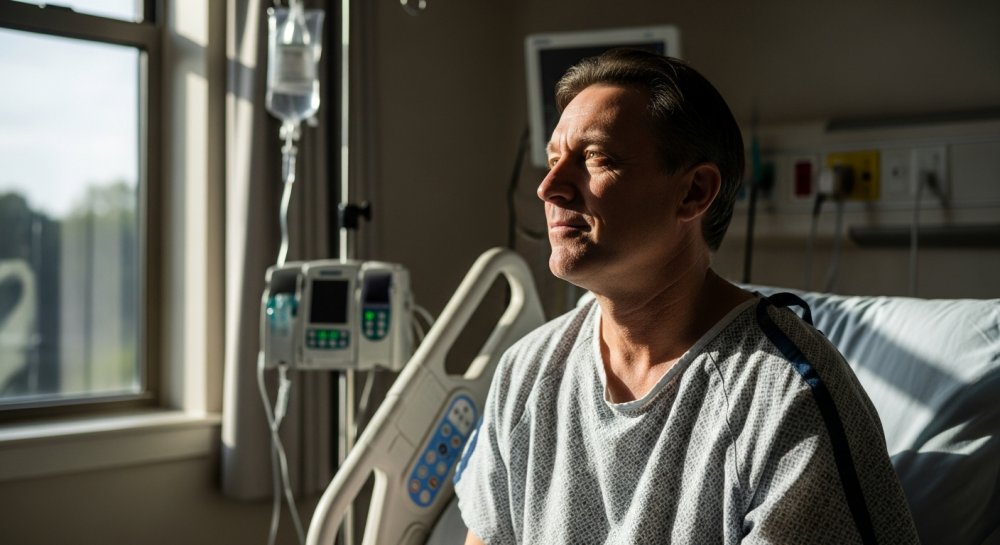
The June 10 surgery lasted seven hours. Doctors declared it a success. Still, Lackmeyer would need to spend 26 nights in the hospital. And his journey back to full health would not be over even then.
“Recovery is far more brutal (and) slow than anticipated,” he wrote on Facebook a week and a half after the operation.
‘It is a miracle’
On one of my visits to the hospital, I asked Lackmeyer if his cancer experience had strengthened or weakened his faith.
It’s definitely strengthened it, he replied without hesitation.
“You’ve got a friend who two months ago was facing a potential death sentence with pancreatic cancer,” he said, “and now I’m free of cancer.”
That’s right: His doctor informed him last week that his cancer is gone. The Whipple procedure was a 100 percent success.
“It is a miracle,” Lackmeyer said.
“I mean, God has created these intricate bodies that we have, but at the same time, he has provided men of science, men of medicine, to work miracles, to rewire an engine literally.”
“And that’s what happened with me,” he added.
“I mean, the Whipple is no easy thing. It’s done by transplant surgeons. Those are top of the game. They’re removing things, they’re cutting out pieces of organs, and they’re connecting things to work differently than they did. I mean, that’s amazing.”
Definitely amazing.
Sometimes the call you never want to receive has a happy ending.
Let us know what you think, please share your thoughts in the comments below.

Faith Facts
- Tim Tebow is partnering with a faith-based streaming platform to produce over 30 family-friendly short-form video series
- The initiative targets the rapidly growing vertical video market designed for mobile viewing
- Tebow’s latest venture continues his post-NFL commitment to advancing Christian values in media and culture
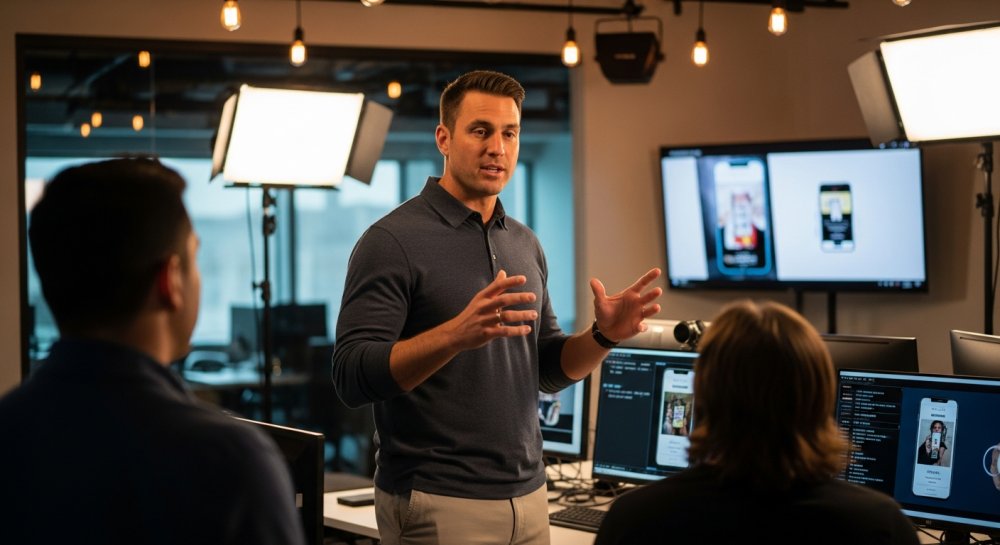
Former NFL quarterback and outspoken Christian Tim Tebow is stepping into the digital streaming arena with a mission to provide wholesome entertainment for American families. The Heisman Trophy winner is partnering with a faith-based venture to create more than 30 short-form video series designed specifically for mobile audiences.
This initiative represents Tebow’s latest effort to influence culture through media that reflects traditional Christian values. The vertical video format, which has exploded in popularity through platforms like TikTok and Instagram Reels, offers a strategic opportunity to reach younger generations with content that upholds faith and family principles.
Tebow has consistently used his platform to advance his Christian faith since his college football days at the University of Florida, where he became known for writing Bible verses on his eye black. After his NFL career, he has devoted himself to ministry work, philanthropy, and media ventures that align with his deeply held beliefs.
The streaming venture capitalizes on the growing demand for family-friendly content in an entertainment landscape increasingly dominated by material that conflicts with Christian values. By focusing on micro-dramas and short-form content, the platform meets audiences where they are — on their mobile devices — while delivering messages that reinforce rather than undermine traditional morality.
This move reflects a broader trend of Christian leaders and entrepreneurs creating alternative media ecosystems that serve faith-based audiences. As mainstream entertainment continues to promote content that many conservative Christians find objectionable, ventures like Tebow’s provide families with options that align with their values.
The former quarterback’s involvement brings star power and credibility to the platform, potentially attracting viewers who might otherwise consume secular content. His track record of authenticity and unwavering commitment to his faith gives the project a foundation of trust with Christian audiences.
Let us know what you think, please share your thoughts in the comments below.
Faith Facts
- Nolan Wells was found dead near Horn Island, Mississippi, on Monday after a July 4th boating trip with friends
- His mother, Christine Wonsley, is calling for prayers and answers as authorities investigate the circumstances surrounding his death
- The incident has raised questions within the community as police work to determine what happened on the island
A Mississippi family is turning to faith and community support as they seek answers following the tragic death of their son. Christine Wonsley, mother of Nolan Wells, is asking for prayers as law enforcement investigates the circumstances surrounding her son’s death near Horn Island off the Mississippi Gulf Coast.
Wells was found dead on Monday after traveling to the barrier island with a group of friends on Independence Day. The young man’s death has left his family searching for clarity about what transpired during the holiday outing.
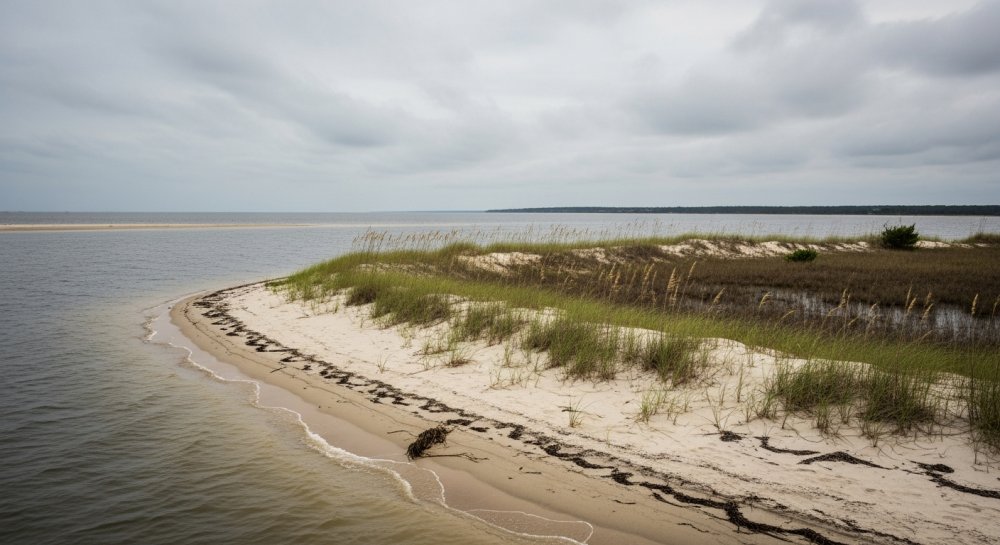
The incident occurred on Horn Island, part of the Gulf Islands National Seashore, a popular destination for boaters and day-trippers along the Mississippi coast. Authorities are currently working to piece together the events that led to Wells’ death.
As the investigation continues, Wonsley has made public appeals for both spiritual support and information that might help explain her son’s death. The family’s request for prayers reflects the deep faith many American families turn to during times of unexplainable tragedy.
Questions continue to surround the circumstances of Wells’ death, with police working to interview witnesses and examine evidence from the scene. The case has drawn attention from the local community, where residents are rallying around the grieving family.
The investigation remains active as authorities seek to provide the Wells family with the answers they desperately need. In moments like these, communities of faith often demonstrate their strength through prayer, support, and the pursuit of truth.
Let us know what you think, please share your thoughts in the comments below.

Faith Facts
- The FIFA World Cup draws billions of viewers every four years, demonstrating humanity’s shared need for community and fellowship
- Sports provide essential opportunities for people to unite across cultural boundaries and develop character-building life skills
- In an increasingly divided world, shared traditions like football remind us of God’s design for human connection and brotherhood
In a world increasingly marked by division, political strife, and cultural fragmentation, one remarkable tradition continues to unite humanity across every continent and background. The FIFA World Cup stands as a powerful testament to our God-given desire for community, competition, and shared experience.
Every four years, billions of people around the globe pause their routines to witness this extraordinary display of athletic excellence and national pride. The beautiful game, as it’s affectionately known, transcends language barriers, political differences, and economic disparities to create moments of genuine human connection.
Sports serve a vital purpose in God’s design for human flourishing. Through athletic competition, people learn discipline, teamwork, perseverance, and grace in both victory and defeat. These aren’t merely entertainment—they’re laboratories for character development and opportunities to channel human energy into constructive pursuits.
The question posed by observers of this global phenomenon is both simple and profound: where would civilization be without these shared traditions? In an age where social media algorithms drive us into isolated echo chambers and political ideologies set neighbor against neighbor, sports remind us of our common humanity.
The World Cup demonstrates that despite our differences in faith, nationality, or politics, we all understand the joy of a well-executed play, the heartbreak of a narrow defeat, and the elation of unexpected triumph. These universal emotions connect us to something larger than ourselves.
For Christians, this global unity through sport offers a glimpse of the brotherhood God intended for humanity. While earthly competitions eventually fade, they point to deeper truths about our need for community, purpose, and shared experiences that bring out the best in human nature.
As families gather around televisions and entire nations hold their collective breath during penalty kicks, we witness the power of tradition to create meaning in an increasingly fragmented world. This is not trivial entertainment—it’s a reminder that we are made for fellowship, for celebration, and for moments that transcend our individual concerns.
Let us know what you think, please share your thoughts in the comments below.


-

 Self-Reliance1 year ago
Trump’s Bold Move Uncovers Massive Social Security Fraud
-

 Faith1 year ago
New Clues Emerge in Noah’s Ark Mystery
-

 News1 year ago
Governor Walz’s Rhetoric Sparks National Controversy
-

 News1 year ago
Mel Gibson’s ‘The Passion of the Christ’ Sequel Title Announced
-

 Family1 year ago
Texas Lawmaker Targets Furries in Schools
-

 Freedom1 year ago
Maine Lawmaker Challenges Sports Fairness Controversy
-

 Family1 year ago
Canada’s Controversial Policy Sparks Ethical Debate
-
Faith8 months ago
Congress Hears Pleas for Nigerian Christians