
Faith
When Mockery Goes Viral: How Christians Can Stand Firm in a Culture of Digital Ridicule


Faith Facts
- Digital mockery through memes and satire has become a subtle tactic to undermine Christian confidence and values in modern culture
- Believers are called to respond with grace and truth rather than retreating from public discourse when faced with online ridicule
- Standing firm in faith requires understanding cultural tactics while maintaining compassion for those who oppose Christian principles
In an era where a single meme can spread to millions within hours, Christians find themselves navigating unprecedented territory. The digital age has transformed how society engages with faith, often reducing deeply held beliefs to punchlines shared across social media platforms.
What began as harmless internet humor has evolved into a sophisticated cultural weapon. Mockery, packaged in clever graphics and viral videos, has become one of the most effective tools for marginalizing Christian perspectives in the public square.
This phenomenon isn’t merely about hurt feelings or wounded pride. The strategic use of ridicule serves a deeper purpose—to make believers second-guess their convictions and retreat from cultural engagement. When faith is consistently portrayed as foolish or outdated, even committed Christians can begin to internalize doubt.
The tactic works because it bypasses rational argument entirely. Rather than engaging with the substance of Christian truth claims, mockery attacks the messenger. It weaponizes shame, suggesting that holding traditional biblical values makes someone socially backward or intellectually inferior.
Yet Scripture provides clear guidance for such moments. Throughout history, followers of Christ have faced far worse than digital derision. The apostles rejoiced when counted worthy to suffer dishonor for the Name, and believers today can draw courage from that same heritage.
The appropriate response isn’t withdrawal or angry retaliation. Christians are called to engage the culture with both conviction and compassion, speaking truth while extending grace to those who oppose them. This requires wisdom—knowing when to offer a reasoned defense and when to simply live out faith authentically.
Understanding the mechanics of mockery helps believers respond effectively. Those who ridicule often do so from their own insecurity or spiritual emptiness. Behind the sarcasm frequently lies genuine searching, masked by defensive humor.
Social media amplifies both the reach and impact of mockery, but it also provides unprecedented opportunities for witness. When Christians respond to ridicule with patience, kindness, and unwavering truth, they demonstrate the transformative power of the gospel to a watching world.
The challenge for modern believers isn’t to avoid the digital public square but to occupy it with confidence. This means developing discernment about which battles merit engagement and which deserve only prayers for those involved.
Parents and church leaders bear special responsibility in this cultural moment. Young believers especially need equipping to navigate an environment where their faith will be regularly challenged through humor and derision. Building theological foundations strong enough to withstand mockery requires intentional discipleship.
Ultimately, the prevalence of anti-Christian mockery reveals the continuing relevance of biblical truth. People rarely bother ridiculing ideas they consider truly irrelevant. The intensity of opposition often indicates the threat posed by authentic Christian witness to worldly systems.
Rather than being deterred by digital mockery, believers can view it as confirmation that their faith still matters in the cultural conversation. The gospel has always been foolishness to those perishing, yet it remains the power of God for salvation to all who believe.
Standing firm doesn’t mean standing alone. The global community of believers provides encouragement and support for those facing ridicule. When one member suffers dishonor, the whole body shares in that experience and provides strength.
The digital age presents unique challenges, but the fundamental call remains unchanged. Christians are commissioned to be salt and light regardless of the response they receive. Mockery may sting temporarily, but truth endures eternally.
Let us know what you think, please share your thoughts in the comments below.

Faith Facts
- Younger American churchgoers are twice as likely as older worshipers to desire more liturgy and structure in church services, according to Lifeway Research.
- The findings challenge common assumptions that younger believers prefer exclusively contemporary, informal worship styles.
- The data suggests a growing hunger among young Christians for traditional worship elements rooted in historic Christian practice.
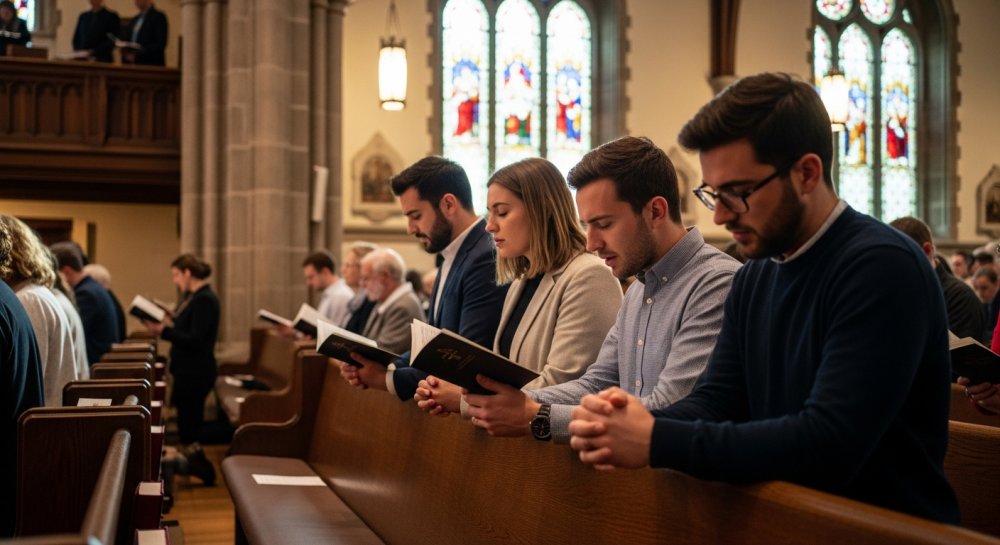
A new survey from Lifeway Research has uncovered a striking trend in American churches that may surprise many church leaders and cultural observers. Younger churchgoers across the United States are showing a marked preference for more liturgical and structured worship—at twice the rate of their older counterparts.
The evangelical research organization’s findings challenge the widespread assumption that younger believers universally prefer contemporary, informal worship experiences. Instead, the data reveals a growing appetite among young Christians for the richness of traditional liturgical elements that have been part of Christian worship for centuries.
This shift in preference represents a significant departure from trends observed in recent decades, when many churches moved away from traditional liturgy in favor of more casual, contemporary formats designed to appeal to younger demographics. The survey suggests that many young believers are now seeking something different—a worship experience grounded in structure, tradition, and historic Christian practice.
The findings have important implications for church leadership and ministry planning. As congregations work to serve multiple generations, understanding these evolving preferences becomes crucial for creating worship environments that honor both contemporary expression and timeless tradition.
For churches that have embraced contemporary worship styles, the data may prompt reconsideration of how to incorporate liturgical elements that younger members are seeking. This could include traditional prayers, creeds, responsive readings, and other structured components that connect worshipers to the broader story of the Christian faith throughout history.
The research also speaks to a broader cultural moment in which many young Americans are exploring questions of meaning, identity, and belonging. In an increasingly fragmented and fast-paced world, the stability and continuity offered by liturgical worship may provide an anchor that resonates deeply with younger believers.
Churches that successfully navigate this landscape will likely be those that can honor both the ancient and the modern—creating worship experiences that draw from the deep wells of Christian tradition while remaining accessible and relevant to contemporary life. The challenge for church leaders is to discern how to incorporate these traditional elements authentically, without simply treating them as trendy additions.
This movement among younger Christians toward more structured worship also reflects a hunger for depth and substance in spiritual practice. Rather than seeking entertainment or novelty, many young believers appear to be drawn to worship forms that have been tested and refined over generations of faithful Christians.
Let us know what you think, please share your thoughts in the comments below.
Faith Facts
- Algeria has systematically sealed nearly all Evangelical churches since launching a crackdown in 2017
- Christian communities have been driven underground, practicing their faith in secret amid government persecution
- Believers describe their situation as an “internal exile” as they continue worshiping despite state opposition
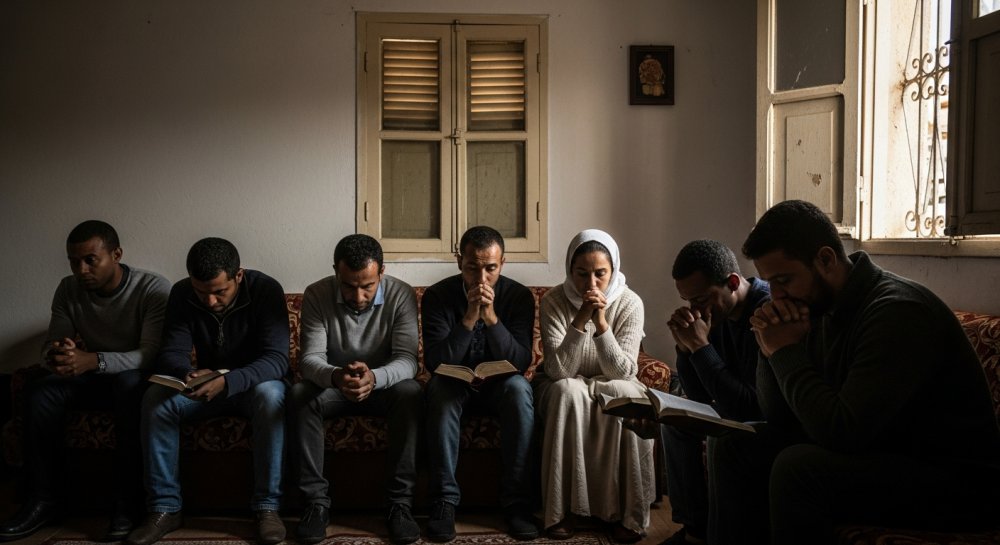
Christian communities in Algeria face severe religious persecution as government authorities continue enforcing a years-long campaign that has shuttered Protestant churches across the North African nation. What began as targeted closures in 2017 has escalated into a full-scale assault on Christian worship, forcing believers to practice their faith in secret.
The systematic closure of Evangelical churches represents one of the most aggressive anti-Christian campaigns in the region. Believers who once gathered openly to worship now meet in homes and hidden locations, reminiscent of the early church under Roman persecution.
Algerian Christians describe their current reality as an “internal exile,” stripped of their fundamental right to worship freely in their own country. Despite the threat of government retaliation, these faithful believers continue to gather, demonstrating the enduring power of Christian faith under persecution.
The crackdown reflects a broader pattern of religious intolerance targeting Christian minorities in predominantly Muslim nations. While Western nations champion religious freedom as a foundational human right, Christians in Algeria and throughout the Middle East and North Africa face systematic discrimination, harassment, and violence for their beliefs.
This persecution should serve as a wake-up call to Christians in America and throughout the free world. The religious liberty we often take for granted remains under assault in many parts of the globe, where believers risk everything simply to follow Jesus Christ.
The courage of Algeria’s underground church stands as a testament to the strength of Christian conviction. When governments attempt to silence the Gospel through intimidation and force, faithful believers respond not with violence but with steadfast devotion to Christ, meeting in secret to worship the God who cannot be contained by earthly powers.
American Christians must stand in solidarity with our persecuted brothers and sisters, lifting them up in prayer and advocating for their religious freedom. The same faith that sustains Algerian believers in their darkest hour calls us to action on their behalf.
Let us know what you think, please share your thoughts in the comments below.

Faith Facts
- Water is essential for all life on Earth yet remains extraordinarily rare throughout the known universe
- The unique physical and spiritual characteristics of water provide a powerful illustration of God’s grace in our lives
- Christians are called to recognize God’s provision through creation and give thanks for His abundant mercy
In a universe filled with countless stars and galaxies, one substance stands out as both essential and extraordinarily rare: water. This life-giving element that covers much of our planet is a cosmic treasure that points directly to the generosity and intentionality of our Creator.
Water’s ubiquity on Earth can cause us to overlook its true significance. Yet scientists confirm that liquid water is astonishingly uncommon in the vast expanse of space, making our blue planet a unique sanctuary for life in an otherwise barren cosmos.
The physical properties of water mirror spiritual truths that every believer should contemplate. Just as water cleanses, sustains, and refreshes our bodies, God’s grace purifies our souls, sustains our faith, and refreshes our spirits in times of trial.
Water’s ability to exist in multiple states—solid, liquid, and gas—while remaining the same substance reflects the unchanging nature of God’s grace, which adapts to meet our needs in every season of life. In drought or flood, in ice or steam, water remains water, just as God’s grace remains constant through all circumstances.
The molecular structure of water itself demonstrates divine design. Its unique ability to absorb heat, dissolve nutrients, and support life at the cellular level reveals the handiwork of an intentional Creator who fashioned the universe with precision and purpose.
When we turn on a faucet or watch rain fall from the sky, we witness a daily miracle that most of the universe cannot claim. This abundant provision on Earth stands as a testament to God’s special care for His creation and His people.
Scripture repeatedly uses water as a symbol of God’s grace and the work of the Holy Spirit. From the waters of creation to the living water Christ offers the woman at the well, the biblical narrative consistently connects this physical necessity with spiritual abundance.
As Christian conservatives committed to stewarding God’s creation, we must recognize that our respect for water flows from our reverence for the One who created it. Every drop is a reminder of divine providence and an invitation to worship the Giver rather than merely enjoying the gift.
The rarity of water in the cosmos should inspire gratitude in every believer’s heart. We live on a planet specifically designed to support life, blessed with resources that reflect the generosity of a loving Father who provides for His children.
In recognizing water as both a physical necessity and a spiritual symbol, we grow in our understanding of how God uses the natural world to teach us about His character. His grace, like water, is freely offered, life-sustaining, and absolutely essential for our survival.
Let us know what you think, please share your thoughts in the comments below.


-

 Self-Reliance1 year ago
Trump’s Bold Move Uncovers Massive Social Security Fraud
-

 Faith1 year ago
New Clues Emerge in Noah’s Ark Mystery
-

 News1 year ago
Governor Walz’s Rhetoric Sparks National Controversy
-

 News1 year ago
Mel Gibson’s ‘The Passion of the Christ’ Sequel Title Announced
-

 Family1 year ago
Texas Lawmaker Targets Furries in Schools
-

 Freedom1 year ago
Maine Lawmaker Challenges Sports Fairness Controversy
-

 Family1 year ago
Canada’s Controversial Policy Sparks Ethical Debate
-
Faith8 months ago
Congress Hears Pleas for Nigerian Christians