
Faith
When Marriage Vows Meet Digital Betrayal

Faith Facts
- Christian counselors report that pornography use represents a form of sexual unfaithfulness that violates the covenant of marriage.
- Biblical grounds for divorce traditionally include adultery and abandonment, with ongoing debate among denominations about pornography’s classification.
- Marriage experts warn that without serious consequences, recovery from pornography addiction often fails, leaving spouses in prolonged emotional suffering.
The question of whether pornography use constitutes biblical grounds for divorce has become increasingly urgent as Christian marriages face unprecedented digital temptations. This issue strikes at the heart of marital fidelity, covenant faithfulness, and the practical realities of protecting one’s family.
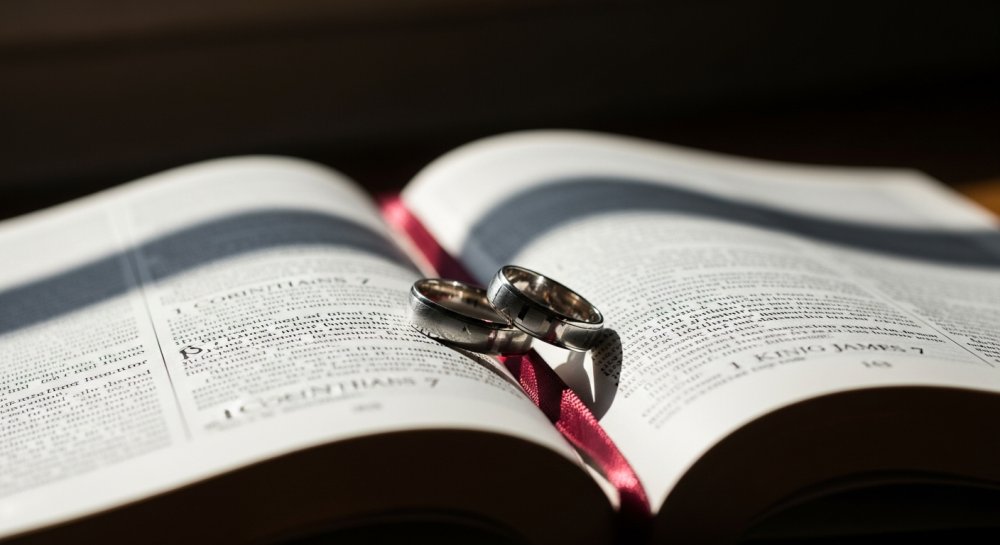
Many Christian counselors and pastors now recognize that pornography use represents more than a private struggle — it constitutes a fundamental betrayal of the marriage covenant. The viewing of pornographic material involves sexual engagement with images of other people, a reality that mirrors the heart of adultery even when no physical contact occurs.
One experienced Christian counselor observed a troubling pattern: when pornography use is not treated as a serious marriage-threatening offense, husbands struggling with this sin often fail to pursue genuine recovery. Without facing real consequences for their actions, the motivation to change remains superficial at best.
The wives in these situations frequently endure years of emotional trauma, living with the ongoing pain of betrayal while their husbands continue in patterns of deception and unfaithfulness. This prolonged suffering takes a devastating toll on mental health, spiritual well-being, and the overall family environment.
Scripture speaks clearly about sexual purity within marriage and the seriousness of adultery. Jesus Himself addressed the issue of lust in Matthew 5:28, stating that looking at a woman with lustful intent constitutes adultery in the heart. This teaching establishes that sexual unfaithfulness is not limited to physical acts but encompasses the intentions and actions of the mind and will.
The Apostle Paul’s teaching in 1 Corinthians 7 provides biblical grounds for divorce in cases of abandonment and persistent unbelief. Many Christian leaders argue that a spouse who continues in pornography use despite repeated confrontation and offers of help has essentially abandoned the marriage covenant, even while remaining physically present.
The protection of the innocent spouse must be a priority in these discussions. A wife living with a husband who refuses to address his pornography addiction faces ongoing spiritual, emotional, and sometimes even physical harm. The church’s response must balance grace with justice, offering both accountability and protection.
Some Christian traditions maintain stricter interpretations of divorce permissibility, while others recognize that pornography addiction can constitute legitimate grounds for ending a marriage. What remains consistent across most Christian perspectives is the acknowledgment that pornography use is sinful, damaging, and incompatible with faithful Christian marriage.
The path forward requires honest assessment of each situation. Has the offending spouse genuinely repented and committed to accountability and recovery? Or do patterns of deception, minimization, and continued use persist? These questions help determine whether reconciliation remains possible or whether divorce may be the necessary, though painful, option.
Churches must provide robust support for both struggling spouses and wounded partners. This includes accountability groups for men battling pornography, counseling resources for traumatized wives, and pastoral leadership willing to address these issues with both compassion and moral clarity.
The rising prevalence of pornography in American culture demands that Christian communities respond with wisdom, biblical fidelity, and practical care for those whose marriages hang in the balance. Protecting the sanctity of marriage sometimes means recognizing when a covenant has been irreparably violated.
Let us know what you think, please share your thoughts in the comments below.

Faith Facts
- Sarah Morse, a Catholic teacher, was terminated from her position after answering students’ questions about abortion according to her faith-based beliefs.
- Over 19,000 Americans have signed a petition supporting Morse, demonstrating widespread concern about religious freedom in educational settings.
- The case highlights growing tensions between Christian educators’ constitutional rights and administrative policies in American schools.
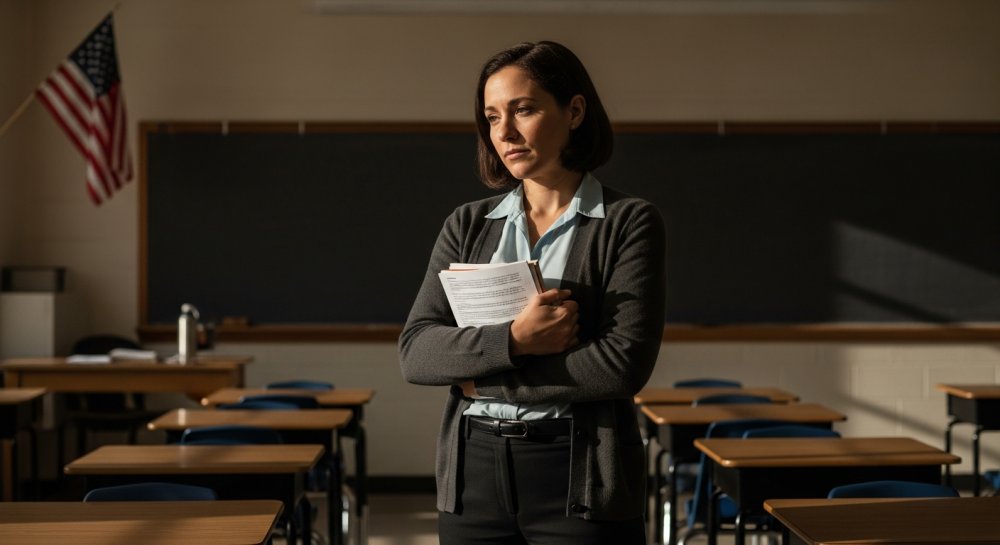
A Catholic educator is receiving overwhelming public support after losing her teaching position for providing faith-based responses to student inquiries about abortion. Sarah Morse’s termination has sparked a national conversation about the rights of Christian teachers in public educational institutions.
More than 19,000 concerned citizens have added their names to a petition defending Morse’s actions. The groundswell of support reflects deeper anxieties among faith communities about the protection of religious liberty in professional environments.
Morse maintains that she simply answered questions posed directly by her students, providing responses consistent with her Catholic faith and pro-life convictions. The teacher’s approach represents the kind of honest, values-based dialogue that many Christian families hope their children will encounter in educational settings.
The case raises fundamental questions about whether Christian educators can speak authentically about their beliefs when students seek guidance on moral issues. For many in the faith community, Morse’s dismissal represents a troubling pattern of religious discrimination in institutions that once welcomed diverse viewpoints.
Supporters argue that firing a teacher for answering student questions—particularly when those answers reflect mainstream Christian doctrine—sets a dangerous precedent. The petition’s rapid growth suggests that thousands of Americans view this case as emblematic of broader challenges facing Christians in the workplace.
The controversy underscores the tension between institutional policies and individual religious convictions. Many Christian educators now face difficult decisions about how openly they can discuss their faith when students initiate conversations about morally charged topics.
For the growing number of petition signers, Morse’s situation represents more than one teacher’s employment dispute. It symbolizes the struggle to maintain Christian influence in educational spaces increasingly hostile to traditional religious perspectives.
The case continues to generate attention as Americans debate the proper balance between administrative authority and religious freedom. For Christian communities, the outcome may signal whether educators can continue to bring their whole selves—including their faith—into the classroom.
Let us know what you think, please share your thoughts in the comments below.

Faith Facts
- Spain midfielder Rodri publicly credited God following his team’s World Cup final victory over Argentina
- Pop star Justin Bieber performed at the championship event, continuing his pattern of integrating faith into his public platform
- The historic match showcased how Christian athletes increasingly share their beliefs on the world’s biggest stages
Spain’s triumphant victory over Argentina in the 2026 FIFA World Cup final delivered far more than athletic excellence—it provided a powerful platform for faith. In a moment when billions watched worldwide, Christian values took center stage as players openly acknowledged God’s role in their success.
Midfielder Rodri, instrumental in Spain’s championship run, didn’t hesitate to give glory to God following the historic win. His public testimony demonstrates the growing confidence of Christian athletes who refuse to hide their faith even under the intense scrutiny of global competition.
The championship event also featured a performance by Justin Bieber, the pop superstar who has increasingly integrated his Christian faith into his public persona in recent years. Bieber’s involvement in such a prominent international event shows how believers can maintain their witness while engaging with mainstream culture.
The convergence of athletic excellence and Christian testimony at the World Cup final reflects a broader trend of athletes refusing to compartmentalize their faith. Rather than separating their spiritual lives from their professional achievements, these competitors recognize that their talents come from God and deserve to be acknowledged publicly.
For Christian families watching around the world, such moments provide powerful examples of bold faith in action. When elite athletes credit God on the world’s biggest stage, they model the courage and conviction that believers should demonstrate in every arena of life.
The 2026 World Cup final will be remembered not just for Spain’s victory, but for the way faith intersected with sports at the highest level. These testimonies remind us that no platform is too large or too secular for acknowledging the One who gives us strength and ability.
Let us know what you think, please share your thoughts in the comments below.
Faith Facts
- Devastating back-to-back earthquakes killed at least 4,490 people in Venezuela, with thousands more homeless, injured or missing
- Christian relief workers are digging through rubble with bare hands, praying with survivors, and risking their own lives to serve earthquake victims
- Despite devastating losses in their own communities, Venezuelan churches have baptized eight new believers while serving in disaster zones
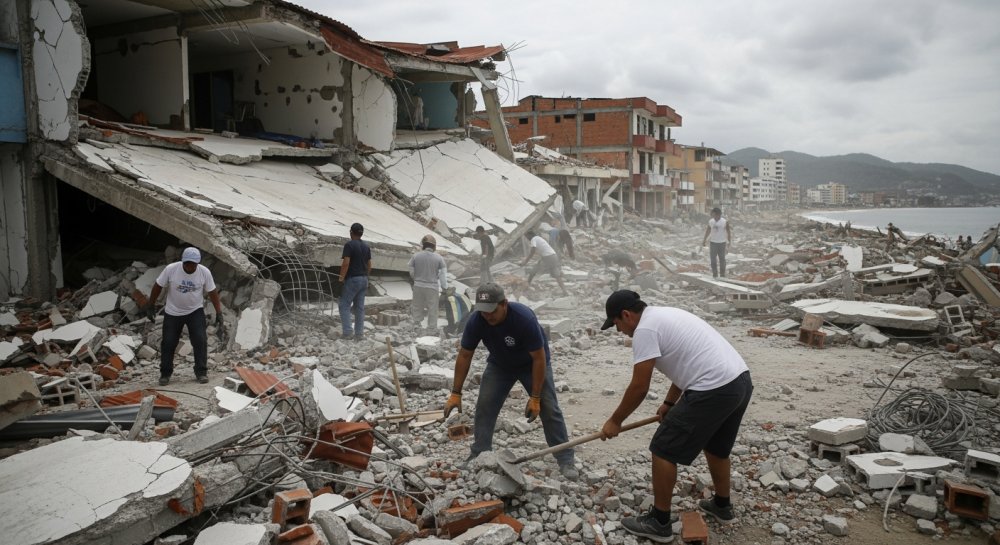
Digging through the remains of collapsed buildings, Christians in Venezuela searched for survivors after back-to-back devastating earthquakes shook the troubled South American nation. What they found tested their faith—but also revealed God’s power to bring hope from tragedy.
José Antonio Quinones, who ministers for a Church of Christ in Venezuela’s capital, Caracas, described the heroic efforts of his fellow believers. His sons and other church members traveled north to La Guaira, a city on the coast of the Caribbean Sea, where the damage is severe.
“Many of them, including my two sons, are working with their bare hands moving stones and debris,” Quinones said.
“The pharmacies in La Guaira were looted, so supplies aren’t readily available,” Quinones said.
The late-June earthquakes followed more than a decade of economic and political turmoil in Venezuela. More than 7 million Venezuelans have left the country since 2014, and those who remain struggle with unemployment and rising crime rates. Now, on top of these ongoing trials, the nation faces one of its darkest hours.
The quakes killed at least 4,490 people, according to numbers from Venezuela’s government at press time. Thousands more are homeless, injured or missing.
Members of Churches of Christ are among the dead, including six of 12 Christians who recently planted a new church in the La Llanada neighborhood of La Guaira, Carlos León told ministry partners. León, a minister in San Antonio de los Altos, Venezuela, is working on relief efforts in La Guaira and its neighboring state, Miranda.
As the tremors and aftershocks subsided, the disaster continued to claim lives—even among relief workers. Joaquín Rodríguez, a minister and one of the leaders of the La Guaira Church of Christ, suffered a heart attack and died after working for three straight days.
“He was helping others and looking for survivors,” said Germán Chirinos, a minister in Falcón state in northwest Venezuela. “Some brothers told me that they prayed together with him, and while he was driving, he died.”
Rodríguez “was a humble man with a big heart,” Chirinos said, adding that the minister was “very concerned and committed to the church in La Guaira.”
At least four other members of the La Guaira church are among the dead, Chirinos said. The loss has been devastating, but believers are pressing forward with the work of the Gospel.
Casualties weren’t confined to the coast. In San Antonio de los Altos, about 30 minutes south of Caracas, church members were meeting for a Wednesday night Bible study when the quakes began, León said. They prayed quickly before taking the stairs out of the building and helping others.
Church member Adela Maqueda and her granddaughter perished when a wall collapsed on top of them, León said. Another church member suffered a skull fracture. Friends carried him on a bicycle to the nearest hospital.
In Caracas, at least two church members died, minister H. Jose Silencio said. The losses continue to mount, yet the Christian community refuses to surrender to despair.
“The situation is critical,” Silencio said. “There are many dead, many injured and many missing. Many people have died in the rubble, and many survivors are left without hope.”
Helping with ‘the Lord’s loving hands’
León and other church members, including fellow ministers Diego Orea and José Bello, are coordinating relief shipments and serving quake victims in Miranda state, La Guaira state and the city of La Guaira. Silencio and others are serving quake victims in Caracas.
Nonprofits associated with Churches of Christ, including Healing Hands International and One Kingdom, are collecting funds and organizing relief shipments for Venezuela. Great Cities Missions, a ministry that plants Churches of Christ across the Latin world, also is collecting for Venezuela aid.
Congregations across Venezuela are collecting funds and supplies for relief efforts, despite their own needs. Chirinos applauded church members who work tirelessly to help the earthquake victims.
“They are doing an amazing job,” Chirinos said. “They just travel every day carrying supplies and food, connecting with the people in tents, praying and preaching to them—and they’ve even baptized some of them, too. I consider them as our Lord’s loving hands spreading not only his Word but his love.”
In La Guaira, relief efforts have resulted in two new mission points, León said.
“One is in Los Corales, where six people have already been baptized, and another in Naiguatá, where two have been baptized.”
‘There’s mourning, but there’s hope of something beyond’
As they begin the long task of rebuilding their lives, earthquake victims take comfort in the divine promise of peace amid suffering, León said. The Christian response to this disaster demonstrates what faith looks like when everything else has been shaken.
He sees God “in the peace that we have. … In spite of the difficult situation that we’re living through, we have a peace that passes all understanding. There’s sadness because of the pain people are suffering, that our brothers and sisters are suffering, and for the loss. There’s mourning, but there’s hope of something beyond.”
For León, the earthquakes in Venezuela call to mind the earthquake Elijah experienced in the Old Testament book of 1 Kings, Chapter 19. When the prophet was overcome with grief, God told him to get out of the cave where he had sought refuge.
“An earthquake appeared, but God wasn’t there in either the earthquake or the hurricane-force winds,” León said, “but rather God was in the peaceful and gentle whisper that gives us peace, that gives us confidence.”
For the Venezuelan minister, Christians are called in a time of suffering not to offer easy answers but comfort. This is the ministry of presence—being the hands and feet of Christ in the darkest hours.
León believes that God wants us to “listen to victims and pray with them … cry with them and be there … be there serving them, so they feel our love and our empathy.”
Chirinos thanked his fellow Christians around the globe for their prayers. The body of Christ is proving once again that borders and distance cannot separate believers united in faith.
“The whole congregation, nationally and worldwide, are together in this trying to help any way they can,” the minister said. “So thanks to God and to all of you.”
Let us know what you think, please share your thoughts in the comments below.


-

 Self-Reliance1 year ago
Trump’s Bold Move Uncovers Massive Social Security Fraud
-

 Faith1 year ago
New Clues Emerge in Noah’s Ark Mystery
-

 News1 year ago
Governor Walz’s Rhetoric Sparks National Controversy
-

 News1 year ago
Mel Gibson’s ‘The Passion of the Christ’ Sequel Title Announced
-

 Family1 year ago
Texas Lawmaker Targets Furries in Schools
-

 Freedom1 year ago
Maine Lawmaker Challenges Sports Fairness Controversy
-

 Family1 year ago
Canada’s Controversial Policy Sparks Ethical Debate
-
Faith8 months ago
Congress Hears Pleas for Nigerian Christians