
News
When Kings Defied God’s Houses and Missionaries Transformed Nations


Faith Facts
- King Henry VIII forcibly dissolved Glastonbury Abbey in 1539, executing its 80-year-old abbot and seizing church property in his break from Rome
- John Eliot, the “Apostle to the Indians,” was baptized in 1604 and would go on to translate the entire Bible into the Algonquian language
- Swedish-American missionary Frederik Franson died in 1908 after founding over 40 mission organizations worldwide
This week marks the anniversary of three pivotal moments in Christian history—one a dark chapter of government overreach against the Church, and two celebrating faithful servants who advanced the Gospel across cultures and continents.
Henry VIII Dissolves Glastonbury Abbey (1539)
On this week in 1539, England’s King Henry VIII ordered the dissolution of Glastonbury Abbey, one of the most ancient and revered Christian sites in Britain. The abbey, believed by many to have been founded in the early centuries of Christianity, was forcibly closed as part of Henry’s systematic campaign to seize church property following his break with the Roman Catholic Church.
The dissolution was not merely an administrative act—it was violent persecution. The abbey’s abbot, Richard Whiting, an 80-year-old man who had served faithfully for years, was arrested on dubious charges of treason.
After a show trial, Whiting was brutally executed—hanged, drawn, and quartered—on Glastonbury Tor. His body parts were displayed as a warning to others who might resist the king’s religious revolution.
This tragic episode serves as a stark reminder of what happens when government power is wielded against religious freedom and the Church. Henry’s actions were driven not by theological conviction but by political ambition and personal desire, demonstrating the dangers of state control over faith.
John Eliot Baptized (1604)
In sharp contrast to the tyranny of Henry VIII, this week also commemorates the baptism of John Eliot in 1604. Born in England, Eliot would emigrate to the Massachusetts Bay Colony in 1631, where he began one of history’s most remarkable missionary endeavors.
Eliot dedicated his life to evangelizing Native American tribes, earning him the title “Apostle to the Indians.” He learned the Algonquian language and undertook the monumental task of translating the entire Bible into that tongue—the first complete Bible printed in North America.
His work established “praying towns” where converted Native Americans could live and worship freely. Eliot’s legacy demonstrates the transformative power of the Gospel when shared with love, respect, and cultural sensitivity.
Unlike the coercive methods of state-imposed religion, Eliot’s ministry exemplified genuine Christian evangelism rooted in service and sacrifice.
Frederik Franson Dies (1908)
This week also marks the death of Frederik Franson in 1908, a Swedish-American missionary and evangelist whose impact on global missions cannot be overstated. Franson founded more than 40 mission organizations, including what would become The Evangelical Alliance Mission (TEAM), one of the largest interdenominational missionary agencies in the world.
Franson traveled extensively across six continents, preaching the Gospel and mobilizing thousands of believers for missionary service. His emphasis on lay involvement in missions and his vision for reaching unreached peoples helped shape modern evangelical missionary strategy.
His death at age 58 came while he was still actively engaged in ministry, a fitting end for a man who lived with such passion for the Great Commission.
These three anniversaries offer valuable lessons for believers today. The dissolution of Glastonbury Abbey warns us that religious freedom must be vigilantly protected against government encroachment. The baptism of John Eliot reminds us of our calling to share the Gospel across cultural boundaries with both courage and compassion. And the death of Frederik Franson challenges us to consider what legacy of faith we are building for future generations.
In an age when religious liberty faces new threats and missions face new challenges, these historical markers call us back to foundational truths: the Church belongs to Christ, not the state; the Gospel is for all nations; and faithful service to God leaves an eternal impact.
Let us know what you think, please share your thoughts in the comments below.

Faith Facts
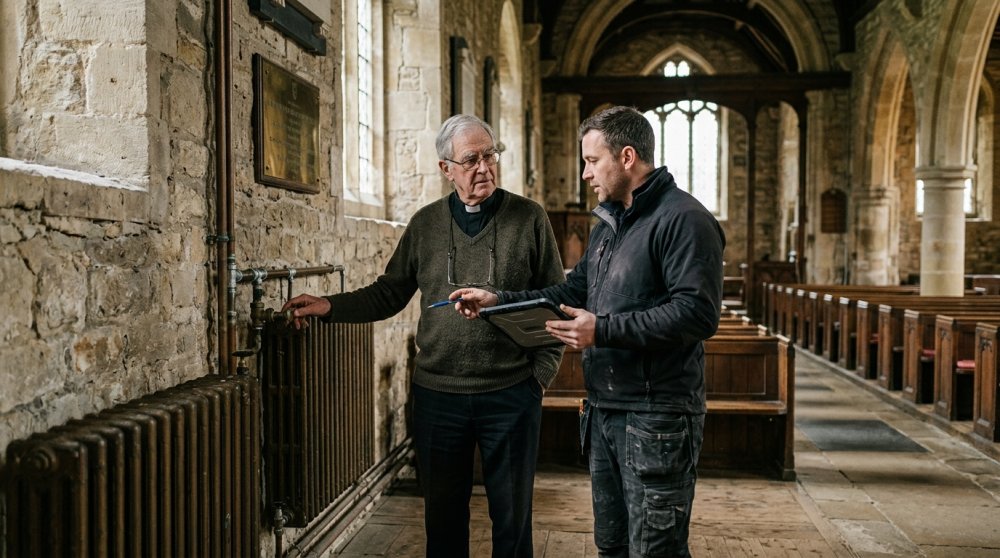
- Millions of dollars have been invested to help Church of England parishes improve energy efficiency across Britain.
- Many congregations are actively moving away from oil and gas heating systems in their church buildings.
- These changes reflect the stewardship responsibility Christians hold toward God’s creation.
The Church of England is witnessing a growing number of parishes transitioning away from traditional oil and gas heating systems. Significant financial resources have been dedicated to this transformation across the denomination.
Energy efficiency upgrades are becoming a priority for church leaders seeking to reduce dependence on fossil fuels. The investment demonstrates a commitment to responsible stewardship of church resources.
Let us know what you think, please share your thoughts in the comments below.

Faith Facts
- Scripture calls believers to defend the oppressed and seek justice for the innocent in every nation.
- Christians worldwide continue to pray for religious liberty and fair treatment under the law in countries where the Gospel faces restriction.
- The rule of law rooted in Judeo-Christian principles remains essential for protecting individual rights and families everywhere.
Pakistan’s Supreme Court has stepped in to suspend prison sentences handed down to two prominent human rights attorneys. The ruling came on Thursday, September 17, when justices granted bail to Imaan Zainab Mazari-Hazir and her husband, Hadi Ali Chattha, while their appeals move forward in the Islamabad High Court.
The decision provides immediate relief to the legal couple as they continue to challenge their convictions. Supporters say the case highlights ongoing concerns about due process in Pakistan’s judicial system.
“The suspension of their sentences allows the appeals process to proceed without the attorneys remaining behind bars,” court observers noted following the hearing.
The couple’s legal troubles have drawn attention from international observers who track religious freedom and civil liberties in South Asia. Many conservative Christians in America view such developments as reminders of the importance of safeguarding constitutional protections at home.
Let us know what you think, please share your thoughts in the comments below.

Faith Facts
- The Costa Rican Evangelical Alliance Federation is standing for integrity and truth in public life by demanding accountability from those who misuse the name of the church.
- Scripture teaches that leaders must be above reproach, and the Alliance is upholding that standard by rejecting any suggestion that votes can be bought with money.
- Believers across Costa Rica are being called to pray for righteous governance and for pastors to remain faithful witnesses rather than political brokers.
The Costa Rican Evangelical Alliance Federation has taken a firm stand for honesty in politics after an opposition lawmaker publicly claimed that a pastor offered her 42,000 votes in exchange for 420 million colones.
April Gordienko, the lawmaker who made the allegation, said the offer came during the most recent election campaign.
The federation is now insisting that Gordienko name the pastor involved so that the church can deal with the matter openly and biblically.
Evangelical leaders in Costa Rica believe that any attempt to barter spiritual influence for political favor damages the witness of the gospel and must be exposed.
“We cannot allow the name of Christ to be used as a bargaining chip in political transactions,” said a federation spokesperson.
Local pastors have echoed the call for transparency, saying the church must remain separate from any appearance of corruption.
Many Costa Rican believers view this moment as an opportunity for the body of Christ to demonstrate that its loyalty belongs first to God, not to any political party or financial promise.
Let us know what you think, please share your thoughts in the comments below.


-

 Self-Reliance1 year ago
Trump’s Bold Move Uncovers Massive Social Security Fraud
-

 Faith1 year ago
New Clues Emerge in Noah’s Ark Mystery
-

 News2 years ago
Governor Walz’s Rhetoric Sparks National Controversy
-

 News1 year ago
Mel Gibson’s ‘The Passion of the Christ’ Sequel Title Announced
-

 Family1 year ago
Texas Lawmaker Targets Furries in Schools
-

 Freedom2 years ago
Maine Lawmaker Challenges Sports Fairness Controversy
-

 Family1 year ago
Canada’s Controversial Policy Sparks Ethical Debate
-
Faith10 months ago
Congress Hears Pleas for Nigerian Christians