Connect with us

Faith

When Faith Confronted Empire and Shaped Nations

Published

on

Faith Facts

  • Charles Spurgeon delivered his final sermon this week in history before declining health ended his pulpit ministry
  • The United Church of Canada was founded through a historic merger of Protestant denominations seeking unity
  • The Knights of Malta surrendered to Napoleon Bonaparte, marking a pivotal moment in Christian military history

This week marks significant turning points in Christian history that continue to shape the faith today. From legendary preaching ministries to denominational unions and military defeats, these events remind us of God’s sovereignty over the affairs of nations and His church.

The most celebrated moment comes from Charles Haddon Spurgeon, known as the “Prince of Preachers,” who delivered his final sermon during this week in Christian history. Spurgeon’s powerful ministry at the Metropolitan Tabernacle in London influenced millions and his sermons remain widely read today. His unwavering commitment to biblical truth and the gospel message made him a champion of the faith, standing firm against theological liberalism that was creeping into churches of his era.

His final sermon marked the end of an extraordinary pastoral career that demonstrated what faithfulness to God’s Word looks like in practice. For Christian conservatives today, Spurgeon’s legacy stands as a testament to the power of biblical preaching and doctrinal clarity.

In Canada, the United Church of Canada was founded this week through the merger of Methodist, Congregationalist, and Presbyterian denominations. This union represented an attempt at Protestant unity, though it came at a cost. Many faithful Presbyterians refused to join, choosing instead to maintain their denominational identity and theological distinctiveness.

The formation of this united church highlights ongoing tensions between the pursuit of organizational unity and the preservation of biblical doctrine. History has shown that mergers driven by institutional concerns rather than theological faithfulness often lead denominations away from their original moorings.

The Knights of Malta’s surrender to Napoleon Bonaparte during this week in history represents another watershed moment. This Catholic military order, which had defended Christendom for centuries, fell to the forces of revolutionary France. The Knights had protected Christian pilgrims and fought against Islamic expansion across the Mediterranean for hundreds of years.

Their defeat symbolized the decline of Christian influence in Europe as Enlightenment ideas and revolutionary fervor swept across the continent. It serves as a reminder that earthly powers rise and fall, but the Kingdom of God endures forever.

These three events from Christian history offer important lessons for believers today. Spurgeon’s faithful preaching ministry demonstrates the enduring power of biblical truth. The Canadian church merger reminds us that unity must be built on sound doctrine, not organizational convenience. And the fall of the Knights of Malta shows that God’s purposes transcend the fate of any human institution.

As we face modern challenges to religious liberty and biblical values, these historical moments encourage us to stand firm in faith, prioritize truth over compromise, and trust in God’s eternal plan. The church has weathered countless storms throughout history and will continue to prevail as Christ promised.

Let us know what you think, please share your thoughts in the comments below.

Continue Reading
Click to comment

Leave a Reply

Your email address will not be published. Required fields are marked *

Faith

Major AI Platforms Show Clear Religious Bias in New Study

Published

on

Faith Facts

  • New research reveals leading AI systems consistently favor certain religious traditions while marginalizing others, including Christianity
  • Study analyzed responses from major AI platforms including ChatGPT, Claude, and Gemini across 100,000 questions about faith, religion, and ethics
  • Researchers found AI models showed measurable bias toward secular and progressive interpretations while underrepresenting traditional religious perspectives

A groundbreaking study has exposed what many Christians have long suspected: artificial intelligence platforms are not neutral arbiters of truth when it comes to matters of faith. Researchers have documented systematic biases in how major AI systems respond to questions about religion, ethics, and spirituality.

The comprehensive analysis examined responses from leading AI models including ChatGPT, Claude, and Google’s Gemini. Over 100,000 religion and ethics-related queries were tested to measure how these platforms handle questions about different faith traditions.

The findings reveal a troubling pattern. AI systems consistently favored certain worldviews while marginalizing others, particularly traditional Christian perspectives. The research showed that secular and progressive interpretations received preferential treatment in the algorithms’ responses.

This bias extends beyond simple preference. The study documented notable gaps in how AI platforms represent various religious traditions, with some faith communities receiving far more comprehensive and sympathetic treatment than others.

For Christian families increasingly relying on AI tools for education, research, and daily tasks, these findings raise serious concerns. The technology shaping how millions access information appears to carry built-in assumptions that may conflict with biblical truth and traditional values.

The researchers’ work highlights a critical issue as AI becomes more integrated into American life. These systems are not merely reflecting existing knowledge—they are actively shaping how users understand complex topics including faith, morality, and ultimate truth.

The implications reach far beyond academic interest. As AI tools become standard in schools, workplaces, and homes, the biases embedded in these systems could influence an entire generation’s understanding of Christianity and religious freedom.

This research confirms what faithful Americans need to remember: technology is never neutral. The worldviews of those who create and train AI systems inevitably shape the output, making discernment more important than ever for believers navigating the digital age.

Let us know what you think, please share your thoughts in the comments below.

Continue Reading

Faith

The Trust You Place in Your Laundry Soap Could Reveal a Troubling Truth

Published

on

Faith Facts

  • Many Christians unconsciously place more trust in everyday consumer products than in God’s promises
  • Scripture commands believers to trust in the Lord with all their hearts, not lean on their own understanding
  • Examining our daily trust patterns can reveal spiritual blind spots that need correction

How often do we pour detergent into the washing machine without a second thought, fully confident it will clean our clothes? We trust it completely. We don’t question whether it will work, we don’t pray over the washing machine, and we don’t lose sleep wondering if our clothes will come out clean.

Yet when it comes to God’s promises, many of us struggle with doubt and anxiety. We say we believe, but our actions tell a different story.

This raises an uncomfortable question for every believer: Do I have more immediate confidence in man-made systems and mass-produced products than I do in the very words of God? It’s a convicting thought, but one worth examining honestly.

The Bible doesn’t mince words about where our trust should lie. Proverbs 3:5-6 instructs us clearly: “Trust in the Lord with all your heart and lean not on your own understanding; in all your ways submit to him, and he will make your paths straight.”

All your heart. Not some of it. Not the parts left over after we’ve trusted in our jobs, our savings accounts, our insurance policies, and yes, our laundry detergent.

Consider the absurdity: we trust a chemical formula created by fallible human beings more readily than we trust the Word of the infallible Creator of the universe. We have faith that a bottle of soap will deliver on its promise, but we waver when God promises to provide for our needs, guide our steps, or work all things for our good.

This isn’t about becoming irresponsible or ignoring practical wisdom. God gave us minds to use and common sense to apply. The issue is where our foundational trust rests.

When we use laundry detergent, we’re operating on earned trust—the product has worked before, so we expect it to work again. But God is calling us to a higher form of trust: faith. Faith believes even when we haven’t seen the outcome yet, even when circumstances look impossible, even when our understanding falls short.

Hebrews 11:1 defines it this way: “Now faith is confidence in what we hope for and assurance about what we do not see.” We’re called to have the same unquestioning confidence in God’s character and promises that we have in that bottle under our sink.

The uncomfortable reality is that our trust in consumer products is actually trust in consistency and predictability. We like systems we can control and outcomes we can anticipate. God, in His sovereignty, doesn’t always work that way—and that’s precisely why trusting Him requires genuine faith.

Perhaps the reason we struggle to trust God as readily as we trust our laundry detergent is that we’ve made an idol of control. We want guarantees on our terms, in our timing, according to our understanding.

But the Christian life is a call to surrender that control. It’s an invitation to trust Someone infinitely greater than ourselves, even when—especially when—we can’t see the full picture.

The next time you pour detergent into your washing machine without a moment’s hesitation, let it serve as a reminder. If you can trust a chemical compound to clean your clothes, how much more should you trust the Almighty God who spoke the universe into existence?

Our God has never failed. His track record is perfect. His promises are sure. His character is unchanging.

Maybe it’s time to trust Him at least as much as we trust the products in our laundry room.

Let us know what you think, please share your thoughts in the comments below.

Continue Reading

Faith

The Hidden Danger of Well-Meaning Advice to Struggling Believers

Published

on

Faith Facts

  • Well-meaning Christian responses like ‘just pray more’ can inadvertently harm believers struggling with depression and mental health challenges
  • Faith leaders and mental health experts emphasize that prayer and professional treatment are not mutually exclusive but complementary approaches to healing
  • The Church is called to respond with compassion, wisdom, and practical support when brothers and sisters in Christ struggle with mental illness

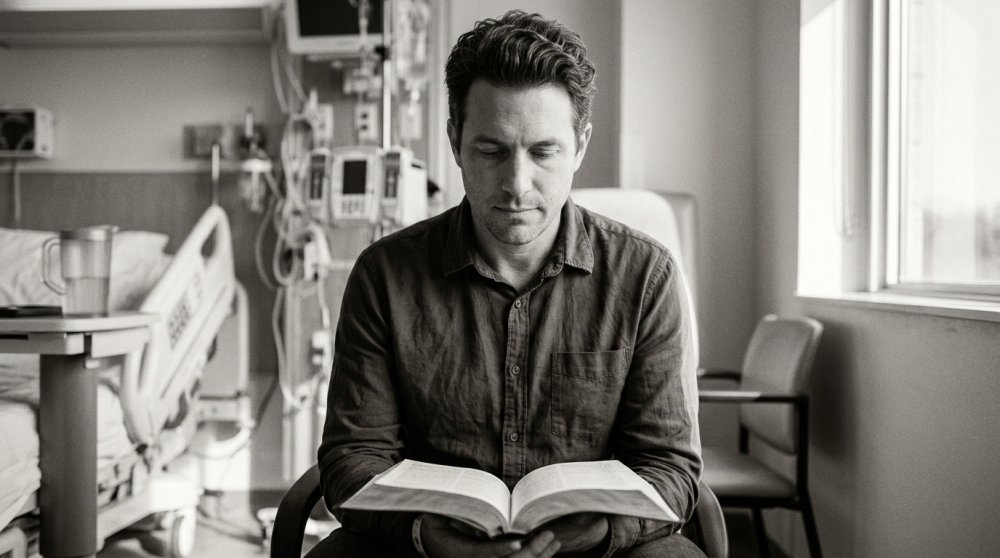
When a fellow believer finally musters the courage to say “I’m not OK,” our response carries profound weight. Yet too often, Christians struggling with depression encounter well-intentioned but potentially harmful advice that oversimplifies their suffering.

The phrase “just pray more” has become a common refrain in church communities when mental health issues arise. While prayer remains a vital spiritual discipline and source of comfort, reducing complex medical conditions to simple spiritual prescriptions can leave hurting believers feeling judged, isolated, and even spiritually inadequate.

Depression is a multifaceted condition that affects body, mind, and spirit. Research has consistently shown that clinical depression involves neurochemical imbalances, genetic factors, traumatic experiences, and environmental stressors—components that require comprehensive care approaches.

Christian mental health advocates emphasize that seeking professional treatment demonstrates the same wisdom as visiting a doctor for a broken bone or cancer diagnosis. God has given humanity medical knowledge and therapeutic tools as means of grace and healing.

Scripture itself models a nuanced approach to suffering. The Psalms are filled with raw expressions of anguish, doubt, and despair alongside declarations of faith. The prophet Elijah experienced what many modern experts would recognize as symptoms of depression, and God responded not with rebuke but with rest, nourishment, and compassionate presence.

When believers dismiss mental illness as merely a spiritual problem, they risk adding shame to already overwhelming pain. Those battling depression may begin to believe their faith is deficient or that God is disappointed in them for their struggle—compounding their suffering rather than alleviating it.

The Church has a sacred opportunity to demonstrate Christ’s compassion by creating spaces where honesty about mental health is welcomed rather than stigmatized. This means educating congregations about depression, connecting struggling members with qualified Christian counselors, and walking alongside them in their journey toward wholeness.

Prayer absolutely has a place in healing—a central place. But it works in concert with medical treatment, counseling, community support, healthy lifestyle changes, and time. God works through all these means to restore His children.

Biblical wisdom calls us to “bear one another’s burdens” and “weep with those who weep.” This requires listening without judgment, offering practical help, pointing people toward appropriate resources, and maintaining compassionate presence even when healing takes longer than we’d like.

Christian communities must recognize that telling someone to “just pray more” can communicate that their suffering isn’t real or serious enough to warrant additional help. It can shut down vulnerable conversations and leave people suffering in silence rather than seeking the comprehensive care they need.

The most Christ-like response to a struggling brother or sister combines spiritual support with practical wisdom. It acknowledges that we live in a fallen world where bodies and minds break, while trusting that God brings healing through multiple means—including the medical and therapeutic resources He has provided.

Churches that embrace mental health awareness demonstrate the full counsel of Scripture: honoring both the spiritual realities of our faith and the physical realities of our humanity. They create cultures where asking for help is seen as strength, not weakness.

As the body of Christ, we are called to be agents of hope and healing in a broken world. This means responding to mental illness with the same compassion Jesus showed to all who suffered—meeting people where they are, offering genuine support, and pointing them toward every resource available for their restoration.

Let us know what you think, please share your thoughts in the comments below.
Continue Reading

Trending