
Faith
When Christians Attack Their Own Defenders Instead of Standing Firm


Faith Facts
- A public debate between Christian apologist GodLogic and Muslim debater Mohammed Hijab sparked intense controversy and legal action within the Christian community
- Many Christians joined critics in mocking their own apologist rather than supporting gospel defense
- This pattern reveals a troubling trend where believers police fellow Christians more harshly than they engage those opposing biblical truth
The Church faces a crisis of priorities that has nothing to do with theology and everything to do with courage. When Christian apologist GodLogic engaged in a high-profile debate with Muslim debater Mohammed Hijab, the exchange quickly escalated beyond typical theological discourse into a heated confrontation that resulted in mockery and even legal threats.
But the most disturbing development wasn’t the debate itself. It was the response from within the Christian community.
Instead of rallying behind a brother in Christ defending the gospel in the public square, many Christians rushed to join the mockery and criticism. The energy spent policing tone, style, and approach dwarfed any concern for the actual defense of biblical truth being attacked.
This reveals a deeper problem plaguing American Christianity: we’ve become more comfortable critiquing fellow believers than confronting those who actively oppose the gospel message. We’ve traded courage for comfort, preferring the safety of internal criticism over the risk of external engagement.
The Apostle Paul faced similar challenges in his ministry. He didn’t always use the gentlest approach, yet he never wavered in defending the truth. Scripture calls us to “contend for the faith that was once for all delivered to the saints” (Jude 1:3), not to sit in judgment of those who actually step into the arena.
When apologists engage hostile opponents in public forums, they put themselves on the front lines of spiritual warfare. They face not only intellectual opposition but personal attacks, misrepresentation, and sometimes even physical threats. The last thing they need is friendly fire from their own camp.
This doesn’t mean Christian apologists are above accountability or constructive feedback. Iron sharpens iron, and we should help each other communicate truth more effectively. But there’s a vast difference between private encouragement and public undermining.
The current climate has created a perverse incentive structure. Christians who engage unbelievers face criticism from both sides, while those who remain silent escape scrutiny entirely. This rewards passivity and punishes engagement—the opposite of what Scripture commands.
Jesus warned that the world would hate His followers because it first hated Him. Yet many Christians today seem more concerned with approval from secular culture than with faithfulness to the gospel. They’ll quickly distance themselves from any believer who appears “too aggressive” in defending Christian truth, hoping to maintain respectability in the eyes of those who will never respect biblical authority anyway.
The early Church turned the world upside down not through careful image management but through bold proclamation of truth. They faced far worse than social media mockery—they faced imprisonment, torture, and death. Yet they counted it all joy to suffer for the name of Christ.
Modern American Christians need to recover that same conviction. We must recognize that when one of our own stands up for biblical truth in the public square, our first instinct should be support, not criticism. We should be quick to pray and slow to condemn.
This doesn’t require blind loyalty or uncritical acceptance of every tactic. It requires perspective on who the real opposition is. Muslims, atheists, and others who deny Christ aren’t our personal enemies, but they do oppose the gospel we’re called to defend. When Christians engage them in debate, they deserve our encouragement, not our scorn.
The GodLogic-Hijab controversy will fade from public memory, but the lesson must remain. If the Church continues to expend more energy policing its own defenders than engaging those who oppose biblical truth, we’ll find ourselves with fewer and fewer willing to stand in the gap. And that’s exactly what the Enemy wants.
We need less friendly fire and more front-line solidarity. We need Christians who are as quick to defend their brothers and sisters in Christ as they are to critique them. We need to remember that we’re fighting for souls, not social media points.
The world is watching to see whether Christians will stand together in defense of the gospel or tear each other apart over secondary issues of style and approach. Our response will determine whether the next generation of believers has the courage to speak truth in a hostile culture or remains silent for fear of criticism from their own camp.
Let us know what you think, please share your thoughts in the comments below.


Faith Facts
- Christians are called to redeem every tool for God’s glory and the spread of the Gospel.
- Artificial intelligence is a human creation and remains under God’s sovereign authority.
- Believers must approach emerging technologies with wisdom rooted in Scripture.
Christians around the world are asking an important question as artificial intelligence grows more powerful. How can this technology be captured for the glory of God and the advancement of the Gospel?
Scripture teaches that every good gift comes from above. Technology itself is not evil, but its use must be directed by truth and righteousness.
AI systems are built by people and trained on data created by people. They reflect human choices and remain limited by the boundaries God has established.
Believers have a responsibility to guide these tools toward purposes that honor Christ and serve others. That includes sharing the Gospel, protecting life, and strengthening families.
“Whether therefore ye eat, or drink, or whatsoever ye do, do all to the glory of God,” 1 Corinthians 10:31 reminds us.
Churches and ministries are already exploring ways to use AI for translation, accessibility, and discipleship resources. These efforts must stay anchored in sound doctrine and prayerful discernment.
At the same time, Christians are right to raise concerns about privacy, truth, and the temptation to place ultimate trust in machines rather than in the Lord.
“Trust in the Lord with all thine heart; and lean not unto thine own understanding,” Proverbs 3:5 declares.
Ultimately, the future belongs to the One who created all things, not to any algorithm or invention of man. AI will never have the final word over humanity.
Let us know what you think, please share your thoughts in the comments below.
Faith Facts
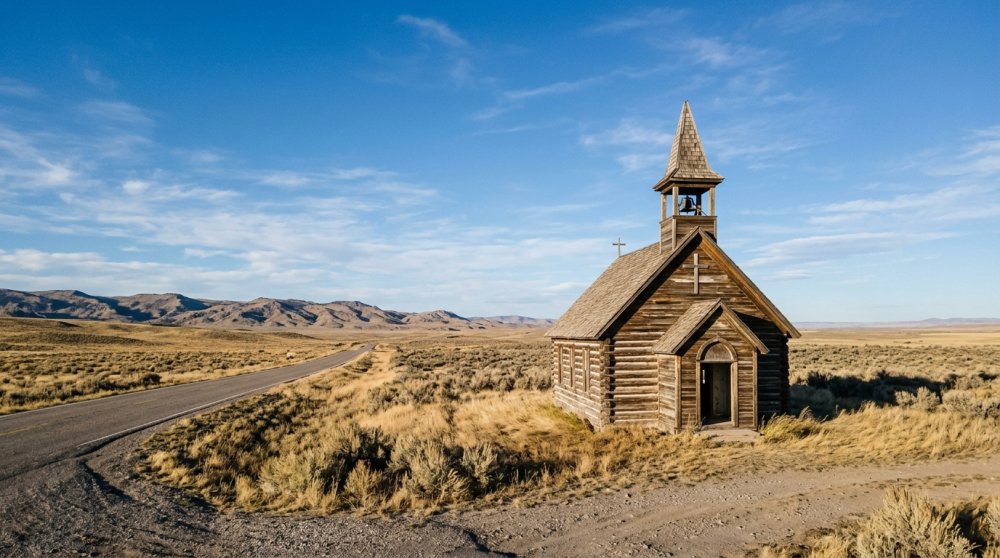
- The little log church has stood along the historic Oregon Trail route, serving as a steadfast reminder of Christian faith amid the rugged American frontier.
- U.S. Highway 191 passes near this enduring structure, connecting modern travelers to the spiritual legacy of pioneer families who settled the West.
- The church continues to bear witness to the traditional values of faith, family, and freedom that shaped our nation’s westward expansion.
Along U.S. Highway 191 stands a little log church that looks as though it has occupied this windswept landscape since the days of wagon trains.
The humble structure serves as a tangible link to the pioneer families who carried their Bibles and their faith across the plains in search of new beginnings.
Its weathered logs and simple steeple rise against the vast Western sky, a quiet testament to the enduring strength of Christian witness in America.
Travelers passing by are reminded that the values of hard work, self-reliance, and devotion to God helped build this nation from the ground up.
Let us know what you think, please share your thoughts in the comments below.
Faith Facts
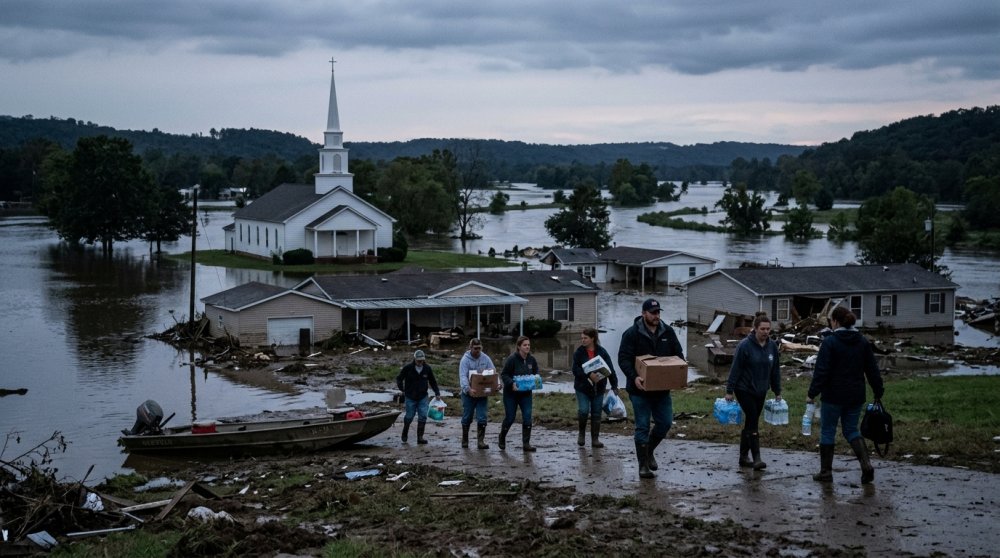
- Scripture teaches that creation groans under the weight of sin and awaits redemption
- Christian teaching holds that believers are called to reflect God’s compassion through practical help
- History shows the church has long been first on the scene after floods, fires, and storms
Every natural disaster reminds us that we live in a fallen world — that mankind’s sin irreparably marred the world’s original perfection.
We call these events “natural disasters,” but the reality is that these tragedies are anything but “natural.”
Let us know what you think, please share your thoughts in the comments below.


-

 Self-Reliance1 year ago
Trump’s Bold Move Uncovers Massive Social Security Fraud
-

 Faith1 year ago
New Clues Emerge in Noah’s Ark Mystery
-

 News2 years ago
Governor Walz’s Rhetoric Sparks National Controversy
-

 News1 year ago
Mel Gibson’s ‘The Passion of the Christ’ Sequel Title Announced
-

 Family1 year ago
Texas Lawmaker Targets Furries in Schools
-

 Freedom2 years ago
Maine Lawmaker Challenges Sports Fairness Controversy
-

 Family1 year ago
Canada’s Controversial Policy Sparks Ethical Debate
-
Faith10 months ago
Congress Hears Pleas for Nigerian Christians