
Faith
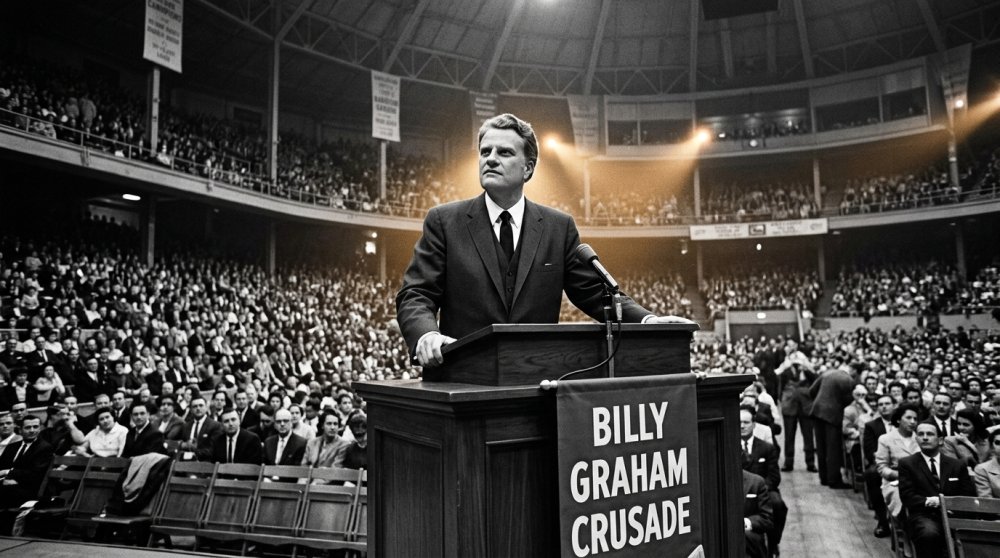
When Billy Graham Transformed New York and America Watched

Faith Facts
- Billy Graham’s 1957 New York crusade lasted 16 weeks, drawing over 2.3 million people and marking the largest religious gathering in American history
- Pastor D. James Kennedy founded Coral Ridge Presbyterian Church and pioneered Evangelism Explosion, training millions worldwide in sharing their faith
- William Paley, whose baptism occurred this week in history, became a leading theologian whose work influenced Christian apologetics for generations
This week marks several pivotal moments in American Christian history, moments that shaped our nation’s spiritual heritage and continue to inspire believers today. From massive evangelistic crusades to the passing of influential Christian leaders, these events remind us of God’s faithfulness across generations.
Billy Graham’s Historic New York Crusade Concludes
On September 1, 1957, Billy Graham concluded what would become one of the most significant evangelistic crusades in American history. For 16 weeks, Graham preached nightly at Madison Square Garden in New York City, drawing over 2.3 million people.
The crusade wasn’t without opposition. Some liberal clergy criticized Graham’s conservative message, while others questioned whether lasting spiritual fruit would come from such large gatherings. Yet the results spoke for themselves.
More than 60,000 people made decisions for Christ during the crusade, which was extended multiple times due to overwhelming public interest. The event demonstrated America’s spiritual hunger and showcased the power of bold, biblical preaching in the heart of the nation’s largest city.
Graham’s New York crusade became a template for modern mass evangelism and proved that traditional Christian values resonated with Americans across all walks of life, even in the most sophisticated urban centers.
Remembering D. James Kennedy
On September 5, 2007, Dr. D. James Kennedy passed away at age 76, leaving behind a remarkable legacy of faith and evangelism. Kennedy founded Coral Ridge Presbyterian Church in Fort Lauderdale, Florida, which grew from a handful of families to one of America’s largest Presbyterian congregations.
Kennedy’s most enduring contribution may be Evangelism Explosion, a systematic approach to sharing the Gospel that has trained millions of Christians worldwide. His question, “If you were to die today and stand before God and He were to say to you, ‘Why should I let you into My heaven?’ what would you say?” became familiar to believers across the globe.
A champion of Christian education and religious liberty, Kennedy also founded Westminster Academy and Knox Theological Seminary. He understood that preserving America’s Christian heritage required both evangelism and the training of future generations in biblical truth.
Kennedy’s television ministry, “The Coral Ridge Hour,” brought Reformed theology and conservative Christian values into millions of homes, making complex theological concepts accessible to everyday believers.
William Paley’s Baptism
William Paley, the influential English clergyman and philosopher, was baptized on September 3, 1743. Though he lived in an earlier era, Paley’s work continues to impact Christian apologetics today.
Paley is best known for his “watchmaker analogy,” which argued that the complexity and design evident in nature point to an intelligent Creator, just as a watch implies a watchmaker. This argument remains central to discussions about faith and science.
His writings defended orthodox Christian belief during the Enlightenment period, when faith faced increasing intellectual challenges. Paley demonstrated that Christianity could withstand rigorous philosophical scrutiny and rational examination.
Lessons for Today’s Church
These historical moments offer valuable lessons for contemporary Christians. Billy Graham showed that bold, uncompromising Gospel preaching can reach even the most secular environments. D. James Kennedy demonstrated the power of equipping ordinary believers to share their faith effectively.
William Paley’s intellectual defense of Christianity reminds us that faith and reason are not enemies but allies in proclaiming truth.
As we face challenges to religious liberty and traditional values today, these examples from Christian history encourage us to remain faithful, speak boldly, and trust God’s providence. The same Spirit that empowered these men continues to work through believers who commit themselves to the Great Commission.
The impact of faithful Christian witness extends far beyond individual lifetimes, shaping nations and cultures for generations to come.
Let us know what you think, please share your thoughts in the comments below.


Faith Facts
- Evangeline Lilly has stepped away from Hollywood to focus on faith-driven projects that align with her values
- The actress is now championing ‘Legend of Destruction,’ a film about the Jewish revolt against Rome and Jerusalem’s fall
- Lilly’s decision represents a growing trend of entertainers rejecting secular Hollywood for meaningful, values-based storytelling
Former Hollywood actress Evangeline Lilly is making headlines not for another blockbuster role, but for her courageous decision to walk away from the industry’s relentless demands. The star has embraced a new mission: promoting faith-driven projects that tell stories with lasting significance.
Lilly is now championing “Legend of Destruction,” a powerful film that chronicles the Jewish revolt against Rome and the internal divisions that ultimately led to Jerusalem’s devastating fall. This historical narrative resonates deeply with contemporary concerns about unity, faith, and the consequences of internal strife.
The actress’s decision to leave behind the Hollywood “rat race” speaks to a broader awakening among entertainers who are questioning the values and priorities of mainstream entertainment. In an industry often criticized for promoting narratives that conflict with traditional American and Christian values, Lilly’s pivot toward faith-based storytelling offers a refreshing alternative.
“Legend of Destruction” provides audiences with more than entertainment—it offers a cautionary tale about what happens when God’s people turn against one another. The film explores how internal division, rather than external threats alone, can lead to catastrophic outcomes for entire communities and nations.
Lilly’s transition reflects a growing movement of artists and creators who are prioritizing meaningful, values-driven content over commercial success. Her willingness to step away from lucrative Hollywood opportunities to support projects with deeper purpose demonstrates a commitment to principle over profit.
The film’s historical setting provides timeless lessons applicable to modern America. As our nation faces its own divisions and challenges, the story of Jerusalem’s fall serves as a powerful reminder of the importance of unity, faith, and staying true to foundational values.
For Christian and conservative audiences hungry for substantive content that respects their worldview, Lilly’s endorsement of “Legend of Destruction” signals that quality alternatives to mainstream Hollywood fare do exist. Her decision may inspire other talented entertainers to follow suit, choosing faith and purpose over fame and fortune.
This shift away from secular entertainment toward faith-driven storytelling represents more than just one actress’s career choice. It exemplifies a cultural moment where Americans are increasingly seeking content that reinforces rather than undermines traditional values, biblical truth, and historical wisdom.
Let us know what you think, please share your thoughts in the comments below.
Faith Facts
- Thousands of women filled Arena Ciudad de México for “The Bible and Us,” a Scripture-centered event focused on strengthening Christian identity and faith.
- The gathering emphasized the importance of Biblical knowledge and women’s role in spiritual leadership within their families and communities.
- The event represents a growing movement of Christian women seeking deeper engagement with Scripture across Latin America.
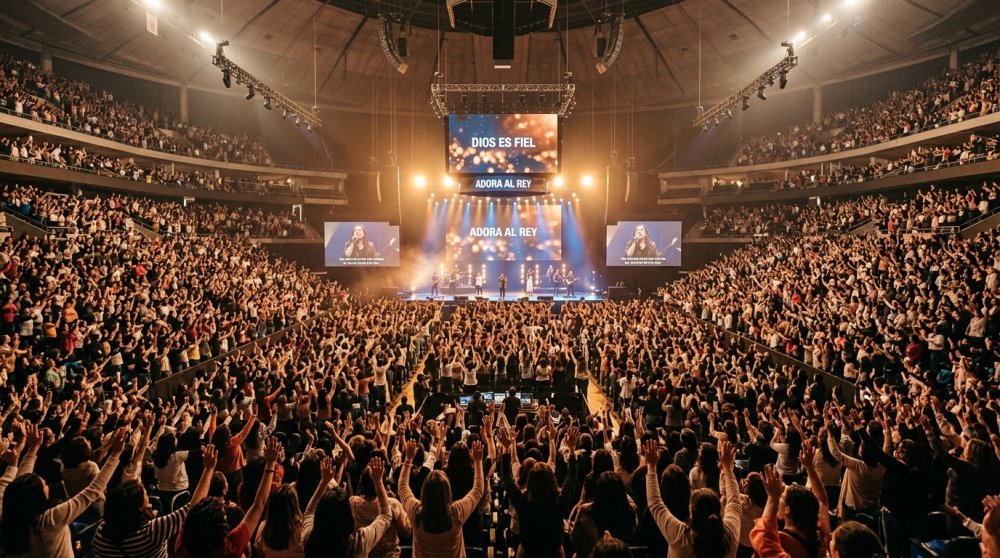
A powerful wave of faith swept through Mexico City as thousands of women gathered at Arena Ciudad de México for a transformative Bible-centered event that underscored the hunger for spiritual truth in an increasingly secular world.
The event, titled “The Bible and Us,” drew Christian women from across the region who came together to deepen their understanding of Scripture and strengthen their identity in Christ. The massive gathering filled the arena with worship, prayer, and Biblical teaching focused on equipping women to lead their families and communities with faith and conviction.
In a culture that often seeks to redefine womanhood apart from Biblical principles, this gathering stood as a powerful counter-cultural statement. Women of all ages came seeking answers not from the world’s shifting standards, but from the unchanging truth of God’s Word.
The event emphasized the critical role women play in preserving and passing down Christian values to the next generation. Through focused teaching on Scripture, participants were encouraged to embrace their God-given purpose and to stand firm in their faith despite cultural pressures to conform to secular ideologies.
This gathering reflects a broader movement across Latin America where Christian women are reclaiming their spiritual heritage and rejecting the notion that faith and femininity are incompatible. Instead, these women are demonstrating that true empowerment comes from understanding one’s identity as found in the Bible.
The success of “The Bible and Us” highlights a growing appetite for authentic Biblical teaching among women who refuse to settle for watered-down theology or feel-good messages. These attendees came seeking substantive spiritual nourishment that equips them for the challenges of living out their faith in today’s world.
Such large-scale gatherings demonstrate that when women are given access to solid Biblical instruction, they respond enthusiastically. The arena atmosphere combined reverence for Scripture with joyful celebration, creating an environment where faith could flourish and women could be strengthened in their walk with Christ.
The event serves as an encouraging reminder that despite cultural headwinds, the desire for Biblical truth remains strong, particularly among women who understand that their most important roles—as wives, mothers, and spiritual leaders—are rooted in timeless Scriptural principles rather than contemporary cultural trends.
Let us know what you think, please share your thoughts in the comments below.

Faith Facts
- Two major Swiss evangelical organizations have issued new guidance for congregations considering renting their buildings to international migrant churches
- The guide addresses growing tensions and disputes that have emerged from some rental arrangements between established Swiss churches and international congregations
- The document reflects broader challenges facing European churches as they balance hospitality with preserving traditional worship practices and church governance
Swiss evangelical leaders are confronting a delicate balancing act as migrant congregations increasingly seek worship spaces in a rapidly changing religious landscape. Two prominent evangelical bodies in Switzerland have jointly released guidance for established churches weighing whether to open their doors to international congregations.
The move comes amid rising demand for worship facilities and follows a series of conflicts that have emerged from rental arrangements between Swiss churches and migrant communities. The guidance document represents an attempt to help congregations navigate the intersection of Christian hospitality and practical concerns about building stewardship, theological alignment, and cultural differences.
For churches rooted in traditional Christian values, the question presents both opportunity and challenge. On one hand, sharing facilities can demonstrate Christ-like generosity and support for fellow believers. On the other, church leaders must weigh their responsibility to maintain doctrinal integrity and ensure that rental arrangements don’t compromise their mission or create division within their own congregations.
The guidance reflects a broader reality facing churches across Europe, where demographic shifts have created unprecedented demand for worship space among immigrant communities. Many established congregations occupy historic buildings that sit largely empty during weekdays, while growing international churches struggle to find affordable meeting places.
Swiss evangelical organizations have recognized that without clear guidelines, well-intentioned rental arrangements can lead to misunderstandings about building use, financial expectations, and theological boundaries. The new document aims to equip church leaders with a framework for making informed decisions that honor both biblical hospitality and wise stewardship.
The situation in Switzerland mirrors challenges facing churches throughout the West, where changing demographics are reshaping religious life. For Christian conservatives, these developments underscore the importance of maintaining doctrinal clarity while extending compassion to believers from different backgrounds.
Church rental arrangements raise fundamental questions about religious freedom, property rights, and the preservation of traditional Christian practice. The Swiss guidance suggests that successful arrangements require clear communication, shared values, and mutual respect for each congregation’s distinct identity and governance.
As Western churches continue grappling with declining attendance and aging facilities, rental income can provide financial relief. However, the Swiss example reminds church leaders that financial considerations must be balanced against spiritual and practical concerns that affect the entire church community.
Let us know what you think, please share your thoughts in the comments below.


-

 Self-Reliance1 year ago
Trump’s Bold Move Uncovers Massive Social Security Fraud
-

 Faith1 year ago
New Clues Emerge in Noah’s Ark Mystery
-

 News1 year ago
Governor Walz’s Rhetoric Sparks National Controversy
-

 News1 year ago
Mel Gibson’s ‘The Passion of the Christ’ Sequel Title Announced
-

 Family1 year ago
Texas Lawmaker Targets Furries in Schools
-

 Freedom1 year ago
Maine Lawmaker Challenges Sports Fairness Controversy
-

 Family1 year ago
Canada’s Controversial Policy Sparks Ethical Debate
-
Faith9 months ago
Congress Hears Pleas for Nigerian Christians