
Faith
When Bible Study Became a Place of Pain Instead of Healing


Faith Facts
- True Christian community requires authenticity about struggle and suffering, not superficial positivity
- Well-meaning believers sometimes cause harm by rushing past pain with quick spiritual answers
- Biblical faith acknowledges the reality of suffering while trusting in God’s ultimate redemption
Every believer who has walked through deep pain knows the sting of shallow spiritual advice. It often comes from well-meaning brothers and sisters in Christ who simply want to help, but instead of offering the comfort of presence, they offer quick fixes wrapped in Scripture.
The experience of attending Bible study while carrying trauma can be isolating. When one woman tried to “fix” another’s suffering with pat answers and forced positivity, she revealed a troubling tendency within some Christian circles: the unwillingness to sit with pain.
This pressure to present a polished version of faith denies the reality of Scripture itself. The Psalms are filled with lament, Job questioned God from the depths of suffering, and even Christ cried out in anguish on the cross. Our faith was never meant to bypass the messy, broken parts of human experience.
The truth is that healing rarely follows a neat timeline. God works in the wilderness, in the waiting, and in the wounds that don’t close on our preferred schedule. When we rush past someone’s pain with spiritual platitudes, we communicate that their struggle is somehow a failure of faith.
Real Christian community means being willing to enter into suffering alongside our brothers and sisters. It means resisting the urge to make everything better immediately and instead offering the ministry of presence—sitting with someone in their darkness and pointing them to the Light without pretending the darkness doesn’t exist.
The Bible doesn’t promise us a life free from suffering. In fact, Scripture repeatedly acknowledges that trials and tribulations are part of the Christian journey. What God does promise is His presence, His faithfulness, and His ultimate redemption of all things.
American Christianity has sometimes fallen into the trap of prosperity-gospel thinking, where faith is measured by the absence of problems rather than by faithfulness through them. This theology crumbles when faced with real suffering and leaves believers feeling isolated and ashamed when life doesn’t match the polished Instagram version of faith.
The woman who tries to fix someone’s trauma with quick spiritual solutions may have good intentions, but she misses the heart of the Gospel. Christ came not to bypass our suffering but to enter into it, to bear it with us, and ultimately to redeem it for His glory and our good.
True biblical counsel doesn’t rush past pain. It acknowledges the reality of what someone is walking through while anchoring hope in God’s character and promises. It speaks truth without minimizing struggle, and it offers comfort without demanding that healing happen on our timeline.
As believers, we must create space in our churches and small groups for authentic wrestling with hard things. We need to cultivate communities where it’s safe to admit that we’re not okay, where questions are welcomed, and where the full range of human emotion finds a home within the family of God.
This doesn’t mean abandoning hope or wallowing in despair. It means holding both the reality of suffering and the promise of redemption in tension, trusting that God is faithful even when we can’t see the way forward. It means being honest about where we are while clinging to who God is.
The call to weep with those who weep is just as important as the call to rejoice with those who rejoice. Both are essential expressions of Christian love and community. When we try to rush someone from weeping to rejoicing, we deny them the very comfort we’re called to provide.
May we be a people who value authenticity over appearances, who make room for the messy middle of faith, and who trust that God is big enough to handle our questions, our doubts, and our pain. May our Bible studies become places of true refuge, where broken people can bring their whole selves and encounter the God who binds up wounds rather than pretending they don’t exist.
Let us know what you think, please share your thoughts in the comments below.


Faith Facts
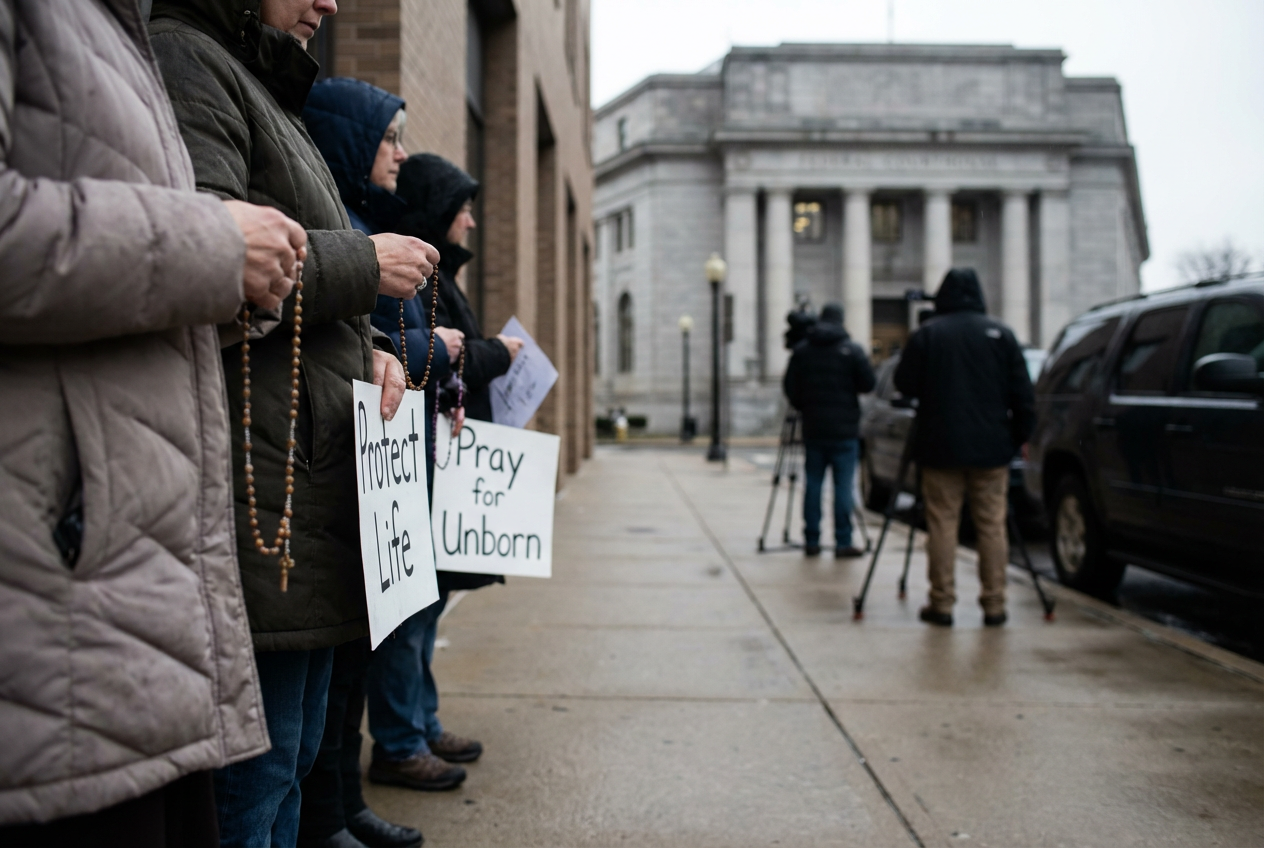
- The forthcoming report reportedly examines how the FACE Act was used against pro-life advocates.
- Activists say the findings point to federal coordination that targeted peaceful believers and protesters.
- The article frames the issue as a clash over religious liberty, life, and government overreach.
A forthcoming Department of Justice report reportedly reveals how the federal government weaponized the FACE Act to target pro-life advocates.
This document suggests the current administration shattered public trust by prioritizing a pro-abortion agenda over the constitutional rights of Christian citizens.
Activists who previewed the findings describe a disturbing pattern of surveillance and coordination between federal prosecutors and the abortion industry.
These actions represent a direct assault on the values of faith and family that form the bedrock of our nation.
“We must pray for the protection of those standing for the sanctity of life against government overreach.”
“May our leaders return to a path of justice that honors the unborn and respects the religious liberty of all Americans.”

Anthropic, the developer of the Claude chatbot, recently hosted an assembly of fifteen Christian leaders to discuss the moral and spiritual implications of artificial intelligence.
This summit brought together Catholic and Protestant figures to provide ethical guidance on how technology should interact with humanity.
Faith Facts
- Barna Group reports that 65% of church leaders worry AI could potentially displace traditional spiritual guidance.
- Anthropic maintains a 29,000-word internal constitution to govern the ethical behavior and responses of its chatbot.
- Current AI models often reflect liberal, Western biases while neglecting traditional values like community, authority, and heritage.
As these systems become more advanced, researchers have observed the emergence of functional emotions within AI experiments, including programmed responses of desperation.
This raises significant concerns for believers who uphold the unique dignity of the human soul as a gift from God.
Researchers warned that AI outputs are creating a feedback loop that could narrow the range of ideas people encounter globally.
For the faithful, this highlights the necessity of ensuring that technology does not erode the foundational truths of scripture and tradition.
While some industry leaders seek spiritual counsel, others remain skeptical about the true motivations behind these corporate engagements with the church.
We must remain vigilant in protecting the sanctity of human life and the role of the helper in ministry.
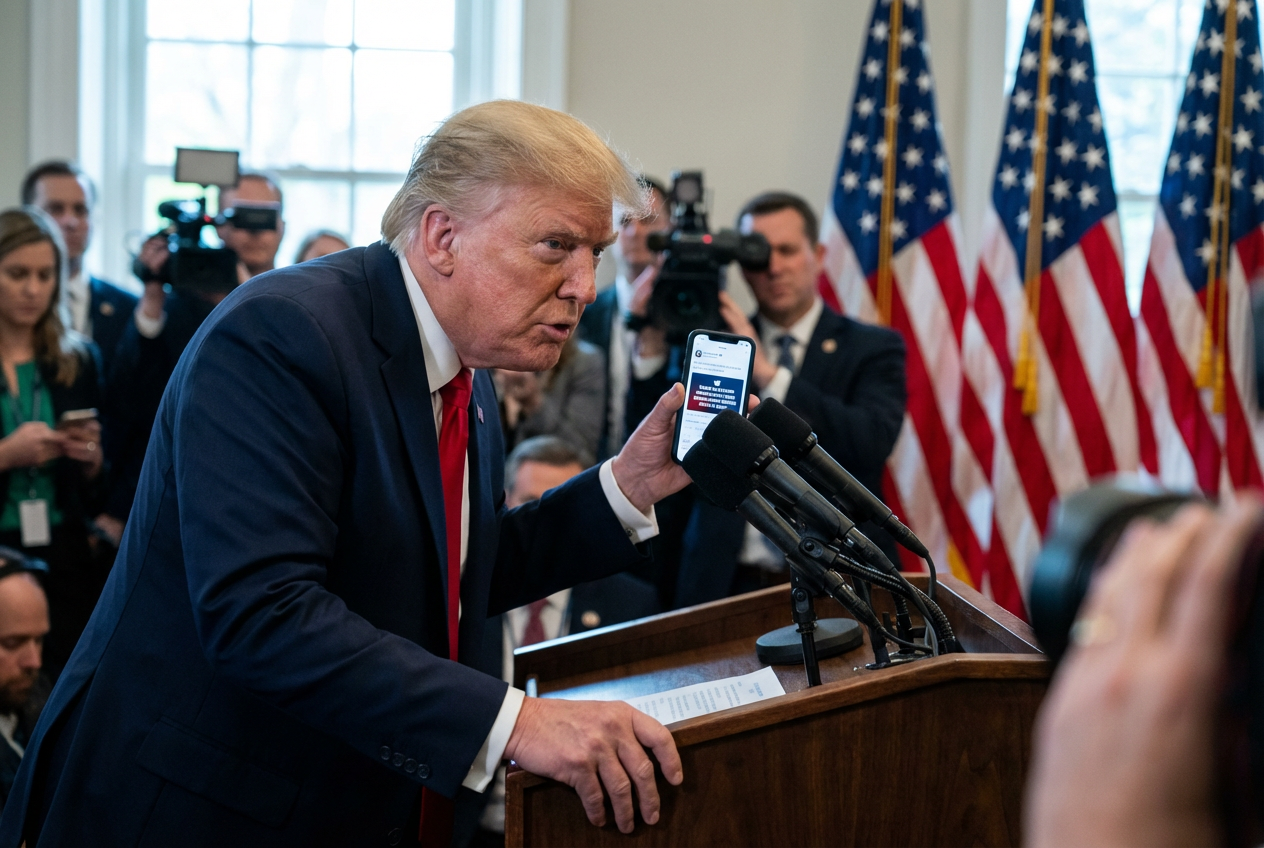
President Donald Trump recently challenged Pope Leo XIV on Truth Social, characterizing the pontiff as weak on crime and misguided regarding American foreign policy. The President highlighted the contrast between the Pope and his brother, Louis Prevost, who remains a steadfast supporter of the MAGA movement and traditional American values.
Trump voiced frustration over the Church’s silence during COVID-19 lockdowns when religious leaders were arrested for holding services, noting that the administration has a mandate to protect the nation. He emphasized that the leadership in the Vatican should focus on the spiritual health of the Church rather than aligning with radical left-wing agendas.
“I don’t think he’s doing a very good job,” Trump told reporters.
“I’m not a big fan of Pope Leo. He’s a very liberal person, and he’s a man that doesn’t believe in stopping crime.”
Responding from the papal plane, Leo XIV claimed he serves the Gospel by advocating for peace and stated he does not fear the current administration’s stance. This public exchange intensified after the President suggested that God supports necessary military actions to protect innocent lives and national security.
“I do believe that the message of the Gospel, blessed are the peacemakers, is a message that the world needs to hear today,” the Pope proclaimed.
“I do not look at my role as being political.”
Faith Facts
- President Trump criticized the Vatican for not sufficiently defending religious liberty during pandemic era restrictions on church services.
- The President stated that a leader’s duty includes stopping the flow of drugs and criminals across borders to protect the sanctity of the family and nation.
- Pope Leo XIV maintained that his opposition to military conflict is a religious mandate, despite the President’s call for strong national defense.
As we navigate these complex times, believers are called to pray for discernment and for leaders who will stand firmly for justice, the rule of law, and the protection of the innocent.


-

 Self-Reliance1 year ago
Trump’s Bold Move Uncovers Massive Social Security Fraud
-

 Faith1 year ago
New Clues Emerge in Noah’s Ark Mystery
-

 News1 year ago
Governor Walz’s Rhetoric Sparks National Controversy
-

 News1 year ago
Mel Gibson’s ‘The Passion of the Christ’ Sequel Title Announced
-

 Family1 year ago
Texas Lawmaker Targets Furries in Schools
-

 Freedom1 year ago
Maine Lawmaker Challenges Sports Fairness Controversy
-

 Family11 months ago
Canada’s Controversial Policy Sparks Ethical Debate
-
Faith5 months ago
Congress Hears Pleas for Nigerian Christians