
Faith
When an Atheist Unlocked What Scripture Says About Depression


Faith Facts
- A Christian father found unexpected insight into depression through an atheist’s perspective on human brokenness and community healing
- Scripture acknowledges both spiritual and physical aspects of suffering, requiring the Church to minister to the whole person
- True Christian community offers a powerful antidote to isolation and despair through genuine connection and care
When someone you love battles depression, the familiar Christian responses can feel hollow. Derek Hughes discovered this truth as he watched a family member struggle, finding that well-meaning prayers and spiritual explanations left crucial gaps in understanding.
Then something unexpected happened. An atheist helped him see what the Church had been missing all along.
The revelation didn’t come from abandoning faith, but from recognizing a fuller picture of human suffering that scripture itself acknowledges. Depression isn’t simply a spiritual problem requiring spiritual solutions alone. It’s a fracture that runs through body, mind, and soul—and the Bible has always known this.
The Psalms overflow with raw expressions of despair. David cried out in genuine anguish, not as a failure of faith but as honest acknowledgment of human brokenness. Job’s friends offered religious platitudes while he sat in ash and misery, and God ultimately rebuked the religious explanations, not the sufferer.
What Hughes learned from his unlikely conversation partner was that the Church’s strength lies not in having all the answers, but in being a genuine community that walks through darkness together. The atheist understood something fundamental about human connection that many churches had forgotten in their rush to provide spiritual fixes.
Scripture calls us to “bear one another’s burdens” and to “weep with those who weep.” These aren’t metaphors. They’re practical instructions for a community that recognizes suffering as real, physical, and deserving of tangible care—not just prayer lists and Bible verses texted from a distance.
The early Church understood this integration. They cared for widows and orphans with actual food and shelter. They visited prisoners in actual dungeons. They recognized that human beings are unified creatures where spiritual health and physical well-being intertwine.
Modern believers sometimes create a false divide, treating depression as either purely spiritual (requiring only prayer and repentance) or purely medical (requiring only therapy and medication). Scripture suggests a both/and approach that honors the complexity of how God made us.
When the Church retreats into simplistic spiritual answers, it abandons suffering people to secular solutions that may address symptoms without pointing to ultimate hope. But when believers engage the full reality of depression—biological, psychological, social, and spiritual—they offer something the world cannot: holistic healing rooted in a God who became flesh and suffered Himself.
The atheist’s insight was this: genuine community, where people truly know and care for one another, provides essential healing that no amount of religious activity can replace. Sitting in a church building once a week, exchanging pleasantries, and maintaining spiritual performance isn’t biblical community.
True Christian fellowship means entering into one another’s suffering, providing practical help, maintaining consistent presence, and creating spaces where honesty about struggle doesn’t trigger judgment or spiritual diagnosis. It means recognizing that sometimes the most Christ-like response is simply showing up with a meal and sitting in silence.
This doesn’t diminish the power of prayer or the truth of God’s Word. Rather, it fulfills the biblical vision of how those spiritual realities are meant to take flesh in the world. Prayer without action is empty. Scripture without compassion misses the heart of the One who spoke it.
For families watching loved ones battle depression, this integrated understanding offers hope beyond platitudes. It means pursuing medical care without guilt, seeking counseling without feeling it betrays faith, and asking the Church for practical support without shame.
For churches, it means training communities to respond with wisdom rather than clichés. It means creating cultures where vulnerability is safe, where mental health struggles are acknowledged openly, and where resources for comprehensive care are readily available and endorsed.
The irony isn’t lost that an atheist helped illuminate what Christian community could be. Perhaps that’s the gentle rebuke believers need—a reminder that truth is truth, wisdom is wisdom, and God can speak through unexpected voices to recall His people to their calling.
Depression reveals the fractures in a fallen world that extends beyond individual sin into the very groaning of creation described in Romans. The Church’s response should reflect the redemptive work of Christ that addresses all of it—body, mind, relationships, and spirit.
When believers get this right, they offer something truly countercultural: communities where people don’t have to pretend they’re fine, where struggle doesn’t disqualify you from belonging, and where hope is grounded in a God who understands suffering from the inside.
Let us know what you think, please share your thoughts in the comments below.

Faith Facts
- Between 200 and 300 young Christian leaders committed to long-term cross-cultural mission work at the Arise Asia 2026 Congress in Manila.
- Organizers described the altar call as one of the most significant in the movement’s history, marking a new wave of missionary commitment.
- The congress represents a growing commitment among Asia’s young believers to spread the Gospel across cultural and national boundaries.
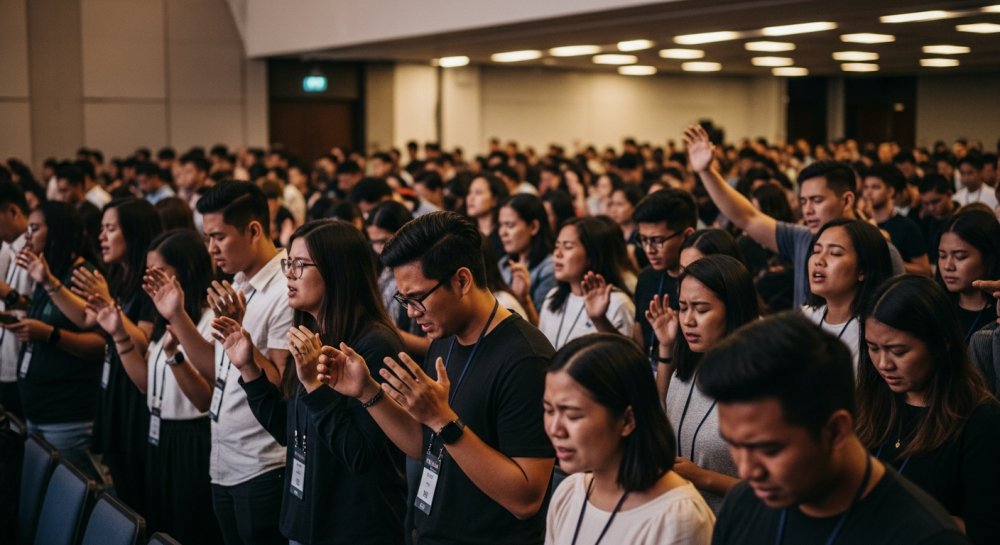
A powerful wave of commitment to global missions swept through Manila as hundreds of young Christian leaders publicly dedicated their lives to spreading the Gospel across cultures. The Arise Asia 2026 Congress witnessed what organizers are calling a historic moment for Christian missions in the region.
An estimated 200 to 300 young leaders stepped forward during what has been described as one of the most significant altar calls in the movement’s history. These young believers committed themselves to long-term cross-cultural mission work, answering a call that has historically required tremendous sacrifice and unwavering faith.
The gathering in Manila highlights a crucial reality often overlooked in Western discussions about the future of Christianity: the global Church is alive, growing, and increasingly missionary-minded. While many Western nations struggle with declining church attendance and cultural hostility to Christian values, believers in Asia are stepping forward in remarkable numbers to carry the Gospel to unreached peoples.
This outpouring of missionary commitment stands as a testament to the enduring power of the Great Commission. In an age when American churches sometimes struggle to inspire long-term ministry commitments, these young Asian believers are pledging years of their lives to serve in challenging cross-cultural contexts.
The significance of this moment cannot be overstated. Long-term cross-cultural missions require extraordinary dedication—leaving home, family, and cultural comfort to share Christ with people who may speak different languages, hold different worldviews, and live in regions hostile to Christianity.
These young leaders are following in the footsteps of countless missionaries who have gone before them, answering the same call that has driven Christian expansion since the first century. Their commitment reflects a deep understanding that the Gospel is not meant to remain confined within any single culture or nation but is intended for all peoples.
For American Christians watching from afar, this gathering offers both inspiration and challenge. It demonstrates that God continues to raise up laborers for His harvest field, even as it poses an uncomfortable question: are we in America as willing to sacrifice for the advancement of the Gospel?
The Arise Asia 2026 Congress represents more than just a conference or gathering. It signals a generational shift in global missions, with young believers from nations once considered mission fields now becoming the missionaries themselves.
This development should encourage every believer who prays for the advancement of God’s kingdom. As cultural Christianity fades in the West, authentic, sacrificial faith is flourishing in other parts of the world. The Church universal remains vibrant and mission-focused.
The commitment of these young leaders also serves as a reminder of what truly matters in the Christian life. In a culture increasingly obsessed with comfort, security, and personal fulfillment, these believers are choosing the harder path of obedience to Christ’s command to make disciples of all nations.
As these hundreds of young missionaries prepare for their calling, they deserve the prayers and support of believers everywhere. Their work will not be easy, and the spiritual battles they face will be real and intense. Yet they go with the same promise that has sustained missionaries throughout history: Christ’s presence and the Holy Spirit’s power.
Let us know what you think, please share your thoughts in the comments below.
Faith Facts
- Mississippi pastor completed 96-hour continuous Bible preaching marathon
- Texas woman practicing witchcraft attempted to curse pastor during livestream
- Woman converted to Christianity after spiritual attack backfired
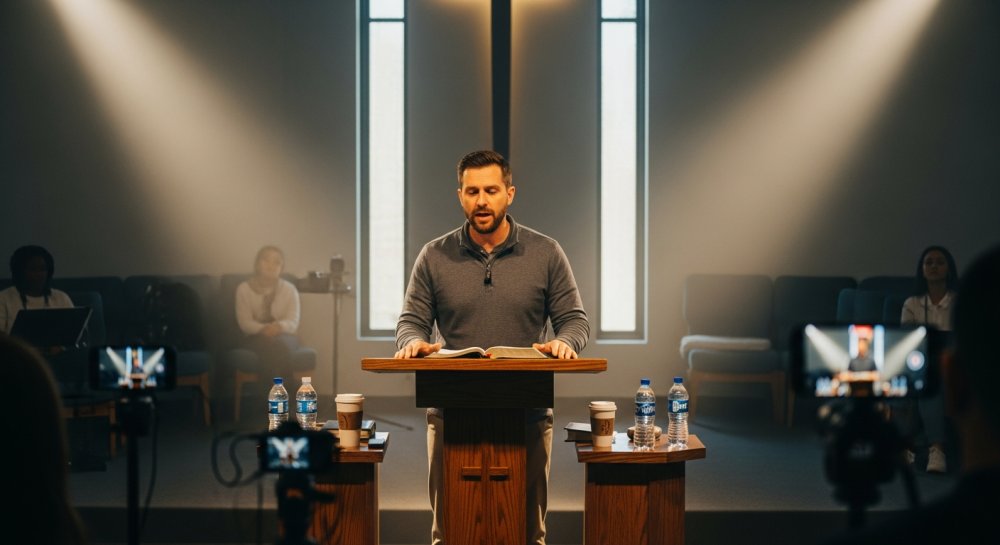
A Mississippi pastor who recently completed an extraordinary 96-hour marathon of preaching through the entire Bible has shared a remarkable testimony of spiritual warfare and redemption. His epic undertaking became the catalyst for an unexpected conversion when a practitioner of witchcraft attempted to curse him during the livestream.
The pastor revealed that a young woman from Texas, who identified as a witch, deliberately tried to place a curse on him while he was preaching. Her intent was clear and malicious — she wanted to cause him harm and even death through dark spiritual forces.
“We wanted you to die,” the woman later confessed to the pastor, acknowledging the evil intentions behind her attempted curse.
However, what was meant for evil became a testimony of God’s protecting power and redemptive grace. Instead of the curse achieving its intended purpose, the spiritual attack backfired in a profound way. The young woman experienced the conviction of the Holy Spirit during the pastor’s continuous Bible preaching.
The power of God’s Word, proclaimed faithfully for four days straight, penetrated the darkness surrounding this woman’s life. Rather than harming the pastor, her encounter with the living Word of God led to her own transformation.
The woman renounced witchcraft and surrendered her life to Jesus Christ, becoming a powerful testimony to the supremacy of God’s Word over the forces of darkness. This conversion stands as evidence that no weapon formed against God’s servants will prosper, and that the Gospel remains the power of God unto salvation.
The 96-hour Bible preaching marathon itself represents an extraordinary feat of endurance and dedication. Preaching through all 66 books of Scripture continuously requires not only physical stamina but deep spiritual preparation and commitment to God’s Word.
This testimony serves as a reminder to believers that spiritual warfare is real, but God’s power is infinitely greater than any force of darkness. It also demonstrates that even those deeply entrenched in occult practices can be reached by the transforming message of the Gospel.
The story echoes biblical accounts where those who opposed God’s messengers encountered the living God instead. Like the sorcerer Simon in Acts or the magicians in Pharaoh’s court, those who practice dark arts ultimately find that God’s power cannot be matched or manipulated.
For Christians engaged in evangelism and spiritual battle, this account offers encouragement that persistent proclamation of Scripture can break through even the strongest spiritual opposition. The Word of God remains living and active, sharper than any two-edged sword.
Let us know what you think, please share your thoughts in the comments below.
Faith Facts
- A Tennessee church known for giving away free gas to hundreds of commuters earlier this year has suffered a devastating fire on their property.
- Despite the significant damage, church leaders maintain their ministry will continue, declaring the fire ‘didn’t stop the word.’
- The congregation demonstrated Christ’s love through practical generosity by providing free gasoline to struggling families during difficult economic times.
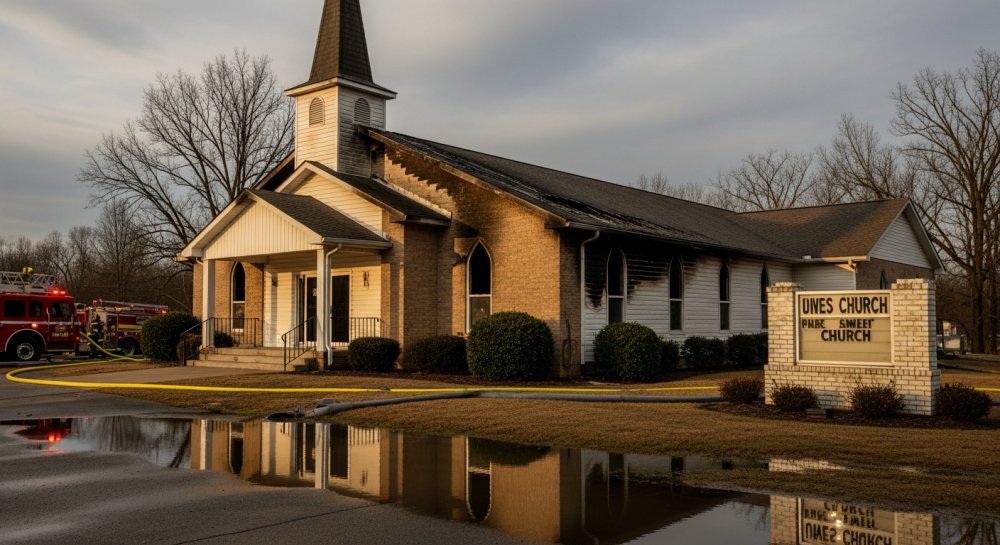
A Tennessee congregation that made headlines for their generous outreach to the community is now facing a significant trial of their own. The church, which blessed hundreds of families with free gasoline during a time of economic hardship, has suffered severe fire damage to their property.
Earlier this year, the church captured hearts across the nation when they opened their doors and their wallets to help commuters struggling with high gas prices. The ministry initiative provided tangible relief to families dealing with the burden of inflation and rising fuel costs, embodying the Biblical principle of loving your neighbor in action.
Now, the church that gave so freely finds itself in need. The fire caused substantial damage to the church property, though details about the extent of the destruction and the cause of the blaze are still emerging. What remains unshaken, however, is the faith and determination of the congregation.
Church leaders responded to the devastating loss with remarkable resolve, stating that the fire “didn’t stop the word.” This declaration reflects a deep commitment to their mission and ministry that transcends physical buildings and material loss.
The church’s response exemplifies the resilience that comes from faith rooted in Christ rather than circumstances. Their witness reminds believers that the Church is not a building but a body of believers united in purpose and calling.
This trial comes as a test for a congregation that has already demonstrated extraordinary generosity. Their earlier gas giveaway wasn’t just charity—it was an expression of Christian love that met people at their point of need, building bridges between the church and community.
The incident serves as a reminder that even those who minister to others face their own valleys. Yet it also presents an opportunity for the broader Christian community to rally around these faithful servants, returning the blessing they so freely gave to others.
As this Tennessee church rebuilds, their testimony stands as an encouragement to believers everywhere: faith perseveres through fire, ministry continues through trials, and God’s Word cannot be stopped by any earthly circumstance.
Let us know what you think, please share your thoughts in the comments below.


-

 Self-Reliance1 year ago
Trump’s Bold Move Uncovers Massive Social Security Fraud
-

 Faith1 year ago
New Clues Emerge in Noah’s Ark Mystery
-

 News1 year ago
Governor Walz’s Rhetoric Sparks National Controversy
-

 News1 year ago
Mel Gibson’s ‘The Passion of the Christ’ Sequel Title Announced
-

 Family1 year ago
Texas Lawmaker Targets Furries in Schools
-

 Freedom1 year ago
Maine Lawmaker Challenges Sports Fairness Controversy
-

 Family1 year ago
Canada’s Controversial Policy Sparks Ethical Debate
-
Faith8 months ago
Congress Hears Pleas for Nigerian Christians