
Faith
What the Pentagon Prayer Controversy Reveals About Faith and Foreign Policy

Faith Facts
- Defense Secretary Pete Hegseth’s recent Pentagon prayers have sparked controversy among Christians concerned about the witness of the gospel to Muslim-majority nations
- Some Christian leaders are expressing concerns that conflating military action with religious language may obscure the message of Christ’s peace and redemption
- The debate highlights ongoing tensions between patriotic duty and the church’s call to be ambassadors of reconciliation across all nations
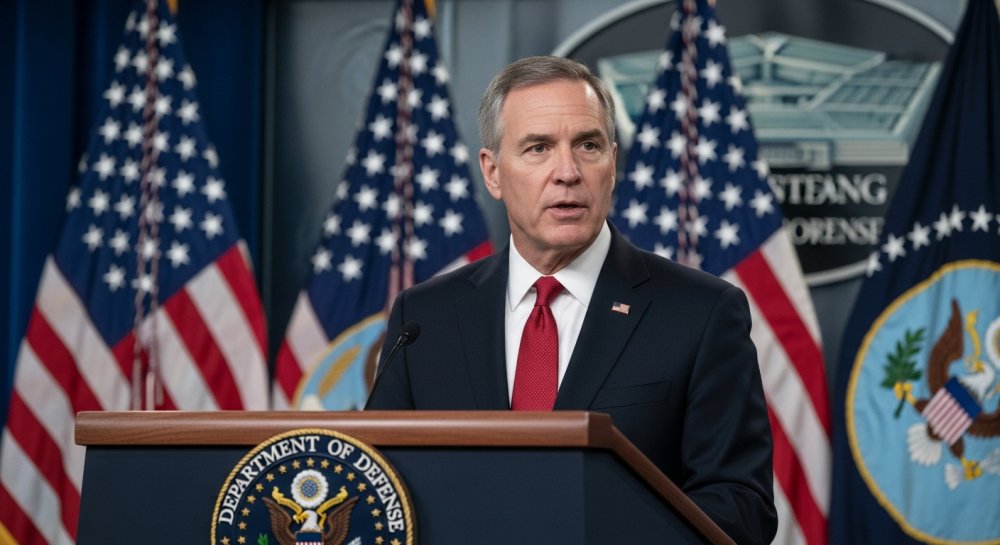
A growing conversation within the Christian community centers on how faith should inform America’s military posture and foreign policy, particularly in regions where Muslims are hearing about Christianity for the first time through American actions.
The discussion comes as Defense Secretary Pete Hegseth has incorporated explicit prayer language into Pentagon events, prompting some believers to ask whether such rhetoric advances or hinders the Great Commission in Muslim-majority countries. The concern is not about prayer itself—which Christians affirm as essential—but about how aggressive military language paired with Christian symbolism may affect perceptions of the gospel abroad.
Christian commentator Matt Roper has raised concerns about what he sees as a conflation of military objectives with spiritual mission. He argues that while Christians must support national defense and honor those who serve, the church’s primary calling is to proclaim a message of redemption that transcends national borders.
“The gospel is not advanced by the sword, but by the Spirit,” Roper notes, echoing longstanding Christian teaching that the kingdom of God comes through changed hearts, not through political or military power.
Supporters of Hegseth’s approach argue that acknowledging God in public life—including in military settings—is both constitutional and morally right. They contend that America’s Judeo-Christian heritage should be celebrated, not hidden, and that leaders have every right to invoke divine guidance in their duties. Many conservative Christians see public prayer as an important stand against the secularization of American institutions.
The tension reflects a deeper question facing the American church: How do we balance patriotic duty with our calling as ambassadors of Christ to all nations? Can we support a strong national defense while also being sensitive to how our actions and rhetoric affect the reception of the gospel worldwide?
Historically, American Christians have navigated this tension in various ways. Some have emphasized the separation between civic duty and evangelistic mission, while others have seen American power as a means of creating space for the gospel to spread. Both perspectives reflect genuine attempts to honor God in the public square while advancing His kingdom.
What remains clear is that Muslims around the world are watching how American Christians conduct themselves. Missionary organizations working in Muslim-majority countries report that violent rhetoric paired with Christian imagery can create significant obstacles to sharing the message of Jesus Christ. At the same time, these same missionaries often benefit from the religious freedom and security that American military strength helps protect.
The path forward may require Christians to hold multiple truths simultaneously: supporting a robust national defense while being mindful of how military rhetoric affects Christian witness; celebrating religious freedom at home while being sensitive to how American actions are perceived abroad; and honoring those who serve in uniform while maintaining that the gospel spreads through love, not force.
As this conversation continues, Christians of good faith may disagree on the proper balance. What should unite believers across these differences is a commitment to the primacy of the gospel and a desire to see all people—including Muslims—come to know the saving grace of Jesus Christ.
Let us know what you think, please share your thoughts in the comments below.

Faith Facts
- Rev. William J. Barber II, a progressive social justice advocate, publicly accused President Donald Trump of “heresy” and waging “war on divinity” over an AI-generated image shared on social media
- The controversial image depicts Trump in a manner that critics claim resembles a portrayal of Jesus Christ
- The rebuke highlights ongoing tensions between progressive religious leaders and the Trump administration over the use of Christian imagery in political messaging
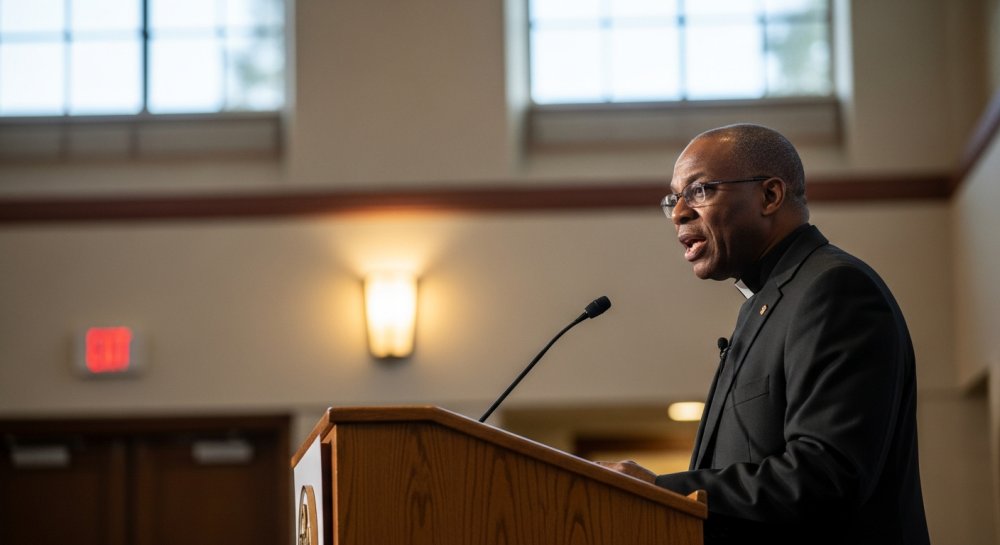
A prominent liberal religious activist has launched a sharp theological attack against President Donald Trump, accusing him of blasphemy for sharing an artificial intelligence-generated image on social media. Rev. William J. Barber II, recipient of a MacArthur fellowship and known for his progressive political advocacy, condemned what he characterized as an inappropriate use of religious imagery.
The controversy centers on an AI-created image that Trump shared on his social media platforms. Critics, including Barber, have claimed the image portrays the president in a Christ-like manner, which they argue crosses sacred boundaries.
Barber, who has built a national platform around social justice causes often aligned with Democratic Party positions, used strong theological language in his criticism. He characterized Trump’s actions as both “heresy” and a “war on divinity,” employing serious religious terminology typically reserved for violations of core Christian doctrine.
The incident reflects the ongoing cultural and political divide over the intersection of faith and politics in America. While progressive religious leaders like Barber frequently criticize conservative politicians for what they perceive as inappropriate religious appeals, many Christian conservatives have embraced Trump as a defender of religious liberty and traditional values.
This latest controversy comes as the Trump administration continues to enjoy strong support among evangelical and conservative Christian voters, who cite his judicial appointments, pro-life policies, and defense of religious freedom as evidence of his commitment to their values. Many conservatives view criticisms from progressive religious figures as politically motivated rather than genuinely theological.
The use of AI-generated imagery in political communication represents a new frontier in digital campaigning and social media engagement. As these technologies become more sophisticated and accessible, questions about their appropriate use in political and religious contexts are likely to intensify.
Barber’s criticism also raises questions about consistency in how religious imagery is policed in American political discourse. Conservative Christians have long noted that progressive politicians frequently invoke religious language and imagery when advancing liberal policy priorities, while facing little comparable scrutiny from mainstream religious commentators.
Let us know what you think, please share your thoughts in the comments below.
Faith Facts
- Former atheist Lee Strobel discusses how the new documentary “The Story of Everything” uses cosmology, physics, and biology to make a case for God’s existence
- Strobel says he’s “jealous” of skeptics who will encounter the scientific evidence in the film with fresh eyes
- The documentary aims to bridge the gap between faith and science by presenting evidence from leading researchers and scholars
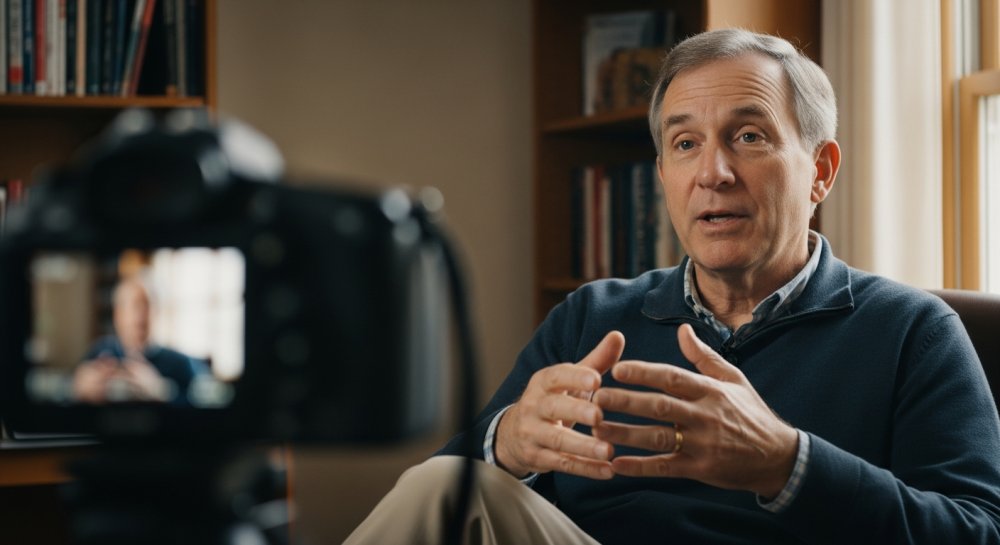
Lee Strobel, the renowned Christian apologist and former atheist, is expressing enthusiasm about a new documentary that takes skeptics on a scientific journey toward faith. “The Story of Everything” uses discoveries in cosmology, physics, and biology to build a compelling case for the existence of God.
The documentary represents a fresh approach to apologetics, one that meets skeptics on their own turf by presenting scientific evidence rather than relying solely on theological arguments. Strobel, whose own conversion from atheism to Christianity came through investigating evidence, sees this film as a powerful tool for reaching those who value scientific inquiry.
In discussing the film, Strobel revealed an unexpected emotion: envy. He says he’s “jealous” of skeptics who will watch the documentary because they’ll experience the wonder of discovering this evidence for the first time.
The sentiment reflects Strobel’s own transformative journey decades ago when he set out to disprove Christianity but instead found the evidence pointing him toward faith.
“The Story of Everything” tackles some of the biggest questions in science and philosophy, examining how the universe began, the fine-tuning of physical constants necessary for life, and the complexity of biological systems. These areas of scientific inquiry have increasingly pointed toward intelligent design rather than random chance, according to proponents featured in the film.
The documentary features contributions from leading researchers and scholars who present evidence that the universe bears the hallmarks of intentional creation. From the precise calibration of fundamental forces to the information encoded in DNA, the film argues that science and faith are not enemies but complementary ways of understanding reality.
For Christians concerned about the cultural narrative that faith and science are incompatible, “The Story of Everything” offers a counter-narrative grounded in evidence and reason. It demonstrates that believing in God is not a leap into intellectual darkness but a conclusion supported by observable phenomena.
Strobel’s work has long focused on providing intellectual foundations for faith, making him a trusted voice for both believers seeking to strengthen their convictions and seekers exploring Christianity. His books, including “The Case for Christ” and “The Case for a Creator,” have helped millions understand that Christian faith rests on a solid evidentiary foundation.
The new documentary continues this tradition, offering viewers a chance to examine the scientific case for God’s existence in an accessible format. For families looking to equip their children with answers to tough questions, or for believers hoping to share their faith with skeptical friends, the film provides valuable resources.
In an age when many young people are leaving the church due to perceived conflicts between science and faith, projects like “The Story of Everything” serve an important purpose. They show that Christianity welcomes intellectual inquiry and that following the evidence can lead straight to the God of the Bible.
Strobel’s jealousy of first-time viewers speaks to the transformative power of encountering truth. For those who have walked with God for years, it can be easy to forget the awe of that initial discovery.
The documentary invites both skeptics and believers to reconsider what science reveals about our origins, our purpose, and the One who created it all.
Let us know what you think, please share your thoughts in the comments below.
Faith Facts
- Matt Chandler explores how suffering and trials progressively shape believers into Christ’s image through sanctification
- The pastor emphasizes that spiritual growth is a gradual, often disorienting process rather than instant transformation
- Biblical sanctification involves God using life’s difficulties to refine Christians and deepen their faith
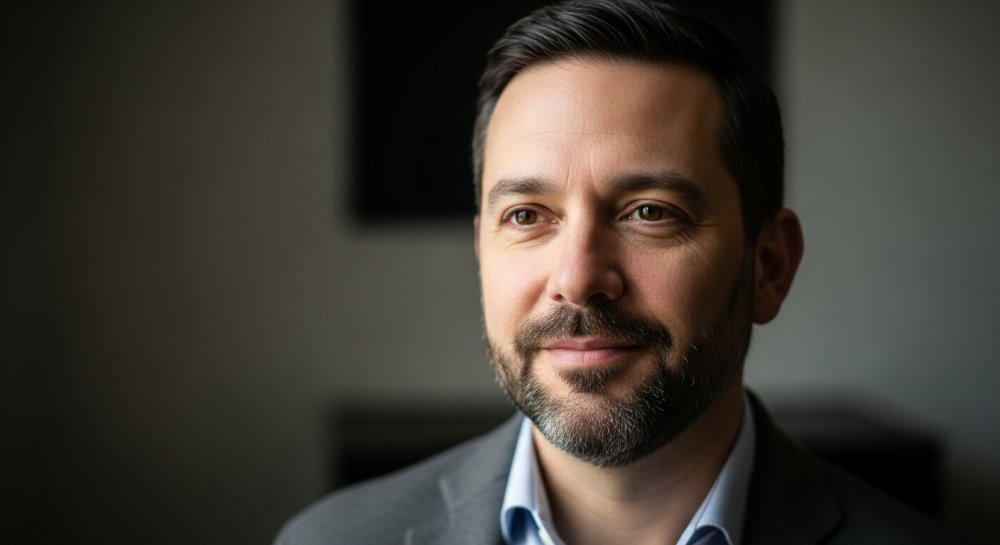
A leading evangelical voice is helping believers understand why their journey toward spiritual maturity often feels more like a winding path than a straight highway. Matt Chandler, pastor of The Village Church, has been speaking openly about the biblical concept of progressive sanctification and why growing in faith can be such a challenging, sometimes confusing experience.
Chandler’s teaching centers on a fundamental Christian truth: becoming more like Jesus is not an overnight event but a lifelong journey. This process, known in theological circles as sanctification, involves God working through both joyful moments and painful trials to shape believers’ character and deepen their dependence on Him.
The pastor’s perspective offers much-needed encouragement to Christians who sometimes wonder if they’re making any spiritual progress at all. In a culture that demands instant results and quick fixes, the biblical model of gradual transformation can feel frustratingly slow.
Yet Chandler emphasizes that this slow work is precisely how God designed the Christian life to function. Through everyday struggles, unexpected hardships, and even suffering, believers are refined and molded into the image of Christ. This process honors God’s sovereignty while acknowledging the reality of human weakness and the ongoing need for divine grace.
The teaching resonates particularly with believers facing difficult seasons. Rather than viewing hardship as a sign of God’s absence or displeasure, Chandler’s message reframes suffering as one of the primary tools God uses to draw His people closer and make them more like His Son.
This understanding of sanctification has deep roots in Scripture and church history. The Apostle Paul wrote extensively about the transformation believers undergo, noting that trials produce perseverance, character, and hope. The early church fathers regularly taught that Christians are progressively transformed through both spiritual disciplines and life’s difficulties.
For American Christians navigating an increasingly secular culture, this message offers both comfort and challenge. It acknowledges that faith will be tested and that growth often comes through discomfort, while also affirming that God is faithful to complete the good work He has begun in every believer.
Chandler’s emphasis on the gradual nature of sanctification also serves as a corrective to some modern church trends that promise immediate spiritual breakthroughs or suggest that mature Christians should be free from struggle. Instead, his teaching affirms the biblical pattern of steady, patient growth under God’s hand.
The pastor’s work reminds believers that spiritual maturity is marked not by the absence of trials but by increasing faith, hope, and love in the midst of them. This perspective helps Christians maintain realistic expectations about their faith journey while remaining confident in God’s ultimate purposes.
Let us know what you think, please share your thoughts in the comments below.


-

 Self-Reliance1 year ago
Trump’s Bold Move Uncovers Massive Social Security Fraud
-

 Faith1 year ago
New Clues Emerge in Noah’s Ark Mystery
-

 News1 year ago
Governor Walz’s Rhetoric Sparks National Controversy
-

 News1 year ago
Mel Gibson’s ‘The Passion of the Christ’ Sequel Title Announced
-

 Family1 year ago
Texas Lawmaker Targets Furries in Schools
-

 Freedom1 year ago
Maine Lawmaker Challenges Sports Fairness Controversy
-

 Family11 months ago
Canada’s Controversial Policy Sparks Ethical Debate
-
Faith5 months ago
Congress Hears Pleas for Nigerian Christians