
Faith
What the Church Must Learn From a High-Profile Fall

Faith Facts
- The Church must recognize that embracing LGBT identity, even without acting on it, contradicts biblical teaching on sanctification and identity in Christ
- God’s design for human sexuality is rooted in creation, not personal feelings or attractions, and calls believers to find their primary identity in Christ alone
- True restoration comes through complete surrender to biblical truth, not through compromise with worldly identity frameworks
The recent struggles of a prominent Christian leader have raised urgent questions about how the Church approaches issues of sexual identity and biblical faithfulness. This moment demands clarity and compassion as believers seek to understand God’s will for human sexuality and personal identity.
For years, the evangelical world has grappled with how to minister to those experiencing same-sex attraction while maintaining biblical conviction. Some leaders have promoted a middle path—acknowledging attraction while committing to celibacy. But recent events suggest this approach may contain hidden dangers that the Church must confront.
The fundamental issue is one of identity. Scripture teaches that believers are new creations in Christ, with their primary identity rooted not in feelings, attractions, or temptations, but in their relationship with the Savior. When Christians adopt identity labels based on sinful desires—even while not acting on them—they risk anchoring part of their self-understanding in something God calls them to leave behind.
The Apostle Paul addressed similar issues in his letters to the Corinthian church. He listed various sins, including sexual immorality, then declared: “And such were some of you. But you were washed, you were sanctified, you were justified in the name of the Lord Jesus Christ and by the Spirit of our God.” The emphasis is on transformation—what they were versus what they became through Christ.
This isn’t about denying the reality of ongoing temptation. Every believer faces battles with sin and fleshly desires. But there’s a crucial difference between acknowledging a temptation and building an identity around it. The Christian’s identity is defined by Christ’s righteousness, not by the particular sins they struggle against.
The Church must return to teaching the fullness of biblical anthropology—God’s design for human beings as male and female, created for His glory. This design isn’t arbitrary or oppressive; it reflects the character of God Himself and points to the relationship between Christ and His Church. When we compromise on this foundation, we undermine the Gospel itself.
At the same time, the Church must demonstrate genuine love and support for those wrestling with sexual sin. This means creating communities where honesty about struggle is met with grace, prayer, and practical discipleship. It means rejecting both harsh judgment and false compassion that affirms what God condemns.
The path forward requires courage to speak biblical truth clearly while extending Christ’s love sacrificially. It means calling sin what it is while offering hope for real transformation through the power of the Holy Spirit. It means refusing to baptize worldly identity categories with Christian language, instead pointing people to their true identity as beloved children of God.
God’s Kingdom promises complete restoration of body, soul, and spirit. This restoration doesn’t come through managing sinful desires or finding middle-ground compromises. It comes through death to self and resurrection to new life in Christ. This is the hope the Church must offer—not a therapeutic accommodation of fallen desires, but the supernatural power of God to make all things new.
As believers pray for those who struggle, they must also examine their own hearts and churches. Are we teaching the full counsel of God on sexuality and identity? Are we equipping believers to find their worth in Christ alone? Are we creating communities where repentance and holiness are pursued with both seriousness and joy?
The challenges facing the Church in this cultural moment are real, but so is the power of the Gospel. Jesus Christ came to save sinners and transform lives completely. That transformation includes our understanding of who we are—not people defined by our temptations, but saints called to reflect the glory of God in every area of life.
Let us know what you think, please share your thoughts in the comments below.

Faith Facts
- Scripture teaches that the Holy Spirit intercedes for believers with groanings too deep for words when human language fails.
- Christian tradition holds that God hears the heart’s cry even when spoken prayer seems impossible.
- Believers are encouraged to draw near to God in faith trusting His promises of presence and comfort.
What do you do when you need God and cannot find the words to pray? The question strikes at the core of every believer’s walk with Christ.
Scripture offers both comfort and direction in such moments. Romans 8 reminds us that the Spirit Himself intercedes for us.
“Likewise the Spirit helps us in our weakness. For we do not know what to pray for as we ought, but the Spirit himself intercedes for us with groanings too deep for words.”
This divine intercession assures Christians that their prayers need not be eloquent to reach heaven. God values sincerity over polished phrases.
Many saints throughout history have testified to seasons of wordless communion with the Lord. Their experience echoes the truth that presence often matters more than perfect speech.
“Be still, and know that I am God.”
Psalm 46:10 continues to guide believers who struggle to articulate their needs. Silence before the throne can become its own powerful prayer.
Practical steps include opening the Bible and allowing God’s Word to speak when personal words fail. Reading Scripture slowly can stir the heart toward renewed trust.
Some Christians also find strength by simply repeating the name of Jesus or by offering a single honest sentence such as “Lord have mercy.”
“The Lord is near to all who call on him, to all who call on him in truth.”
Psalm 145:18 reinforces the promise that God draws close to those who seek Him even without polished prayers. His faithfulness does not depend on our eloquence.
Ultimately the answer to wordless seasons lies in resting on God’s character rather than on our own ability to perform. The Father knows what His children need before they ask.
Let us know what you think, please share your thoughts in the comments below.

Faith Facts
- Christian believers are facing declining reading habits and rising biblical illiteracy.
- Crossmap Book Club is a new digital lending library designed to make faith-based books widely accessible.
- The platform encourages community building and deeper spiritual growth among believers.
Amid declining reading habits and biblical illiteracy, a new Christian digital lending library is seeking to make faith-based literature more accessible while helping believers build community and deepen their spiritual lives.
Let us know what you think, please share your thoughts in the comments below.
Faith Facts
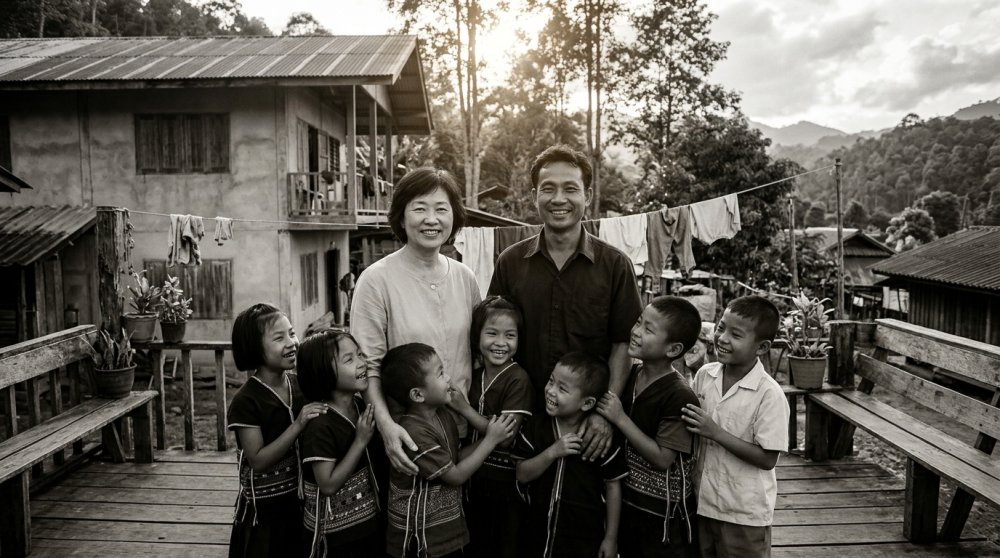
- Wendy Wong and her husband Anawin Rungrotpanthawee have provided housing, meals, and daily Bible study for up to thirty abandoned children in northern Thailand for the past decade.
- The couple began their work among the Akha hill tribe in Chiang Rai, offering education and discipleship to children who would otherwise have no path beyond elementary school.
- Despite having little money, Wong and her husband continue to welcome children recommended by local churches, trusting God to supply every need.
Wendy Wong was born in Hong Kong and married Anawin Rungrotpanthawee from Thailand. Seventeen years ago the newly married couple planted churches among the Akha people in the mountains near Chiang Rai.
Ten years ago they opened their home to children who had no one else. The work began with one or two children and grew as older teens moved on and new children arrived. Today as many as thirty youngsters live with them at the Eternal Life Student Centre, a ministry supported by Agape Asia and Churches of Christ.
Recently Wong spoke about the heartbreaking situations that bring children to the centre and the ways God is restoring hope and raising a new generation whose futures are no longer defined by their past.
“Much of our work takes place outside the city in small villages such as Blossom Village, where many residents belong to the Akha hill tribe. Many visitors have never heard of the Akha people until they come here and see their communities firsthand.
“We realized that many of the children in the village had no opportunity to continue their education. The village had only two elementary schools, and once students finished primary school, there was nowhere for them to continue their studies. We provide after-school care to about 110 students. It’s a program in Blossom Village that helps students with the languages, reading, mathematics and Bible. These children are sent to us by their parents in hopes that we can further develop them for future success.
“We want these children to have opportunities that their village can’t provide, so we began bringing them into the city where they could attend middle school and beyond. We provide everything they need — housing, meals, school tuition, books, clothing and daily Bible study.
“Ten years ago, we welcomed our first group of 17 students.”
“The other way we take care of children is through the Eternal Life Student Centre. We have 30 kids with us, and the youngest one is 8. The oldest one is almost 18. Ten come from Blossom Village. The remaining 20 come from other communities. Some have lost both parents. Others live with grandparents or relatives who cannot provide for them. Some are children of undocumented immigrants. Others have been orphaned because of conflict and war.
“Many of the ministers, churches and church members throughout the region know about our ministry. They regularly recommend children who need help.
“When we can, we make home visits to evaluate each family’s situation. When we see genuine need, we welcome the child into our home.
“Most of the children, when they first come to see us, are very nervous. They don’t know how to handle a relationship with strangers, and most of them just don’t know how to take care of themselves. They just don’t know how to live with a schedule, a timetable.
“Most of the children, when they first come to see us, are very nervous. They don’t know how to handle a relationship with strangers, and most of them just don’t know how to take care of themselves.”
“After several months, most of them are more cheerful. They love our center, they like their home and they start to know that having a schedule is very good in their lives. And then they enjoy playing together, eating together. Now they just love to be living in a group that has become their family.
“Some of the young people who have grown up with us are still faithfully involved in church. Others have stepped away because of the pressures of society and the difficult work environments they now face. In Thailand, many aspects of culture conflict with biblical teaching, so discipleship requires continual encouragement, teaching and honest conversations about how to live faithfully in today’s world.”
“Although they were not Christians, my parents eventually accepted my calling. They later visited us in Thailand and saw the ministry firsthand. They watched the children we were raising and recognized that God was using our lives to make a real difference. Today, they fully support what we do.
“Financially, we have very little. We have never accumulated much wealth or many possessions. I cannot give my parents expensive gifts or provide them with financial security. But I can tell them that I am doing exactly what God has called me to do.
“They now understand that while we may appear poor by the world’s standards, we are rich in purpose, rich in faith and rich in the joy of serving Christ.”
Let us know what you think, please share your thoughts in the comments below.


-

 Self-Reliance2 years ago
Trump’s Bold Move Uncovers Massive Social Security Fraud
-
 Faith2 years ago
New Clues Emerge in Noah’s Ark Mystery
-

 News2 years ago
Governor Walz’s Rhetoric Sparks National Controversy
-
 News2 years ago
Mel Gibson’s ‘The Passion of the Christ’ Sequel Title Announced
-

 Family2 years ago
Texas Lawmaker Targets Furries in Schools
-

 Freedom2 years ago
Maine Lawmaker Challenges Sports Fairness Controversy
-

 Family2 years ago
Canada’s Controversial Policy Sparks Ethical Debate
-
Faith12 months ago
Congress Hears Pleas for Nigerian Christians