
News
What Pro-Life Americans Must Do as Abortion Industry Posts Record Numbers

Faith Facts
- Planned Parenthood performed a record 392,715 abortions in 2023-2024, the most in the organization’s history
- Republican-led states have successfully reduced abortion access, with 14 states implementing strong protections for the unborn
- Pro-life advocates face a critical moment requiring renewed commitment to both legislative action and compassionate support for mothers in crisis
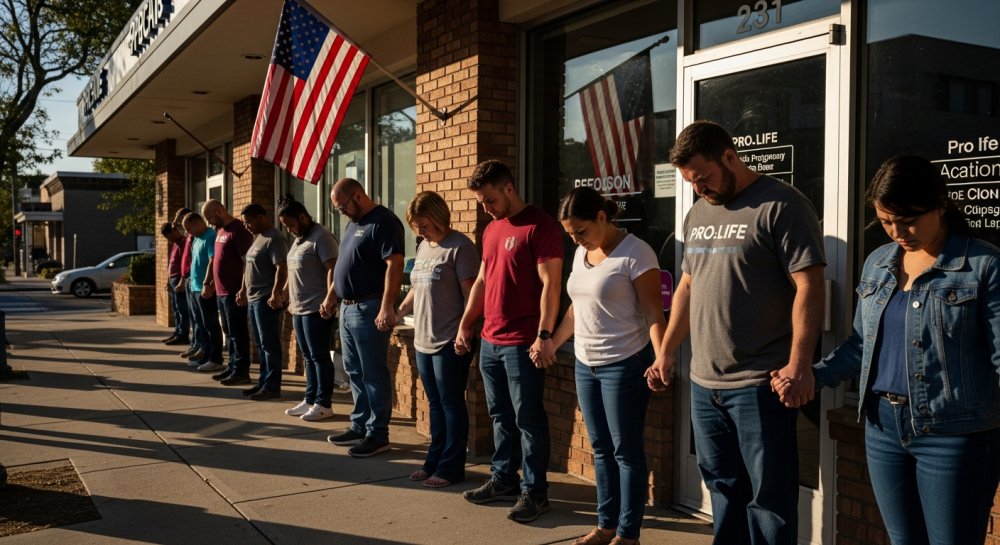
The pro-life movement stands at a crossroads. While celebrating the monumental Supreme Court victory that overturned Roe v. Wade, faithful Americans now confront sobering statistics from the abortion industry itself. Planned Parenthood’s latest annual report reveals they performed a record number of abortions in their most recent fiscal year — a stark reminder that the battle to protect the unborn is far from over.
The path forward for Republicans and the broader pro-life coalition requires both moral clarity and strategic wisdom. Recent electoral setbacks on state ballot measures demonstrate that good intentions without effective messaging and grassroots mobilization fall short. The pro-life cause is fundamentally about protecting innocent human life, and that truth must be communicated with both conviction and compassion.
In states where strong pro-life laws have been enacted, the results speak for themselves. Fourteen states now provide substantial protection for unborn children, saving countless lives. These legislative victories represent the fruit of decades of patient advocacy, prayer, and political engagement by Christians and pro-life Americans who refused to accept the status quo.
However, Planned Parenthood’s record abortion numbers reveal the urgent need for a comprehensive approach. Restricting abortion access through law is essential, but equally important is building a culture of life that supports women facing unplanned pregnancies. Crisis pregnancy centers, adoption services, and community support networks form the compassionate infrastructure that makes choosing life a realistic option.
The Republican Party must maintain its commitment to life while recognizing that hearts and minds are changed through persuasion, not just legislation. This means investing in organizations that provide alternatives to abortion, supporting policies that help young families thrive, and consistently articulating why every human life has inherent dignity and worth from conception to natural death.
The opposition’s strategy relies on fear and deception, portraying pro-life laws as harmful to women while ignoring the reality that abortion always ends a human life. Pro-life advocates must counter this narrative with truth spoken in love, sharing testimonies of women who chose life and found hope, and exposing the profit-driven motives of the abortion industry.
For Christian conservatives, this moment demands renewed dedication to prayer and action. The spiritual battle for a culture of life requires both supernatural intervention and faithful human effort. Churches must continue providing practical support for mothers and families while teaching biblical truth about the sanctity of life.
State-level activism remains crucial. Where pro-life laws face ballot challenges, early organization and clear communication can make the difference. Where abortion restrictions are already in place, vigilance is required to maintain and strengthen these protections. Every state presents unique opportunities for advancing the cause of life.
The increase in Planned Parenthood’s abortion numbers should serve as a call to action, not discouragement. The organization’s aggressive expansion of chemical abortion services and its increasing reliance on abortion revenue underscore the urgent need for pro-life Americans to remain engaged. This is not the time to retreat or grow weary in doing good.
Looking ahead, the pro-life movement must combine the best elements of political advocacy, community service, and cultural engagement. This means supporting candidates who will defend the unborn, volunteering at pregnancy resource centers, and speaking openly about the gift of life in conversations with neighbors and colleagues.
The victories of recent years prove that change is possible when God’s people act with courage and conviction. The work continues, and the stakes could not be higher. Each life saved represents an eternal soul of infinite worth, created in the image of God and deserving of protection.
Let us know what you think, please share your thoughts in the comments below.

Faith Facts
- A woman has publicly accused megachurch Pastor Jamal Bryant of being an absent father to a child she claims is his, allegedly conceived over ten years ago.
- Pastor Bryant has publicly positioned himself as an advocate for black fathers being present in their children’s lives.
- The allegations raise questions about consistency between public ministry messaging and private family responsibilities.
A woman has come forward with serious allegations against megachurch Pastor Jamal Bryant, claiming he has been absent from the life of a son she says he fathered more than a decade ago.
According to the woman’s account, the child was conceived during what she describes as a massage session approximately ten years ago. She alleges that despite his public advocacy for responsible fatherhood, Pastor Bryant has not been present in the child’s life.
Pastor Bryant has been vocal in his ministry about the importance of black men taking active roles in their children’s lives. He has frequently addressed issues of fatherhood and family responsibility from the pulpit and in public forums.
The accusations present a potential contrast between the pastor’s public statements on fatherhood and the claims being made about his private conduct. The woman’s allegations have not been independently verified.
Pastor Bryant leads a large congregation and maintains a significant public ministry presence. His advocacy work has included addressing absent fathers in the African American community as a critical social issue.
The timing and nature of these allegations raise important questions about accountability and the standards to which spiritual leaders should be held. Biblical teaching consistently emphasizes the importance of integrity, with leaders called to be “above reproach” in their conduct.
As these claims circulate, they serve as a reminder of the importance of living out the values we profess, particularly for those in positions of spiritual authority and public trust.
Let us know what you think, please share your thoughts in the comments below.
Faith Facts
- Israeli officials received no advance warning about President Trump’s announcement of a 60-day ceasefire deal with Iran
- The surprise announcement came shortly after Trump had promised additional military strikes against the Iranian regime
- The unexpected diplomatic shift has raised questions about coordination between the United States and its closest Middle East ally
Israeli officials were caught off guard by President Donald Trump’s sudden announcement that a 60-day ceasefire agreement had been reached with Iran, according to multiple reports. The surprise revelation came without any advance notification to America’s most steadfast ally in the Middle East.
The timing of the announcement has raised eyebrows among both Israeli and American observers. Just days earlier, President Trump had publicly committed to carrying out additional military strikes against the Iranian regime, signaling a hardline approach to the ongoing tensions.
The abrupt policy shift from military action to diplomatic agreement represents a significant development in U.S.-Iran relations. Trump indicated the deal could potentially be signed as early as this weekend, marking a dramatic acceleration in negotiations that Israeli officials apparently were not privy to.
The lack of prior consultation with Israel is particularly notable given the nation’s direct security interests in any agreement involving Iran. Israel has long viewed Iran’s nuclear ambitions and regional activities as existential threats, and has historically been kept informed of major U.S. policy decisions regarding the Islamic Republic.
This development comes at a critical time for Middle East stability and raises important questions about the future of American-Israeli strategic coordination. For many Christian Americans who support Israel as a matter of biblical conviction and national interest, the surprise nature of this announcement may be cause for concern about whether Israel’s security needs are being adequately considered.
The 60-day ceasefire framework remains unclear, and details about what commitments each side has made have not been fully disclosed. The rapid timeline for potential signing suggests negotiations moved forward quickly, though the circumstances that led to this diplomatic breakthrough remain murky.
As this situation continues to develop, the relationship between the United States and Israel remains a cornerstone of American foreign policy in the region. How this unexpected announcement affects that partnership will likely become clearer in the days ahead.
Let us know what you think, please share your thoughts in the comments below.

Faith Facts
- A Washington state school district faces a lawsuit after a biological male wrestler competing in girls’ sports allegedly sexually assaulted a female opponent during a match.
- The incident highlights growing concerns among parents and faith communities about the safety implications of allowing biological males to compete in female athletic divisions.
- The lawsuit challenges school policies that critics say prioritize ideology over the physical safety and dignity of female students.
- Many Christian and conservative groups have warned that blurring biological distinctions in sports creates dangerous situations for girls and young women.
A lawsuit has been filed against Washington state school officials following allegations that a biological male identifying as transgender sexually assaulted a female wrestler during a high school match. The case is drawing national attention as parents, faith leaders, and advocates for women’s sports raise urgent concerns about student safety.
The incident reportedly occurred during competition when the male athlete, permitted to compete in the girls’ division, allegedly engaged in inappropriate sexual contact with a female opponent. Parents of the victim are now seeking legal recourse against school administrators who they say failed to protect their daughter.
The lawsuit argues that school policies allowing biological males to compete against females created a dangerous environment that violated the rights and safety of female students. Christian families and conservative advocates have long warned that such policies compromise the dignity and physical well-being of girls in athletics.
Critics of these policies point to fundamental biological differences between males and females, including differences in strength, speed, and physical capability. These distinctions, they argue, are not merely social constructs but God-given realities that must be respected, especially in contact sports like wrestling.
The controversy reflects a broader cultural battle over the boundaries of religious freedom, parental rights, and common-sense protections for children. Many Christian parents feel their concerns about these policies have been dismissed or labeled as discriminatory, even when rooted in legitimate safety considerations.
Supporters of traditional women’s sports argue that fairness and safety should take precedence over gender ideology. They contend that allowing biological males into female athletic spaces not only undermines competitive fairness but also exposes young women to potential harm, as this case allegedly demonstrates.
The lawsuit could have far-reaching implications for school districts across the country that have adopted similar policies. Legal experts suggest that cases involving student safety may compel courts to reconsider how schools balance competing interests when implementing transgender participation policies.
Faith-based organizations have rallied around the family, offering support and calling for policy changes that prioritize the protection of all students. They emphasize that compassion for individuals struggling with gender identity should not come at the expense of girls’ safety and privacy.
As this case moves forward, it serves as a sobering reminder of the real-world consequences when ideology overrides biological reality and common sense. Parents nationwide are watching closely, hoping for an outcome that restores sanity and safety to school athletics.
Let us know what you think, please share your thoughts in the comments below.


-

 Self-Reliance1 year ago
Trump’s Bold Move Uncovers Massive Social Security Fraud
-

 Faith1 year ago
New Clues Emerge in Noah’s Ark Mystery
-

 News1 year ago
Governor Walz’s Rhetoric Sparks National Controversy
-

 News1 year ago
Mel Gibson’s ‘The Passion of the Christ’ Sequel Title Announced
-

 Family1 year ago
Texas Lawmaker Targets Furries in Schools
-

 Freedom1 year ago
Maine Lawmaker Challenges Sports Fairness Controversy
-

 Family1 year ago
Canada’s Controversial Policy Sparks Ethical Debate
-
Faith7 months ago
Congress Hears Pleas for Nigerian Christians