
Family
What Modern Culture Gets Wrong About Grief


Faith Facts
- Grief is a natural, God-given process that cannot be rushed or scheduled according to modern expectations
- Scripture teaches there is “a time to weep and a time to mourn” (Ecclesiastes 3:4), acknowledging grief’s necessary season
- Contemporary culture’s demand for quick emotional recovery contradicts biblical wisdom about the healing power of time and community support
In a world obsessed with efficiency and productivity, grief has become one more thing we’re expected to rush through. Modern society seems uncomfortable with extended mourning, pushing those who’ve lost loved ones to “move on” and “get back to normal” on a timeline that serves everyone’s comfort except the griever’s.
But grief doesn’t follow our schedule. It doesn’t respect our deadlines or our desire for neat resolution.
The Bible offers a radically different perspective on loss and mourning. Scripture doesn’t minimize pain or demand we suppress it quickly. Instead, it acknowledges that grief has its own season—one that cannot and should not be artificially shortened.
Ecclesiastes 3:4 reminds us there is “a time to weep and a time to mourn.” This isn’t a suggestion to indulge in endless despair, but a recognition that mourning is a necessary, God-ordained part of the human experience.
The psalmists regularly express deep anguish and sorrow, modeling for us that bringing our pain before God is both healthy and holy. David wrote honestly about his tears, his sleepless nights, and his overwhelming grief—and these expressions became Scripture.
Yet our contemporary culture treats grief like an inconvenient interruption to productivity. Bereavement leave at most jobs offers just a few days, as if the loss of a spouse, parent, or child could be processed in less time than it takes to recover from the flu.
Social expectations are often worse. After the funeral, after the casseroles stop coming, grieving people frequently report feeling abandoned by their communities. Friends and family members grow uncomfortable with continued sadness, offering platitudes like “they’re in a better place” or “at least you had time together” rather than simply sitting with someone in their pain.
This rush to resolve grief does real damage. Research consistently shows that suppressed or hurried grief leads to complicated bereavement, depression, anxiety, and even physical health problems. When we don’t allow ourselves or others the time needed to properly mourn, we don’t eliminate the pain—we just drive it underground where it causes different kinds of harm.
The Christian response should be different. We should be the people who understand that healing takes time, that resurrection comes after the tomb, and that pretending everything is fine doesn’t honor God—it dishonors the reality He created.
Our faith communities should be places where people can grieve openly for as long as they need to. Where saying “I’m still struggling” six months or a year after a loss is met with compassion, not judgment. Where we follow the biblical model of mourning with those who mourn rather than rushing them toward joy they’re not ready to feel.
This doesn’t mean wallowing in despair or rejecting the hope we have in Christ. The resurrection is real, and Christian grief is indeed different because we grieve “not as others do who have no hope” (1 Thessalonians 4:13). But hope doesn’t eliminate sorrow—it reframes it.
We can simultaneously believe in eternal life and miss someone desperately. We can trust in God’s goodness and still feel the sharp sting of loss. These aren’t contradictions; they’re the tension of living in a fallen world while holding onto heavenly promises.
What the grieving need isn’t a timeline or a deadline. They need permission to take the time they need. They need communities that will walk with them through the valley of the shadow of death, not just to the edge of it.
They need churches that remember them after the funeral, friends who continue to check in months later, and a culture that values emotional health over the appearance of having it all together.
Grief deserves its season. Not because we’re without hope, but because we’re human, and the losses we experience are real and significant. Rushing through grief doesn’t demonstrate faith—it demonstrates a lack of understanding about how God designed us to process pain.
Let us be people who give grief the space it needs, who trust that healing happens in God’s time rather than ours, and who create communities where mourning is met with patience, presence, and prayer.
Let us know what you think, please share your thoughts in the comments below.


Faith Facts
- Jep and Jessica Robertson credit Phil and Kay Robertson’s biblical marriage wisdom for transforming their own relationship
- The couple is launching a new faith-centered series ‘Jep & Jess: Beyond the Bayou’ focused on Christian values and community
- The Robertsons are opening their lives to demonstrate how traditional marriage principles strengthen families in modern America
The Robertson family has long been a beacon of traditional Christian values in American entertainment, and now Jep and Jessica Robertson are stepping forward with powerful testimony about what truly makes a marriage work. As they prepare to launch their new series, the couple is sharing the transformative advice they received from Duck Dynasty patriarch Phil Robertson and his wife Kay.
The Robertson family’s commitment to biblical principles has resonated with millions of Americans who share their values. Now, through their new platform, Jep and Jessica are inviting families across the nation to witness how faith, forgiveness, and traditional marriage foundations create lasting relationships that honor God.
“Jep & Jess: Beyond the Bayou” represents more than entertainment—it’s a ministry opportunity. The series will showcase how Christian families can thrive by adhering to time-tested scriptural wisdom about marriage, parenting, and community building. In an era when traditional family structures face constant attack from secular culture, the Robertsons are standing firm.
Phil Robertson’s marriage counsel has always been rooted in Scripture, emphasizing the husband’s role as spiritual leader and the wife’s essential partnership in building a godly home. This biblical framework, passed down through generations, has proven its worth in the Robertson family’s enduring marriages.
The new series will document the Robertsons’ daily walk of faith as they navigate challenges while maintaining their commitment to Christian principles. Viewers will see authentic examples of prayer, forgiveness, and sacrificial love—the very foundations that have kept the Robertson marriages strong through decades of cultural upheaval.
Jessica Robertson’s willingness to share their journey demonstrates the hunger many American families have for real, faith-based content that reinforces rather than undermines traditional values. The Robertsons understand that their platform comes with responsibility to point others toward Christ and biblical truth.
As the Robertson family continues expanding their ministry through media, they remain committed to the same principles that made Duck Dynasty a cultural phenomenon. Their unapologetic Christian witness and defense of traditional marriage have made them heroes to conservative Americans who refuse to compromise their values.
The timing of this new series couldn’t be more critical. As marriage rates decline and divorce continues devastating families, the Robertsons are offering a counter-cultural message: biblical marriage works. Their testimony provides hope for couples struggling to navigate modern challenges while staying faithful to God’s design.
Let us know what you think, please share your thoughts in the comments below.

Faith Facts
- The counseling profession has become overwhelmingly female-dominated, with men representing a shrinking minority of practitioners serving families and churches
- A veteran Christian counselor argues the shortage of male counselors creates unique challenges for men seeking faith-based mental health support
- The gender imbalance in Christian counseling may be leaving countless men without relatable mentors during their most vulnerable moments
The counseling rooms of America’s churches and Christian practices tell a story many haven’t noticed. Walk into most faith-based counseling centers today, and you’ll find a profession that has quietly become dominated by women, leaving men in need of guidance with fewer options that match their specific needs.
A veteran counselor is sounding the alarm on what he sees as a critical gap in ministry. His message cuts against the grain of typical diversity conversations.
“In counseling, there aren’t too many women. There are too few men.”
The observation raises important questions about how the church serves its entire congregation. Men facing marriage struggles, addiction, spiritual crisis, or mental health challenges often benefit from counsel that understands their unique perspective and communication style.
The shift didn’t happen overnight. Over recent decades, counseling and related helping professions have seen men exit in significant numbers, creating what some see as an unintended ministry gap.
Christian communities have long valued the nurturing gifts women bring to counseling and pastoral care. That contribution remains invaluable and irreplaceable. But the near-absence of men from the field creates its own set of concerns, particularly for a faith tradition that emphasizes the distinct and complementary roles of men and women.
Some men struggling with personal issues may find it difficult to open up to female counselors about certain challenges. Others may simply lack male role models who can speak into their lives with both professional insight and shared understanding of masculine struggles.
The veteran counselor’s call represents more than professional concern—it’s a spiritual challenge. He’s urging young Christian men to consider counseling not as a fallback career, but as a vital calling that combines compassion, wisdom, and the opportunity to restore broken lives.
Churches and Christian educational institutions may need to actively recruit and encourage men toward counseling professions. That might mean highlighting male counselors as examples of biblical manhood, offering mentorship programs, or creating pathways that make the profession more accessible and appealing to men.
The mental health crisis affecting American men—reflected in higher suicide rates and lower help-seeking behavior—makes this shortage even more pressing. Christian men need Christian male counselors who can meet them where they are, speaking their language while pointing them toward Christ.
As the church continues to navigate questions of service, calling, and ministry effectiveness, the counseling gap presents a clear opportunity. The question is whether Christian men will answer the call to fill it.
Let us know what you think, please share your thoughts in the comments below.
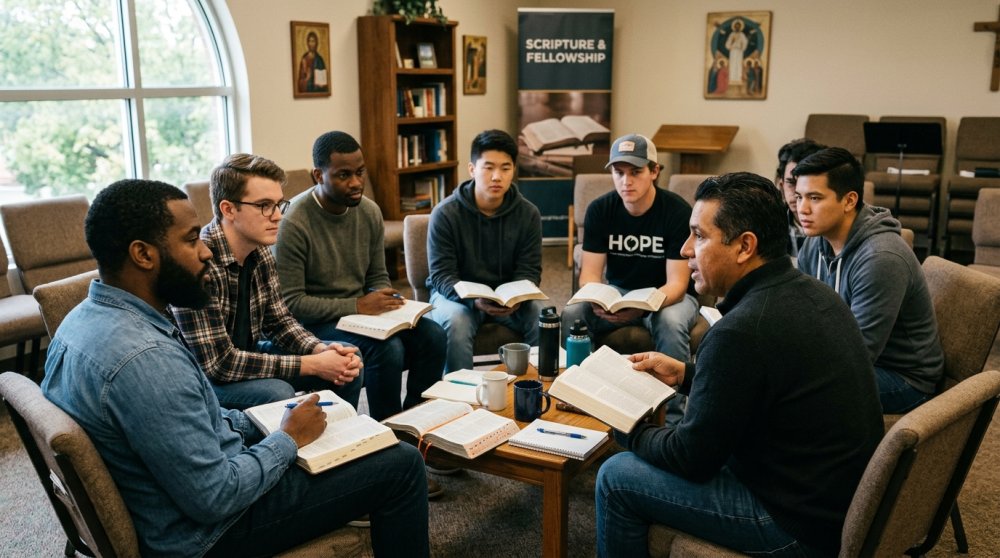
Faith Facts
- Both progressive gender ideology and toxic masculinity influencers like Andrew Tate reject biblical manhood
- True masculinity rooted in Scripture calls men to servant leadership, not domination or abdication
- Christian men are called to protect, provide, and cherish women as image-bearers of God
America faces a masculinity crisis that neither the secular left nor internet provocateurs can solve. While progressive culture dismantles traditional manhood and toxic influencers promote exploitation, both paths lead our sons astray from God’s design.
The modern left has spent decades attacking masculinity itself, pushing gender confusion and celebrating the feminization of men. Drag performances in schools, attacks on fatherhood, and the erasure of male and female distinctions have left young men without healthy models.
Into this vacuum stepped figures like Andrew Tate, whose online empire peddles a counterfeit masculinity built on materialism, sexual conquest, and the objectification of women. His brand of manhood—now facing serious criminal allegations—represents everything biblical masculinity opposes.
Both models fail because both reject God’s blueprint. Progressive ideology denies the reality of manhood altogether. Tate-style influencers pervert it into selfish dominance.
Scripture offers a third way—one America desperately needs to rediscover. Biblical masculinity calls men to sacrificial love, not exploitation. Strength in service, not self-glorification. Leadership through humility, not domination.
The Apostle Paul instructs husbands to love their wives as Christ loved the church—giving Himself up for her. This is the pattern: authority exercised through sacrifice, strength channeled toward protection, masculinity expressed in covenant faithfulness.
Christian men are commanded to honor women as co-heirs of grace, not trophies to collect or obstacles to eliminate. Real manhood protects the vulnerable, provides for families, and points others toward Christ.
Our culture’s confusion stems from rejecting this design. When men abandon their God-given roles, chaos follows. When they twist those roles into tyranny, destruction results.
The solution isn’t found in cultural Marxism’s war on manhood or in the hollow machismo of internet grifters. It’s found in returning to the unchanging truth of Scripture.
Fathers must disciple their sons in biblical manhood. Churches must preach it without apology. Communities must celebrate men who embody it—coaches who mentor, fathers who sacrifice, husbands who cherish, leaders who serve.
America’s boys deserve better than drag story hours and Andrew Tate videos. They deserve the truth: that God created them male for a purpose, that masculinity is good when rightly ordered, and that their greatest calling is to reflect Christ.
The battle for masculinity is ultimately a battle for the soul of our nation. Strong families require strong fathers. Healthy communities need godly men. The future depends on raising boys who understand that real strength protects the weak, real leadership serves others, and real manhood honors God.
Let us know what you think, please share your thoughts in the comments below.


-

 Self-Reliance1 year ago
Trump’s Bold Move Uncovers Massive Social Security Fraud
-

 Faith1 year ago
New Clues Emerge in Noah’s Ark Mystery
-

 News1 year ago
Governor Walz’s Rhetoric Sparks National Controversy
-

 News1 year ago
Mel Gibson’s ‘The Passion of the Christ’ Sequel Title Announced
-

 Family1 year ago
Texas Lawmaker Targets Furries in Schools
-

 Freedom1 year ago
Maine Lawmaker Challenges Sports Fairness Controversy
-

 Family1 year ago
Canada’s Controversial Policy Sparks Ethical Debate
-
Faith9 months ago
Congress Hears Pleas for Nigerian Christians